

Let's be honest, finding the best commercial refrigerator for your kitchen isn't just about picking a shiny stainless steel box. It's about choosing a reliable, efficient workhorse that will become the heart of your entire operation. The best units out there blend pure muscle with smart performance, keeping your food safe and your workflow smooth.
For most Washington businesses, this means investing in a piece of equipment that truly fits their space and their menu, whether that’s a tough reach-in refrigerator, a versatile sandwich prep table, or a compact undercounter unit.
Your Guide to Washington's Best Commercial Refrigerators
Choosing the right commercial refrigerator is one of the most critical decisions you'll make for your Washington food business. Think of it as the anchor of your kitchen—it's absolutely essential for food safety, operational efficiency, and, ultimately, your bottom line. This guide is your roadmap to finding the perfect unit, whether you're running a slammed Seattle restaurant, a cozy neighborhood coffee shop, or a brand-new food truck.
You're not just buying an appliance; you're investing in a massive, growing industry. The global commercial refrigeration market hit an impressive USD 85.6 billion in 2024 and is expected to climb to USD 161 billion by 2034. That growth is fueled by kitchens just like yours—restaurants, supermarkets, and convenience stores where fresh, safe food is non-negotiable.
For restaurant owners all across Washington, from Seattle to Spokane, this just confirms that a smart investment now in reliable equipment pays off for years to come. You can learn more about the commercial refrigeration market trends to see where the industry is headed.
Finding the Perfect Fit for Your Business
Your refrigerator should be the star player on your kitchen team. It needs to be powerful, dependable, and perfectly suited for the job you give it. We'll walk through a wide range of options you can find from suppliers like Seattle Restaurant Equipment to help you make a smart, long-term investment.
This guide will cover the essential equipment every kitchen needs, including:
- Commercial Refrigerators and Freezers: The true workhorses for bulk storage, available as reach-ins or full-blown walk-ins.
- Sandwich and Pizza Prep Tables: These genius units combine chilled storage with a prep surface right on top, perfect for delis and pizzerias.
- Under Counter Refrigerators and Freezers: The ultimate space-savers for tight kitchens, bars, and coffee shops.
- Specialty Seattle Bar Equipment: Think back bar coolers and glass door merchandisers that keep drinks ice-cold and ready to sell.
- Other Key Appliances: We'll even touch on things like deep fryers that often work side-by-side with your refrigerated prep stations.
A well-chosen commercial refrigerator doesn’t just store food; it protects your inventory, streamlines your workflow, and safeguards your profits. It’s an investment in consistency and quality.
Once you understand how each piece fits into your daily grind, you can confidently pick the best commercial refrigerator that not only meets your needs today but also supports your business as it grows.
Figuring Out the Different Types of Commercial Refrigerators
When you're picking out a commercial refrigerator, you've got to think beyond just "a big cold box." The right piece of equipment doesn't just keep your food safe; it actually makes your kitchen run smoother. Let's break down the different types and see how they fit into the real world of a Washington kitchen.
Imagine a busy Bellevue deli during the lunch rush. Their sandwich prep table isn't just a fridge—it's the heart of their operation. These units are geniuses of design, with refrigerated wells up top for all the ingredients, a cutting board right in front, and reach-in storage below. The whole sandwich-making process happens in one spot, keeping every topping crisp and cold and slashing prep time.
Now, picture a cozy coffee shop in Seattle where every inch of space is precious. An under counter refrigerator or under counter freezer becomes a lifesaver. These Seattle coffee shop refrigerators tuck right under the counters, freeing up floor space while keeping milk, cream, and frozen pastries right where the barista needs them. They're the unsung heroes of small kitchens.
Workhorses for Bulk Storage and Display
For your basic, heavy-duty storage, you can't beat the classic reach-in models. These are the foundation of pretty much any commercial kitchen.
- Commercial Refrigerators: These are the tall, upright beasts perfect for holding bulk produce, vats of sauce, and prepped meals. A high-volume spot in Tacoma would be lost without a multi-door reach-in to keep everything organized and easy to grab during a chaotic dinner service.
- Commercial Freezers: You need these for the long haul—storing meats, seafood, and all your frozen goods. A good reach-in commercial freezer is your insurance policy, protecting thousands of dollars in inventory from spoiling.
But storage isn't always about hiding things away. A glass-door merchandiser in a Renton bar or corner store is a sales machine. It turns your cold storage into an advertisement, showing off perfectly chilled drinks and grab-and-go snacks that catch a customer's eye. It’s a core piece of Seattle bar equipment because it just plain works.
The best commercial refrigerator for you is the one that fits into your daily grind like it was made for it—whether that's a prep table that speeds up the line or an undercounter unit that makes a tiny kitchen possible.
Specialized Units for Specific Menus
Some kitchens need gear built for one specific job. If you're running a pizzeria, a standard prep table just won't cut it. You need a dedicated pizza prep table. These have wider, deeper rails designed to hold big pans of cheese, pepperoni, and veggies, plus a tough work surface made for stretching dough. It's a one-stop shop for building pies quickly and consistently.
Even equipment that isn't refrigerated is part of the same system. Think about where you place your deep fryers. A smart line cook will have an under counter refrigerator right next to the fryer, stocked with perfectly portioned, chilled fries. They can grab a basket and drop it in the oil in one smooth, safe motion.
When you start to see how these pieces fit together, you can map out your kitchen's whole ecosystem. You see how the big reach-in freezer in the back room supports the sandwich prep table on the line, which is backed up by an under counter freezer for extra ingredients. By connecting each piece of equipment to a specific task, you can pick the perfect setup from Seattle Restaurant Equipment to build a kitchen that’s powerful, productive, and profitable.
Mastering Kitchen Layout and Capacity Planning
Your kitchen's layout is the unsung hero of your whole operation. Think of it as a traffic system—a smart design keeps staff and ingredients moving smoothly, but a bad one creates constant gridlock and headaches. When you're picking out a commercial refrigerator, planning your space and capacity isn't just a good idea; it's the critical first step to avoid costly mistakes.
Before you even start browsing for models, grab a tape measure. You absolutely need to know the exact dimensions you're working with. But it’s not just about squeezing the unit in. You have to leave room for ventilation clearances. Commercial refrigerators work their tails off, and their compressors throw off a lot of heat. Without proper airflow, usually a few inches on every side, that unit will overheat, run poorly, and die an early death.
Calculating Your True Storage Needs
Once you've got your physical dimensions mapped out, it's time to figure out the right storage capacity. This isn't a guessing game. You need to look at the data—your menu, your customer traffic, and your delivery schedule—to make sure you invest in a unit that meets your needs without wasting space or electricity.
Here's what to think about to nail down your ideal capacity:
- Menu Complexity: A sprawling menu packed with fresh ingredients is going to demand way more cold storage than a simple, focused one. A Seattle cafe that just does pastries has completely different needs than a full-service restaurant with a big seafood selection.
- Customer Volume: How many people are you serving on your busiest night? Your fridge needs to hold enough product to survive the rush without someone having to run to the back-of-house walk-in every five minutes.
- Delivery Frequency: If you get fresh deliveries every day, you can get by with less on-site storage. But if your suppliers only show up once or twice a week, you'll need a much bigger unit to hold all that inventory.
This chart gives you a quick visual on how different businesses match up with specific refrigeration setups.
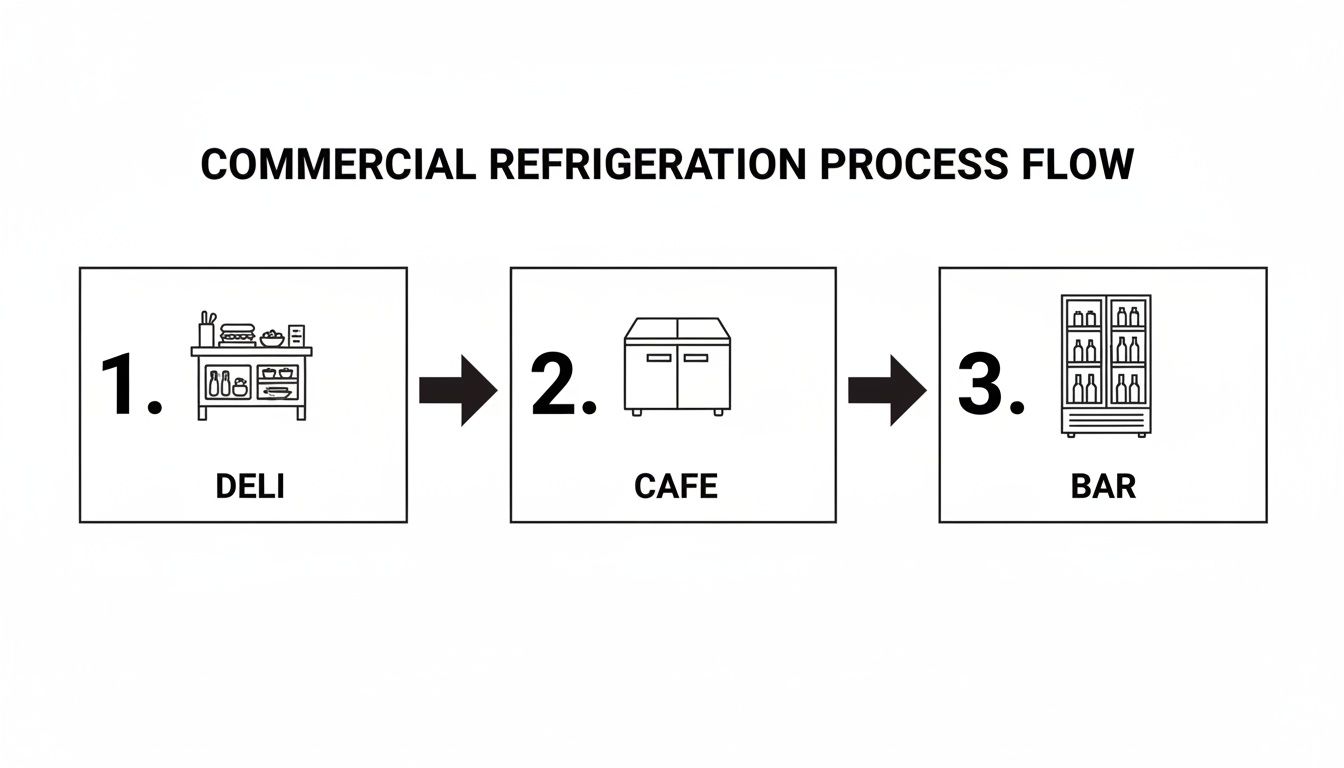
As you can see, what a business does dictates its go-to refrigeration choice, from specialized prep tables for high-volume sandwich shops to compact undercounter units for a tight bar space.
From Food Trucks to Full-Scale Kitchens
Let's put this into practice with some real-world Washington businesses. A food truck operator in Spokane is working with very limited square footage. They have to make a tough call: a single-door reach-in for general storage, or maybe an under counter freezer to stock specialty items like fries for their deep fryers? The right answer depends entirely on their menu and how they work.
Now, think about a caterer in Kent prepping for a massive wedding. They need bulk storage, period. A multi-door commercial freezer or even a full walk-in unit is non-negotiable for holding huge quantities of food safely. For a slammed Seattle bar, the priorities shift again. They’ll be looking at Seattle bar equipment like back bar coolers and glass door merchandisers that are all about quick access and showing off the product, not just raw storage volume.
A classic rookie mistake is buying a fridge that's too small just to save a few bucks upfront. This almost always backfires. You end up with overstuffed units, food held at unsafe temperatures, and spoiled inventory—costing you way more in the long run.
The demand for reliable cold storage is only getting bigger. Supermarkets and big-box stores are taking up a huge slice of the commercial refrigeration market as retail chains expand and people want more fresh dairy, meat, and frozen foods. Here in Washington, that means our bustling restaurants, bars, and pop-ups need top-notch equipment to keep up with the state's amazing food scene—from fresh-caught seafood in Seattle to craft brews in Spokane. That's exactly what Seattle Restaurant Equipment provides: new fridges, freezers, and prep tables that come with warranties, no-commission pricing, and fast shipping across the state.
By taking the time to carefully plan your layout and capacity, you're setting your kitchen up to run like a well-oiled machine, ready for whatever the dinner rush throws at you.
Evaluating Performance and Long-Term Durability
Technical specs on a product page can feel like a foreign language, but they tell a crucial story about how tough and reliable a commercial refrigerator really is. Getting a handle on these details is the key to picking a unit that won’t fold under the pressure of a busy Washington kitchen.
Think of it like looking under the hood before buying a car. You wouldn't just kick the tires, right? You want to know what kind of engine is powering your investment.
One of the most important parts is the compressor. You can think of it as the unit's heart or engine. A more powerful, robust compressor can handle the heavy lifting of a slammed dinner service where the door is constantly being opened. It’s what gives a refrigerator strong temperature recovery—the ability to get back down to a safe, cold temperature fast, protecting all your valuable inventory inside.
Built to Withstand the Daily Grind
Beyond the motor, the actual physical construction of a commercial refrigerator is what really determines its lifespan. The materials used play a huge role in both how long it lasts and how safe it keeps your food.
- Stainless Steel Grades: You'll often see different grades of stainless steel mentioned. Higher-grade stainless steel is your best friend against corrosion, which is a big deal in a steamy, fast-paced kitchen where spills and cleaning chemicals are just part of the daily routine.
- Insulation Quality: Good insulation, like high-density polyurethane foam, does more than just save on your energy bill. It helps the unit hold a consistent internal temperature, which means less wear and tear on the compressor over time.
- Door and Hinge Construction: The doors on these units get opened hundreds of times a day. Heavy-duty, self-closing hinges and tough, durable gaskets aren't just nice-to-haves; they're non-negotiable features that stop cold air from leaking out and ensure a solid seal, every single time.
These are the details that separate a true kitchen workhorse from a machine that will give up on you in a year. When you're looking at equipment from Seattle Restaurant Equipment, you're seeing units built for exactly this kind of demanding work, from commercial freezers to sandwich prep tables.
Connecting Performance to Profitability
Putting your money into a well-built unit is a direct investment in your bottom line. The North American commercial refrigeration market hit USD 16.89 billion in 2024 and is expected to climb to USD 22.12 billion by 2030. That growth is being fueled by an expanding food service industry and a major push for equipment that's both tough and efficient.
For Washington bar owners, breweries, and coffee shops, this means reliable equipment like Seattle bar equipment or Seattle coffee shop refrigerators is more critical than ever. A powerful glass-door merchandiser that keeps craft beer or cold brew perfectly chilled can directly boost your sales and make customers happy. You can discover more insights about the commercial refrigeration market and how it’s shaping the industry.
A refrigerator that dies during a dinner rush doesn't just mean spoiled food. It means lost revenue, a potential headache with the health department, and a hit to your reputation. Durability isn't a luxury—it's an absolute operational necessity.
When you're choosing the best commercial refrigerator, you're making a long-term investment. At Seattle Restaurant Equipment, we focus on units that are built to last, including everything from pizza prep tables and deep fryers to under counter refrigerators and under counter freezers.
By prioritizing powerful compressors, high-grade materials, and sturdy construction, you’re making sure your equipment can handle the daily grind of a professional kitchen for years. Making the right choice here protects your inventory, streamlines your operation, and helps you build a more resilient business.
Understanding Energy Efficiency and Operational Costs
Let's be honest, utility bills are one of those relentless costs that can really eat into your profits. And guess what one of the biggest energy hogs in any Washington kitchen is? Your refrigeration.
Choosing the best commercial refrigerator isn't just about how cold it gets. It's a major financial decision that hits your bottom line every single month. A slightly bigger investment upfront for a genuinely energy-efficient model can save you a mountain of cash over the long haul.
Think of it this way: you could buy a cheap, old work van that guzzles gas, or you could invest in a modern one with great mileage. The van with better mileage costs more initially, but it saves you a fortune at the pump. An energy-efficient refrigerator is the exact same idea, paying you back month after month on your electricity bill. This is especially true for equipment that never sleeps, like your commercial refrigerators and commercial freezers.
When you're shopping, keep your eyes peeled for the ENERGY STAR logo. That little blue sticker is your shortcut to finding units that are proven to be more efficient, often because they use smarter compressors, better insulation, and more intelligent designs.
Translating Ratings into Real-Dollar Savings
So what does an "energy-efficient" label actually mean for your bank account? A modern, ENERGY STAR-certified commercial refrigerator can be up to 40% more efficient than that old beast clanking away in your kitchen right now. For a busy Seattle restaurant running multiple units, those savings add up fast.
And this isn't just about your big walk-in or reach-in units. Think about the other workhorses on your line:
- Sandwich Prep Tables: A good prep table holds its temperature without kicking the compressor on every five minutes. That saves a surprising amount of energy, especially during your slower day parts.
- Under Counter Refrigerators: For a bar or coffee shop, efficient under counter refrigerators and under counter freezers do more than just lower your energy bill. They also kick out less waste heat, which means your HVAC system doesn't have to work as hard to keep the place cool.
- Deep Fryers: While obviously not a fridge, where you place it matters. An efficient refrigerator sitting next to a hot deep fryer won't have to fight as hard to stay cold, which saves even more energy.
Choosing an energy-efficient appliance isn't an expense; it's an investment in a lower utility bill. Over the lifespan of the equipment, the savings can easily surpass the initial price difference.
Staying Compliant with Washington Standards
Beyond just saving money, your refrigeration has to meet non-negotiable food safety standards. Both Washington state and federal laws have strict rules about the temperatures required for holding potentially hazardous foods. Getting this wrong can mean spoiled inventory, a failed health inspection, or fines that could shut you down.
The good news is that all new equipment—from pizza prep tables to Seattle bar equipment—is built to meet these standards right out of the box, giving you one less thing to worry about. A reliable, modern unit ensures your operation is both safe and on the right side of the law.
Of course, maintaining that equipment is just as critical. For a deeper dive into making your whole kitchen more cost-effective, check out our guide on energy-efficient commercial refrigeration for more practical tips.
By making energy efficiency a priority, you turn a necessary purchase into a smart financial play. The right unit from Seattle Restaurant Equipment won't just keep your food cold; it will actively contribute to the long-term financial health of your business.
Getting Your Equipment With Financing and Support
You’ve done the hard work. You’ve planned your layout, picked out the perfect models, and you're ready to pull the trigger. Now for the easy part: getting that equipment into your kitchen with a partner you can count on for the long haul. This is where it all comes together, without any hassle or hidden costs.
At Seattle Restaurant Equipment, we’ve made the whole process as simple as possible. You can browse our entire online catalog from anywhere, whether you’re in the market for a new commercial refrigerator, a heavy-duty deep fryer, or specific Seattle bar equipment.
Once you find what you need, you can count on fast, free delivery anywhere in Washington. It doesn’t matter if you’re in Seattle, Tacoma, Vancouver, or Spokane—your gear typically shows up in just one to two business days. We get you up and running, fast.
Making High-Quality Equipment Accessible
Let’s be honest, the biggest hurdle for most new or expanding food businesses is the upfront cost of outfitting a kitchen. A brand-new food truck or a ghost kitchen scaling up might need everything from an under counter freezer to a sandwich prep table, and that initial investment can feel massive.
That’s exactly why we offer accessible financing options through The Restaurant Warehouse. These aren't generic loans; they're programs built specifically to help businesses like yours keep cash flowing.
- For New Businesses: Get all the essentials you need for a successful launch without wiping out your startup capital.
- For Expanding Operations: Upgrade your kitchen or add new equipment with monthly payments you can actually manage, letting you grow your capacity and your bottom line.
- For Diverse Needs: Our financing covers the whole nine yards, including commercial freezers, pizza prep tables, and even specialized Seattle coffee shop refrigerators.
Don't let a tight budget push you into buying someone else's problem. Financing new, warrantied appliances gives you peace of mind and protects your business from the nightmare of unexpected breakdowns and wallet-draining repairs.
This approach makes getting the best commercial refrigerator and other critical equipment a realistic goal for any operator, no matter the size of their bank account. Think of it as an investment in reliability and efficiency that starts paying for itself from day one.
A Local Partner Committed to Your Success
Buying equipment shouldn't feel like a one-and-done transaction where you’re left to fend for yourself once the delivery truck is gone. The real value comes from having a local partner in your corner—someone you can call for hands-on support and straight-up advice when you need it.
This commitment is what really sets a dedicated supplier apart. You're not just buying a piece of steel; you're gaining a resource that gets the unique grind of running a food business in Washington.
Got a question about installation? Need help deciding between an under counter refrigerator and a full-size unit? Just want some expert advice? Help is always just a phone call away. That kind of ongoing support builds trust and makes sure you get the absolute most out of your investment. It's about more than just moving boxes; it's about helping your restaurant, food truck, or coffee shop thrive for years to come.
Questions We Hear All the Time
Running a restaurant, food truck, or bar in Washington keeps you busy, and navigating the world of commercial refrigeration can bring up a lot of questions. Here are some clear, straightforward answers to the things we get asked most often.
What’s the Biggest Mistake Restaurants Make When Buying a Refrigerator?
Hands down, the most common and costly mistake is buying based on the lowest price tag alone. It's an easy trap to fall into, but it ignores the things that really matter: size, energy efficiency, and durability.
An undersized unit simply can't keep up during a dinner rush, which means it can't hold safe temperatures. That puts you at huge risk for food spoilage and, even worse, a health code violation. On the flip side, an inefficient model might seem cheap upfront, but it will bleed you dry on your utility bills month after month, eating right into your profits.
At Seattle Restaurant Equipment, we focus on long-term value. We'll help you find a properly sized, tough, and efficient appliance that actually saves you money over its lifespan, whether it’s a workhorse commercial refrigerator or a specialized pizza prep table.
Should I Get a Prep Table or a Standard Reach-In Refrigerator?
This one really comes down to your menu and how your kitchen flows. If your team is constantly building sandwiches, tossing salads, or assembling pizzas, a sandwich prep table is a no-brainer. It keeps every ingredient perfectly chilled and right where you need it, making your whole line faster and more efficient.
A standard reach-in refrigerator is built for something different: bulk storage. It's where you'll keep cases of produce, buckets of sauce, and other large items. The truth is, most kitchens need both. We can help you figure out the perfect combo, like a dedicated prep table for service and a big reach-in commercial freezer in the back for your inventory.
Choosing the right tool for the job is everything. A prep table on a busy line is a productivity multiplier, while a reach-in is your inventory's fortress.
Is Free Delivery Available to Spokane or Vancouver?
Absolutely. We offer fast, free shipping on every single order across Washington state. It doesn't matter if your business is in Seattle, Tacoma, Spokane, or Vancouver—we typically get your equipment to you within one to two business days.
This isn't a special promotion; it's just how we do business. We want to make it easy and affordable for Washington restaurants to get the gear they need without worrying about hidden fees or complicated shipping logistics. That goes for everything from small under counter refrigerators to heavy-duty deep fryers.
What if I Can’t Afford a New Refrigerator Upfront for My Food Truck?
We get it. Cash flow is king, especially when you're starting out or growing your business. That’s exactly why we’ve partnered with The Restaurant Warehouse to offer flexible financing options built specifically for the food service industry.
These programs are designed to help restaurants, bars, Seattle coffee shops, and food trucks get the essential equipment they need with monthly payments they can actually manage. You can outfit your entire operation, from an under counter freezer to your main cook line, without that huge upfront investment. It’s all about making sure you can get the reliable, high-quality equipment you need to succeed right from day one.
Ready to find the perfect refrigeration for your Washington business? Seattle Restaurant Equipment has a massive selection of new, warrantied equipment with fast, free delivery anywhere in the state. Check out our inventory today and start building a smarter, more profitable kitchen.