

A glass door merchandiser refrigerator isn't just another piece of cold storage—it's one of the hardest-working sales tools you can have in your shop. For any Seattle business, from a busy downtown restaurant to a neighborhood coffee spot, these units are what turn a passing glance into a profitable sale. They're built to show off everything from local craft beers to fresh grab-and-go sandwiches, making that visual appeal count directly toward your bottom line.
Your Silent Salesperson: How a Glass Door Refrigerator Boosts Business
Think of a glass door merchandiser as your most reliable employee. It’s on the clock 24/7, never calls in sick, and is an absolute pro at one thing: closing the deal. This is about so much more than just keeping drinks cold; it's smart, strategic visual merchandising. When a customer can see a crisp, perfectly lit product right in front of them, the gap between "just looking" and "I'll take one" gets a whole lot smaller.
It’s a simple principle, and it’s exactly why you see these units everywhere. They're a cornerstone of any modern retail or food service operation, fitting perfectly into the larger ecosystem of your kitchen and front-of-house. A successful Seattle business knows this single piece of equipment works hand-in-hand with other essential tools.
- Commercial Refrigerators and Freezers: While your merchandiser is out front making sales, our selection of commercial refrigerators and commercial freezers keeps your bulk inventory chilled and ready for restocking.
- Prep Tables: That sandwich prep table or pizza prep table needs a constant flow of fresh ingredients, which are often pulled from larger refrigerators. The delicious final products? They go straight into a nearby merchandiser for customers to see.
- Specialty Equipment: From Seattle bar equipment showing off local brews to Seattle coffee shop refrigerators holding milk and cold brew concentrates, the merchandiser is the specialized final step in customer-facing presentation.
Turning Glances into Purchases
The real magic of a glass door merchandiser is its knack for creating desire on the spot. Bright, energy-efficient LED lighting makes every can, bottle, and package pop. The crystal-clear doors offer an irresistible, unobstructed view that practically begs customers to open them up and grab something. This isn't just a hunch; the impact on sales is real and well-documented.
A well-placed and well-stocked glass door merchandiser can be a game-changer for any food or beverage business. It taps directly into the psychology of "see, want, buy," creating an immediate sales opportunity that a solid-door refrigerator simply can't match.
The market statistics tell the same story. These merchandisers have become so vital that the global market was valued at a staggering USD 7.85 billion in 2024. Why? Because they've been proven to boost impulse buys by 25-40%, thanks to that superior product visibility. Here in the United States, installations shot up by 12% last year alone as more and more businesses choose models that not only look great but also cut down on operating costs. You can learn more about these market trends and their impact on retail.
Whether you're setting up a new venture from scratch or just upgrading existing gear like under counter refrigerators, under counter freezers, or deep fryers, understanding this powerful sales dynamic is absolutely key.
To put it simply, here’s a breakdown of what these units bring to the table.
Key Benefits of Glass Door Merchandisers for Your Business
| Benefit | Impact on Business | Ideal For |
|---|---|---|
| Increased Impulse Sales | Turns casual browsers into buyers by showcasing products attractively at the point of sale. | Convenience stores, cafes, delis, checkout counters. |
| Enhanced Product Visibility | Bright LED lighting and clear glass make products look their best, encouraging customers to try new items. | Grocery stores, breweries, restaurants with grab-and-go options. |
| Improved Customer Experience | Allows customers to quickly find what they want without having to open doors and search, speeding up service. | High-traffic areas, quick-service restaurants, bars. |
| Efficient Inventory Management | Staff can see stock levels at a glance, making it faster and easier to know when to restock popular items. | Any business looking to streamline its restocking process and avoid stockouts. |
Ultimately, investing in a glass door merchandiser is an investment in better sales, a smoother customer experience, and a more professional look for your entire operation.
Finding the Right Size and Capacity for Your Space
Choosing the right glass door merchandiser isn't like buying any old appliance. Think of it more like hiring a key member of your sales team. You're not just plugging a hole in your floor plan; you're picking a unit that has to keep up with the unique rhythm of your business. The sweet spot is a merchandiser that meets customer demand without eating up precious floor space or sending your energy bill through the roof.
Let's imagine a busy Seattle coffee shop. A compact, single-door under counter refrigerator tucked near the register would be perfect. It can hold milks, oat milk alternatives, and a nice selection of bottled cold brews, keeping essentials handy for baristas while tempting customers with a last-minute grab-and-go purchase. That small footprint is all about efficiency, perfectly suited for a place with high turnover and a focused menu. Our selection of Seattle coffee shop refrigerators offers many similar solutions.
Now, shift gears and picture a high-volume deli downtown. That same single-door unit would be wiped out in minutes during the lunch rush. For this spot, a big two- or three-door glass door merchandiser refrigerator is a must. This workhorse can display dozens of pre-made sandwiches, vibrant salads, and pasta bowls, showing off the full menu and handling the noon stampede without breaking a sweat.
Calculating Your Capacity Needs
Before you even think about pulling out the tape measure, you need to get a handle on your sales velocity and product footprint. How fast do your products fly off the shelves, and how much physical room does each item take up? Answering these questions first will stop you from buying a unit that’s either too small and needs constant restocking, or way too big and just becomes an expensive, energy-guzzling storage box.
- Sales Velocity: Dig into your sales data. If you sell 50 bottled sodas on a typical day, you need a unit that can hold at least that many, plus a little extra for your busiest days. Don't plan for your average day; plan for your best one.
- Product Footprint: Take a look at the actual shape and size of what you sell. Tall, skinny energy drink cans need totally different shelf spacing than wide, flat salad containers. Look for a merchandiser with adjustable shelving so you can customize it for your specific inventory.
- Restocking Frequency: Be realistic about how often your team can restock the merchandiser. If you’re short-staffed or want to keep employees focused on customers during peak hours, a larger capacity unit is probably the way to go.
This little decision tree is a great way to think through whether a merchandiser is the right move to boost those impulse buys.
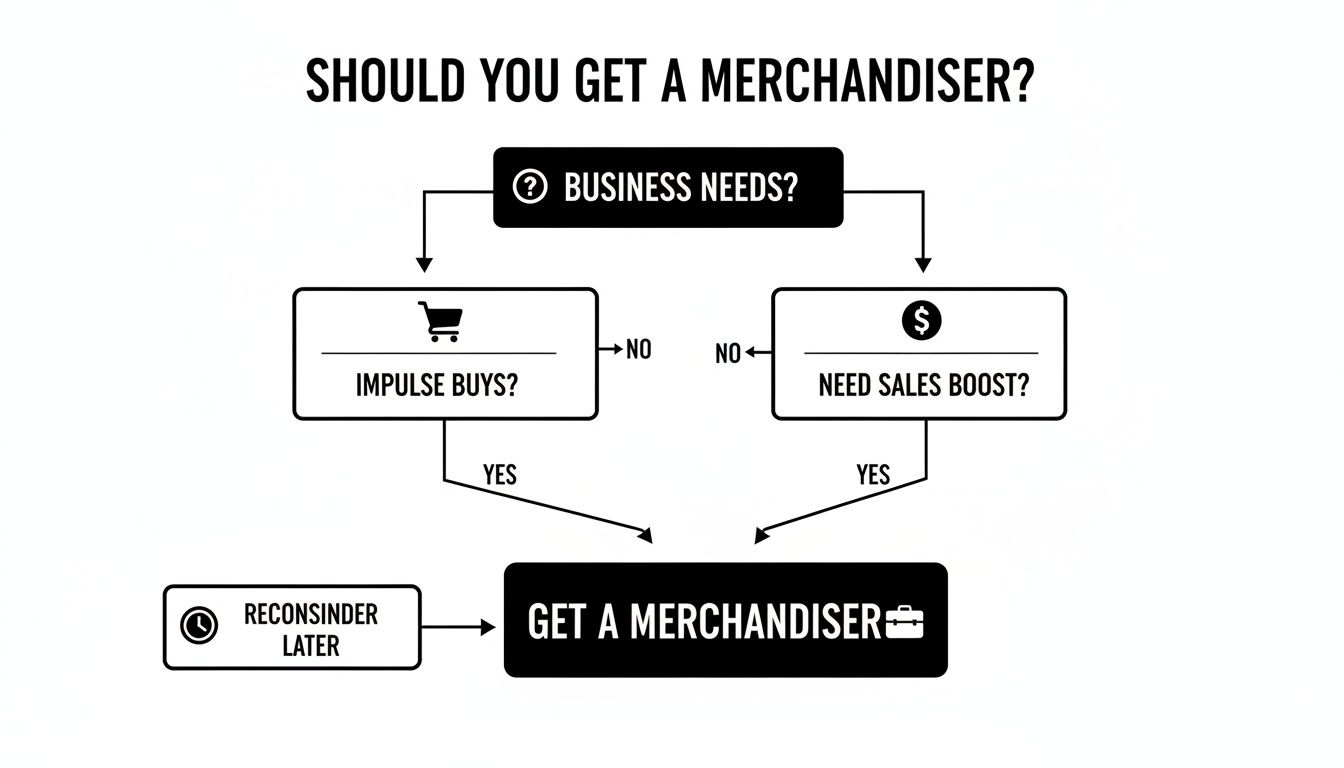
As you can see, if you're looking to encourage customers to make impulse purchases and ultimately bump up your sales, a glass door merchandiser is a direct line to hitting those goals.
Measuring for a Seamless Fit
Okay, so you’ve got a good idea of the internal capacity you need. Now it’s time to get out the tape measure. This step is absolutely critical. It helps you avoid one of the most common—and frustrating—headaches: buying a beautiful new unit that you can’t even get through your front door.
Don't just measure the spot where it's going to live. Measure every single doorway, hallway, and tight corner on the path from the delivery truck to its final home. An inch can be the difference between a smooth installation and a complete disaster.
A glass door merchandiser refrigerator also needs to play nice with your existing equipment. Make sure you leave enough clearance around the entire unit for proper ventilation. This is non-negotiable for the compressor's health and longevity. It's especially important if you're placing it near anything that throws off heat, like deep fryers, or right next to other refrigeration like commercial freezers or sandwich prep tables.
For a huge selection of units that fit all sorts of spaces and capacity needs, you can check out the diverse options of beverage merchandisers in Seattle to find the perfect match. A little bit of planning upfront ensures your new merchandiser makes your workflow better, not worse.
Getting Smart About Features: Efficiency and Long-Term Value
When you're staring at a spec sheet for a glass door merchandiser refrigerator, it's easy for your eyes to glaze over. But those technical details aren't just industry fluff—they're what separate a cooler that costs you money from one that makes you money. It's about looking past the price tag to see the real, long-term value of what you're buying.
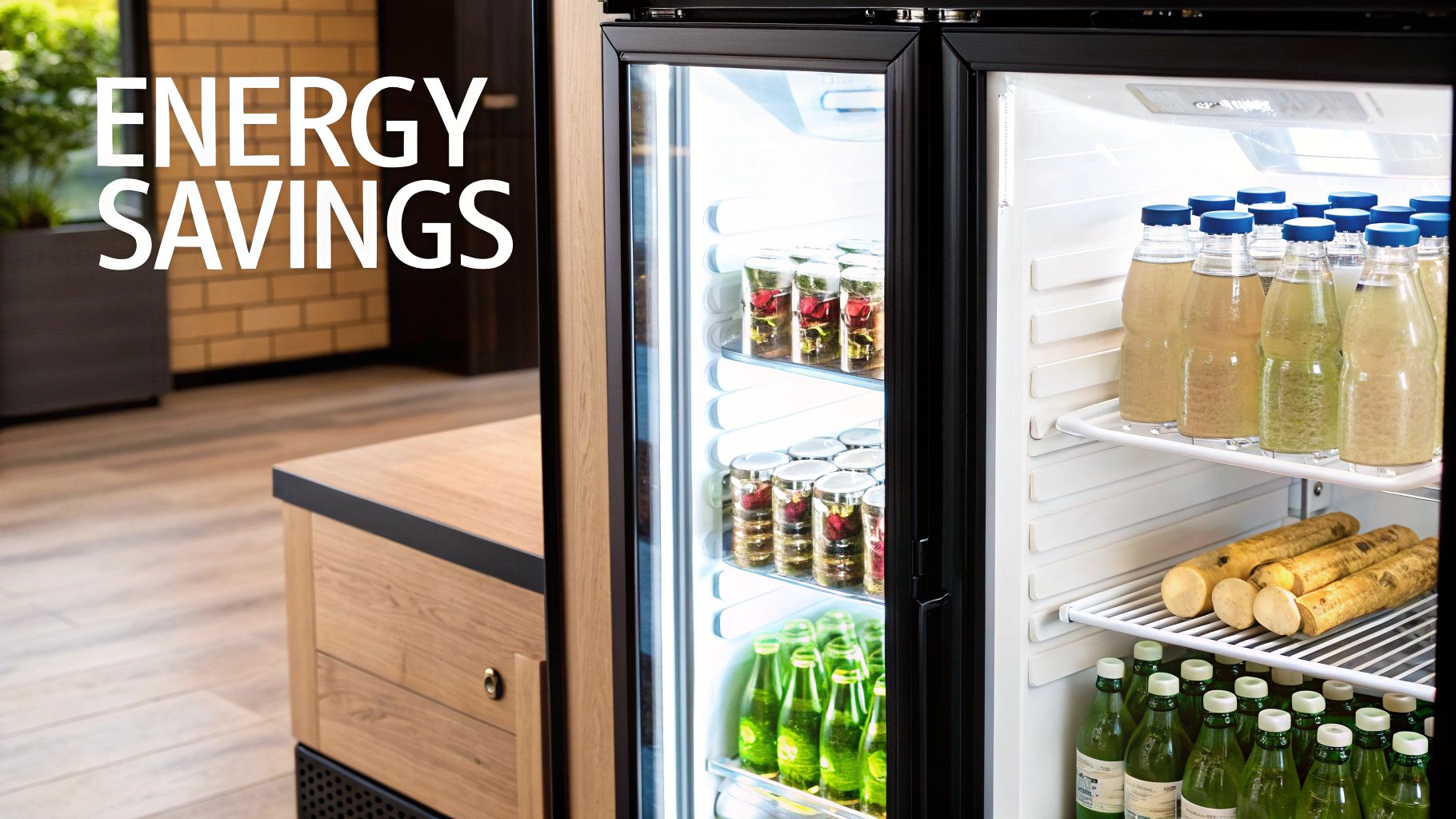
Think of temperature consistency as your first line of defense against spoiled inventory and food safety nightmares. A solid merchandiser holds its temperature steady, even when you're slammed and the doors are constantly opening. That reliability isn't a "nice-to-have"; it's essential for any serious food business.
This push for quality is making a big impact. The market for glass door fridges is growing because of smart upgrades like better controls and serious energy-saving tech. A modern unit can slash power use by 40%, and features like low-emissivity glass and LED lighting can even boost product shelf life by 15%. That's less food waste and more money in your pocket. You can read the full research about these market innovations to see where the industry is headed.
Cracking the Code on Energy Efficiency
That little ENERGY STAR logo on a commercial fridge is a big deal. It's basically a promise that your monthly power bill is going to be lower. Certified models are built to do the same heavy lifting while sipping electricity, which adds up to huge savings over the years.
Just look at the lighting. Old-school coolers used fluorescent bulbs that actually generated heat, making the compressor work overtime just to keep up. Now, bright, cool-running LED lighting is the standard. It not only makes your drinks and snacks pop but also lowers the internal heat, directly cutting down on energy costs.
To see how different models compare on this front, check out our guide on the best commercial refrigerators. It’s a great resource for weighing the features and finding the most efficient unit for your operation.
Features That Protect Your Investment
Beyond the utility bill, a few key design choices make all the difference in how long your merchandiser will last and how easy it is to own. These are the little things that prevent massive headaches down the road.
- Self-Closing Doors: Every time a door is left cracked open, cold air rushes out and your compressor has to work like crazy to catch up. Self-closing doors with a tight magnetic seal stop this from happening, saving energy and preventing unnecessary strain on the system.
- Built to Last: A busy commercial kitchen is no place for flimsy equipment. Look for a heavy-duty, powder-coated steel frame that can resist the dents, chips, and corrosion that happen in a fast-paced environment.
- Low-Maintenance Design: Smart features like an epoxy-coated evaporator coil (to fight rust) and a bottom-mounted compressor make life so much easier. When it's time for cleaning or a service call, you'll be glad everything is easy to get to.
It's all about the total cost of ownership. The sticker price is just the beginning. The real value of a quality merchandiser shows up in lower energy bills, less spoiled product, and fewer maintenance headaches.
At the end of the day, picking a glass door merchandiser refrigerator is a strategic move. When you focus on these core features, you're not just buying a box to keep things cold—you're making an investment in the efficiency and profitability of your entire business.
Exploring Advanced Features That Simplify Operations
Modern merchandisers do a lot more than just keep your products cold. Today's units come loaded with smart features built to make your daily workflow smoother, protect your inventory, and generally make your life easier. These aren't just little bells and whistles; they're strategic upgrades that have a real impact on your efficiency and your bottom line.
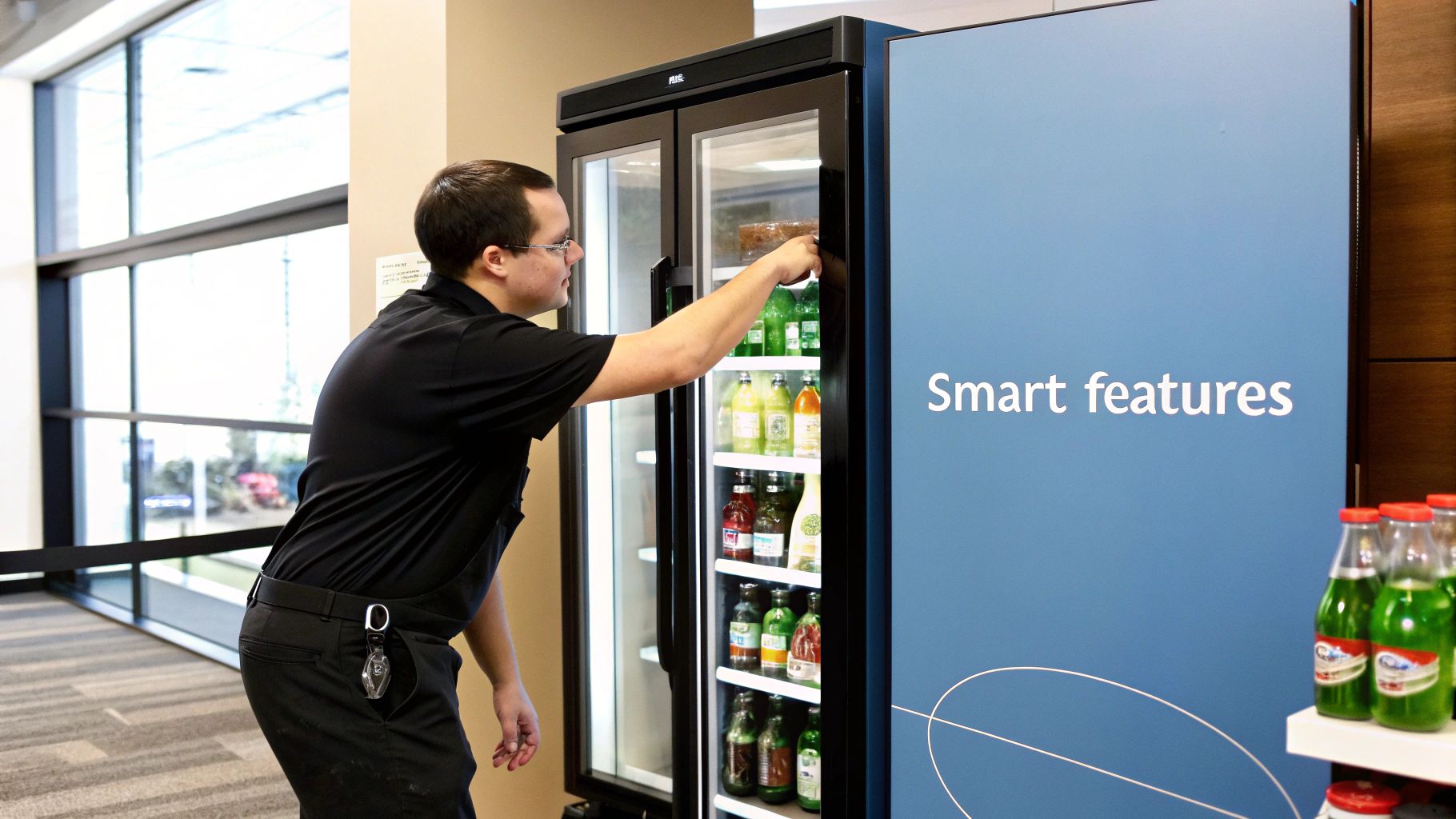
Think about the peace of mind you get from knowing your products are always held at the perfect, food-safe temperature. That’s what digital temperature controls give you. Unlike the old-school analog dials, digital displays let you set and monitor the temperature with pinpoint accuracy, right down to the degree. That precision is everything when it comes to meeting health codes and preventing costly spoilage.
Automation That Saves You Time
Another absolute game-changer is the automatic defrost cycle. Frost buildup is a constant battle for any refrigeration unit, tanking its efficiency and forcing the compressor to work overtime. An auto-defrost system takes care of this for you, regularly melting away any ice accumulation without you ever having to think about it.
This isn't just about saving labor. An automated defrost cycle ensures your glass door merchandiser refrigerator runs at peak efficiency, which translates into lower energy consumption and a longer lifespan for the unit.
This feature is pretty much standard in quality commercial equipment these days, freeing up your staff to focus on serving customers instead of chipping away at ice. To see how features like this add up, check out our deep dive into energy-efficient commercial refrigeration.
Customization and Security
The inside of a quality merchandiser is built for one thing: flexibility. Adjustable shelving is a simple but incredibly powerful feature that lets you customize the layout to fit whatever you're selling. One week you might need space for tall energy drinks, and the next you're stocking wide salad containers. No problem.
This adaptability is key for keeping your displays looking fresh and dynamic, especially when you're running seasonal promotions. It ensures you’re always making the most out of every square inch of merchandising space.
For a lot of businesses, especially those selling high-value items like craft beer or wine, security is a big deal. A few key features really help lock things down:
- Door Locks: This is a must-have for any spot that closes overnight. Door locks protect your inventory from theft after hours, which is especially important for Seattle bar equipment holding premium beverages.
- Self-Closing Doors: While this is mainly an energy-saving feature, self-closing doors also make sure your unit is always shut tight. This prevents temperature swings and stops anyone from casually grabbing something.
These advanced features all work together to create a system that’s not just a powerful sales tool but also a reliable, low-maintenance, and secure asset for your business. From the precision of digital controls to the convenience of auto-defrost, these are the details that make a true commercial-grade glass door merchandiser refrigerator a smart investment for any Seattle food or beverage operation.
Creating a Cohesive Kitchen with Integrated Equipment
Your glass door merchandiser refrigerator doesn’t work in a vacuum. Think of it as a key player on a much larger team. The best kitchens flow like a perfectly choreographed dance, where every piece of equipment works together to speed up service and cut down on wasted steps.
When you start thinking about how your merchandiser fits with your other gear, you’re no longer just buying appliances—you’re designing a high-functioning, profitable workspace.
A smart kitchen layout directly impacts your bottom line. It’s all about creating a seamless path from back-of-house prep to front-of-house sales. The goal is a space where your staff moves efficiently, restocking is a breeze, and the whole operation runs like a well-oiled machine. This big-picture view ensures your new merchandiser pays off in both sales and sanity.
This kind of strategic thinking is more important than ever. The market for these units is growing, largely because they are workhorses of efficiency. Glass door merchandisers can slash refrigeration energy use by a whopping 50-75% compared to open displays. Plus, modern features are helping kitchens cut food spoilage by 20-30%. You can dig into more of these market trends here.
Building Synergy in a Pizzeria
Picture a busy Seattle pizzeria on a Friday night. The workflow is fast, constant, and demands perfect coordination. Here, a glass door merchandiser is the final, crucial link in the chain.
The process starts with bulk ingredients in commercial freezers and refrigerators. Dough, cheese, and toppings move to the pizza prep tables, where the pies come to life. Once the pizzas hit the oven, the focus shifts to the customer. A perfectly placed glass door merchandiser stocked with sodas and local craft beers becomes an effortless upsell. The customer orders their pie, grabs a cold drink, and the transaction is done—smooth, efficient, and profitable.
A Seamless Cafe and Deli Workflow
For a bustling coffee shop or deli, that synergy is just as critical. The day kicks off with fresh ingredients pulled from a reach-in commercial refrigerator. They’re prepped and organized at a sandwich prep table, where staff assemble grab-and-go meals.
Those finished sandwiches, salads, and parfaits go straight into a customer-facing glass door merchandiser refrigerator. This unit sits alongside specialized Seattle coffee shop refrigerators holding milk for the espresso machine. The entire system is built for speed, letting baristas focus on drinks while the merchandiser passively sells your food items. It's a perfect partnership.
Smart equipment pairing isn't just about saving space; it's about saving time. When your merchandiser is logically placed near its corresponding prep station, you reduce staff movement, streamline restocking, and create a more intuitive workflow for everyone.
Back-of-house support is just as important. While the front-of-house merchandiser is driving sales, under counter refrigerators and under counter freezers can be tucked under workstations to hold backup inventory. This means your team can quickly restock popular items during a rush without a long trip to the main walk-in. Even equipment like deep fryers benefits when a merchandiser is nearby, offering drinks to customers waiting on hot food.
The Bar and Brewery Connection
In a bar, the game is all about presentation and quick access. Your primary Seattle bar equipment—the tap systems and ice wells—handles the draft pours. But a glass door merchandiser becomes your visual menu for bottled beers, ciders, and chilled wines.
Placing it where customers can see it but bartenders can easily reach it is the sweet spot. It showcases your premium selections, tempting patrons to try something new while letting your staff serve them in seconds. The merchandiser essentially becomes an extension of your back bar, working with every other piece of equipment to boost sales.
Smart Equipment Pairings for Your Business
Thinking about how your glass door merchandiser will interact with other key appliances is the secret to a smooth operation. It's not just about having the right tools; it's about making them work together.
Here’s a quick look at how different businesses can create a powerful workflow by pairing their merchandiser with the right equipment:
| Business Type | Primary Paired Equipment | Workflow Benefit |
|---|---|---|
| Pizzeria | Pizza Prep Table & Ovens | Creates a direct line from pizza making to offering grab-and-go drinks, streamlining the entire order process. |
| Café / Deli | Sandwich Prep Table | Allows for immediate transfer of finished grab-and-go items to the display, keeping products fresh and visible. |
| Bar / Brewery | Bar Coolers & Tap Systems | Showcases premium bottled/canned options to complement draft selections, increasing visibility and sales. |
| Convenience Store | Point-of-Sale (POS) System | Positions drinks and snacks for easy impulse buys right at checkout, maximizing revenue per customer. |
| Food Truck | Undercounter Refrigerator | The merchandiser handles customer sales, while the undercounter unit provides compact, accessible backup stock. |
By planning these pairings ahead of time, you create an environment where your staff can work faster and more comfortably, which ultimately leads to happier customers and a healthier bottom line.
Alright, you’ve done the research. You know the benefits, you've figured out the features you need, and you’ve even picked the perfect spot for your new glass door merchandiser refrigerator. Now it's time to nail down the final details and make it happen.
This is your last walkthrough before you commit. Getting these practical details right—from the plug on the wall to the path it takes to get there—is what separates a smooth installation from a day of headaches. Let’s make sure your new unit is ready to start making you money from the moment it arrives.
The Pre-Purchase Verification
Before you pull the trigger, run through this quick but critical checklist. Think of it as measuring twice and cutting once. A few minutes now can save you a world of trouble later.
- Confirm Electrical Requirements: Take a close look at the unit’s spec sheet. Does it need a standard 115V outlet, or something heavier duty? Make sure you have the right dedicated circuit ready and waiting. The last thing you want is a tripped breaker during a lunch rush.
- Measure Delivery Paths Meticulously: Don’t just measure the final resting spot. Walk the entire delivery route with a tape measure. Every doorway, hallway, and tight corner counts. Remember to account for the delivery team’s dollies and equipment, not just the unit’s dimensions.
- Review Warranty and Service Agreements: What does the warranty really cover? How long is the protection for parts, labor, and that all-important compressor? Knowing these details up front gives you real peace of mind for the long haul.
Partnering with a Knowledgeable Supplier
Buying the right cooler is one thing; buying it from the right people is another. A supplier like Seattle Restaurant Equipment is more than just a warehouse. We’re a local partner who understands the grind and can help you turn a simple purchase into a smart business move.
This is huge when you're dealing with local regulations. An experienced partner can help make sure your new glass door merchandiser refrigerator—and all your other gear, from commercial freezers to sandwich prep tables—is up to snuff with Seattle and Washington state health codes.
Partnering with a supplier who knows your local market is a real advantage. They can give you personalized advice, suggest equipment that actually fits your needs—whether you're a coffee shop, bar, or pizzeria—and make sure the delivery and installation go off without a hitch.
When you work with a team that lives and breathes the Seattle food scene, you get more than just equipment. You get a resource. We can help with everything from finding the right under counter refrigerators, pizza prep tables, and deep fryers to planning a whole new kitchen layout.
With this checklist in hand and the right support behind you, you can invest with confidence. You’re not just buying a fridge; you’re making a strategic decision that will serve your business well for years to come.
A Few Common Questions
When you're looking to buy a new glass door merchandiser refrigerator, a few questions always come up. Here are some quick, no-nonsense answers to the things we hear most from Seattle business owners. We want you to feel totally confident before you make a decision.
What’s the Right Temperature for My Merchandiser?
The perfect temperature setting really comes down to what you’re selling.
For drinks like sodas, kombucha, and craft beers, you’ll want to set it between 35-40°F (1.6-4.4°C). This range keeps them ice-cold and ready to grab, which is exactly what you need for Seattle bar equipment or a busy café.
But if you're stocking pre-packaged foods like sandwiches, salads, or grab-and-go meals, food safety is your number one job. Health codes demand that you keep these items at or below 40°F (4.4°C). Thankfully, modern digital thermostats make it simple to lock in that exact temperature and keep it there.
How Much Energy Does a Glass Door Unit Really Save?
A glass door merchandiser is worlds more efficient than an open-air cooler, and it’s not even close. The secret is in the sealed doors—they stop all that precious cold air from spilling out into your store. This simple design trick means the compressor doesn't have to constantly kick on just to keep things cool.
On average, a good glass door model will use 50-75% less energy than a comparable open-air unit. If you really want to slash your utility bills, look for an ENERGY STAR certified model. It’s a smart investment for any business owner keeping an eye on the bottom line.
Can I Just Use a Residential Fridge for My Business?
We get this question a lot, and the answer is a hard no. It's a really bad idea to use a residential glass refrigerator in a commercial space.
Commercial-grade refrigerators, like the ones we offer at Seattle Restaurant Equipment, are built completely differently. They have powerful compressors and heavy-duty parts designed for the grind of a busy restaurant, deli, or coffee shop. They can handle doors swinging open all day long and still hold a food-safe temperature.
Using a residential model in a commercial kitchen will almost always void its warranty. More importantly, it likely won't pass your health inspection. A commercial unit isn't just an expense; it's an investment in reliability and staying compliant.
What Kind of Maintenance Does My Merchandiser Need?
A little bit of regular, simple maintenance goes a long way in keeping your merchandiser running efficiently for years. The single most important thing you can do is clean the condenser coils every month. When those coils get caked with dust, they can't breathe, forcing the unit to work way harder and burn more electricity.
Besides that, just a few quick checks will keep it in top shape. Give the glass doors and shelves a daily wipe-down to keep your products looking great. Once a week, check the door gaskets to make sure they're creating a tight seal. This stops cold air leaks and makes sure your unit is performing at its best.
Ready to get customers excited about what’s inside your cooler? Seattle Restaurant Equipment has a huge selection of commercial refrigerators, commercial freezers, and prep tables to help you build an efficient and profitable setup.