

A health inspection can feel like a high-stakes exam for any Seattle restaurant, bar, or coffee shop owner. A top score is not just about avoiding fines; it's about protecting your customers, your reputation, and ultimately, your business's longevity. The key to success isn't frantic, last-minute cleaning, but a consistent, proactive approach to food safety embedded in your daily operations. This comprehensive restaurant health inspection checklist is designed specifically for Washington operators, breaking down the 10 most critical areas inspectors scrutinize with a fine-toothed comb.
We will provide actionable steps, detail common pitfalls to avoid, and reveal how having the right tools is your first line of defense. Proper compliance starts with reliable equipment, from high-performance commercial refrigerators and commercial freezers that hold consistent temperatures to efficient sandwich prep tables that streamline safe food handling. Whether you are running a bustling pizzeria with dedicated pizza prep tables or a high-volume bar needing dependable Seattle bar equipment, the right gear simplifies adherence to health codes.
This guide moves beyond theory. It offers a practical framework for building a compliant, safe, and successful kitchen. We will cover everything from temperature control and pest prevention to employee hygiene and proper documentation. Let's dive into the details that make the difference between simply passing and achieving a perfect score on your next inspection, ensuring your establishment is known for both its quality and its commitment to safety.
1. Food Storage Temperature Control & Monitoring
Maintaining precise temperature control is a non-negotiable cornerstone of any successful restaurant health inspection checklist. This foundational practice involves verifying that all refrigeration and freezing equipment consistently maintains temperatures safe for food storage, thereby preventing the growth of harmful bacteria that cause foodborne illness. For Washington operators, this means refrigerators must hold at or below 41°F, and freezers must be at or below 0°F.
Proper temperature management goes beyond just setting the dial; it requires a systematic approach to monitoring, documentation, and utilizing the right equipment. Seattle pizzerias, for example, rely on specialized pizza prep tables with integrated refrigeration to keep dough and toppings safely chilled during service. Similarly, a local coffee shop's success depends on reliable Seattle coffee shop refrigerators to keep dairy products safe and fresh.
How to Verify and Implement
Active temperature control is demonstrated through consistent monitoring and documentation. Health inspectors need to see proof that you are diligent, not just compliant on the day of their visit.
- Daily Temperature Logs: Create a log sheet for every commercial refrigerator and commercial freezer. Assign staff to record temperatures at the beginning and end of each shift. Keep these records accessible for at least 30 days.
- Calibrated Thermometers: Place a calibrated, NSF-certified thermometer inside each unit. This provides an accurate, at-a-glance reading independent of the unit's built-in thermostat.
- Strategic Placement: Install thermometers in the warmest part of the unit, typically near the door, to ensure the entire contents remain safely chilled.
Common Violations and Fixes
A frequent violation is equipment failing to hold temperature, often due to being overloaded or poorly maintained. This restricts airflow and forces the compressor to work harder, leading to temperature fluctuations.
Pro Tip: Schedule quarterly professional servicing for all refrigeration equipment. This preventative maintenance calibrates thermostats, cleans coils, and catches potential failures before they lead to a critical violation and costly food loss.
To avoid this, invest in appropriate commercial-grade equipment like commercial freezers, under counter refrigerators, or sandwich prep tables that meet your capacity needs. For a deeper dive into maintaining larger units, understanding the nuances of walk-in cooler temperature management is essential.
2. Cooking Equipment Cleanliness and Functionality
A core component of any restaurant health inspection checklist is the state of your cooking equipment. This involves ensuring that all appliances, from ranges and griddles to commercial deep fryers, are meticulously clean, free of hazardous grease buildup, and functioning correctly. Properly maintained equipment is not just about passing an inspection; it’s crucial for preventing fire hazards, ensuring food quality, and maintaining kitchen efficiency.
Well-maintained equipment demonstrates a commitment to safety and operational excellence. For instance, high-volume Seattle pizzerias that use commercial charbroilers and convection ovens rely on professional servicing to ensure consistent cooking temperatures and prevent dangerous malfunctions. Similarly, coffee shops with commercial ranges pass inspections with flying colors because their daily cleaning protocols prevent the accumulation of grease and food debris that can attract pests and pose a fire risk.
How to Verify and Implement
Proving compliance requires more than a clean surface on inspection day. Health inspectors look for established routines and documented upkeep that show a consistent, long-term commitment to equipment safety and sanitation.
- Daily Cleaning Schedules: Implement and post detailed cleaning checklists for each piece of cooking equipment, including ranges, deep fryers, and griddles. Staff should sign off after completing their assigned tasks.
- Maintenance Logs: Keep a dedicated logbook for all cooking appliances. Document every professional service visit, repair, and part replacement.
- Operational Checks: Train kitchen staff to perform daily checks to confirm that equipment like ovens and deep fryers can reach and hold their required cooking temperatures.
Common Violations and Fixes
One of the most frequent violations is excessive grease buildup on and around cooking stations, especially on fryer hoods, filters, and behind equipment. This not only creates a serious fire hazard but also indicates a lapse in daily cleaning procedures.
Pro Tip: Establish a non-negotiable, end-of-day deep clean for the entire cook line. This should include cleaning grease traps, wiping down all surfaces, and ensuring ventilation filters are clear. Make this a team effort to ensure it’s done thoroughly and efficiently every single night.
To prevent this, ensure your team has the right tools and training. For specialized equipment like deep fryers, a structured approach is essential. For comprehensive guidance, review the steps on how to clean a commercial deep fryer to keep your equipment compliant and safe.
3. Hand Washing Station Accessibility and Supplies
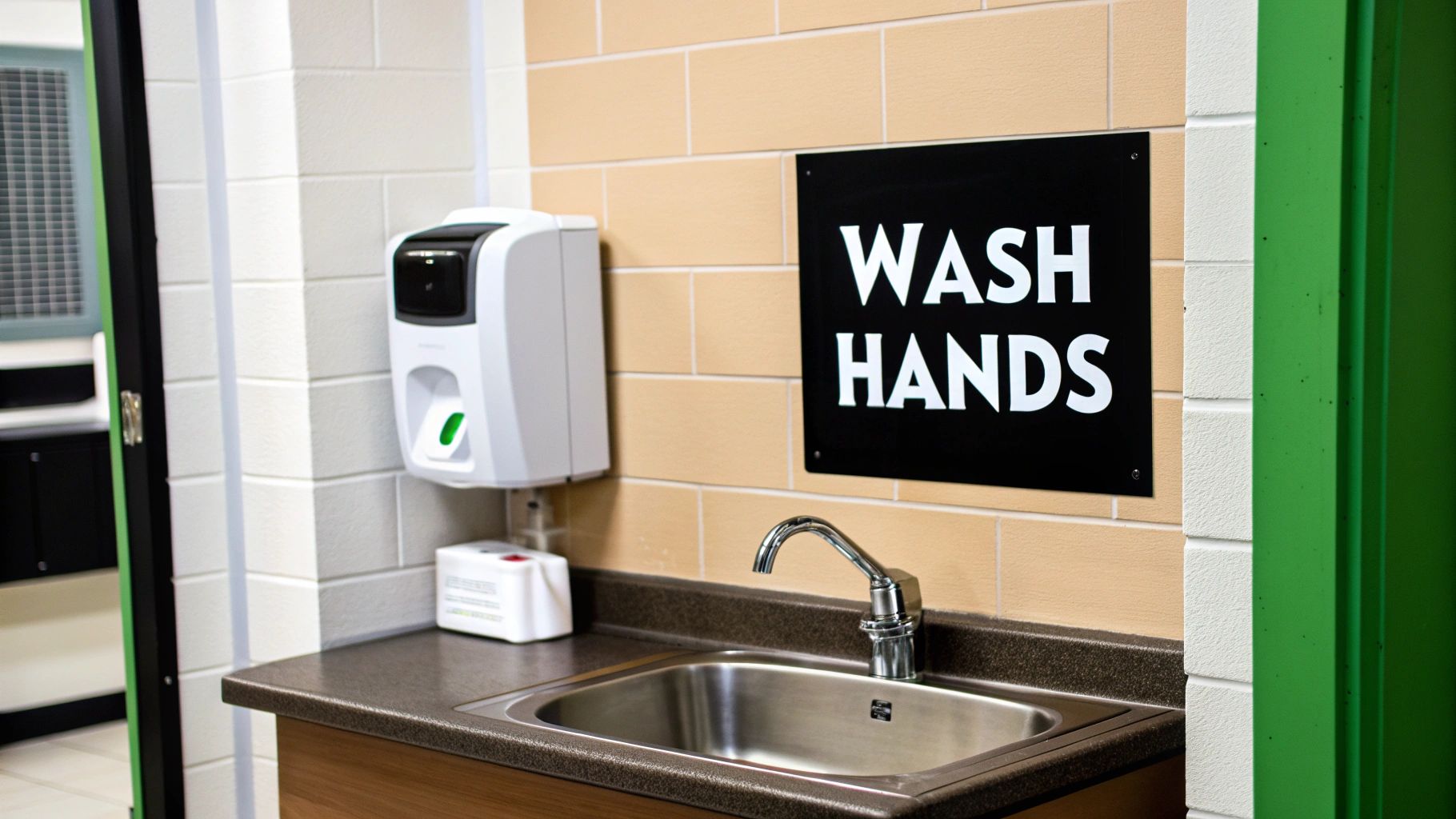
Properly equipped and accessible hand washing stations are a critical control point in any restaurant health inspection checklist, acting as the first line of defense against cross-contamination. This fundamental requirement ensures that every employee has the means to wash their hands effectively between tasks, especially after handling raw food or before touching ready-to-eat items. In Washington, this means each station must provide hot (at least 100°F) and cold running water, soap, and an approved method for hand drying, like single-use paper towels.
These facilities must be dedicated solely to hand washing, never used for dumping liquids or washing utensils. The strategic placement of these stations is just as important as their contents. Seattle food trucks master this by integrating compact, self-contained hand washing units that meet mobile kitchen regulations, while commissary kitchens often establish dedicated, clearly marked hand washing zones for each distinct prep area to maintain strict hygiene protocols.
How to Verify and Implement
An inspector will not only check for the presence of hand washing stations but will also observe their use and accessibility. Proactive verification involves making compliance effortless for your staff.
- Routine Supply Checks: Assign a team member to check and restock soap and paper towels at the start, middle, and end of every shift.
- Temperature Verification: Use a calibrated thermometer to test the hot water temperature at each sink weekly, ensuring it reaches the required 100°F. Log these checks.
- Clear Signage: Post clear, simple "Employees Must Wash Hands" signs at every station. Using floor tape to create a designated "hand washing only" zone can further reinforce its purpose.
Common Violations and Fixes
One of the most frequent violations is a blocked or inaccessible hand washing sink. Staff might place dirty dishes, boxes, or even small equipment like under counter freezers in front of the sink, rendering it unusable and creating an immediate health hazard.
Pro Tip: Consider upgrading to touchless fixtures, including automatic soap dispensers and faucets. This small investment significantly reduces the risk of re-contaminating clean hands and demonstrates a serious commitment to hygiene that inspectors appreciate.
To ensure compliance, train staff that hand washing sinks are sacred spaces. For kitchens with limited space, a dedicated stainless steel hand sink is a non-negotiable piece of equipment. Integrating these units seamlessly into the workflow, away from food prep surfaces, is key to preventing violations and promoting a culture of food safety.
4. Pest Control and Prevention
A proactive pest control program is a critical component of any restaurant health inspection checklist, demonstrating a commitment to sanitation and public safety. This essential practice involves more than just reacting to a problem; it's about implementing a comprehensive strategy to prevent rodents, insects, and other pests from ever entering your establishment. For Washington operators, this means having verifiable, ongoing measures in place, including sealed entry points, proper waste management, and meticulous sanitation protocols.
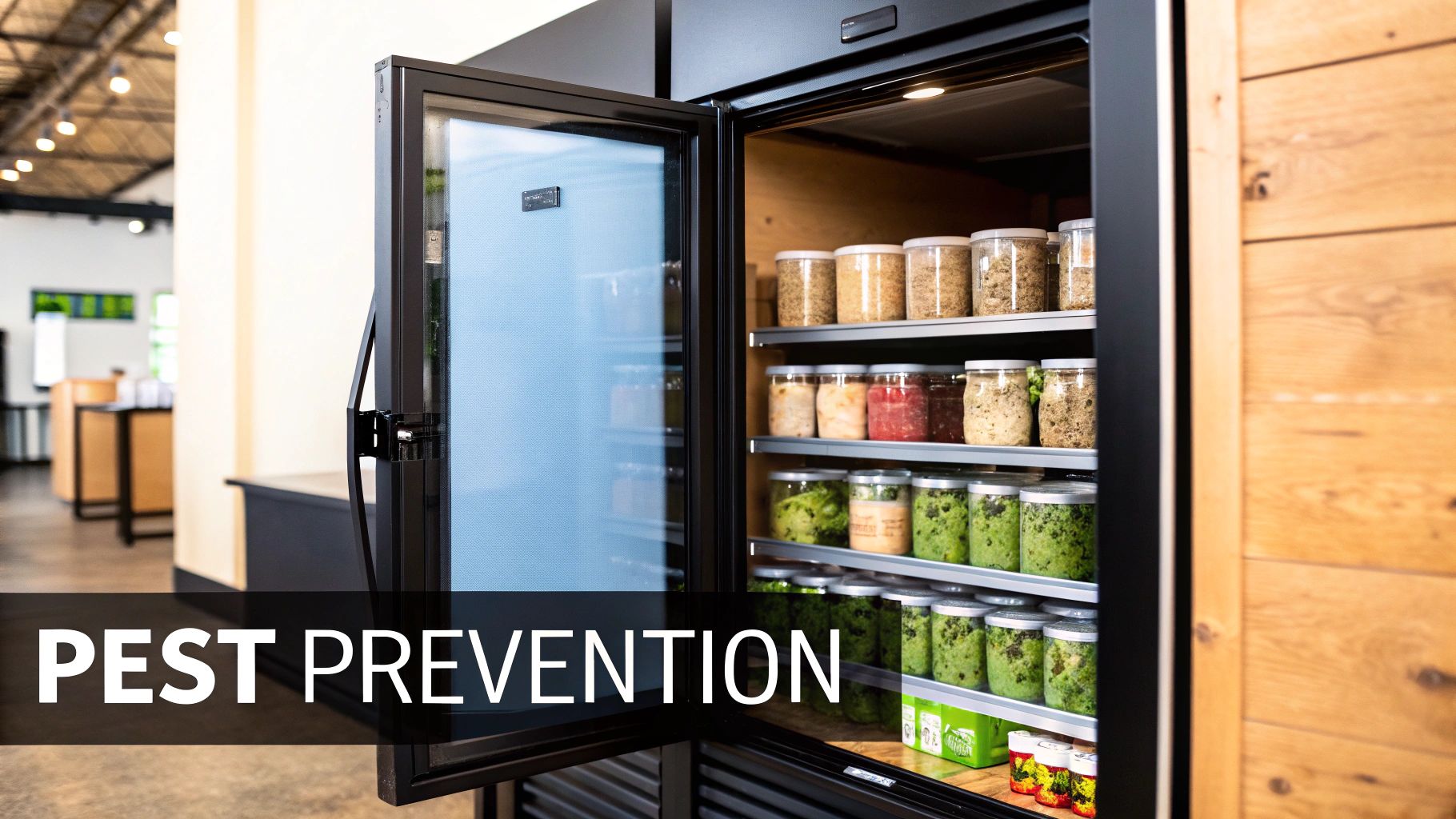
Effective pest prevention is built on denying pests the three things they need to survive: food, water, and shelter. Seattle food trucks, for example, achieve this by using tightly sealed, professional-grade food storage containers and maintaining spotless interiors. Similarly, breweries and bars combat common nuisances like fruit flies by implementing rigorous daily cleaning of drains and beverage service areas, often supplemented by a professional pest control service contract to address unique environmental challenges.
How to Verify and Implement
An inspector will look for physical evidence of pest activity and documentation of your preventative efforts. A clean, well-maintained facility with clear records is your best defense against a pest-related violation.
- Professional Pest Control Contract: Engage a licensed pest control operator for regular service. Keep their reports, service logs, and a list of all chemicals used on-site and easily accessible.
- Structural Integrity Checks: Regularly inspect the building's exterior and interior for gaps. Seal any openings larger than a ¼-inch around pipes, windows, and vents. Install and maintain tight-fitting door sweeps on all exterior doors.
- Sanitation Schedules: Implement and document daily and weekly cleaning tasks that target pest-prone areas, such as under heavy equipment, in storage closets, and around waste disposal areas.
Common Violations and Fixes
One of the most frequent violations is evidence of pests, like droppings or gnaw marks, found in food storage areas. This often stems from improper food storage and gaps in the building’s physical barriers.
Pro Tip: Invest in food storage solutions designed for pest prevention. Using NSF-certified, rodent-proof containers and keeping all dry goods on shelves at least six inches off the floor and away from walls makes it harder for pests to access food sources and easier for staff to clean.
To avoid this, ensure your kitchen is equipped with proper storage. Utilizing equipment like under counter refrigerators and under counter freezers with solid, well-sealed doors can protect ingredients. Storing bulk items in sealed containers within a commercial refrigerator or freezer further denies pests a potential food source, reinforcing your proactive prevention strategy.
5. Food Handler Certification and Training
Proper employee training and certification are critical components of a comprehensive restaurant health inspection checklist, acting as the human firewall against foodborne illness. This point verifies that all food handling staff possess a valid Washington State Food Worker Card and that at least one Certified Food Protection Manager (CFPM) is on duty during all hours of operation. Health inspectors will ask to see physical or digital copies of these certifications and may quiz staff on basic food safety knowledge.
This requirement is not just about paperwork; it ensures a foundational understanding of food safety is present throughout your team. For instance, multi-unit operators across Washington rely on standardized training programs to ensure consistency, while independent Seattle restaurants often have the owner or head chef hold the CFPM certification. Even food truck owners and ghost kitchen operators must maintain these credentials, often completing online certifications during slower periods to ensure they are always compliant and prepared.
How to Verify and Implement
Demonstrating compliance involves diligent record-keeping and a proactive approach to training that is embedded in your operational culture. Inspectors look for organized, accessible proof that your team is qualified.
- Maintain a Certification Binder: Keep a binder, either physical or digital, with a copy of every employee's Food Worker Card and the CFPM’s certificate. Organize it for quick access.
- Track Expiration Dates: Create a spreadsheet or use a scheduling app to track the expiration dates of all certifications. Set reminders to notify employees 30-60 days before their card expires.
- Incorporate into Onboarding: Make obtaining a Food Worker Card a mandatory part of the new hire process, to be completed within 14 days of employment as required by state law.
Common Violations and Fixes
A frequent violation is having an expired Food Worker Card on file or lacking a designated CFPM during a particular shift. This often happens due to employee turnover or a simple failure to track renewal dates.
Pro Tip: Schedule brief, monthly food safety "huddles" to refresh key concepts like handwashing, cross-contamination, and temperature danger zones. This reinforces formal training and keeps safety top-of-mind for the entire team.
To prevent this, make certification management a key responsibility for a manager or lead employee. Use convenient, state-approved online courses for training and recertification, and ensure your schedule always has a certified manager present. This proactive system shows an inspector your commitment to a robust food safety program.
6. Dishwashing and Sanitization Procedures
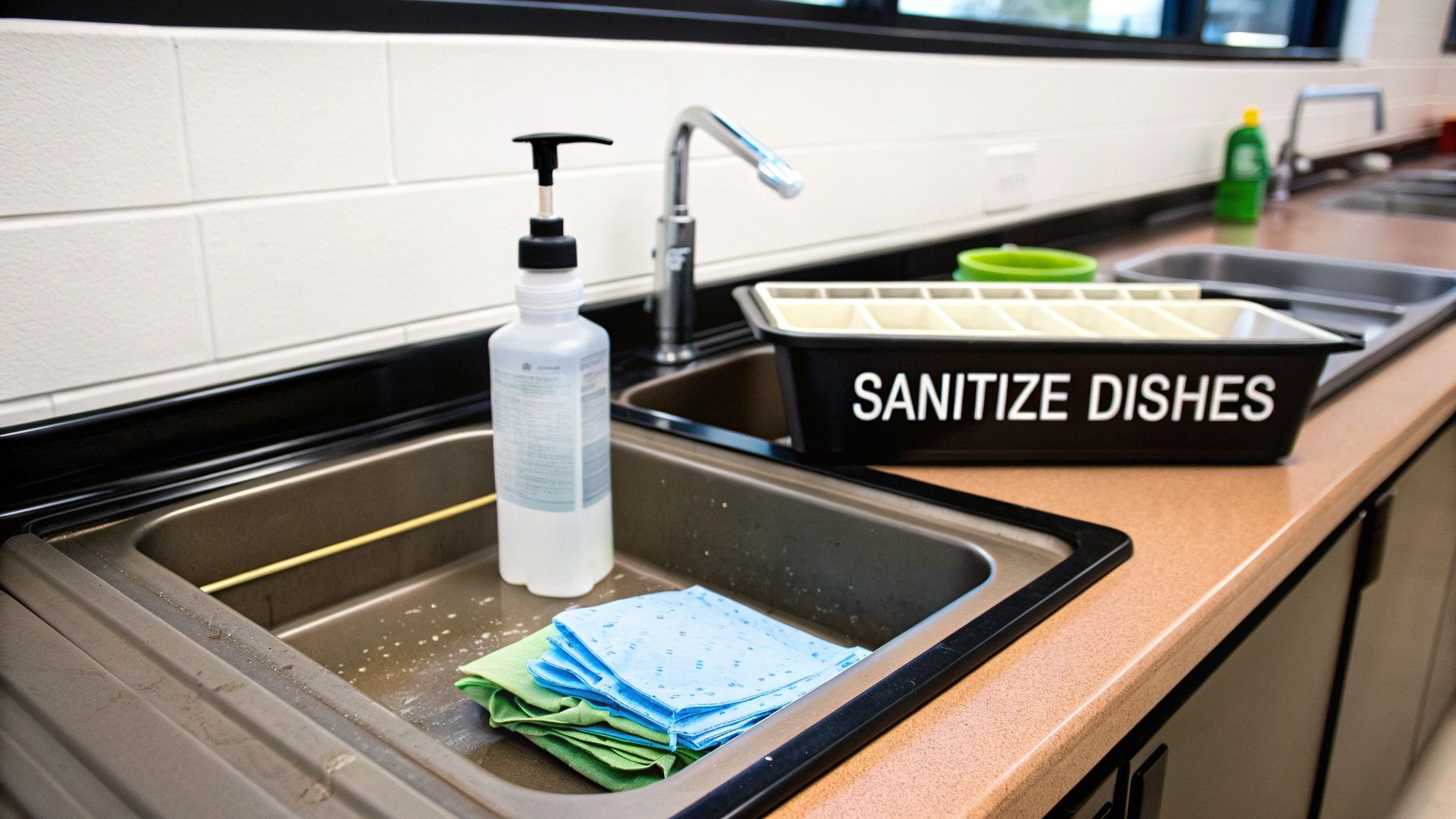
Proper dishwashing and sanitization are critical operational procedures on any restaurant health inspection checklist, ensuring that all food-contact surfaces are free from harmful pathogens. This process involves the meticulous cleaning and sanitizing of equipment and utensils, either through a manual three-compartment sink method or with a high-temperature commercial dishwasher. In Washington State, this means adhering to specific temperatures and chemical sanitizer concentrations to effectively kill bacteria.
For instance, busy Seattle delis often rely on efficient three-compartment sink setups to manage the rapid turnover of smallwares during a lunch rush, while high-volume pizzerias utilize commercial dishwashers to handle the constant flow of plates, pans, and utensils. Even mobile operations like food trucks must incorporate approved portable sink systems to remain compliant and safe.
How to Verify and Implement
An inspector will verify your procedures by observing staff, checking temperatures, and testing sanitizer concentrations. Proactive implementation involves robust training and consistent oversight.
- Master the Three-Compartment Sink: Train all staff on the correct sequence: Wash in hot, soapy water (at least 110°F), Rinse in clean water, and Sanitize in a chemical solution at the proper concentration. Post clear signage detailing these steps.
- Utilize Test Strips: Check sanitizer levels with the appropriate test strips at least three times per shift, or whenever a new solution is mixed. Document these checks.
- Air-Dry Everything: Never use towels to dry dishes, as they can reintroduce bacteria. Use commercial-grade dish racks that allow for complete air circulation.
Common Violations and Fixes
A frequent violation is incorrect sanitizer concentration, either too weak to be effective or too strong, leaving a chemical residue. Another common issue is staff skipping a step, particularly the rinse between washing and sanitizing.
Pro Tip: Invest in a high-temperature commercial dishwasher. These units use a final hot water rinse to sanitize, removing the potential for human error with chemical mixing and providing a more consistent result.
To prevent these issues, make sanitizer test strips easily accessible near every sink. Conduct regular spot checks to ensure staff follow the correct three-step process. Additionally, remember that specialized equipment also requires sanitization; for a complete guide, explore best practices for using an ice machine cleaner and sanitizer.
7. Proper Food Labeling and Dating
Proper food labeling and dating is a critical component of any restaurant health inspection checklist, acting as the primary defense against serving expired or unsafe food. This practice involves clearly marking all prepared foods, opened ingredients, and ready-to-eat items with the product name and a "use-by" or preparation date. For Washington state operators, this means any refrigerated, ready-to-eat, potentially hazardous food held for more than 24 hours must be marked with the date of preparation or opening and consumed within seven days if held at 41°F or below.
This systematic approach is essential for traceability and food safety. For instance, a bustling Seattle sandwich shop must label its sliced meats and house-made sauces daily to ensure freshness and compliance. Similarly, catering companies across the region rely on meticulous date marking for batch-prepared items, ensuring that every component served is within its safe consumption window. This discipline prevents foodborne illness and minimizes costly food waste by ensuring older products are used first.
How to Verify and Implement
Health inspectors look for consistent, clear, and accurate labeling on all applicable food items. Your system should be easy for staff to understand and execute every single time.
- Standardized Labeling System: Use a consistent format across the entire kitchen. Labels should include, at a minimum, the item name and the "use-by" date. Consider using color-coded day-of-the-week labels for quick visual identification.
- Immediate Application: Train all kitchen staff to label items immediately after preparation or opening. This prevents items from being put away without a date, which is a common oversight during busy periods.
- First-In, First-Out (FIFO): Implement and enforce the FIFO rotation method. New products are placed behind older products in all storage units, from commercial refrigerators to under counter freezers, ensuring that items with the earliest dates are used first.
Common Violations and Fixes
A frequent violation is missing or illegible date marks, often due to busy service or inadequate training. Another common issue is failing to discard food that has passed its use-by date, which poses a direct risk to public health.
Pro Tip: Post clearly visible charts near prep and storage areas that list the maximum shelf life for common items (e.g., cooked chicken: 3-4 days, house-made dressings: 5-7 days). This empowers staff to make correct labeling and disposal decisions without guesswork.
To support this process, ensure your kitchen is equipped with dedicated prep areas, like NSF-certified sandwich prep tables, that provide an organized space for both preparation and immediate labeling. Regularly auditing your stored items during daily checks is a proactive measure that keeps your inventory safe and your kitchen inspection-ready.
8. Facility Cleanliness and Maintenance
A visibly clean and well-maintained facility is a direct reflection of your commitment to food safety and a critical component of any restaurant health inspection checklist. This broad category covers everything from the floors and walls to non-food contact surfaces, ensuring the entire environment is free from grease, dirt, and potential contaminants. For Washington operators, this means demonstrating a rigorous, facility-wide cleaning protocol that prevents cross-contamination and pest harborage.
A pristine environment is achievable through systematic processes and the right equipment. Seattle breweries, for instance, must maintain immaculate taproom floors and spotless back-of-house areas to meet health standards. Similarly, food trucks operating in tight quarters rely on efficient daily cleaning routines and durable, easy-to-clean stainless steel surfaces to prevent grime buildup and ensure a safe, compliant mobile kitchen.
How to Verify and Implement
Inspectors look for evidence of a consistent, proactive cleaning schedule, not just a last-minute effort. This requires clear documentation and well-defined staff responsibilities.
- Comprehensive Cleaning Checklists: Develop daily, weekly, and monthly checklists for every area, from the dining room to the dumpster pad. Assign specific tasks to staff members for accountability.
- Maintenance Logs: Keep a detailed log of all facility repairs, such as fixing cracked floor tiles, peeling paint, or leaky faucets. This shows an inspector you are actively maintaining the physical structure.
- Proper Equipment and Chemicals: Use commercial-grade cleaning chemicals appropriate for each surface. Ensure staff are trained on correct dilution ratios and safety procedures.
Common Violations and Fixes
One of the most frequent violations is the buildup of grease and food debris under and behind cooking equipment. This is often caused by heavy, difficult-to-move appliances and inadequate cleaning protocols.
Pro Tip: Invest in commercial cooking equipment, like deep fryers and ranges, that are fitted with casters. This allows staff to easily move them for nightly or weekly deep cleaning, preventing hazardous accumulation and making sanitation effortless.
To prevent structural issues, immediately repair any damage like holes in walls or ceilings, as these can become entry points for pests. Schedule regular deep cleaning services during off-hours to tackle hard-to-reach areas and ensure your facility consistently exceeds the standards of any restaurant health inspection checklist.
9. Allergen Awareness and Cross-Contamination Prevention
Preventing allergen cross-contact is a critical component of a modern restaurant health inspection checklist, reflecting the growing importance of food safety for customers with allergies. This practice involves establishing and verifying strict procedures to keep allergenic ingredients separate from other foods throughout storage, preparation, and service. For Washington establishments, this means ensuring staff can identify the major food allergens (the Big Eight plus sesame) and know how to prevent them from contaminating other dishes.
Effective allergen management requires dedicated processes and often dedicated equipment. For example, a Seattle deli committed to customer safety might use a designated, color-coded cutting board and a separate slicer exclusively for gluten-free breads to avoid cross-contact with wheat. Similarly, a catering company serving diverse clients will maintain meticulous ingredient documentation for every dish, ensuring they can confidently answer any allergen-related inquiry and provide safe meals.
How to Verify and Implement
Health inspectors will look for evidence of a comprehensive system, not just a verbal promise. Your team must demonstrate a clear and consistent protocol for handling allergens safely from back-of-house to front-of-house.
- Dedicated Equipment & Color-Coding: Use purple, the industry-standard color for allergens, for cutting boards, knives, and tongs. Invest in a separate, dedicated under counter refrigerator or a specific, clearly labeled section in your commercial refrigerator for storing high-risk allergenic ingredients like shellfish or nuts.
- Clear Labeling and Documentation: Label all food containers with their contents and the date prepared. Maintain an accessible binder or digital file that lists every ingredient for every menu item, making it easy for staff to verify what is in a dish.
- Staff Training: Implement mandatory, regular training sessions covering the major allergens, symptoms of allergic reactions, and your restaurant's specific procedures for handling allergen-free orders. Document who has completed the training and when.
Common Violations and Fixes
A frequent violation is the reuse of utensils or surfaces without proper cleaning between tasks, such as using the same tongs for a salad with nuts and one without. Another common issue is using the same deep fryer oil for breaded shrimp and french fries, which introduces a seafood and gluten allergen to an otherwise allergen-free item.
Pro Tip: Invest in a dedicated countertop deep fryer for allergen-free orders, such as gluten-free items. This small equipment investment significantly reduces the risk of cross-contact and demonstrates a serious commitment to food safety that inspectors and customers will recognize.
To prevent these issues, create a written Standard Operating Procedure (SOP) for allergen handling. This should detail every step, from receiving an allergen-free order and notifying the kitchen, to using clean equipment and delivering the plate separately to the guest.
10. Proper Chemical Storage and Handling
Ensuring the safe storage and handling of chemicals is a critical component of any restaurant health inspection checklist. This practice involves completely separating all toxic substances, like cleaners and sanitizers, from food, packaging, and any food-contact surfaces. For Washington operators, this means chemicals must be stored in their original, clearly labeled containers, with Safety Data Sheets (SDS) readily accessible to all staff.
Proper chemical management prevents accidental contamination and protects both customers and employees from chemical exposure. A Seattle brewery, for instance, must have a dedicated, locked area for its potent sanitizers, far from the fermentation tanks and serving lines. Similarly, food trucks operating in busy areas like Pike Place Market often use compact, secured cabinets integrated under their counters or externally to keep chemicals isolated from their limited food prep space, demonstrating compliance even in tight quarters.
How to Verify and Implement
Health inspectors will look for physical separation and evidence of staff training. Proving compliance requires a clear, organized system that leaves no room for error.
- Designated Storage Areas: Establish a specific, clearly marked area exclusively for chemicals, such as a locked cabinet or a separate storage room. This area must be located away from and below any food storage or preparation surfaces.
- Accessible SDS Binder: Maintain a binder containing the Safety Data Sheet for every chemical used on-site. Ensure this binder is kept in a known, accessible location for all employees to reference in case of a spill or exposure.
- Documented Staff Training: Train all employees on correct chemical handling, dilution procedures, and emergency protocols during their initial onboarding. Keep signed records of this training in each employee's file.
Common Violations and Fixes
A frequent violation is storing a spray bottle of sanitizer on a prep table or a shelf above food items. This creates a high risk of direct chemical contamination and is an immediate red flag for inspectors.
Pro Tip: Implement a color-coded system for cleaning supplies. Use specific colored buckets, spray bottles, and cloths for different areas (e.g., red for restrooms, green for food prep areas) to prevent cross-contamination between toxic chemicals and food-safe sanitizers.
To prevent this, enforce a strict "never above food" policy. Equip your facility with dedicated janitorial closets or wall-mounted, lockable chemical storage cabinets. Investing in automated chemical dispensing systems can also minimize handling errors, ensure proper dilution, and reduce the risk of spills, a smart move for any high-volume kitchen.
10-Point Restaurant Health Inspection Comparison
| Item | Implementation 🔄 (complexity) | Resources ⚡ (requirements/efficiency) | Expected Outcomes 📊 | Ideal Use Cases 💡 | Key Advantages ⭐ |
|---|---|---|---|---|---|
| Food Storage Temperature Control & Monitoring | Moderate — procedures, daily logs, equipment maintenance | Commercial refrigeration, calibrated thermometers, staff time, possible digital logging | Maintains cold chain; reduced spoilage and foodborne risk; compliance records | Any operation with perishables; multi-unit or high-volume prep | Strong cold-chain control; waste reduction; inspection-ready |
| Cooking Equipment Cleanliness and Functionality | High — frequent cleaning, calibration, professional servicing | Labor for daily cleaning, servicing costs, replacement parts | Consistent cooking temps; lower fire and safety risks; longer equipment life | High-heat/fryer/grill operations (pizzerias, diners) | Improved safety and consistent food quality |
| Hand Washing Station Accessibility and Supplies | Low — install and maintain accessible stations | Plumbing, fixtures, soap, single-use towels or dryers, monitoring | Reduced pathogen transmission; rapid inspection compliance | All kitchens, food trucks, catering setups | High safety impact for low cost; simple to implement |
| Pest Control and Prevention | Moderate — continuous monitoring and facility sealing | Licensed pest service, sealing materials, sanitation labor | Fewer infestations; protected reputation; documented prevention | Facilities near waste/industrial areas or with large storage | Prevents contamination and costly infestations; compliance evidence |
| Food Handler Certification and Training | Moderate — scheduling, record-keeping, periodic recertification | Course fees, staff time, training materials, tracking system | Better staff practices; fewer violations; informed allergen handling | All food operations; required for manager-level oversight | Reduces illness risk; legal and inspection compliance |
| Dishwashing and Sanitization Procedures | Moderate — procedural adherence and monitoring | Commercial dishwasher or three-compartment sink, sanitizers, test strips, labor | Eliminates pathogens on food-contact surfaces; consistent sanitation | High-turnover dining, catering, food trucks with backups | Reliable sanitization; lowers cross-contamination risk |
| Proper Food Labeling and Dating | Low — consistent labeling routine | Labels, markers, training, storage charts | Reduced waste; traceability for recalls; FIFO adherence | Prep-heavy kitchens, catering, multi-day production | Simple traceability; waste control; quicker audits |
| Facility Cleanliness and Maintenance | High — ongoing daily and periodic deep cleaning, repairs | Significant labor, cleaning chemicals, maintenance budget | Fewer pest/pathogen habitats; professional environment; longer asset life | All facilities, especially high-traffic or public-facing venues | Broad risk reduction; improved employee morale and inspections |
| Allergen Awareness & Cross-Contamination Prevention | Moderate — protocols, training, possible dedicated equipment | Staff training, labeling, separate utensils/areas, communication systems | Fewer allergic incidents; legal compliance; customer trust | Menus with common allergens; high special-request volume | Protects customers; reduces liability; builds trust |
| Proper Chemical Storage and Handling | Low–Moderate — designated storage, SDS access, training | Labeled containers, SDS binders, storage cabinets, training | Prevents chemical contamination and staff injury; compliance | All kitchens using cleaners, pesticides, sanitizers | Protects food and staff; prevents accidental contamination |
From Checklist to Culture: Making Food Safety Second Nature
Navigating the complexities of a restaurant health inspection can feel like preparing for a final exam. This comprehensive restaurant health inspection checklist has provided a detailed study guide, breaking down the critical areas inspectors focus on, from precise food storage temperatures to meticulous documentation. We've explored the importance of accessible handwashing stations, the non-negotiable standards for sanitization, and the essential protocols for preventing cross-contamination. Each point, from pest control to chemical storage, represents a vital link in the chain of public health and operational excellence.
However, the ultimate goal isn't just to pass an inspection; it's to create an environment where food safety is an ingrained, automatic part of your daily operations. The true takeaway from this guide is that compliance is a byproduct of culture, not a one-time scramble. When your team understands the "why" behind each rule, the checklist transforms from a list of tasks into a shared standard of professional pride.
From Compliance to Commitment
Moving beyond simple compliance requires a strategic shift in mindset and a tangible investment in your team and tools. Think of this checklist not as a finish line, but as the foundation for building a robust food safety program. The most successful operators in Washington don't just "get ready" for inspections; they stay ready.
This proactive approach involves several key actions:
- Empower Through Training: Regular, engaging training sessions that go beyond a simple review of rules are crucial. Use real-world examples from your own kitchen to illustrate the consequences of common violations covered in this restaurant health inspection checklist.
- Lead by Example: As a manager or owner, your commitment sets the tone. When you consistently follow hygiene protocols, check temperatures, and prioritize cleanliness, your team is far more likely to do the same.
- Invest in Reliability: Outdated, malfunctioning, or difficult-to-clean equipment is a leading cause of health code violations. A commercial refrigerator that can't hold a consistent temperature or a prep table with cracked, hard-to-sanitize surfaces is a liability waiting to happen.
The Role of Reliable Equipment in Food Safety
Your kitchen equipment is the silent partner in your food safety program. It's the frontline defense against temperature danger zones, cross-contamination, and inefficient workflows that can lead to costly errors. Investing in high-quality, commercial-grade appliances isn't just an operational upgrade; it's a direct investment in your restaurant's safety, reputation, and long-term success.
For instance, a modern pizza prep table or sandwich prep table with NSF-certified cutting boards and reliable refrigeration ensures ingredients stay safe and workflows remain efficient. Similarly, high-performance deep fryers that maintain accurate oil temperatures not only produce a better product but also cook food to safe internal temperatures more consistently. For bars and coffee shops in Seattle, having dependable Seattle coffee shop refrigerators and Seattle bar equipment is essential for maintaining the integrity of dairy, syrups, and garnishes, directly impacting both safety and quality.
By turning this checklist into a living document and supporting it with the right training, leadership, and equipment, you build a resilient operation. You protect your customers, empower your staff, and create a brand synonymous with quality and trust. This commitment is what separates a good restaurant from a great one, ensuring that you're always prepared, not just for the inspector, but for every single guest who walks through your door.
Ready to build a foundation of safety and reliability in your kitchen? The right equipment makes all the difference in turning your restaurant health inspection checklist from a challenge into a daily standard, and Seattle Restaurant Equipment has the commercial-grade tools you need. Explore our extensive selection of new commercial refrigerators, prep tables, and cooking equipment to ensure your establishment is always inspection-ready at Seattle Restaurant Equipment.