

Choosing the best commercial freezer isn't about finding the one with the most features; it's about finding the right one for your business. Whether you're running a high-capacity kitchen in a bustling Seattle restaurant or need a compact undercounter for your coffee shop, the goal is the same. You need a workhorse that nails energy efficiency, reliable temperature control, and durable construction to protect your inventory—and your investment.
Here at Seattle Restaurant Equipment, we've hand-picked a selection of commercial freezers, commercial refrigerators, sandwich prep tables, and even deep fryers built to handle the non-stop demands of Washington's food service industry.
Finding Your Ideal Commercial Freezer in Washington
Let's be honest, picking out a commercial freezer is a major decision for any foodservice operator in Washington. It’s easy to get lost in spec sheets and sales pitches. This guide is here to cut through all that noise and help you find the perfect fit for your actual operation, not just a generic box off a shelf.
Think about it: the right freezer is an investment that protects thousands of dollars in inventory, keeps you on the right side of health inspectors, and directly impacts your bottom line.
Your needs are unique. A high-volume restaurant in downtown Seattle has a completely different set of challenges than a food truck starting up in Kent or a cozy Bellevue coffee shop. This decision affects everything from your kitchen's workflow to your monthly utility bills. A pizzeria, for example, might need a big chest freezer for bulk dough and a separate pizza prep table with refrigerated wells for easy access to toppings. It's all about creating a system that works.
Match the Freezer to Your Business Needs
The real key is to think bigger than just the freezer itself. You have to consider your entire equipment ecosystem. A well-planned kitchen is a symphony of moving parts, and your freezer is a crucial instrument. At Seattle Restaurant Equipment, we provide the full range of gear that must work in harmony.
- Commercial Refrigerators: These are the daily workhorses, keeping produce, dairy, and prepped ingredients fresh and ready to go.
- Commercial Freezers: Essential for long-term storage, preserving everything from bulk meats to pre-made sauces.
- Sandwich Prep Tables & Pizza Prep Tables: These specialized stations are non-negotiable for businesses that assemble food to order, combining refrigerated storage right below your workspace.
- Under Counter Freezers & Under Counter Refrigerators: Absolute lifesavers in tight spaces. They fit perfectly into Seattle bar equipment setups or beneath coffee shop counters, putting essential items right where you need them.
- Seattle Bar Equipment: From back-bar coolers to glass chillers, we outfit bars for maximum speed and efficiency.
- Seattle Coffee Shop Refrigerators: We offer everything from milk coolers to glass-door merchandisers perfect for showcasing grab-and-go items.
- Deep Fryers: While it's a hot unit, a deep fryer's location and ventilation needs can dictate where you have space left for your cold storage.
Thinking this way ensures every piece of equipment, from your main walk-in to your undercounter unit, serves a clear purpose without creating frustrating bottlenecks in your kitchen.
This isn’t just a local trend; the need for reliable cold storage is huge. The global market for commercial refrigeration was valued at USD 51.26 billion in 2025 and is expected to climb to USD 67.31 billion by 2030, growing at a steady 5.6% CAGR. What’s driving this? A massive push for energy-efficient systems—a critical factor for any business owner trying to keep operational costs in check. (You can read more about commercial refrigeration market trends if you want to dive deeper.)
This guide will walk you through everything you need to know, from the basic freezer types to the nitty-gritty of energy costs, so you can make a smart investment for your business.
To get you started, we've put together a simple chart to help you quickly see which freezer type might be the best match for your Washington-based business.
Quick Freezer Selection Guide for Washington Businesses
| Freezer Type | Best For | Key Benefit | Example Seattle Restaurant Equipment Product |
|---|---|---|---|
| Upright Freezer | Restaurants, cafes, and ghost kitchens needing organized, accessible storage. | Easy Organization: Shelves make it simple to see and grab exactly what you need, fast. | Dukers D55F 55" Two Door Reach-In Freezer |
| Chest Freezer | Pizzerias, bakeries, and businesses buying bulk ingredients like dough or meat. | Maximum Bulk Storage: Open design holds large, awkwardly shaped items with minimal energy loss. | Dukers DUCF48 48" Undercounter Freezer (as a chest-style alternative) |
| Undercounter Freezer | Bars, coffee shops, food trucks, and kitchens with limited square footage. | Space Efficiency: Fits perfectly under counters, putting frozen goods right at your fingertips. | Dukers DUCF27 27" Undercounter Freezer |
| Walk-In Freezer | High-volume restaurants, commissaries, and catering operations with large inventories. | Unmatched Capacity: Offers the most storage per square foot for extensive inventory needs. | Custom solutions available based on operational scale. |
This table is just a starting point, of course. The best choice always comes down to the unique rhythm and demands of your own kitchen.
Getting to Know the Different Types of Commercial Freezers
Picking the right commercial freezer for your Washington business is like casting a key role in your kitchen. Each type has a job it’s built for, and understanding their strengths is the first step to making your whole operation run smoother. Let's skip the jargon and think about them in terms of what they actually do in a busy kitchen.
From uprights that give you grab-and-go access to undercounter units that squeeze into tight spots, the right choice makes your kitchen flow. The wrong one? It just creates headaches and wasted steps.
This simple map breaks down the big-picture factors that should guide your decision: your business, your needs, and your budget.
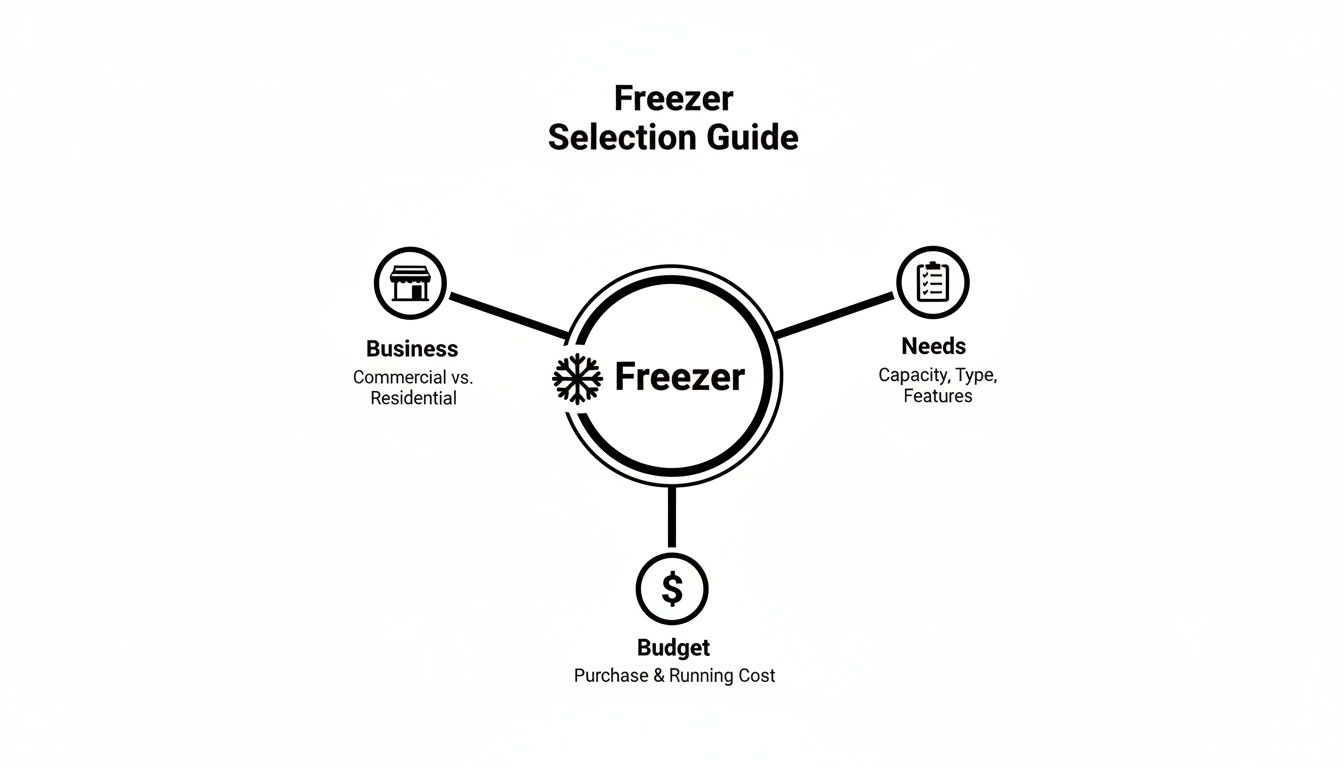
As you can see, the best freezer is always a balance of these three things. It has to fit the reality of your day-to-day work.
Upright Reach-In Freezers: The Front-Line MVP
Think of an upright reach-in freezer as the MVP of your cook line. It’s the unit your staff opens dozens of times a shift. With its vertical shelves, everything is organized, easy to see, and ready to grab in a second.
This design is a lifesaver for busy Seattle restaurants where chefs need to pull specific ingredients without digging through a frozen pile. It keeps the kitchen humming along, cutting down on delays and making service more efficient.
Chest Freezers: The Bulk Storage Powerhouse
If the upright is your line’s MVP, the chest freezer is your powerhouse for bulk, long-term storage. Its wide-open layout is perfect for stashing big, awkward items—think whole cases of meat, bags of dough for a pizzeria, or the massive supply of fries for your deep fryers.
You wouldn't put a chest freezer on the line for quick access during a dinner rush. Its strength is holding a ton of inventory efficiently. They’re also famously energy-efficient since less cold air spills out when you lift the lid.
Key Takeaway: The job dictates the design. Upright freezers are built for speed and organization during service. Chest freezers are built for maximum capacity and energy savings for your backup inventory.
Undercounter Freezers: The Space-Saving Specialist
In a kitchen where every single inch is prime real estate, the undercounter freezer is the ultimate specialist. It's like having a mini-warehouse tucked right under your main prep station, whether that's a sandwich prep table or a pizza prep table. This is where you keep the high-turnover items you need for immediate assembly.
These units are absolutely vital for a smooth workflow in tight spots. They're a must-have in any Seattle bar equipment setup for storing frozen garnishes and specialty ice. For Seattle coffee shop refrigerators, they're perfect for smoothie packs or frozen pastries. An under counter freezer or under counter refrigerator keeps your most-used ingredients right at your fingertips, saving countless trips across the kitchen.
Walk-In Freezers: The Central Inventory Bank
For bigger operations, the walk-in freezer is the central bank for your entire food inventory. It’s more than an appliance; it's a core piece of your kitchen's infrastructure, designed to hold a massive amount of product safely.
Commissaries, large-scale caterers, and high-volume restaurants depend on walk-ins to manage their inventory. This allows them to buy in bulk, which can seriously slash food costs. While it’s a bigger investment upfront, the capacity is simply unmatched by any other type.
Alright, you’ve picked out the general style of freezer that’s going to work in your kitchen. Upright, chest, undercounter… that’s the easy part. Now it’s time to really look under the hood, because the spec sheet is where a freezer goes from being just a cold box to a reliable, money-saving workhorse for your business.
Reading through technical specs can feel a bit like trying to read another language, but these details are what separate a solid investment from an energy-guzzling headache. It’s about matching the right tool to the right job. You wouldn't use a tiny paring knife to butcher a side of beef, right? Same idea here. Each feature, from its capacity to its insulation, plays a huge role in your daily grind and, ultimately, your bottom line.
Let's cut through the jargon. We'll break down the key performance specs so you can look at any model from Seattle Restaurant Equipment and know exactly what you’re getting.
Capacity: Usable Space vs. Advertised Cubic Feet
The first number you’ll always see is capacity, measured in cubic feet. It gives you a ballpark idea of the size, but the number that really matters is the usable space. Don't get fooled by a big number on paper; internal hardware like the compressor housing, bulky shelving brackets, and fans can eat up a surprising amount of that advertised volume.
Think about how you’ll be using the space. Are you storing big, awkward boxes of fries or neat, stackable containers of prep? A freezer with adjustable or even removable shelves can be a game-changer, letting you customize the layout to max out every last inch of practical storage.
Temperature Range: Holding vs. Freezing
Not all cold is the same. A freezer's temperature range tells you exactly what it's built to do. Most standard commercial freezers are designed for holding—their job is to keep already-frozen food safe and sound, usually somewhere between 0°F and -10°F. This is exactly what most restaurants need for day-to-day storage.
But if your goal is to freeze fresh product quickly, you're actually looking for a blast chiller or shock freezer. Those are specialized units that operate at insanely low temperatures to bring food down to a frozen state fast. Using a standard holding freezer to freeze a big batch of warm soup will strain the compressor to its breaking point and could put your food in the temperature danger zone.
Pro Tip: Asking a holding freezer to freeze fresh product is like asking a marathon runner to sprint the whole race. It might manage for a little while, but it's not built for that kind of stress and is headed for an early breakdown.
Defrost Type: The Battle Between Labor and Food Quality
Ice buildup is the natural enemy of any freezer, making it work harder and use more energy. How a unit handles that ice is a critical feature, and you’ve basically got two options.
- Manual Defrost: This is the simple, old-school method. Because there’s no heating element cycling on and off, the internal temperature stays rock-solid, which is way better for delicate items that are prone to freezer burn. The obvious trade-off is your time—you have to empty the unit and defrost it by hand, which means downtime for your kitchen.
- Automatic Defrost: These freezers are the definition of convenience. They use a timer and a small heating element to melt away ice buildup on their own. For most busy kitchens, this is a lifesaver. The only downside is that the brief temperature fluctuations during the defrost cycle can sometimes affect the quality of very sensitive foods.
For the vast majority of restaurants, the set-it-and-forget-it nature of an automatic defrost system is well worth it.
Insulation and Door Type: Your Keys to Efficiency
Think of your freezer’s insulation as its winter coat. The thicker and better the coat, the less energy it needs to stay cold. This is measured by its R-value—a higher R-value means better insulation against the heat of your kitchen. Better insulation means the compressor kicks on less often, which directly translates to lower electricity bills.
The type of door you choose also makes a massive difference in your energy costs.
- Solid Doors: These are the champs of insulation. They lock the cold in tight, making them the most energy-efficient pick for back-of-house storage where you don’t need to see what’s inside.
- Glass Doors: Perfect for grabbing items quickly or for merchandising drinks and desserts out front. They let staff and customers see the product without letting all the cold air out. The trade-off is that glass just isn’t as good an insulator as a solid door, so expect these units to work a bit harder.
It’s all about balancing function with efficiency. If you want to dive deeper into how these choices impact your utility costs, check out our guide on energy-efficient commercial refrigeration.
How Your Freezer Impacts Your Bottom Line
It’s easy to look at a commercial freezer as just another box in the corner of your kitchen. But that’s a mistake. A freezer is an active, 24/7 partner in your business, and it has a direct impact on your financial health. Think of it less like a one-time purchase and more like an employee who never clocks out. When you manage it right, it protects your inventory, slashes waste, and lowers your utility bills. But if you neglect it, it can become a serious drain on your profits.
Understanding the true cost of ownership completely changes how you shop for a freezer. The focus shifts from the sticker price to the total value it brings to your kitchen over its entire lifespan. That cheaper, less efficient model might save you a few bucks today, but it could easily cost you thousands more in sky-high energy bills and spoiled product down the road.
Decoding Energy Consumption and Savings
The single biggest ongoing expense for any commercial freezer is the electricity it guzzles down. For many restaurants, refrigeration is a huge chunk of the monthly power bill, which is why paying close attention to efficiency ratings is so critical for your bottom line.
One of the best indicators of efficiency is the ENERGY STAR certification. A freezer with this label isn't just a little better—it’s been verified to be significantly more energy-efficient than standard models, often by 15-20% or more. Over the freezer's life, those savings really add up, often paying back the initial price difference and then some. Investing in efficiency is a direct investment in your profitability.
Proactive Maintenance Extends Lifespan
Just like your delivery van, a commercial freezer needs regular maintenance to perform at its best and avoid a complete meltdown. An emergency repair call isn’t just expensive; it also means costly downtime and potentially thousands of dollars in inventory tossed in the trash. A simple, proactive maintenance routine is one of the smartest ways to protect your investment.
You don't need to be an HVAC expert to keep your unit humming. A few basic tasks can make all the difference in preventing the most common—and costly—breakdowns. Committing to a simple schedule protects both your equipment and your inventory.
Freezer Maintenance Checklist for Peak Performance
A little bit of prevention goes a long way. This checklist breaks down simple tasks your kitchen staff can handle to keep your freezer running efficiently, avoid surprise breakdowns, and keep your food safe.
| Frequency | Task | Why It Matters |
|---|---|---|
| Weekly | Wipe Down Door Gaskets | Prevents grime from creating micro-gaps that leak cold air, forcing the compressor to work harder. |
| Monthly | Check and Clean Condenser Coils | Dusty coils can't release heat efficiently, leading to overheating and significantly higher energy use. |
| Quarterly | Inspect for Ice Buildup | Excessive ice acts as an insulator, making the freezer less effective and signaling potential defrost system issues. |
| Annually | Professional Service Inspection | A technician can check refrigerant levels, electrical connections, and motor health to catch problems early. |
Sticking to this schedule can add years to your freezer's life and save you from the headache of a middle-of-service failure.
Temperature Monitoring for Safety and Compliance
At the end of the day, your freezer has one primary job: to keep things consistently and safely frozen. If it fails, you're not just risking food quality—you're risking a violation of Washington health codes. Food that creeps into the "temperature danger zone" can cause foodborne illness, which can lead to fines and serious damage to your reputation.
Regular temperature logging is non-negotiable for food safety. A simple log sheet next to the unit or a digital monitoring system provides a clear record of performance, proving due diligence to inspectors and alerting you to issues before they become critical.
This simple habit protects your customers and your business. It ensures that the thousands of dollars of inventory locked inside your freezer remains safe, high-quality, and ready to serve. This prevents the kind of waste that quietly eats away at your profits.
For those looking to manage costs across their entire kitchen, understanding the value of well-maintained equipment is key. You can see how this same principle applies to other gear by reading our guide on the benefits of used commercial kitchen equipment.
Putting It All Together: Freezer Scenarios in the Real World
Specs and features on a product page are one thing, but how does all this play out in a real Washington kitchen? The "best" commercial freezer isn't a single model; it's the one that solves your specific problems.
Let's walk through a few common situations you’ll recognize. Seeing the decision-making process in action is the best way to connect the dots between freezer types and your own operational headaches.
The Seattle Pizzeria Upgrade
Picture this: a bustling pizzeria in Capitol Hill is bursting at the seams. They’re constantly shuffling ingredients, trying to find space for bulk cheese, dough, and toppings. The owner is weighing two very different paths: a massive walk-in freezer or just squeezing in a couple more chest freezers. Their current setup relies on a pizza prep table for line service, but their bulk storage is a disaster.
- The Walk-In Freezer: This is the big-league solution. It solves their capacity problem for years to come and makes organization a dream with all that shelving. Buying in bulk suddenly becomes a real possibility, which could seriously lower their food costs. The catch? The hefty upfront investment and the sheer amount of space it eats up.
- The Chest Freezers: This is the quick-and-dirty fix. It's way cheaper, faster, and gets them more storage right now. But anyone who's managed a busy kitchen knows this can turn into a disorganized mess, with staff digging for ingredients during a rush. Plus, chest freezers are floor-space hogs for the storage they offer.
The Decision: After clocking how much time the crew wastes hunting through multiple chest freezers, the owner pulls the trigger on the walk-in. They see it not as an expense, but as a long-term investment in pure efficiency. It’ll pay for itself just in the time saved and smoother prep line flow. And if you're stuck with chest freezers for now, you can still make the most of them—explore our guide on how to organize a chest freezer for some pro tips.
The Tacoma Food Truck Launch
Now, let's head down to Tacoma, where a new food truck is getting ready to hit the lunch scene. Here, every single inch is precious real estate. They need rock-solid frozen storage, but it has to be compact enough to fit a tiny footprint and tough enough to handle the daily grind of travel. They also need a sandwich prep table and a small deep fryer to execute their menu.
This one’s a no-brainer: an under counter freezer. It slides right under their main prep counter, keeping everything from proteins to pre-made sauces right where they need them. The owner zeroes in on a model with a heavy-duty stainless steel exterior and a rugged compressor built for the road. Energy efficiency is also a huge deal since they'll be running off a generator all day.
For a food truck, a freezer is more than storage—it's part of the workspace. Its footprint, durability, and power draw are just as critical as how much it can hold.
The Spokane Bar Expansion
Finally, let's swing over to Spokane. A popular bar is leveling up its cocktail game and adding a small appetizer menu. This means they need a smarter cold storage setup, one that boosts efficiency behind the bar and shows off some new frozen desserts.
They land on a clever mix of Seattle bar equipment:
- Under Counter Freezers: They install two stainless steel under counter freezers right behind the bar. One holds specialty ice and frozen fruit purees for cocktails, and the other keeps glasses perfectly frosted. Drink service just got a whole lot faster.
- Glass-Door Merchandiser: A sleek, upright glass-door freezer goes out front. It’s stocked with eye-catching frozen desserts and ice cream novelties, turning basic storage into a silent salesperson.
By combining different freezer types, they built a system where every unit has a specific job, streamlining the workflow for bartenders and driving more sales out front.
Work With Seattle Restaurant Equipment for the Long Haul
Figuring out the difference between R-values and defrost cycles is a big step. It gives you the confidence to make a smart buy for your kitchen. But picking the right freezer is only half the job. The real key to long-term success is finding the right supplier—and that’s where we come in.
Think of us as your local partner, not some faceless online warehouse. We’re part of the Washington food community, so we get the challenges you face every single day.
Your Local Source for Quality and Value
We built our business on a straightforward idea: offer tough, commercial-grade equipment without the ridiculous price tag. How? We ditched the costly showrooms and high-pressure salespeople who work on commission. We pass those savings straight to you. This lets us stock a solid selection of the best commercial freezer options that are built to last.
And we’ve got everything else your kitchen needs to run smoothly, all in one place:
- Commercial Refrigerators: The workhorses of any kitchen, keeping your daily prep fresh.
- Commercial Freezers: From upright to undercounter, we have the cold storage solution you need.
- Sandwich Prep Tables & Pizza Prep Tables: Critical for keeping your assembly line moving fast.
- Seattle Bar Equipment: We’ve got the undercounter refrigerators, undercounter freezers, and back bar coolers that make the most of a tight bar space.
- Deep Fryers: High-output units that are the heart and soul of so many menus.
- Seattle Coffee Shop Refrigerators: Glass-door merchandisers for grab-and-go, plus compact units for milk and creams.
It's More Than Just a Transaction
When you buy from us, you're not just getting a piece of equipment dropped at your curb. We stand behind our gear with solid warranties and offer flexible financing options built for restaurants, bars, and food trucks.
We think getting your kitchen set up should be simple and affordable. That's why we ship fast and free across Washington. You’ll have your new freezer or refrigerator at your door in as little as 1-2 business days.
We’re committed to getting your operation up and running without the usual headaches. Whether you’re launching a new food truck in Tacoma or overhauling a busy line in Spokane, we have the gear and the know-how to help you succeed. Take a look through our online shop or give us a call for a one-on-one chat. Let's build the dependable, affordable kitchen you need.
Your Commercial Freezer Questions, Answered
Even after going through all the specs, a few questions always pop up. We get it. This is a big investment for your business. Here are some of the most common things we hear from Washington restaurateurs, with straightforward answers to help you make your final call.
What's the Real Deal: New vs. Used Commercial Freezers?
This is the big one, isn't it? A used freezer might look tempting with that lower price tag, but it's a gamble. When you buy a new unit from Seattle Restaurant Equipment, you’re not just getting a freezer; you’re getting peace of mind.
You get the full manufacturer's warranty, top-tier energy efficiency right out of the box, and the confidence that it hasn’t been abused in someone else’s kitchen. That means fewer frantic calls for repairs and lower energy bills every single month. Over time, that new freezer often ends up being the more economical choice.
How Does the Free Washington Shipping Work for Something This Big?
We’ve worked hard to make this part as painless as possible. When you order a beast of an item like a commercial freezer, commercial refrigerator, pizza prep table, or deep fryer, our free Washington shipping kicks in. We handle all the freight logistics to get it directly to your business, usually within 1-2 business days.
Our whole goal is to kill the logistical nightmares and hidden fees. The price you see is the price to get that freezer to your curb, whether you’re in downtown Seattle or out in Spokane. No surprises.
What Info Do I Need to Get Equipment Financing?
Getting set up with financing is simpler than you might think. For the most part, you'll just need the basics about your business—its legal name, address, and how long you've been operating. You’ll also provide your personal details as the owner. Our financing partners work with restaurants, food trucks, and bars all the time, so they've made the process quick and easy.
Can You Help Me Figure Out a Refrigeration Layout for a Tiny Kitchen?
Absolutely. That’s our specialty. Squeezing every bit of utility out of a tight space is a puzzle we love to solve. Whether you're trying to fit in undercounter freezers, a sandwich prep table, and a main reach-in commercial refrigerator, we can help. Our team can give you practical, real-world advice on arranging your gear for a workflow that actually works, keeping your kitchen humming instead of causing traffic jams.
Ready to get your kitchen the reliable, high-performance freezer it deserves? The team at Seattle Restaurant Equipment is here to help with personal advice and fast, free shipping anywhere in Washington.