

For any restaurant operator in Seattle, managing costs is a constant battle. This is why choosing used commercial kitchen equipment isn't just a budget move; it's a smart financial strategy. It allows you to get your hands on premium, workhorse brands for a fraction of what they’d cost new. That saved cash can then be pumped back into other vital parts of your business, like marketing, hiring great staff, or perfecting your menu.
Whether you're just starting out or a seasoned pro, going with used gear is one of the savviest ways to build a solid kitchen without breaking the bank.
Why Seattle's Top Restaurants Choose Used Equipment
In Seattle's fast-moving and tough food scene, every dollar has a job to do. Fitting out a new kitchen or upgrading an old one can be a huge expense, easily running into tens of thousands of dollars for new appliances. This is exactly why smart operators—from busy downtown spots to your favorite neighborhood coffee shop—are looking to high-quality used equipment.
This isn't about cutting corners. It’s about making smart, sustainable decisions for the health of your business.
This trend isn't just local. The worldwide market for commercial kitchen appliances was valued at around $104.47 billion in 2024 and is expected to hit nearly $173.47 billion by 2032. That massive growth shows a strong demand for pre-owned equipment as businesses try to modernize without draining their accounts. You can check out more on this growing market over at 360iResearch.com.
Access Premium Brands Without the Premium Price Tag
Picture this: your kitchen line is filled with the most reliable names in the industry. Buying used makes that a reality. Instead of settling for a lesser-known brand just to save a few bucks, you can afford the proven durability and performance of top-tier equipment.
Here at Seattle Restaurant Equipment, we stock the essential workhorses you need, making sure you get reliability where it counts. Our inventory is always changing, but we regularly carry:
- Commercial Refrigerators & Freezers: From big reach-in units to compact under counter refrigerators and under counter freezers, we have the cold storage that every kitchen needs.
- Specialized Prep Tables: We get in efficient sandwich prep tables and pizza prep tables designed to make your workflow smoother.
- Bar & Coffee Shop Essentials: Our selection often includes key Seattle bar equipment like back bar coolers and specialized Seattle coffee shop refrigerators.
- High-Performance Cooking Gear: Powerful, reliable deep fryers are a must for many menus, and we source models built to handle the dinner rush.
When you choose professionally inspected used equipment, you're doing more than just saving money upfront. You're investing in appliances that have already proven they can handle the grind of a commercial kitchen. That gives you peace of mind and a much healthier bottom line.
A Strategic Move for Financial Health
At the end of the day, opting for used equipment is a calculated business decision. The savings are huge—often 50-70% less than new—and that cash can be put to work elsewhere.
Think about it. That could be a bigger marketing budget for your grand opening, better pay to attract the best chefs, or the freedom to source higher-quality ingredients that make your dishes unforgettable. When you work with a trusted local dealer like Seattle Restaurant Equipment, you avoid the risks and get professionally inspected gear that's ready to go from day one.
Navigating Seattle's Used Equipment Marketplace
Jumping into the market for used commercial kitchen equipment can feel a bit like a treasure hunt. You'll find a mix of amazing deals and potential headaches. It's a world where a fantastic find is just as possible as a future maintenance problem. Knowing the good and the bad is the first step to making a smart investment for your Seattle restaurant.
The upsides are pretty clear. You can get your kitchen up and running faster with equipment that's available right away. Plus, there's a certain peace of mind that comes with gear that has already proven it can handle the daily grind. But you have to be realistic about the risks. You might be looking at limited or non-existent warranties and the chance of hidden problems that a quick look-over won't reveal.
This is where your choice of how you buy your equipment really matters. The experience of buying from a private seller online versus working with a professional dealer couldn't be more different.
The Reputable Dealer Advantage
Partnering with a dedicated, Seattle-based dealer like Seattle Restaurant Equipment changes everything. We take the guesswork out of buying used and turn it into a secure, reliable process. A good dealer doesn't just flip equipment; we put our time and expertise into every single piece that comes through our shop.
This is what separates a potential problem from a dependable asset. Our process covers all the bases:
- Thorough Inspection: Every item, from commercial refrigerators to deep fryers, gets a multi-point inspection from technicians who know exactly what to look for.
- Professional Cleaning and Sanitization: We make sure all equipment is cleaned from top to bottom, meeting health and safety standards so it's ready to go straight into your kitchen.
- Necessary Servicing and Repairs: If a part is worn out or not working right, we fix it or replace it. This handles issues before they can ever slow down your service.
We do all the heavy lifting of checking and servicing the equipment, so you don't have to. You get the great prices of used gear without the risks of going it alone.
Finding the Right Equipment for Your Needs
Seattle has a huge variety of restaurants, and our inventory is set up to match. We focus on stocking the workhorses that every successful kitchen needs. This means you're not just buying a piece of metal, but a real solution that fits what you're trying to do.
Choosing a reputable dealer means you're not just buying a product; you're gaining a partner. This partnership gives you access to expert advice, help after the sale, and a hand-picked selection of equipment that's already passed our quality checks.
Our selection is here to support every part of the local food scene, whether you're running a busy downtown spot, a quiet coffee shop, or a high-volume bar. We always keep key categories in stock so you can find what you need.
Core Inventory at Seattle Restaurant Equipment:
| Equipment Category | Common Models We Stock | Ideal For |
|---|---|---|
| Refrigeration | Commercial refrigerators, under counter freezers | Restaurants, cafes, ghost kitchens |
| Prep Stations | Sandwich prep tables, pizza prep tables | Delis, pizzerias, high-volume kitchens |
| Bar & Beverage | Seattle bar equipment, Seattle coffee shop refrigerators | Bars, breweries, coffee shops |
This focus lets us offer high-quality, reliable options like under counter refrigerators for tight spaces or heavy-duty commercial freezers for bulk storage. Our goal is to give you the confidence to tell a great deal from a future problem, making sure your investment is a good one for years to come.
Your Essential Pre-Purchase Inspection Checklist
Buying used commercial kitchen equipment without a game plan is like trying to nail a dinner service blindfolded. You might get lucky, but you're more likely to miss a critical step and end up with a mess. This checklist is your recipe for success, breaking down the inspection process so you can check out any piece of gear with confidence and sidestep costly surprises.
Knowing what to look for takes the mystery out of the technical stuff. It gives you the power to spot both the hidden gems and the deal-breakers, making sure the equipment you bring into your kitchen is a real asset, not a ticking time bomb. This is especially true when you're weighing a professionally vetted piece against something from a private seller.
It's a huge decision for any operator, and it boils down to two main paths you can take.
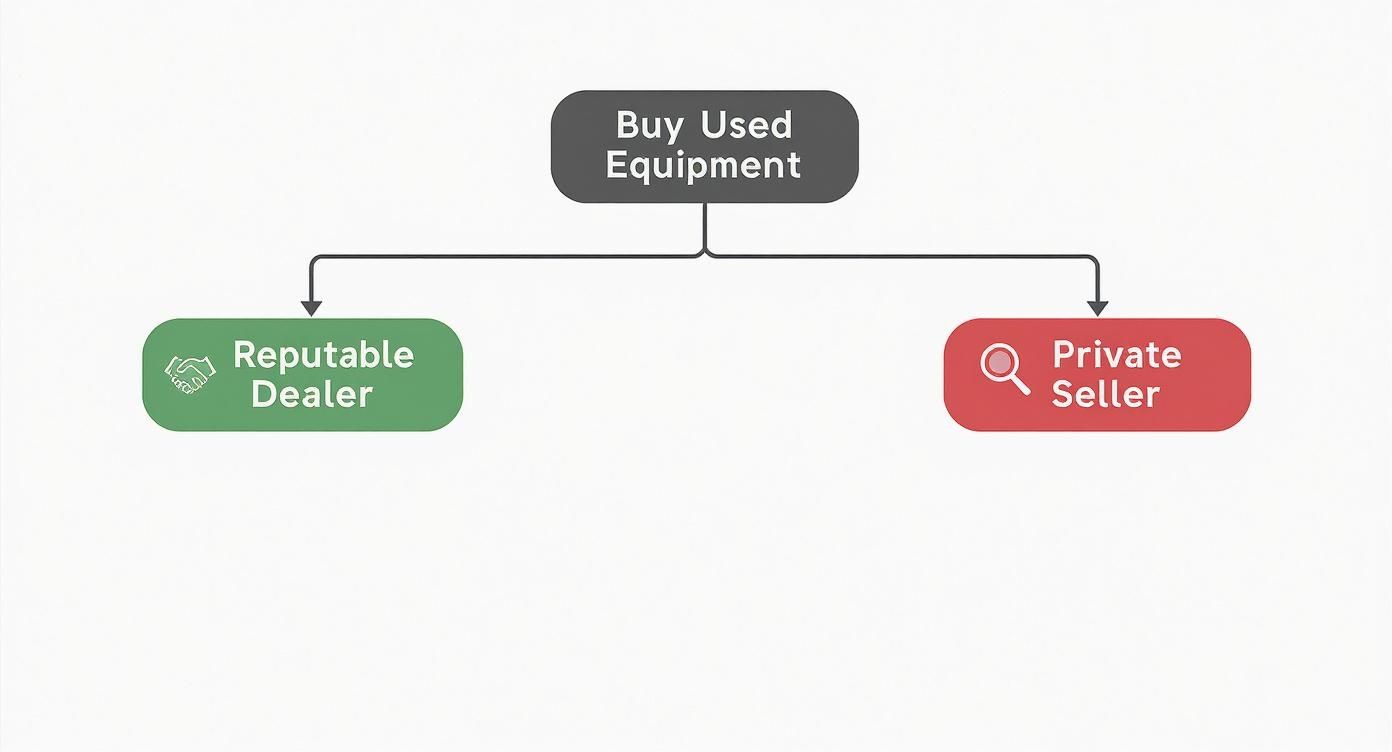
As you can see, going through a reputable dealer adds layers of inspection and assurance. A private sale, on the other hand, puts the entire burden of verification squarely on your shoulders.
How To Inspect Refrigeration And Freezers
Your cold line is the absolute core of your food safety program, which makes inspecting commercial refrigerators and commercial freezers a non-negotiable step. The process is the same whether you're looking at a big walk-in, a workhorse under counter refrigerator for a cafe, or a compact under counter freezer for your bar.
Start with the doors. Open and close them a few times. Do they swing right? Do they seal tight? Now get a good look at the gaskets—the rubber seals around the edges. They need to be flexible, not cracked, brittle, or moldy. A bad gasket bleeds cold air, which makes the compressor work overtime and jacks up your power bill.
Next, just listen. The compressor should hum along quietly, cycling on and off. If you hear any loud clanking, grinding, or rattling, walk away. Those are the sounds of an expensive, and probably imminent, failure. Finally, look for signs that it's struggling to hold temp, like way too much frost or condensation inside.
A refrigeration unit’s health is written on its surfaces. Look for rust on the coils or water pooling on the floor. These are clear signs of potential leaks or drainage problems that can lead to significant repair costs.
To make things easier on the fly, here's a quick reference guide for your inspections.
Used Equipment Inspection Quick Guide
This table breaks down the key things to look for across the most common types of used equipment you'll encounter.
| Equipment Type | Key Inspection Points | Red Flags to Watch For |
|---|---|---|
| Refrigeration/Freezers | Check door gaskets for cracks, listen to the compressor cycle, and look for rust or frost buildup. | Loud grinding noises, torn seals, excessive condensation, or water pooling. |
| Prep Tables | Inspect the cutting board surface, test the refrigeration component, and check the food wells. | Warped or deeply scored cutting boards, weak refrigeration, or inconsistent temps. |
| Deep Fryers | Examine the inside of the tank for damage, check heating elements/burners, and test all controls. | Pitting or cracks in the oil tank, bent electric elements, or faulty thermostats. |
| Ovens & Ranges | Test all burners, check oven door seals, and verify thermostat accuracy with an oven thermometer. | Uneven flame on gas burners, worn door gaskets, or significant temperature swings. |
| Dishwashers | Look for leaks around doors and hoses, check spray arms for clogs, and run a test cycle. | Water pooling underneath, mineral buildup on spray arms, or error codes. |
Keep this checklist handy on your phone or a notepad. It’s a simple way to stay focused and avoid overlooking a potentially major issue.
How To Evaluate Prep Tables And Fryers
Sandwich prep tables and pizza prep tables are the workhorses of the line, mixing cold storage with a workspace. You need to inspect both parts.
First, check out the cutting board. Is it a mess of stains, warped, or scarred with deep cuts? You can replace it, sure, but a trashed board points to some seriously heavy use. More importantly, test the refrigeration just like any other cooler—check the seals, listen to the compressor, and see if the food wells are holding a consistent temperature.
For deep fryers, it’s all about safety and performance. Focus your inspection on three key spots:
- The Tank: Look inside the oil tank. Do you see any pitting, rust, or cracks? A compromised tank is a massive fire hazard and isn't something you can just patch up.
- Heating Elements: On electric fryers, make sure the elements are straight and undamaged. For gas fryers, inspect the burners and pilot light for any corrosion or gunk blocking them up.
- Thermostat and Controls: All the knobs should turn smoothly and be easy to read. A bad thermostat leads to uneven cooking and can burn through oil like crazy.
A solid inspection is your best defense against a bad buy. For those running specialized gigs like catering, being extra thorough is even more critical. You can get more helpful tips from our comprehensive catering equipment checklist, which covers everything from the big appliances down to smallwares. Taking the time to really look over each piece will ensure your used equipment is ready to go from day one.
Finding the Right Equipment for Your Seattle Kitchen
When you’re outfitting a kitchen, picking the right used commercial kitchen equipment isn't just about finding a good deal. It's about finding the specific, reliable tools that match your menu and your crew’s workflow. For any operator in Seattle, this means tracking down workhorses that can take the heat of a busy service, day in and day out.
The goal isn't to buy any used appliance; it's to select the right one that slots perfectly into your operational puzzle. Every piece has a job, from keeping ingredients at their peak freshness to making the prep line hum. Getting this right is how you build a kitchen that’s not just functional, but profitable.
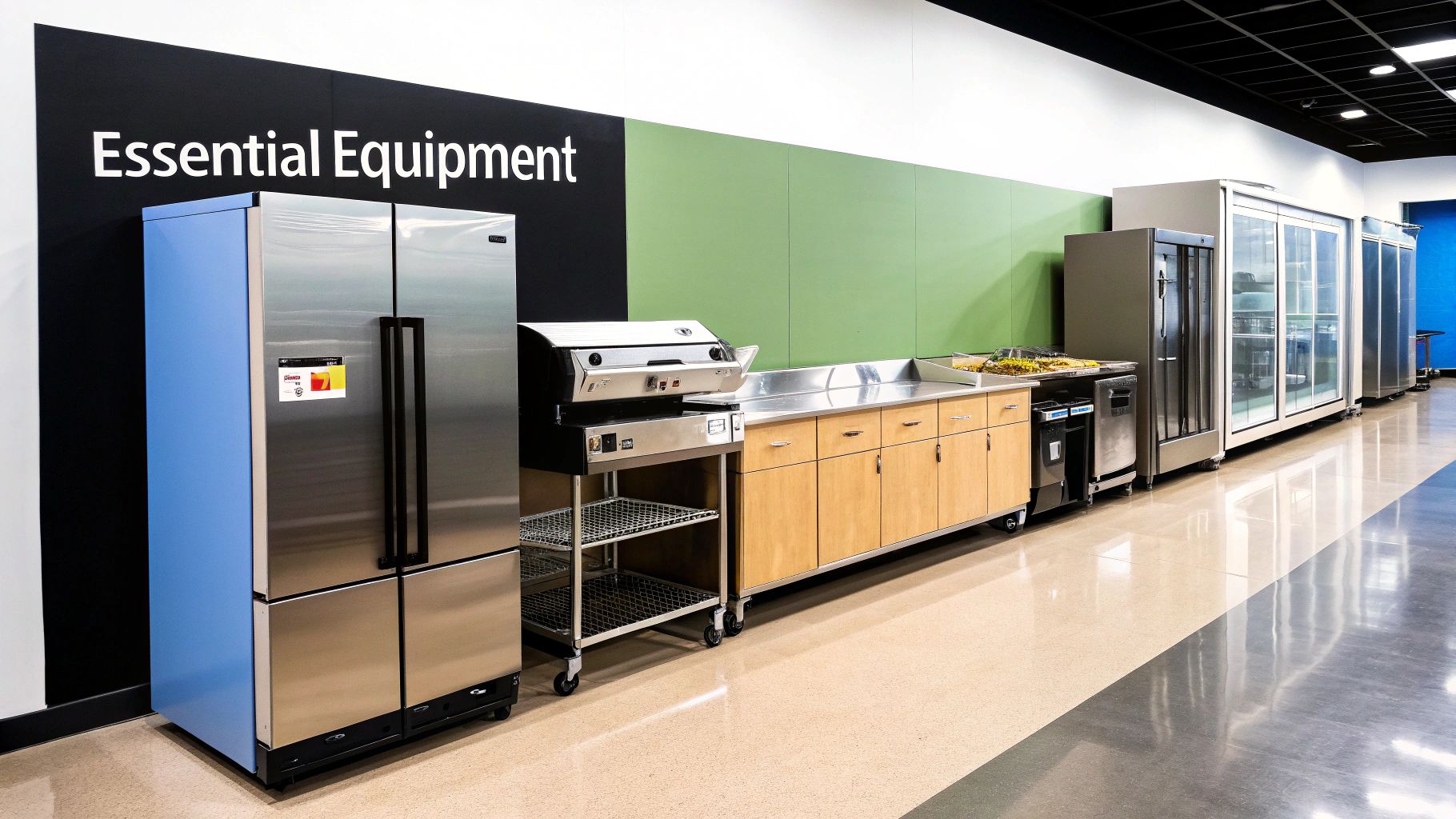
The Foundation of Freshness: Commercial Refrigeration
Let's be honest, no kitchen can survive without rock-solid cold storage. Commercial refrigerators and commercial freezers are the heart of your food safety and inventory control. These aren't just bigger versions of what you have at home—they’re built with powerful compressors and tough materials designed to handle constant use while holding precise temperatures.
For Seattle kitchens, where space is often at a premium, the choice usually comes down to footprint and function.
- Reach-In Refrigerators & Freezers: These are the standard for a reason. They keep everything from produce to prepped sauces within arm's reach of the line, making them the backbone of your day-to-day operations.
- Walk-In Coolers & Freezers: If you're running a high-volume spot, nothing beats a walk-in for bulk storage. It lets you buy in larger quantities, which usually means better pricing, without ever compromising on freshness.
- Undercounter Models: When every square foot counts, under counter refrigerators and under counter freezers are absolute game-changers. They slide right under your prep stations, keeping key ingredients exactly where they're needed.
Streamlining Your Workflow With Prep Tables
The speed of your line is directly tied to how well your prep stations are set up. This is where specialized prep tables come in. They combine refrigerated storage with a dedicated workspace, which can dramatically speed up service. They are the unsung heroes of any fast-paced kitchen.
A smart prep table cuts down on the steps a chef needs to take, leading to faster ticket times and more consistent dishes.
Think of a prep table as your command center. Everything you need is organized and chilled in one place, turning a chaotic assembly process into a smooth, repeatable system. This efficiency boost is one of the quickest ways to improve your kitchen's output.
Sandwich prep tables have cold wells for meats, cheeses, and toppings, keeping everything safe and accessible. In the same way, pizza prep tables feature a wide, refrigerated rail for sauces and toppings right above a durable surface for working with dough. Both are essential for any Seattle deli, pizzeria, or cafe that wants to serve people fast.
Specialized Equipment for Bars and Cafes
Seattle’s famous bar and coffee scene has its own set of needs. Standard kitchen appliances often just don't fit the unique rhythm of a barista or bartender. This is where targeted equipment really shines.
For example, Seattle bar equipment like back bar coolers and glass chillers are non-negotiable. They keep drinks at the perfect temperature and help merchandise your selection to customers, all while being designed for quick access during a rush.
Likewise, Seattle coffee shop refrigerators are often undercounter units for milk or glass-door merchandisers for grab-and-go items. These pieces blend performance with aesthetics to fit a front-of-house vibe. An under counter freezer might be used to store ice cream or frozen fruit for smoothies, keeping those items separate from the main kitchen stock.
The Power and Precision of Deep Fryers
For a huge number of restaurants, deep fryers are a major profit center. From perfectly crisp french fries to juicy fried chicken, a good fryer delivers the consistent results that keep people coming back. When you’re looking at used models, the key is to match the fryer’s capacity and power to what your menu demands.
Here’s what to think about:
- Gas vs. Electric: Gas fryers usually heat up and recover temperature faster, which is great for high-volume kitchens. Electric models, on the other hand, can offer more precise temperature control.
- Tank Capacity: The size of the oil tank dictates how much you can cook at once. A small cafe might get by with a countertop model, but a busy pub will need a larger floor unit with multiple baskets.
- Recovery Time: This is about how quickly the oil gets back to cooking temp after you drop in cold or frozen food. A fast recovery time is crucial for avoiding greasy, soggy food during a rush.
Ultimately, the right equipment is deeply tied to how your kitchen actually works. A smart selection of used gear not only saves you money upfront but makes your whole operation run smoother. To see how these pieces fit into the bigger picture, check out our guide on effective restaurant kitchen layout design.
Planning for Installation and Long-Term Success
Getting your hands on a great piece of used commercial kitchen equipment is a big win, but the real work starts the moment it rolls up to your door. Proper planning for installation and long-term care is what turns a good deal into a reliable, money-making asset. Skipping these steps can lead to some serious headaches, like unexpected costs or delays that can shut you down before you even get started.
Your job doesn't end at the purchase. To make sure your new gear fits in and runs smoothly, you need a solid plan for what comes next. This means double-checking your utility hookups, getting familiar with local codes, and knowing what kind of support you can expect after the sale.
Verifying Your Kitchen's Infrastructure
One of the most common—and expensive—mistakes we see is operators assuming a new appliance will just plug in and work. Commercial equipment has very specific and demanding needs, and your kitchen has to be ready to support them. Before that delivery truck even pulls up, you need to know your kitchen’s infrastructure inside and out.
Just imagine the frustration of a powerful new deep fryer arriving, only for you to find out your electrical panel can’t handle the juice. Or a commercial dishwasher showing up with no plumbing or drainage hookups nearby. These aren't just small hiccups; they can bring your entire operation to a halt for weeks.
To avoid this mess, get these details locked down first:
- Power Requirements: Does the unit need 120V, 208V, or 240V? Is it single-phase or three-phase? A mismatch can fry your new equipment or force you to call in an expensive electrician.
- Plumbing Hookups: For gear like ice machines, dishwashers, and steamers, know exactly where your water lines and drains are. Make sure you have the right connections and that they meet local codes, which often demand specific backflow prevention devices.
- Ventilation Needs: Cooking equipment like ranges, fryers, and charbroilers create a lot of heat and grease-filled vapor. They absolutely must be installed under a commercial ventilation hood that meets fire safety and air quality rules. Check your hood's capacity (CFM) to be sure it can handle the new addition.
Navigating Health Codes and After-Sale Support
Making sure your used equipment meets Seattle and King County health codes is not optional. A good dealer will have already professionally cleaned and serviced the equipment to meet these standards, but it's on you to keep it that way. This means all surfaces must be easily cleanable, safety features have to work, and the unit must hold its temperature correctly.
Beyond the initial setup, think about the long-term support for your equipment. While used gear often has limited warranties, a quality dealer provides value well after you've paid. This includes clear communication on delivery, help with installation questions, and access to technicians who actually know the equipment.
The real value of a trusted supplier isn't just in the equipment they sell, but in the partnership they offer. After-sale support provides a safety net, helping you troubleshoot issues and maximize the operational lifespan of your investment.
This kind of professional support is a key part of a growing industry. The global market for commercial cooking equipment was valued at around $13.7 billion in 2023 and is expected to hit $18.6 billion by 2034. North America continues to be a huge player in this space, driven by the constant demand for reliable kitchens. You can find more details on this growth over at News Channel Nebraska. Planning your installation right is how you tap into that professional standard.
Thinking through these final steps ensures your new equipment becomes a productive part of your kitchen, not a problem. For a deeper dive into the whole process, check out our guide on setting up a commercial kitchen for a complete blueprint.
Of course, even with all the upsides, you probably have a few questions rolling around in your head before you pull the trigger on used commercial kitchen equipment. That’s smart. Running a successful restaurant is all about making calculated decisions, and that means getting straight answers.
We get it. That’s why we’re tackling the most common questions we hear from operators right here in Seattle. Our goal is to give you the clear, no-nonsense information you need to buy with total confidence. Let's dig into the realistic lifespan of used gear, why a local dealer is your best friend, and a few simple tricks to get the most out of your purchase.
How Long Does Used Equipment Realistically Last?
This is the big one, isn't it? The honest answer is: it depends. It really comes down to three things: what kind of machine it is, the quality of the original brand, and how well the previous owner took care of it. A top-tier brand that was professionally serviced is almost always going to outlive a budget model that was pushed to its limits day in and day out.
Think of it like buying a used work truck. A well-maintained commercial refrigerator from a brand known for durability might have some miles on it, but if it was built tough and cared for, it's got a long, productive life ahead. With the right care, a lot of high-quality used equipment can be a cornerstone of your kitchen for years.
- Commercial Refrigerators & Freezers: A solid, well-kept unit can easily give you another 5-10 years of reliable cooling. The two most important things to check are the health of the compressor and the condition of the door seals.
- Deep Fryers: These things are built like tanks. A serviced gas or electric fryer can easily keep going for another 5-7 years, especially if the oil tank is in good shape.
- Prep Tables: For gear like sandwich prep tables and pizza prep tables, it's all about the refrigeration unit. If that cooling system is solid, the table itself can last a decade or more.
Why Buy From A Dealer Instead Of Online?
It's tempting to scroll through online marketplaces and get drawn in by the low prices, but those deals often come with some serious hidden risks. More often than not, you're buying "as-is," which is just a nice way of saying any inspections, deep cleaning, or surprise repairs are now your problem.
Walking into a specialized local dealer like Seattle Restaurant Equipment is a completely different ballgame. We’re your professional filter. We vet every single piece of equipment before it even thinks about hitting our showroom floor.
Buying from a dealer is about investing in peace of mind. You're not just getting a piece of equipment; you're getting an appliance that has been inspected, cleaned, and serviced by technicians who know what they're doing. This process turns a potential risk into a reliable asset for your business.
We stand behind everything we sell, from Seattle bar equipment and Seattle coffee shop refrigerators to the heavy-duty cooking lines that power the busiest kitchens. Our reputation is on the line with every sale, so we make sure our gear is ready to work from day one. You get a partner in your success, not just a transaction.
This commitment to quality is more important than ever. The commercial cooking equipment market is set to explode, projected to grow from $13.3 billion in 2025 to a whopping $26.5 billion by 2035. As more restaurants focus on efficiency and hygiene, the demand for truly reliable used options is only going to climb. You can get more insights on this trend over at FutureMarketInsights.com.
How Can I Maximize The Life Of My Used Equipment?
Alright, so you’ve got your equipment installed and running. Now what? Proactive maintenance. It's the single best thing you can do to protect your investment. A little bit of consistent care can add years to an appliance's life and save you from those frantic, expensive emergency repair calls.
Here are a few easy, practical tips to get you started:
- Keep it Clean: Regularly clean the condenser coils on your under counter refrigerators and under counter freezers. When those coils get clogged with dust and grime, the compressor has to work overtime, which leads straight to burnout.
- Follow a Schedule: Make a simple daily, weekly, and monthly cleaning checklist for everything. This is especially crucial for equipment like deep fryers, where grease buildup can become a serious problem.
- Train Your Staff: Show your team how to use and care for the equipment the right way. You'd be surprised how much of a difference simple things—like not slamming refrigerator doors—can make over time.
By keeping these points in mind, you can navigate the used equipment market with a clear head, ready to make choices that will strengthen your kitchen and your bottom line for years.
Ready to find reliable, professionally inspected equipment for your Seattle-area kitchen? At Seattle Restaurant Equipment, we offer a wide selection of top-quality used appliances to fit any need and budget.