

Imagine your next Seattle event flowing so smoothly you can actually focus on the food, not on a frantic hunt for a missing spatula. That kind of peace of mind starts with one thing: a rock-solid catering equipment checklist. This isn't just a list; it's your game plan for smart planning, accurate budgeting, and executing a flawless event.
Building Your Foundation for Flawless Catering Events
A detailed checklist is hands-down the most important tool for stopping on-site emergencies before they happen. It's the bridge between your culinary vision and the nuts-and-bolts reality of making it happen off-site. For caterers in the Seattle area, this means being ready for anything—from a corporate lunch in Bellevue to a waterfront wedding on Lake Union. The right plan helps you remember every last item, from big-ticket appliances like commercial refrigerators and deep fryers down to the smallest serving spoon.
This diagram shows how a good checklist is the backbone of every single stage of event management.
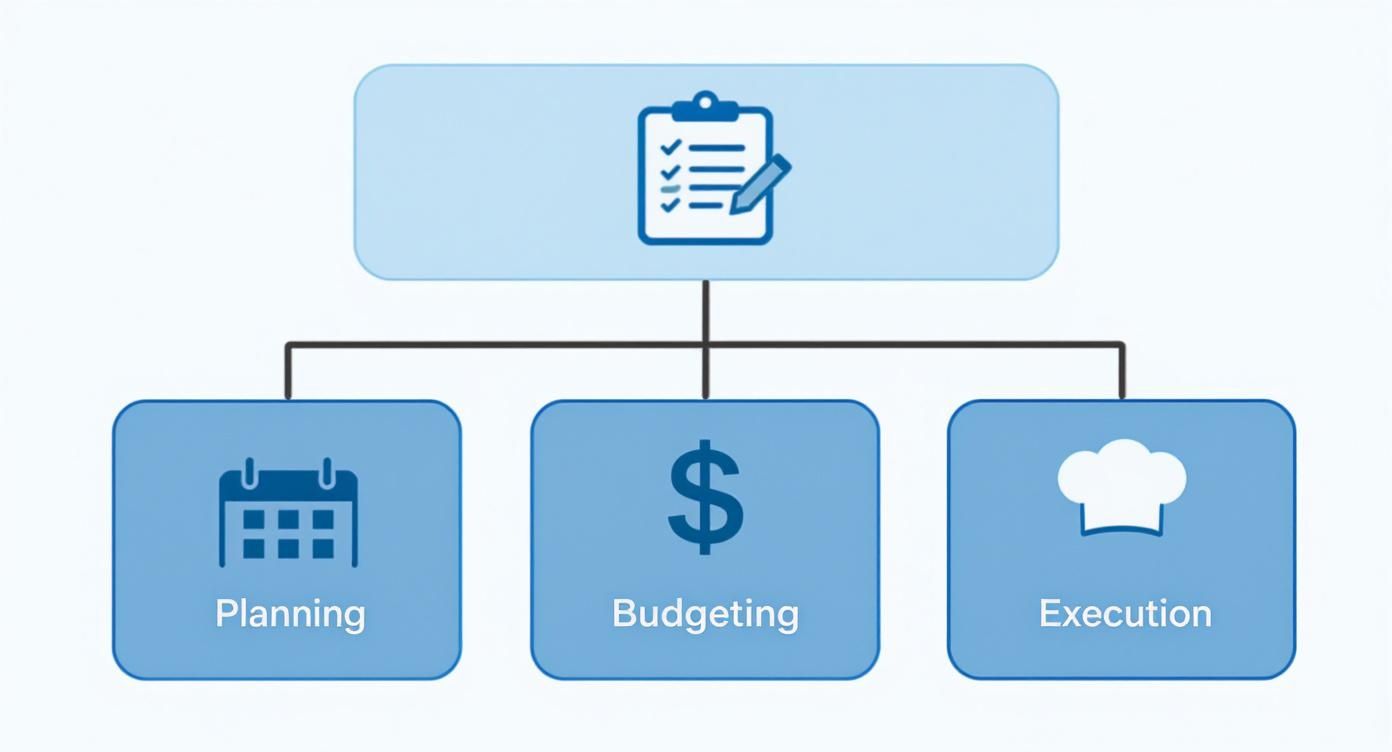
As you can see, your checklist isn't just something you whip up at the last minute. It's the core document that guides all your financial and operational moves.
Why Every Seattle Caterer Needs a System
Trying to remember everything is a recipe for disaster. A standardized checklist brings consistency and efficiency to every single event. It lets you delegate tasks with confidence, knowing every team member is working from the same playbook. This systematic approach is a game-changer, whether you're setting up a pop-up kitchen for a festival or a fancy beverage station using specialized Seattle bar equipment.
Better yet, a well-made checklist becomes a living document. After each event, you can tweak it based on what went right and what went wrong, constantly making your process smoother. This habit of refining your system is what separates the pros from the amateurs.
From Core Appliances to Mobile Workstations
Your master checklist will cover a ton of gear, but the heart of it usually comes down to temperature control and prep speed. Think about the foundational pieces you can't live without:
- Reliable Cold Storage: Commercial freezers and under counter refrigerators are non-negotiable for keeping ingredients safe and fresh, both in transit and on-site.
- Efficient Prep Stations: Specialized units like sandwich prep tables or pizza prep tables can seriously cut down your service time for specific menus.
- Specialty Equipment: Depending on the gig, you might need anything from Seattle coffee shop refrigerators for a morning conference to powerful deep fryers for an outdoor fair.
A great catering equipment checklist does more than just prevent you from forgetting things; it builds confidence. When your gear is organized and accounted for, you and your team can perform at your best, even when things get hectic.
This kind of strategic thinking is what successful operations are built on. For more on picking the right equipment, take a look at our guide on setting up a commercial kitchen, which covers a lot of the same core principles. The global catering equipment market is expected to hit USD 224.66 billion by 2031, which just goes to show how much demand there is for the kind of gear that makes modern catering possible.
Mastering the Mobile Cookline
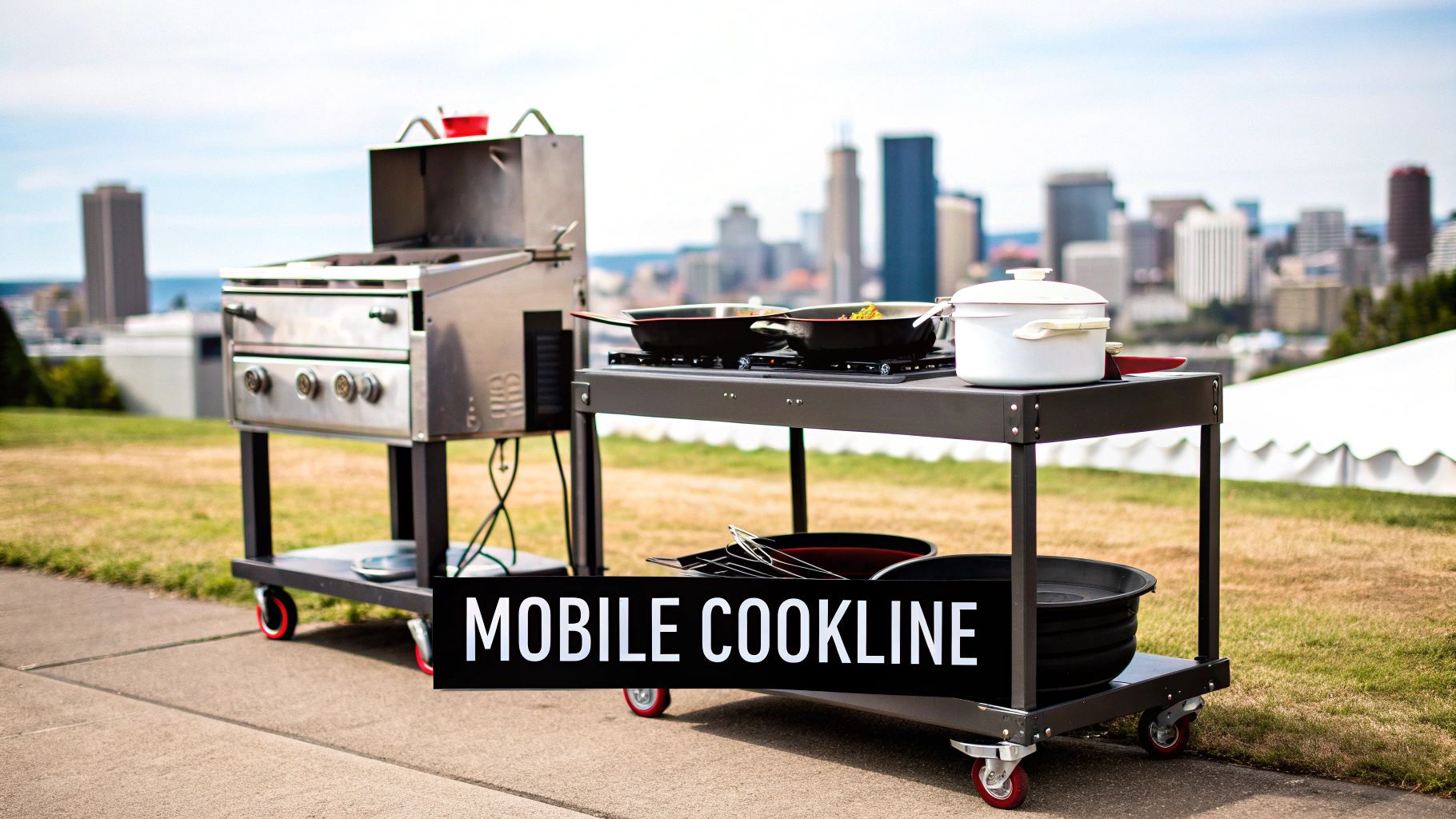
Your cookline is the engine of your whole catering operation. Think of it as your kitchen’s command center, just one that’s designed to be packed up and taken anywhere—from a pop-up at Pike Place Market to a big corporate event in Bellevue. Getting this mobile setup right is how you deliver restaurant-quality food, no matter where you are. The goal isn't just to cook; it's to pull off your menu without a hitch, even when the pressure is on.
One key piece of gear many people forget is the deep fryer. It’s often the secret to getting that perfect, crispy finish on-site. If you fry items ahead of time at your main kitchen and just reheat them later, you often end up with soggy, sad results. A portable deep fryer makes sure every bite is as hot, fresh, and crunchy as it would be coming out of a restaurant kitchen.
Building Your Core Cooking Arsenal
Besides a fryer, your main cooking equipment is what defines your menu's speed and what you can even offer. You need powerful, reliable tools that can handle a crowd without hogging all your limited space.
These are the essential workhorses for any mobile cookline:
- Portable Gas Ranges or Induction Burners: Gas gives you that raw power most chefs are used to. Induction, on the other hand, offers precise temperature control and is safer, which makes it perfect for indoor venues. Having both makes you ready for anything.
- Convection Ovens: These are your best friends for cooking in batches. A portable convection oven can bake, roast, and reheat huge amounts of food evenly, keeping every plate consistent.
- Griddles and Charbroilers: If your menu has burgers, pancakes, or seared fish, a portable griddle or charbroiler is a must-have. They give you the high, direct heat you need for that perfect sear.
For a closer look at outfitting a mobile kitchen, our complete food truck equipment list has great advice that works just as well for caterers trying to build a versatile and efficient setup.
Calculating Your Cookline Capacity
Just having the equipment isn't enough; you need the right amount of it. Showing up to a 150-person event with a single four-burner range is just asking for trouble. You need a simple way to figure out your capacity.
A good rule of thumb is to have one primary heating source (like a four-burner range or a large griddle) for every 50-75 guests. If you have a complex menu with lots of different cooked parts, you should stick closer to the 50-guest mark for each appliance.
Let's say you're catering a wedding for 200 guests. The menu is seared salmon, roasted vegetables, and a pasta station. You'd need at least three to four main cooking appliances. That could be a six-burner range, a big convection oven, and a portable induction station working together. This formula makes sure your team isn't tripping over each other and can get dishes out on time.
Thinking this way about your catering equipment checklist for the cookline is crucial. It changes a simple list of items into a real plan for success, making sure your mobile kitchen is just as powerful as a permanent one. When you carefully choose and count your cookline gear, you're building the foundation to serve amazing food at any event.
Choosing Refrigeration That Protects Your Reputation
If your mobile cookline is the engine of your catering operation, think of your refrigeration as its life support. Nothing tanks a caterer's reputation faster than food that's not fresh or, even worse, not safe. Your game plan for keeping ingredients at the perfect temperature—from your home base kitchen in Seattle to a wedding venue in Tacoma—is an absolute must-have for your catering equipment checklist. This is where your investment directly protects your business.
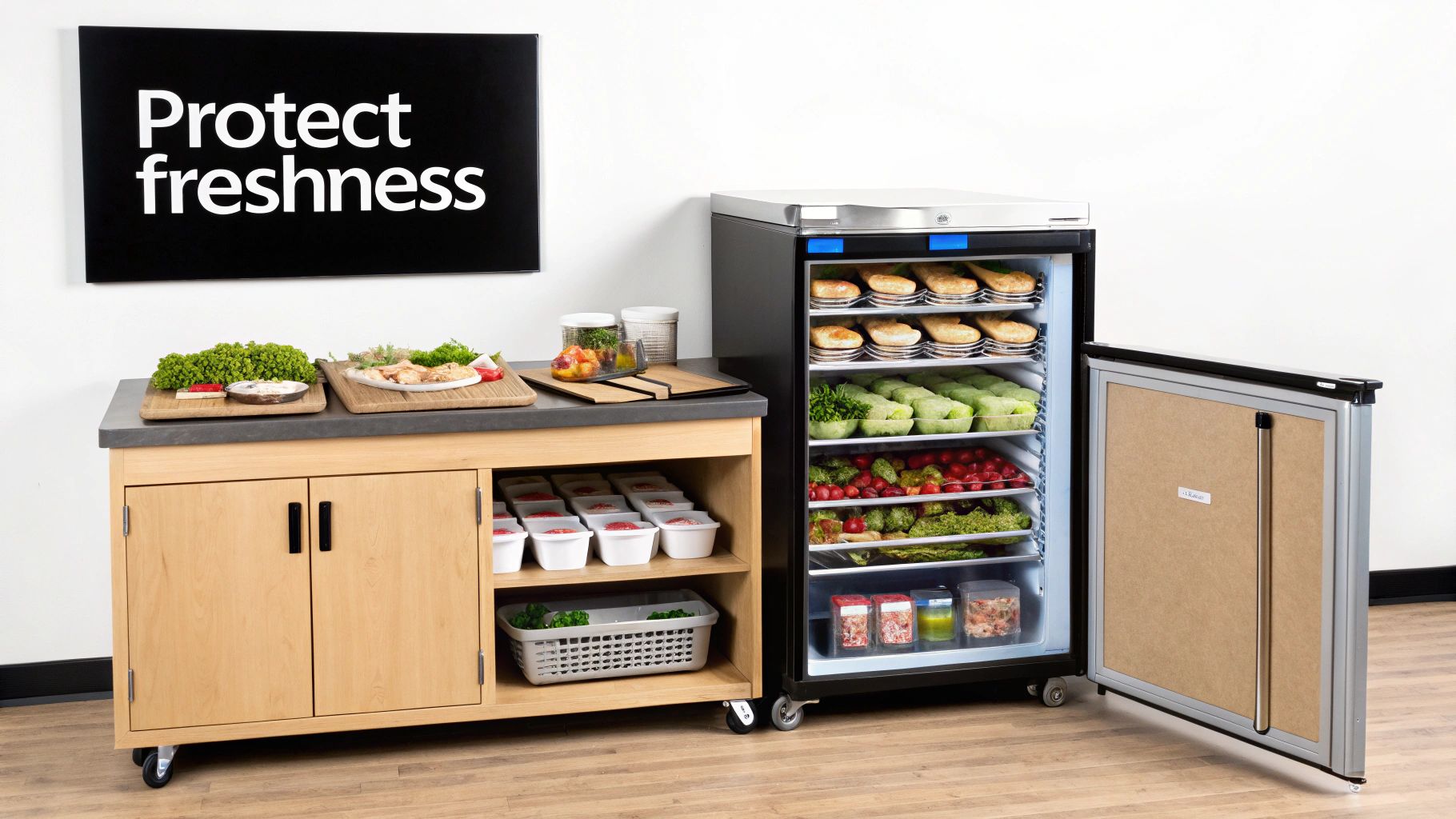
It all starts back at your commissary. Your workhorse commercial refrigerators and commercial freezers are the backbone of your prep kitchen. These units are built to handle the constant opening and closing of a busy kitchen, holding their temps steady even when you're in the weeds. They are your first line of defense, preserving the quality and safety of everything you buy in bulk.
On-Site Cold Storage Solutions
Once you hit the road, the whole game changes. You need equipment that's nimble, reliable, and doesn't take up a ton of space. This is where smaller, more specialized units really shine.
These are the key players for keeping things cool at an event:
- Under Counter Refrigerators: These little powerhouses are perfect for setting up temporary prep or service stations. Tuck one under a folding table, and you've got crucial ingredients like sauces, garnishes, and prepped veggies right where you need them. No more running back and forth.
- Under Counter Freezers: A lifesaver for events with frozen appetizers, desserts, or fancy cocktails. An under counter freezer makes sure that ice cream or frozen hors d'oeuvres stay rock solid until the very second you serve them.
- Deep Fryers: Okay, not refrigeration, but they go hand-in-hand. Having an under counter freezer nearby to hold french fries or battered appetizers before they hit the hot oil from your deep fryer is a classic setup for a flawless event.
For a caterer, refrigeration isn't just about keeping things cold; it's about maintaining control. Every single degree matters. Having the right gear on-site gives you the power to stick to food safety rules and deliver the quality your clients are paying for, no matter where you are.
Specialized Prep and Niche Refrigeration
For certain menus, the right kind of refrigeration can make your workflow incredibly efficient. A sandwich prep table or a pizza prep table is basically a refrigerated assembly line. They combine a cold base for ingredient storage with a cooled top rail for pans of toppings, letting your staff build orders fast and safely. Just imagine putting together hundreds of gourmet sliders for a corporate picnic; a sandwich prep table turns that potential nightmare into a smooth, easy process.
Beyond the main course, caterers often have to think about unique client needs. A pop-up coffee bar at a morning conference? You'll need a compact Seattle coffee shop refrigerator to keep milk and cream perfectly chilled. Running a mobile bar at a wedding? You'll want dedicated Seattle bar equipment, like underbar coolers for beers, wines, and mixers. Thinking through these little details is what takes your service from good to great.
To help you navigate these choices, here’s a quick breakdown of what might work best for different scenarios.
Finding Your Ideal Catering Refrigeration Solution
| Equipment Type | Best Use Case | Key Feature | Seattle Event Example |
|---|---|---|---|
| Commercial Refrigerator | Commissary kitchen bulk storage | High capacity, durable construction | Storing produce for a week of events at your Seattle prep kitchen. |
| Under Counter Refrigerator | On-site service & prep stations | Compact, fits under tables | Keeping fresh garnishes chilled at a food stall at Pike Place Market. |
| Sandwich/Pizza Prep Table | High-volume assembly menus | Cooled top rail for ingredients | Assembling 200 custom sandwiches with a sandwich prep table for a corporate lunch in South Lake Union. |
| Under Counter Freezer | Serving frozen appetizers/desserts | Maintains solid-frozen temperatures | Serving Snoqualmie Ice Cream from an under counter freezer at a summer wedding at the Arboretum. |
Choosing the right unit really depends on what you're serving and where you're serving it. The selection of commercial refrigerators available in Seattle offers a wide range of these specialized units to fit pretty much any event's demands.
While the cooking equipment usually gets all the attention, the numbers show just how vital cold storage is. Globally, refrigeration equipment is the second-biggest piece of the food service market, grabbing a 24% market share—right behind cooking gear. This just goes to show that for every grill on your checklist, you need a solid refrigeration plan to back it up.
Since most equipment needs to be replaced every 5 to 7 years, smart caterers are always looking at their checklists for newer, more efficient models. This commitment to reliable refrigeration is what ultimately protects both your food and your good name.
Moving Food From Kitchen To Guest
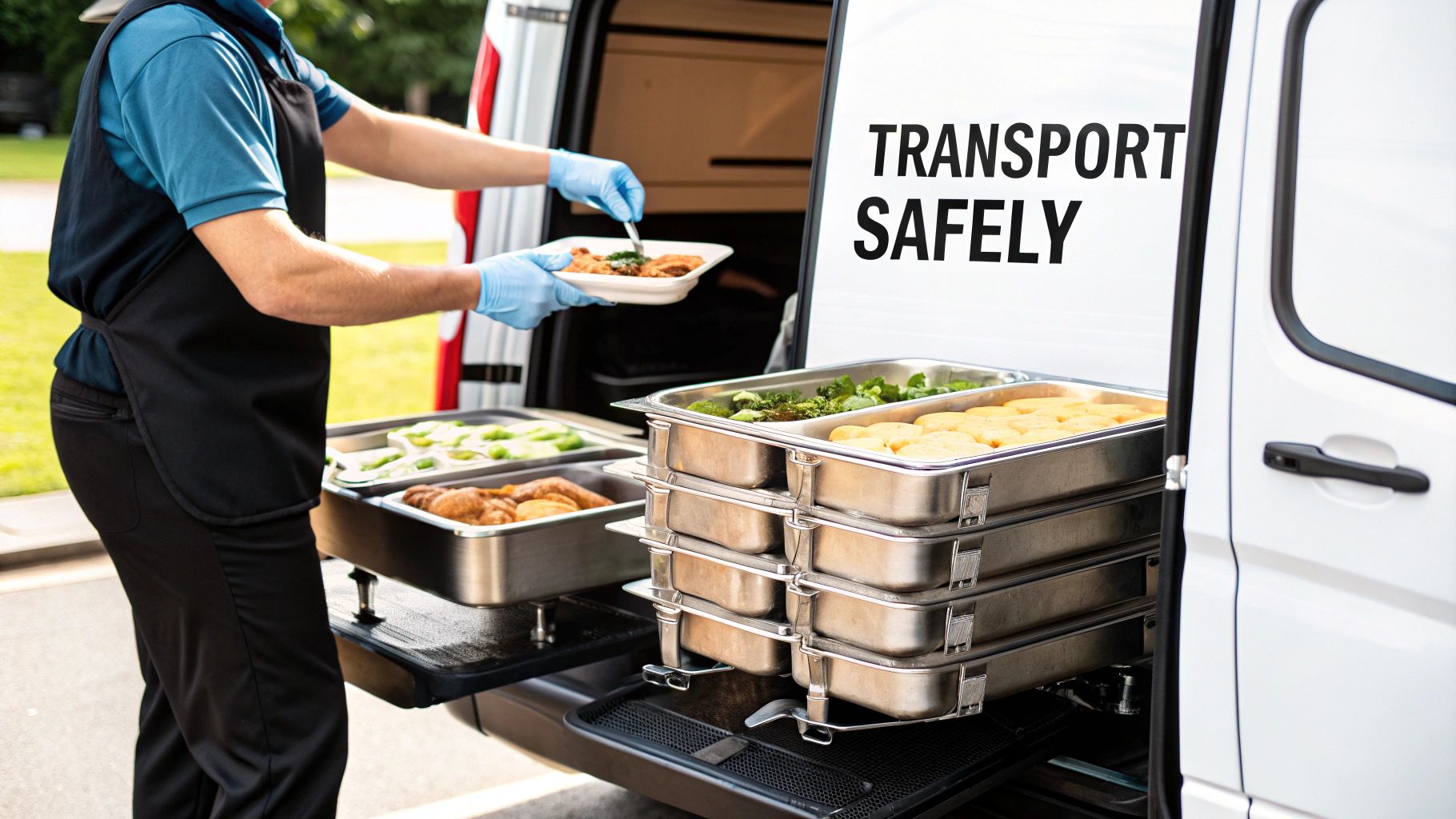
The trip from your Seattle kitchen to the event venue is where things can go wrong, even for the most perfectly planned menus. This is all about logistics, turning your static kitchen into a mobile one. Your success here depends entirely on having the right equipment to keep food at the perfect temperature and quality, making sure every bite is as good as it was when it came off the cookline. This part of your catering equipment checklist covers the gear that gets your food safely from point A to point B.
Think of insulated food carriers—or "hot boxes" as we call them in the business—as your personal mobile warming ovens. You absolutely cannot cater without them. They're your best defense against lukewarm food and unhappy guests, safely holding pans of hot food and locking in heat for hours. In the same way, insulated beverage dispensers are a must for keeping coffee piping hot or lemonade refreshingly cold all event long.
The Art of Temperature Control On-Site
Once you're at the venue, the challenge shifts from transport to holding. This is where chafing dishes get their moment to shine. They do more than just look professional; they are your main tool for keeping food in the safe zone (above 140°F) while guests serve themselves. A proper setup means having the whole system ready to go.
- Chafing Dishes: You'll need the frames, water pans, and food pans for every hot dish you plan to serve.
- Chafer Fuel: Pack more than you think you need. Seriously. A standard can only lasts about two hours, so for a four-hour event, you’ll be swapping them out midway through.
- Lighters or Matches: This is the one thing everyone forgets. Keep a couple of lighters in different spots just in case.
This simple but brilliant system creates a gentle steam bath that keeps your food hot without turning it to mush.
Front-of-House Serving Essentials
While the kitchen crew is managing the heat, your front-of-house team needs the right tools to present the food and serve guests without a hitch. Running out of clean plates or forks is a rookie mistake, but it's one you can easily avoid. A good checklist should have a solid inventory of all your serviceware.
The professionalism of your service is judged by the details. Having ample, clean, and appropriate serving platters, utensils, and glassware shows clients you've thought through every aspect of their guests' experience.
A good rule of thumb to figure out your inventory is the Guest Count x 1.5 formula. This buffer covers guests who might grab a fresh plate for dessert or accidentally drop a fork, saving you from having to wash dishes in the middle of service.
For a 100-guest buffet, your list should look like this:
- 150 dinner plates
- 150 sets of flatware (forks, knives, spoons)
- 150 water glasses
That 50% buffer is your peace of mind. It keeps things running smoothly so no one is scrambling for clean dishes.
This entire system relies on quality equipment. The global food service equipment market, which is the backbone of every caterer's checklist, was valued at around USD 39.07 billion and is only getting bigger. This growth is all about businesses needing efficient, reliable gear, from commercial refrigerators to holding cabinets. It's also pushing caterers to use NSF-compliant and ENERGY STAR-rated appliances to meet today's standards. You can dive deeper into these industry trends over at Grand View Research.
Ultimately, getting your food from the kitchen to the guest is about creating a seamless process. From the hot box you load at your commissary to the serving spoon a guest uses, every single piece on your checklist is critical for pulling off a flawless event.
The Non-Negotiable Sanitation and Safety Gear
While a shiny new commercial refrigerator or a powerful deep fryer gets all the attention, it’s the sanitation and safety gear that truly separates the pros from the risky amateurs. This part of your catering equipment checklist isn't glamorous, but it’s what protects your crew, your guests, and the future of your business.
Forgetting these items isn't just a simple mistake; it's a direct violation of Washington State health regulations.
Think of this gear as your business’s insurance policy. It’s the behind-the-scenes equipment making sure every plate you serve is not only delicious but completely safe. These aren't just suggestions—they are absolute must-haves for any off-site event.
Building Your Core Safety Kit
Your safety and sanitation kit needs to be put together just as thoughtfully as your mobile cookline. These items are the bedrock of a safe, compliant, and professional catering operation.
Here are the absolute non-negotiables for any event:
- Portable Handwashing Stations: If the venue doesn't have easy-to-reach sinks, this is a legal must-have. It needs running warm water, soap, and paper towels for proper hand hygiene.
- Food-Safe Sanitizer: You'll need approved solutions for wiping down every prep surface, from under counter refrigerator tops to sandwich prep tables, throughout the event.
- Disposable Gloves: Bring a ton. A plentiful supply is crucial for stopping cross-contamination. Your staff should be changing gloves constantly, especially when switching from one task to another.
- Trash and Recycling Bins: You're responsible for all the waste. Bring enough big, sturdy bins with extra liners to leave the venue even cleaner than you found it.
This setup isn't just about following the rules. It’s about showing clients and health inspectors you’re serious about your craft.
Preparing for On-Site Emergencies
Beyond the basic sanitation, a true professional is always ready for the unexpected. Your checklist has to include gear for handling common kitchen mishaps, from a minor cut to a more serious fire hazard.
Managing risk is a core function of a catering business. A well-stocked first-aid kit and the correct fire extinguisher are not expenses—they are critical investments in the safety of everyone at the event.
Your emergency kit should have two key things. First is a comprehensive, well-stocked first-aid kit with bandages, antiseptic wipes, burn cream, and pain relievers.
Second, and just as important, is a K-class fire extinguisher. Your standard extinguisher won't work on grease fires common in kitchens with equipment like deep fryers. A K-class unit is specifically designed to smother cooking oil fires, and it can stop a small flare-up from turning into a catastrophe. This isn't just a smart idea; it's an essential piece of safety gear that shows you run a responsible and professional operation from start to finish.
Acquiring Your Equipment the Smart Way
Building out your catering inventory doesn't mean you have to empty your bank account. In fact, making smart choices about how you get your gear is a huge part of a successful catering equipment checklist, especially if you're working in a competitive market like Seattle. It all boils down to one simple question for every single item you're considering: should I buy it or rent it? Getting this right turns equipment from a simple expense into a real investment in your business's future.
The answer almost always comes down to how often you'll use it. For the foundational, everyday pieces, buying is a no-brainer. These are the workhorses you'll rely on for just about every event you book.
Building Your Core Owned Inventory
The equipment you own should be the absolute backbone of your operation. Think of the items you'd be lost without, the gear you'll use so often that renting it would just be throwing money away. Finding a good local partner like Seattle Restaurant Equipment is key here, giving you access to solid, commercial-grade stuff with service and support right around the corner.
Start by purchasing these essentials:
- Commercial Refrigerators: A quality reach-in or walk-in is the heart of your prep kitchen. It's non-negotiable for keeping ingredients in bulk and making sure everything stays safe.
- Commercial Freezers: Just as important, a reliable commercial freezer lets you stock up on ingredients when prices are good and prep food components in advance, which is a massive time and money saver.
- Core Cookline Gear: You'll find yourself using a versatile deep fryer and a good portable range for most of your events, making them clear candidates to own outright.
These pieces are your foundation. They're what gives your mobile kitchen its power and keeps things running smoothly day in and day out.
When to Rent for Maximum Flexibility
Renting is your secret weapon. It’s how you stay nimble and profitable without sinking a ton of cash into equipment you'll barely use. It gives you the power to say "yes" to those unique client requests or one-off gigs that need very specific gear. This keeps your overhead lean and your business agile.
Renting makes a lot of sense for things like:
- Specialty Prep Tables: Got a client throwing an Italian-themed party who wants a pizza station? Rent a pizza prep table for the night. It's way smarter than buying a unit that will just collect dust. The same goes for a sandwich prep table if you land a huge one-time corporate lunch.
- Niche Beverage Equipment: If a wedding client has their heart set on a full espresso bar, renting Seattle coffee shop refrigerators and professional espresso machines is the only way to go. Planning for a cocktail-heavy event? Renting specific Seattle bar equipment is much more cost-effective.
- High-Volume On-Site Storage: For a big outdoor festival, you might need a few extra under counter refrigerators or under counter freezers for satellite bars or food stations. Renting them as needed saves you the headache of storing and maintaining all that extra inventory.
A good way to think about it is this: your owned inventory is your permanent staff, and your rented items are like skilled freelancers you hire for specific projects. This mindset keeps your core team strong while giving you the flexibility to handle any job that comes your way.
Making these buy-or-rent decisions for every item on your catering equipment checklist is absolutely critical. For Washington caterers, it's also worth looking into financing options to get that essential owned equipment without a huge upfront cost. This lets you build out your inventory as your business grows. This balanced strategy—owning the essentials and renting the special-occasion gear—is how you build a capable, profitable, and long-lasting catering business.
Your Catering Equipment Questions Answered
When you're building out your catering arsenal, a lot of questions pop up. It's totally normal. Here, we're tackling some of the most common things Seattle-area caterers ask when putting together their essential equipment checklist.
Do I Really Need a Prep Table If I Have Folding Tables?
Yes, absolutely. While folding tables are indispensable for a hundred other things, a real prep table is a game-changer for how you work and for food safety. Think of a sandwich prep table or a pizza prep table as its own little refrigerated workstation. It keeps your perishable ingredients—meats, cheeses, sauces—right where you need them, safely chilled in insulated pans.
This kind of setup slashes the time your crew spends running back and forth to a separate cooler, which is a massive bottleneck during a rush. More importantly, it helps you maintain the cold chain, keeping everything out of that dreaded temperature danger zone. A standard folding table just can't compete on that level of safety and speed.
What’s the Best Refrigeration for a Mobile Bar?
For a mobile bar, you need to be flexible and efficient with your space. Your best bet is to combine a few key pieces of Seattle bar equipment. Start with under counter refrigerators. They are perfect for chilling beer bottles, wine, and mixers, and they slide right under your portable bar, keeping the whole setup looking clean and professional.
If you're doing a pop-up coffee service, a dedicated Seattle coffee shop refrigerator is clutch for holding milk and cream at just the right temperature. And don't ever forget an ice caddy or a portable ice bin. Trust me, you will always, always need more ice than you think. This trio ensures every drink comes out perfectly chilled, just like it should.
Can I Get Away With Using a Standard Fryer for Catering?
You could, but you'll be much happier—and safer—with a commercial-grade portable deep fryer. These units are built to take a beating and have precise temperature controls that are critical for getting consistent, quality results when you're cooking for a crowd.
A commercial deep fryer is designed for quick recovery. It reheats the oil to the target temperature way faster after you drop in a batch of cold food. That quick recovery is the secret to getting crispy, not greasy, fried food. A standard home fryer just can't keep up during a high-volume event.
What Is the Most Overlooked Piece of Equipment?
Hands down, it's the humble under counter freezer. Everyone remembers refrigerators for chilling ingredients, but having a dedicated freezer on-site is incredibly useful. It's the perfect spot for holding frozen appetizers until they're ready to hit the oven, storing ice cream for a dessert station, or just keeping your extra bags of ice frozen solid all night long. Putting an under counter freezer on your checklist gives you an extra layer of capability that can really save the day.
At Seattle Restaurant Equipment, we get what it takes to succeed in the Washington catering scene. We stock the durable, commercial-grade gear you need. From foundational commercial freezers to specialized prep tables, we can help you build the perfect mobile kitchen. Explore our inventory online and get fast, free shipping across Washington. Find what you need at https://seattlerestaurantequipment.com.