

Picking the best commercial fridge for your kitchen isn't just about finding a good deal. It’s a strategic investment that hinges on balancing performance, capacity, and cost. While top-tier brands like Turbo Air and True often come to mind, the right unit for a Washington business is the one that slots perfectly into your daily grind—whether you're running a high-volume restaurant, a busy Seattle coffee shop, or a local food truck.
A Strategic Guide to Choosing Your Next Commercial Fridge
Your commercial refrigeration is one of the most important purchases you'll make. This isn't just a box to keep food cold; it's the heart of your inventory management, the guardian of your food safety, and a key player in your kitchen's efficiency. This guide is built for operators across Washington, cutting through the noise to help you make a smart, profitable decision for your business.
The first step is always the same: match the equipment to the job. Your menu, customer volume, and kitchen layout are the three pillars that will determine which type of unit you actually need.
Aligning Equipment with Your Business Needs
Here at Seattle Restaurant Equipment, we see it every day: different kitchens need different solutions. A bustling restaurant might need several commercial refrigerators for bulk storage, while a cozy coffee shop can get by perfectly with an under counter refrigerator tucked away.
It's all about workflow. A pizzeria is lost without a solid pizza prep table to keep their line moving, just like a deli needs a sandwich prep table to keep ingredients fresh and right at hand. Every piece of equipment, from commercial freezers to specialized Seattle bar equipment, has a role to play. Even your deep fryers are part of this ecosystem, and your refrigeration has to support the whole operation.
Key Commercial Refrigeration Categories
To find the best commercial fridge, you first need to know what you're looking for. It helps to break things down into the main categories and what they're built to do. This table gives you a quick rundown of the essential gear available from Seattle Restaurant Equipment for Washington’s foodservice businesses.
| Equipment Type | Primary Use Case | Ideal For |
|---|---|---|
| Commercial Refrigerators | General-purpose cold storage for fresh ingredients | Any restaurant, cafe, or kitchen needing bulk storage |
| Commercial Freezers | Long-term frozen storage for meats, prepped items, and bulk goods | Businesses with extensive menus or long inventory cycles |
| Sandwich/Pizza Prep Tables | Combining refrigerated storage with a dedicated prep surface | Delis, pizzerias, and high-volume sandwich shops |
| Under Counter Refrigerators/Freezers | Compact, space-saving refrigeration at point-of-use stations | Bars, coffee shops, and kitchens with limited space |
A Deep Dive Into Commercial Refrigerator Types
Figuring out the different roles of refrigeration units is your first step to a smoother kitchen workflow. Picking the best commercial fridge isn’t a one-size-fits-all deal; it’s about choosing the right tool for the job. Every type of refrigerator and freezer is built to solve a specific problem in a commercial kitchen, from holding bulk inventory to speeding up the assembly line.
This breakdown will walk you through the main categories we carry at Seattle Restaurant Equipment. We’ll look at what each one does best and where it fits, so you can confidently match the equipment to your space, your menu, and how fast you need to serve. Whether it’s a big reach-in or a specialized prep table, the right choice makes a real difference in your kitchen’s efficiency and the quality of your food.
High-Capacity Storage Commercial Refrigerators and Freezers
The real workhorses of any kitchen are the commercial refrigerators and commercial freezers. These units have one main purpose: to store large amounts of product safely and reliably. A reach-in refrigerator is the central hub for fresh produce, dairy, and prepped ingredients, holding everything at a steady, food-safe temperature.
Likewise, a commercial freezer is non-negotiable for the long-term storage of meats, seafood, and big batches of prepped food. The market shows just how critical they are—commercial freezers are dominating the scene, pulling in over 60% of total market revenue. This is all thanks to huge demand from foodservice and retail. The whole commercial food refrigeration equipment market, worth USD 28,620 million in 2024, is expected to climb to USD 36,650 million by 2034, pushed by tough food safety rules and new tech. This is a big deal for Washington operators, whether it’s a food truck in Kent upgrading its mobile kitchen or a ghost kitchen in Renton needing precise temperature control to stay compliant.
For a busy restaurant, a multi-door reach-in refrigerator gives you the space to handle big inventory drops. For a smaller café, a single-door freezer might be all you need. The trick is to match the unit's cubic footage to how often you order and how complex your menu is.
Streamlining Workflow with Prep Tables
Prep tables are the perfect blend of refrigeration and workspace, built to make assembly lines in busy spots fly. They’re a true game-changer for businesses that depend on speed and consistency.
- Sandwich Prep Tables: An absolute must for delis, cafes, and ghost kitchens. These units have refrigerated wells on top for holding ingredients like meats, cheeses, and veggies. Underneath, a refrigerated cabinet stores your backup supply, keeping everything you need right there.
- Pizza Prep Tables: Made specifically for pizzerias, these tables feature a wider, raised rail that fits large pizza pans and a whole spread of toppings. The refrigerated base is perfect for storing dough trays and extra sauce, making the whole pizza-making process seamless.
Space-Saving Undercounter Refrigeration
When you’re tight on floor space, under counter refrigerators and under counter freezers offer a compact but mighty solution. These units slide right under countertops, putting cold storage exactly where you need it at workstations without messing up the kitchen’s flow.
For Seattle bar equipment, an undercounter unit is essential for keeping bottles, garnishes, and mixers chilled. In a Seattle coffee shop, a Seattle coffee shop refrigerator like this can hold milk and dairy alternatives right next to the espresso machine. This smart placement cuts down on how much your staff has to move around, shaving precious seconds off every single order. To get the perfect fit for your layout, it helps to understand the different under counter refrigerator sizes and configurations out there.
Specialized Equipment for Unique Needs
Beyond the main categories, Seattle Restaurant Equipment also has specialized units designed for very specific needs. Glass-door merchandisers are perfect for customer-facing spots in cafes or small markets, encouraging impulse buys while keeping drinks and grab-and-go items perfectly chilled.
On the hot side of the line, your refrigeration choices need to support your cooking equipment. Having ingredients properly chilled and easy to grab is crucial for operations using high-output gear like deep fryers. A well-placed refrigerator ensures that items waiting to be fried are held at safe temperatures right up until they hit the oil, protecting both safety and quality.
Digging Into the Details: Comparing Models Like a Pro
Picking the right commercial fridge isn't about ticking boxes on a feature list. For any Washington foodservice business, it's a hands-on decision that boils down to how a unit will hold up in your kitchen. You have to look at everything—capacity, temperature precision, durability, and compliance—through the lens of your day-to-day grind.
Whether you're outfitting a tight cafe space in downtown Seattle or a sprawling restaurant in Spokane, the basics don't change. You need equipment that streamlines your workflow, protects your expensive inventory, and sails through every health inspection. Let's break down these critical factors so you can compare models with confidence.
This decision tree is a great starting point. It helps you visualize where to begin based on your kitchen's main needs, steering you from broad requirements to the right equipment category.
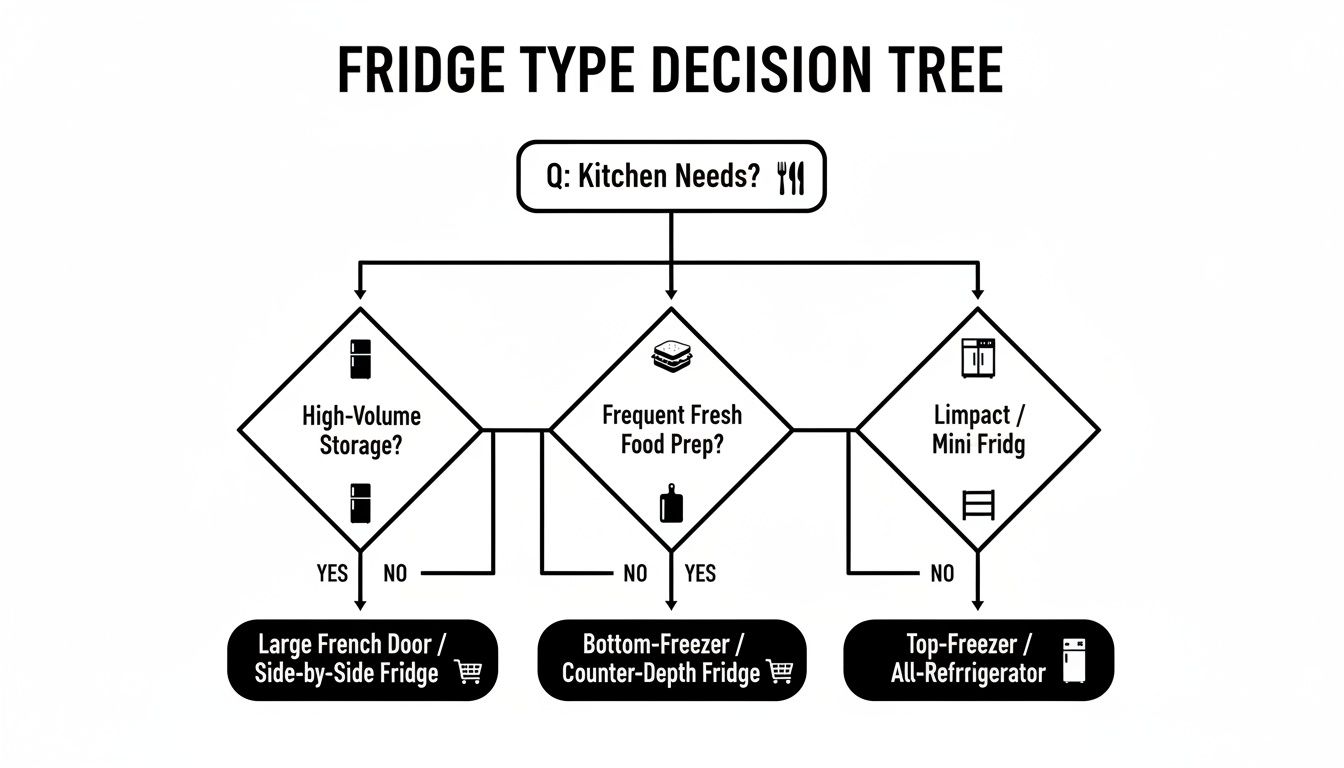
As the flowchart shows, figuring out if you need a high-volume workhorse, a specialized prep table, or a compact undercounter unit all starts with understanding your kitchen's primary function.
To give you a clearer picture, this table breaks down the most common fridge types by what they do best, helping you match the right unit to your operational needs.
Commercial Fridge Comparison by Operational Need
| Fridge Type | Best For (Business Type) | Capacity Range | Key Feature | Space Consideration |
|---|---|---|---|---|
| Reach-In | Restaurants, Cafes, Bars | 20-70+ cu. ft. | Versatile, high-volume storage | Requires significant vertical space |
| Walk-In | High-Volume Restaurants, Caterers | 100-1000+ cu. ft. | Bulk ingredient storage | Needs dedicated room, often outdoors |
| Undercounter | Coffee Shops, Bars, Small Kitchens | 2-15 cu. ft. | Fits under standard counters | Maximizes space in compact areas |
| Prep Table | Pizza Shops, Sandwich Shops, Cafes | 5-30 cu. ft. | Integrated workspace and cold storage | Line or prep area placement |
| Merchandiser | Cafes, Markets, Convenience Stores | 5-70+ cu. ft. | Glass doors for product display | Customer-facing placement |
Ultimately, the best choice often involves a combination of these types, each serving a specific role in your kitchen's ecosystem.
Sizing and Capacity Calculations
Getting the capacity right is everything. A fridge that’s too small forces you to over-stuff it, which kills airflow and creates dangerous hot spots. Go too big, and you're just wasting valuable kitchen real estate and paying for energy you don't need.
To nail down your needs, think about your inventory turnover. A spot that gets daily produce deliveries needs less bulk storage than a place ordering bi-weekly. A good rule of thumb is to plan for 1.5 to 2.5 cubic feet of refrigeration per restaurant seat, but you'll need to tweak that based on your menu and how much fresh vs. frozen product you hold.
A small Seattle coffee shop can get by perfectly with an under counter refrigerator for milk and a small reach-in for backup. A bustling restaurant, on the other hand, will need a mix of large commercial refrigerators and commercial freezers to manage a diverse inventory.
Temperature Control and Food Safety
Rock-solid temperature control is completely non-negotiable. The best commercial fridge holds a steady temperature, usually between 35°F and 38°F, even when the doors are swinging open and shut during a chaotic dinner rush.
Look for units with digital thermostats and easy-to-read external displays. These let your crew check temps at a glance without opening the door and letting all the cold air out. This is especially vital for equipment like sandwich prep tables and pizza prep tables, where ingredients sit exposed to ambient air during service.
A reliable cooling system isn't just a perk; it's your number one defense against foodborne illness and spoilage. Investing in a unit with a powerful compressor and smart airflow design protects your customers, your reputation, and your profits.
Material Durability and Construction
The professional kitchen is a tough place. Your gear has to be built to take a beating, from accidental cart bumps to aggressive daily cleaning. The materials and build quality of a commercial refrigerator are a dead giveaway for how long it will last.
- Stainless Steel Grades: Don't settle for less than high-grade stainless steel (like type 304) for both the outside and inside. It stands up to corrosion, dings, and scratches way better than aluminum or cheaper steel.
- Door Construction: Self-closing doors are a must. They save energy and help maintain consistent temps. Make sure the hinges feel heavy-duty and the gaskets form a complete, airtight seal.
- Shelving: Heavy-duty, coated wire shelves are the industry standard. They should be easy to adjust for different product heights and allow for good airflow around your inventory.
These principles apply to all your equipment, from your main refrigerators to the units supporting your Seattle bar equipment and even appliances like deep fryers.
Compliance and NSF Certification
Here in Washington, just like everywhere else, commercial kitchen equipment has to meet strict health and safety codes. The most important stamp of approval you need to look for is from the NSF (National Sanitation Foundation).
An NSF-certified unit has been put through the wringer and verified to meet high standards for material safety, ease of cleaning, and performance. Using non-certified gear can get you slapped with failed health inspections and hefty fines. All commercial refrigerators, under counter freezers, and prep tables we sell at Seattle Restaurant Equipment meet these critical standards, so you're compliant from day one. You can dive deeper into top-tier options in our guide to the best commercial refrigerator brands.
The demand for compliant, high-performance equipment is fueling massive growth in the industry. The commercial refrigeration market is expected to grow by USD 16,186.6 million between 2025 and 2030, climbing at a 6.5% CAGR. This boom is driven by the global expansion of foodservice, where businesses are scaling up and investing in reliable equipment to stay competitive. With foodservice operations accounting for 42% of the market's revenue, it's clear that buying a quality commercial fridge is a foundational step in future-proofing your business.
Calculating the True Cost of Ownership
When you’re buying a commercial refrigerator, it’s easy to get fixated on the price tag. But the smartest operators know the initial price is only part of the story. The real measure of a good investment is the Total Cost of Ownership (TCO).
This just means looking at what the unit will really cost you over its entire life. A cheaper fridge might feel like a win on day one, but if it's racking up your utility bills and needs constant repairs, it’s actually costing you more. TCO helps you see the bigger financial picture, making sure your equipment is an asset, not a drain on your profits.
Energy Efficiency as a Long-Term Investment
One of the biggest ongoing expenses for any refrigerator is the power it consumes. A high-efficiency model—the kind with a modern compressor and better insulation—might cost a bit more upfront. But those savings on your monthly utility bill start adding up immediately.
Think about a busy restaurant in Bellevue choosing between two refrigerators. One is cheaper, but the other is an ENERGY STAR certified model. That energy-efficient unit could easily save the restaurant hundreds of dollars a year. Before you know it, it’s paid for the initial price difference and is putting money back into your pocket for years to come.
Choosing an energy-efficient model is a direct investment in your profitability. Over a decade, these small monthly savings add up to a substantial return, freeing up capital that can be reinvested into other areas of your business, like expanding your menu or marketing efforts.
The entire industry is moving toward smarter, more efficient tech. New systems are slashing energy consumption by up to 30% while meeting tough environmental standards, thanks to innovations like IoT and AI. It’s a huge shift, with the market projected to hit USD 99.8 billion by 2036, driven by the food retail and hospitality sectors which make up over 65% of the demand.
Reliability and the Cost of Downtime
Beyond your power bill, reliability is a huge piece of the TCO puzzle. A dependable fridge protects you from two of a restaurant's worst nightmares: emergency repairs and food spoilage. When a unit goes down during a Saturday night rush, the costs snowball.
First, you’re on the phone for an emergency service call, which always costs more than planned maintenance. Worse, though, is the lost inventory. A single failure can mean throwing out thousands of dollars in spoiled product, wiping out your profits in an instant.
The best commercial fridge doesn't just keep things cold—it’s the one you can count on, day in and day out. That’s the kind of reliability we build into all our equipment, from commercial freezers and pizza prep tables to under counter refrigerators and Seattle bar equipment.
Maintenance and Repair Projections
Let's be realistic: no machine runs forever without a little TLC. The difference is, a well-built unit is designed for easier servicing with durable parts that don’t fail as often. Cheaper models? Not so much.
Thinking about potential repair costs is a crucial part of the TCO analysis. That bargain-priced unit might not seem like such a deal when you’re replacing a compressor a few years down the road. By investing in a quality, reliable unit from the start, you dramatically lower the odds of facing those expensive, business-stopping breakdowns. A proactive approach here can make a huge difference to your bottom line, as we cover in our guide on the benefits of energy-efficient commercial refrigeration.
Why Washington Businesses Trust Our Equipment
Choosing the right partner for your kitchen equipment is just as critical as choosing the equipment itself. For restaurant and food truck operators all over Washington, buying the best commercial fridge isn't just a transaction. It’s about building a reliable foundation for your business to grow. We've built our entire model around the unique needs of local businesses, from bustling Seattle restaurants to up-and-coming food trucks in Spokane.
We give you direct access to new, commercial-grade equipment without the inflated price tags you'll find in traditional showrooms with commissioned salespeople. This no-fluff approach means your money goes into quality and performance, not our overhead. Our focus is simple: deliver durable, dependable tools that help your kitchen run smoothly and profitably from day one.

This commitment to value is backed by real, practical support designed for the fast pace of the Washington foodservice industry.
Our Comprehensive Equipment Selection
Every kitchen's needs are different, and your supplier should get that. We've curated an inventory of essential refrigeration and cooking equipment, making sure you can find exactly what you need for any job.
Our selection includes:
- Commercial Refrigerators and Freezers: The backbone of any kitchen, we have them in all sizes to handle everything from daily prep ingredients to bulk frozen goods.
- Sandwich and Pizza Prep Tables: These are absolute must-haves for streamlining assembly lines in delis, pizzerias, and cafes. They combine refrigerated storage with a practical workspace.
- Under Counter Refrigerators and Freezers: Perfect for making the most of tight spots. They provide crucial cold storage right where you need it, which is why they're so popular for Seattle bar equipment and as Seattle coffee shop refrigerators.
- Specialty and Cooking Equipment: We're not just about refrigeration. We also stock vital cooking tools like deep fryers, ensuring your entire line is ready for service.
This range means you can source multiple key pieces from a single, trusted partner, which really simplifies the whole procurement headache.
Unmatched Logistics and Support in Washington
Getting your equipment quickly and affordably gives you a major advantage. We’ve designed our logistics to get rid of the usual headaches for businesses across the state, helping you get up and running faster.
One of the biggest things that sets us apart is our delivery promise. We offer free shipping on all orders throughout Washington state, which cuts a significant hidden cost right off the top. Whether you're in Seattle, Tacoma, Bellevue, or Spokane, you can count on fast, reliable delivery.
We know that downtime is simply not an option in this business. That’s why we guarantee fast 1-2 business day delivery to major hubs, making sure your new commercial fridge or freezer arrives exactly when you need it to keep things moving.
On top of that, every piece of equipment we sell is backed by a comprehensive warranty. This gives you peace of mind, protecting your investment from unexpected problems and ensuring you have support when you need it. We're committed to long-term reliability, not just making a quick sale.
Flexible Financing to Fuel Your Growth
We firmly believe that every passionate entrepreneur deserves access to professional-grade equipment, no matter what their starting capital looks like. A tight budget shouldn't stop you from launching that food truck, upgrading your restaurant’s kitchen, or opening a new coffee shop. That's why we offer flexible financing options that are tailored to the realities of the foodservice industry.
Our financing programs are built to empower businesses at every stage:
- Startups and Food Trucks: Get the essential commercial refrigerators, under counter freezers, and cooking equipment you need to launch without draining all your initial cash.
- Established Restaurants: Upgrade your aging equipment or expand your capacity without a huge upfront payment, keeping your working capital free for other operational needs.
- Bars and Cafes: Grab that specialized Seattle bar equipment or a new Seattle coffee shop refrigerator to grow your beverage program and boost your sales.
These accessible financing solutions break down the financial barriers, making it possible to invest in the reliable equipment that will drive your success. When you partner with us, you get more than a supplier—you get a resource that's genuinely committed to helping your Washington business thrive.
Answers to Your Common Questions
Diving into the world of commercial refrigeration brings up a lot of practical questions. If you're running a foodservice business in Washington, getting this choice right is a big deal for your efficiency, compliance, and bottom line. Here are some straightforward answers to the questions we hear the most.
What Size Commercial Fridge Do I Need for My Restaurant?
The honest answer? It comes down to your menu, how many customers you serve, and your kitchen's layout. A common rule of thumb is to have 1.5 to 2.5 cubic feet of cold storage for every seat in your restaurant, but think of that as a starting point, not a final answer.
To really dial it in, you need to look at your own operations. How often are you getting ingredient deliveries? How much do you buy in bulk? A Seattle cafe that gets fresh produce dropped off daily has completely different needs than a Spokane steakhouse that stocks up on meat every two weeks. Our team can walk through your specific workflow and recommend the best commercial fridge—one that gives you plenty of room without hogging floor space or electricity.
Should I Choose a Refrigerator, a Freezer, or a Prep Table?
Your menu will tell you exactly what you need. Each one of these units plays a unique and critical role in a smooth-running kitchen.
- A commercial refrigerator is your workhorse for holding the fresh ingredients you’re grabbing all day long.
- For storing meats, seafood, or pre-made items for more than a couple of days, a commercial freezer is an absolute must-have.
- If your kitchen is built around assembling sandwiches, salads, or pizzas, a sandwich prep table or pizza prep table is essential. It’s all about efficiency, giving you refrigerated storage right below your workspace.
Most businesses, from bars outfitting themselves with Seattle bar equipment to kitchens running multiple deep fryers, end up needing a mix of these. That often includes specialized units like under counter refrigerators and under counter freezers to create a seamless flow from storage to prep to the line.
How Much Can an Energy-Efficient Fridge Really Save Me?
The savings are real, and they add up fast. When you invest in a modern, energy-efficient commercial refrigerator, you're cutting long-term operating costs in a big way. New models with advanced compressors, better insulation, and LED lighting can reduce energy use by up to 30% compared to the older units they're replacing.
For a typical Washington restaurant, that directly translates into hundreds, sometimes thousands, of dollars saved on electricity bills each year. Over its lifespan, the equipment essentially pays for itself, making it a smart financial move, not just an operational upgrade.
Do You Offer Delivery and Financing Options?
Absolutely. We're here to make getting professional-grade equipment as straightforward and affordable as possible for businesses across Washington. We offer free shipping on all orders statewide, so you don't have to worry about surprise costs.
We also know that when you need equipment, you usually need it fast. That’s why we provide 1-2 business day delivery to major areas like Seattle, Tacoma, Spokane, and Vancouver. A big purchase is a significant investment, so we have flexible financing programs designed specifically for restaurants, bars, and food trucks. These programs help you get the essential tools you need to grow your business without tying up all your capital upfront.
Ready to find the perfect refrigeration solution for your Washington business? Explore our full range of new, reliable, and affordable equipment at Seattle Restaurant Equipment. Visit us online to see our selection and take advantage of our free statewide shipping and flexible financing options.