

In any busy commercial kitchen, countertop refrigeration is the secret weapon for keeping ingredients fresh, safe, and right where you need them. These compact but mighty units—everything from sandwich prep tables to under counter freezers—are all about optimizing your workflow and making the most out of every square inch. They're the real foundation of fast service and a smooth-running operation.
Your Guide to Efficient Kitchen Operations
In the non-stop world of Seattle's food scene, every second and every inch of counter space is gold. Countertop refrigeration isn't just about keeping food cold; it's a smart move that pays off in pure efficiency. Picture the lunch rush: your line cook is building a sandwich, grabbing fresh toppings from a sandwich prep table, all without taking a single step away from their station. That's the power of having your cooling right at the point of use.
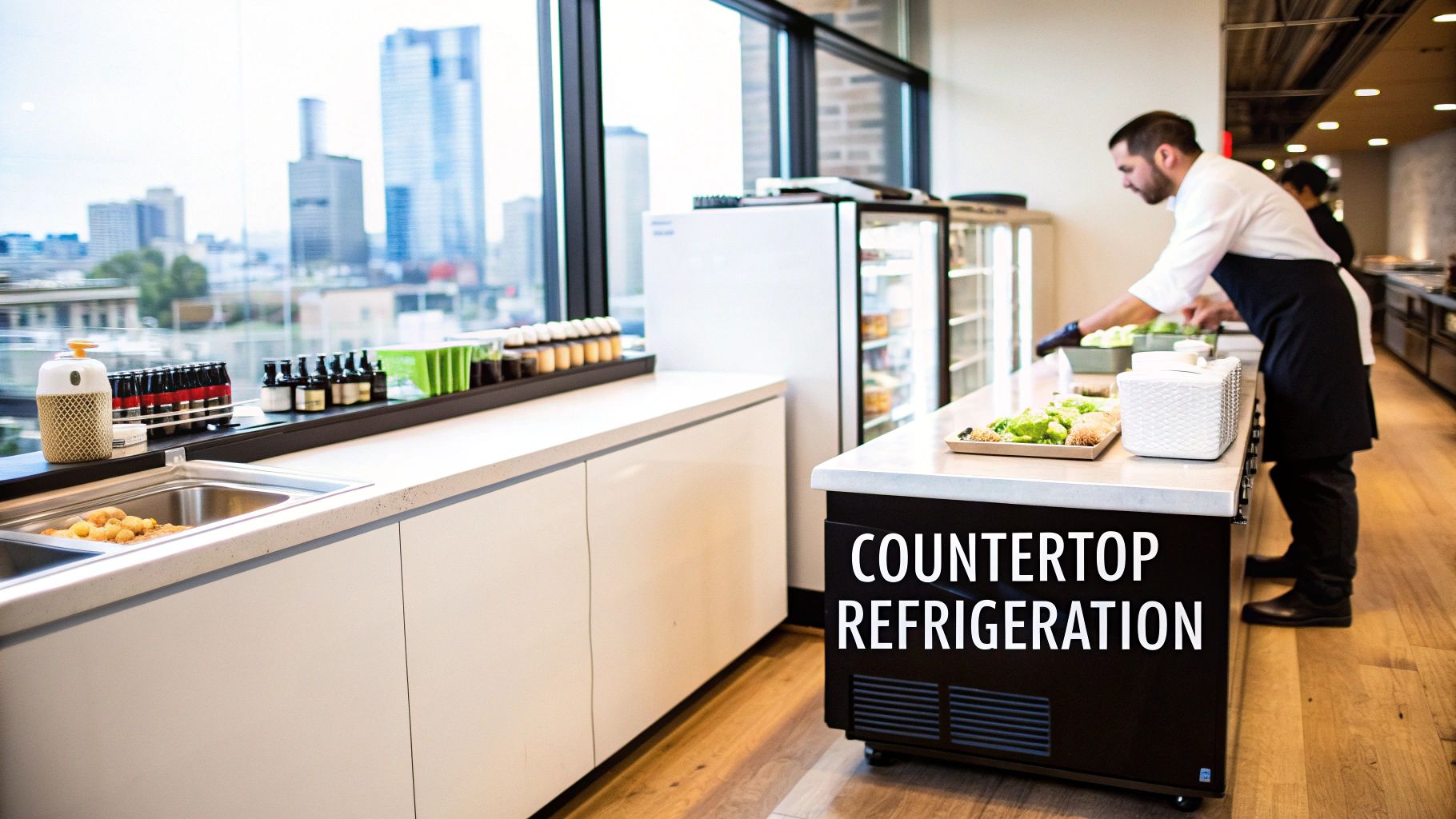
These units are the unsung heroes behind countless successful Seattle businesses, from bustling restaurants and bars to your favorite neighborhood coffee shop. By putting chilled ingredients within arm's reach, they empower your team to create a seamless flow from prep to plate, which has a direct impact on your bottom line.
Maximizing Your Kitchen's Potential
The right gear does more than just hold food; it completely changes how your kitchen works. When you bring in specialized commercial refrigerators and commercial freezers, you can create dedicated zones for different tasks. This cuts down on staff running back and forth and seriously lowers the risk of cross-contamination—a huge win for both speed and food safety.
At its heart, countertop refrigeration is all about bringing cooled ingredients directly to the prep area. This one simple change can slash ticket times and make your kitchen a much better place to work.
Just think about the different needs across Seattle's food landscape:
- Restaurants lean heavily on sandwich prep tables and under counter refrigerators to keep their lines moving smoothly, often alongside equipment like deep fryers.
- Coffee Shops use compact Seattle coffee shop refrigerators for milk, cream, and those essential grab-and-go items.
- Bars count on Seattle bar equipment like back bar coolers to serve up perfectly chilled drinks in a flash.
This equipment isn't a small niche; it's a huge piece of the global commercial refrigeration market, which was valued at a whopping USD 42.94 billion in 2024. With North America driving much of that demand, the market is set to keep growing, showing just how critical these compact cooling solutions are in today's foodservice world. You can explore more about these market trends and see what they mean for your business.
Finding the Perfect Fit for Your Seattle Business
Seattle’s food scene is as diverse as it gets, and the right counter top refrigeration is never a one-size-fits-all deal. The gear you choose needs to be a silent partner in your kitchen, something that directly supports your menu and your specific workflow. What works for a bustling pizzeria on Capitol Hill won't be the best fit for a quiet coffee shop in Ballard, but the right unit makes all the difference for both.
Think about building a gourmet sandwich. With a good sandwich prep table, every single ingredient—crisp lettuce, cured meats, fresh tomatoes—is perfectly chilled and sitting right there in refrigerated wells. The cutting board is just inches away. It’s a natural assembly line, turning a clunky process into a smooth, efficient motion. Your staff isn't trekking back and forth to a walk-in, which shaves precious seconds off every order.
That same idea applies to pizzerias. A pizza prep table is built for one thing: making pies. It keeps your dough, sauce, cheese, and toppings at safe, cool temperatures and all within arm's reach. This doesn't just make service faster; it ensures every pizza that leaves your oven is consistent and up to your standards.
Under Counter Units: The Workhorses of Your Kitchen
Beyond the specialized prep tables, you have under counter refrigerators and under counter freezers. These are the true workhorses of any commercial kitchen. They are essentially point-of-use storage stations, bringing cold storage exactly where you need it most. Stick an under counter refrigerator by the grill, and your chef has steaks and veggies on hand without getting in anyone's way.
By the same token, an under counter freezer right next to the deep fryers means your French fries and appetizers stay frozen solid until the second they hit the hot oil. This kind of smart placement is what cuts down on wasted steps and helps your team pump out orders during the dinner rush.
These compact units are absolute must-haves for:
- Creating dedicated workstations: Isolate prep for different parts of your menu to boost efficiency and stop cross-contamination in its tracks.
- Supporting high-volume equipment: Keep your most-used ingredients close to the deep fryers, griddles, or ovens that need them.
- Making the most of small spaces: Tuck powerful cooling under existing counters and hang on to that valuable prep space.
Specialized Cooling for Seattle's Niche Markets
Seattle is so much more than just traditional restaurants. Our famous coffee culture and vibrant bar scene have their own unique cooling needs. For any busy bar, Seattle bar equipment like a back bar cooler is non-negotiable. These are designed for grabbing bottles and cans on the fly, keeping everything at the perfect temperature while showing customers exactly what you’ve got.
In a Seattle coffee shop, counter space is gold. A compact Seattle coffee shop refrigerator is a total game-changer, keeping milk, cream, and oat milk right next to the espresso machine so your barista can craft drinks without missing a beat.
Here at Seattle Restaurant Equipment, our entire stock of commercial refrigerators and commercial freezers is picked to meet these real-world demands. Whether you need a beast of a pizza prep table for a high-volume deli or a small, efficient Seattle coffee shop refrigerator, we have the tools that help businesses thrive in this city. Every piece is designed to slide right into your operation and boost your productivity from day one.
Choosing the Right Unit with Key Specifications
Picking the right counter top refrigeration for your Seattle business goes way beyond just measuring the space you have available. The real secret is matching the technical specs of a unit to your specific menu and the hustle of your service. Get it right, and you've made a smart investment. Get it wrong, and you've got an expensive box that just gets in the way.
The first thing to look at is capacity, which is measured in cubic feet. This isn't just about how much stuff you can cram inside; it's about how that storage space actually works with your daily prep flow. A small cafe might get by just fine with a compact under counter refrigerator, but a busy deli cranking out sandwiches all day will need a big sandwich prep table with tons of cold storage underneath.
Next up is temperature. This is non-negotiable. A commercial refrigerator has to hold everything at or below a chilly 40°F. For a commercial freezer, it's even stricter: 0°F or colder to keep your food safe and meet those health codes.
Understanding Refrigeration and Defrost Systems
You'll quickly find that not all cooling systems are built the same. In the world of countertop and undercounter units, you’re generally looking at two main types, and each has its place.
- Static Cooling: This system uses cold plates built into the walls to chill the interior. It’s perfect for delicate items like leafy greens or certain produce that might dry out under a constant blast of cold air.
- Fan-Assisted Cooling: Just like it sounds, a fan constantly circulates cold air, keeping the temperature even from top to bottom. This is the workhorse you want in a busy kitchen where the doors are always swinging open.
This flowchart can help you see exactly how different units fit into different businesses.
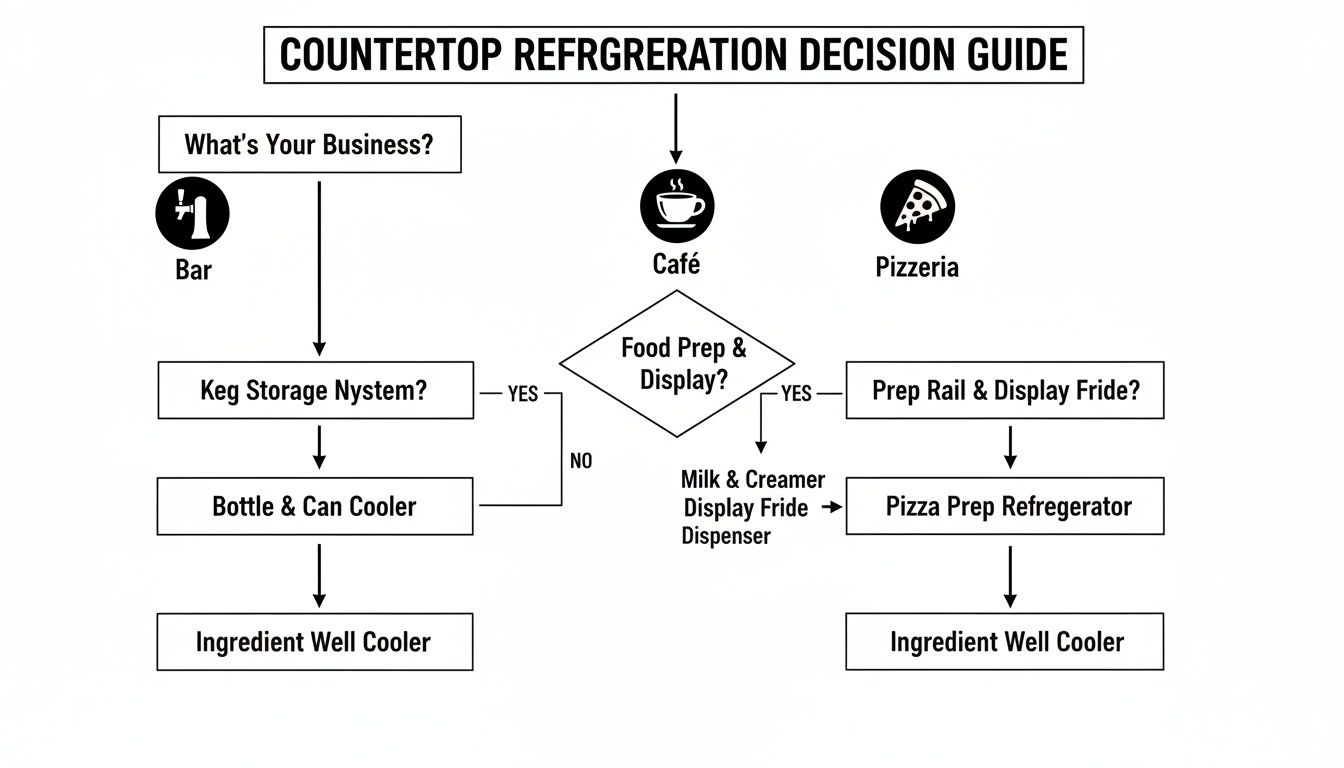
As you can see, the needs of a coffee shop are worlds apart from a pizzeria. The equipment—from small Seattle coffee shop refrigerators to sprawling pizza prep tables—has to match the unique workflow.
Finally, let's talk about defrosting. Manual defrost units are usually a bit more energy-efficient, but they require you to shut them down and clean them out yourself. That's a no-go for most busy kitchens. Automatic defrost systems, on the other hand, handle all the ice buildup on their own, making them the go-to for any fast-paced spot that can't afford downtime.
It’s clear businesses are demanding this kind of reliability. The market for refrigerated display cases is on track to hit nearly USD 17.9 billion by 2034, all because operators need reliable, visible cold storage that just works. When you nail down the right specs for your operation, your equipment stops being just a tool and starts becoming a true partner in your success.
Mastering Your Kitchen Layout and Sizing
How you decide to fit counter top refrigeration into your kitchen can literally make or break your entire workflow. It’s not about just finding a spot where a unit can squeeze in; this is about strategic placement that builds an efficient, easy-to-use space. When you get this right, you'll see faster service, less tired staff, and a smoother operation that actually makes you more money.
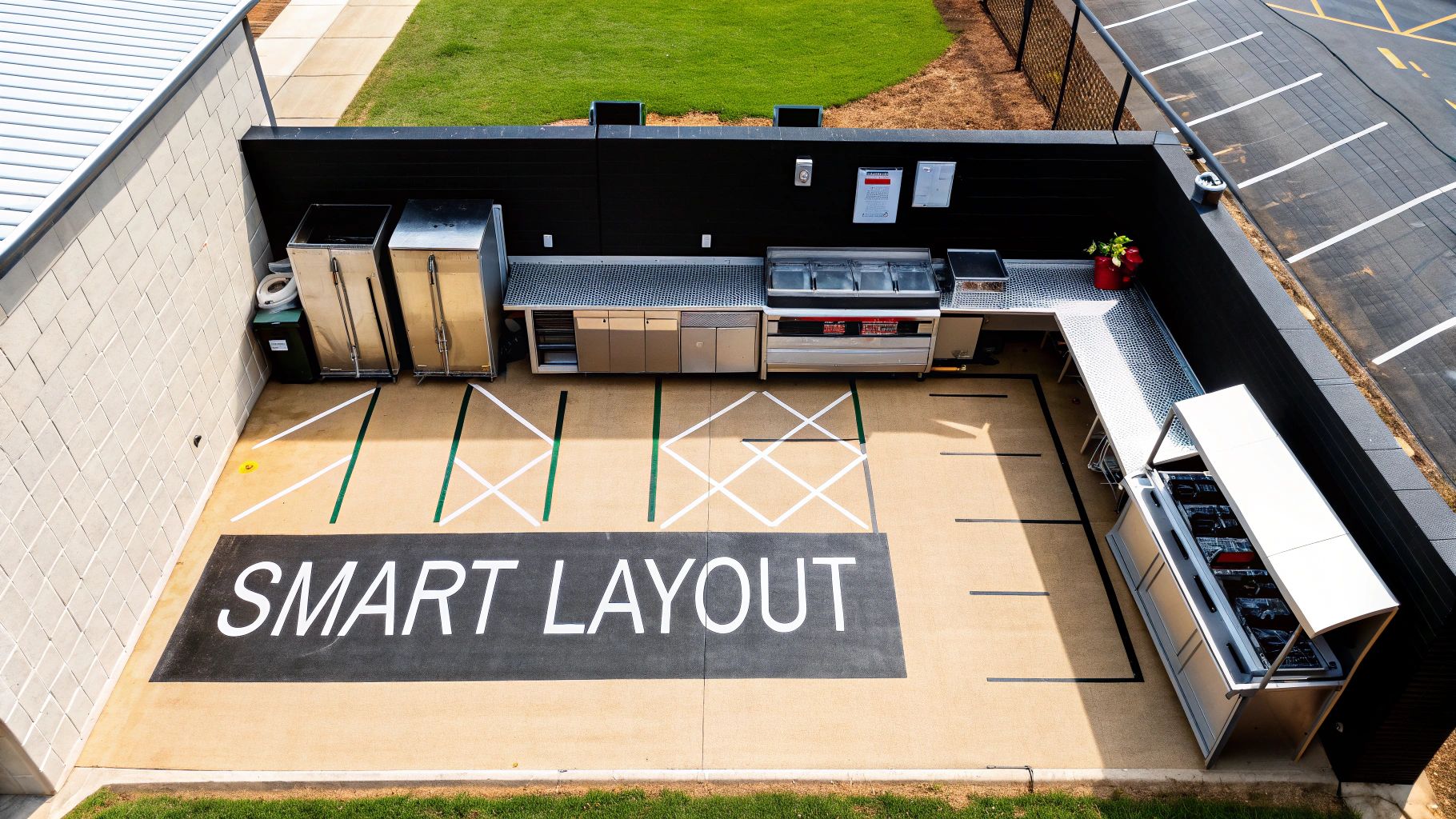
The first step is always to get out the tape measure, but don't stop there. You absolutely have to account for ventilation clearances. Commercial refrigerators and commercial freezers are constantly working and generating heat. Without proper airflow, they can overheat, work way too hard, and fail years before they should. Starving your equipment of air is a surefire recipe for sky-high energy bills and expensive repair calls.
The Power of Smart Placement
Strategic placement is where you really start to see the magic happen. Think of your kitchen as a collection of workstations, with each one having a specific job. By putting refrigeration right at the point of use, you can slash the number of steps your team has to take during a busy service. This simple concept is a total game-changer for productivity.
Just think about these powerful combinations you can build:
- Sandwich Prep Table by the Grill: This setup lets a line cook assemble burgers and sandwiches with perfectly chilled, fresh ingredients without ever leaving their station.
- Under Counter Freezer by the Deep Fryers: Keep your fries, onion rings, and appetizers right where you need them, ensuring they stay frozen solid until the second they hit the hot oil.
- Seattle Bar Equipment Next to the Well: A back bar cooler or under counter refrigerator keeps mixers, garnishes, and top-selling beers within arm's reach of your bartender.
By cutting out all that unnecessary running around, you're not just saving a few seconds here and there. Over a busy shift, this adds up to huge gains in speed and how many customers you can serve, which goes straight to your bottom line.
For a much deeper look into optimizing your entire kitchen, our guide on restaurant kitchen layout design is packed with expert tips that can completely transform your workflow.
Solutions for Compact Seattle Kitchens
Let's be real—not every Seattle business has a massive, sprawling kitchen. Food trucks, cozy coffee shops, and historic downtown spots often have to deal with serious space limitations. In these tighter layouts, every single piece of equipment has to earn its keep. This is where the flexibility of under counter refrigerators and under counter freezers really shines.
An under counter refrigerator can be tucked neatly beneath an existing prep surface, giving you vital cold storage without eating up precious workspace. For a coffee shop, a small Seattle coffee shop refrigerator keeps milk and cream perfectly chilled right next to the espresso machine, making drink prep a breeze.
The goal in any layout, big or small, is to create a logical flow that makes sense for your menu and your service style. You want to turn those potential bottlenecks into hubs of efficiency.
Proper airflow is non-negotiable for keeping your equipment healthy. Here’s a quick guide to the clearances you’ll want to maintain.
Ventilation Clearance Recommendations
| Location | Minimum Clearance (Inches) | Reason |
|---|---|---|
| Back | 2-3 | Allows heat from the condenser coils to escape properly. |
| Sides | 1-2 | Ensures adequate air intake for the cooling system. |
| Top | 3-4 | Prevents heat from getting trapped, especially under a counter. |
Always double-check the manufacturer's spec sheet for the exact requirements of your model, but these numbers are a great starting point. Giving your unit room to breathe is one of the easiest ways to extend its life and keep it running efficiently.
Boosting Efficiency and Keeping Food Safe
The sticker price on a new countertop refrigeration unit is just the beginning of the story. The real cost shows up over years of power bills and daily wear and tear. Thinking about energy efficiency isn't just a "green" choice—it's a smart business move that pads your bottom line. An inefficient commercial refrigerator or commercial freezer can be a silent profit-killer, working overtime just to hold its temperature during a hectic dinner rush.
When you're shopping for equipment, keep an eye out for the ENERGY STAR® label. Think of it as a seal of approval, guaranteeing the unit meets strict energy performance standards from the U.S. Environmental Protection Agency. Grabbing an ENERGY STAR certified model can slash energy use by 10-20% compared to standard units. That’s real money you'll see back on your monthly bill. For a closer look at this, you can learn more about the benefits of energy-efficient commercial refrigeration and what it means for your restaurant.
A Simple Cleaning Routine is Your Best Friend
Beyond the energy bills, good old-fashioned sanitation is non-negotiable for food safety and keeping your equipment running for the long haul. A well-maintained unit doesn't just sidestep expensive repair calls; it means you're always ready when the health inspector walks in. The best defense is a simple, consistent cleaning schedule.
Here’s a practical routine to keep your refrigeration in peak condition:
- Every Day: Give all surfaces—inside and out—a quick wipe-down. Pay special attention to door handles and gaskets. Mop up spills right away before they freeze over or turn into a science experiment.
- Every Week: Pull everything out and give the interior shelves and walls a proper cleaning with a food-safe sanitizer. While you're at it, check the door gaskets for any cracks or hardness. A bad seal forces the compressor to work harder, burning more energy.
- Every Month: Time for a slightly deeper dive. Carefully clean the condenser coils, which are usually hiding at the back or bottom of the unit. Dust and grease love to build up here, forcing the system to fight to release heat and guzzle more power.
A clean condenser coil is the single biggest thing you can do for your refrigerator’s efficiency and lifespan. Just 1/8th of an inch of dust buildup can make it over 30% less efficient.
Last but not least, make sure the drain lines are clear. A clog can lead to ice buildup and water leaking all over your floor, creating a slip hazard and a maintenance headache you just don't need. A few minutes spent on these tasks protects your investment, keeps your food safe, and ensures your kitchen runs like a well-oiled machine.
Here for You, From Seattle to Spokane
Picking out the right counter top refrigeration is a huge step, but what happens after the purchase is just as critical. When you work with us, you’re not just buying a piece of equipment. You’re starting a local partnership built on real-world experience and trust for your Washington business. We stand behind every single thing we sell, from the most compact under counter refrigerator to a sprawling new pizza prep table.
Every new commercial refrigerator and commercial freezer we offer is backed by a solid manufacturer's warranty, which means you can breathe a little easier. We sweat the details so you can stay focused on what you do best—running your kitchen. You can operate with the confidence that your investment is protected from the get-go.
We believe getting the essential tools for your kitchen should be straightforward. Our whole goal is to knock down the barriers that stand between you and the equipment you need to thrive, whether your spot is in the heart of Seattle or clear across the state in Spokane.
Getting You What You Need, Without the Hassle
We've made the entire process as simple as possible, from the moment you decide to buy to the day your equipment arrives. We offer fast, free shipping to major hubs like Seattle, Tacoma, and Bellevue, and we don't forget about our customers in places like Spokane and Vancouver. Your gear, whether it's new sandwich prep tables or a couple of deep fryers, usually shows up in just one to two business days.
Worried about cash flow? We get it. That's why we have flexible financing options available. These programs are built specifically to help new and growing restaurants, bars, and coffee shops get up and running without a massive upfront hit to the bank account. It makes it that much easier to outfit your kitchen with everything from pizza prep tables and Seattle bar equipment to the specialized Seattle coffee shop refrigerators you need. Our job is to help you grow by making top-tier equipment affordable and easy to get.
We Get Asked This A Lot
When you're trying to find the perfect refrigeration for your kitchen here in Seattle, a lot of questions pop up. It's totally normal. Here are some of the most common things we hear from local restaurant owners and what you need to know.
Can I Just Use a Residential Mini-Fridge in My Cafe?
We see this question a lot, and the answer is a hard no. Commercial units are built for a completely different world. They have beefy compressors that can slam the temperature back down to a safe level even when the door is being opened every thirty seconds during a rush.
A residential fridge from a big box store just can't hang. It'll fail, and you'll be staring at a food safety violation or a fridge full of spoiled product. You absolutely need a proper Seattle coffee shop refrigerator designed for the grind.
Sandwich Prep Table vs. Pizza Prep Table: What’s the Real Difference?
It really just comes down to the cutting board. Sandwich prep tables have a slimmer board—plenty of room for assembling subs, paninis, and sandwiches without taking up a ton of space.
Pizza prep tables, on the other hand, have a much deeper cutting board. This gives your crew the real estate they need to stretch and top large pizza doughs. Just match the table to what you're making most, and your workflow will thank you.
Does All My Produce Need to Be Refrigerated?
Nope, and this is a great way to save space. A solid commercial refrigerator is a must-have for things like leafy greens, prepped veggies, dairy, and of course, meats. But a surprising amount of produce is actually happier at room temperature.
Things like tomatoes, onions, garlic, and potatoes can get mealy or lose their flavor in the cold. Keep them on a dry storage shelf and you’ll free up precious refrigerated space for the items that genuinely need it.
Getting your produce storage right is a pro move. It keeps your ingredients tasting their best and makes your under counter refrigerators and under counter freezers work a lot more efficiently. Knowing what not to chill is a game-changer.
Is an Under Counter Refrigerator Really Better Than an Upright?
This one is all about your kitchen's layout and how your team moves. Under counter refrigerators and under counter freezers are fantastic for creating efficient little work zones. You can stick one right next to the grill or fry station so your line cooks have everything they need within arm's reach.
An upright fridge might hold more in bulk, but for point-of-use access, you can't beat an undercounter model. It's all about putting the cold storage exactly where the action is.
Here at Seattle Restaurant Equipment, our job is to help you figure this stuff out. We want to find the refrigeration that makes your kitchen safer, faster, and more efficient.
Take a look at our full lineup of commercial counter top refrigeration.