

Choosing between leasing and buying an ice machine is one of those pivotal financial decisions every foodservice operator has to make. For a lot of folks, especially new ventures, leasing an ice machine is the smarter play. It turns a massive capital hit into a predictable monthly payment, and that often includes all the maintenance and repairs. It's a strategic move to keep cash flowing where you need it most.
Why Leasing an Ice Machine Is Often the Smart Play
When you're building out a new kitchen, every single dollar is precious. You aren’t just buying an ice maker; you're investing in an entire ecosystem of equipment. We're talking about the essentials: commercial refrigerators to keep produce crisp, heavy-duty commercial freezers, and the versatile sandwich prep tables that become the heart of your line. The upfront cost for all that gear can be staggering.
This is precisely where leasing an ice machine becomes a powerful tool. By leasing, you sidestep a huge initial expense, freeing up that capital to be used elsewhere. That’s money you can immediately put toward other critical gear, like a couple of new deep fryers, a dedicated pizza prep table for your star menu item, or the specific Seattle bar equipment you need to serve up amazing cocktails.
Preserving Capital for Core Operations
Let's say you're launching a new coffee shop here in Seattle. Your success hinges on more than just ice. You absolutely need top-tier Seattle coffee shop refrigerators to keep your milk and dairy perfect, and maybe a slick under counter refrigerator to make the most of a tight space. Leasing the ice machine means you can afford to invest in those core assets without compromise.
The fixed monthly lease payment also makes budgeting a whole lot easier. You're protected from those surprise, gut-wrenching repair bills that can seriously derail a new business.
For many restaurant owners I've worked with, the peace of mind from an all-inclusive maintenance plan is the real clincher. Knowing that a critical piece of equipment is completely covered just removes a massive operational headache.
This financial flexibility is a game-changer for any kind of foodservice business. A busy restaurant might desperately need an under counter freezer for quick access during the rush, while a growing catering operation might need to prioritize more shelving and storage. Leasing ensures that one necessary purchase doesn't kill your ability to make another.
Before you decide, it's helpful to see the options laid out side-by-side.
Leasing vs Buying an Ice Machine Quick Comparison
| Consideration | Leasing | Buying |
|---|---|---|
| Upfront Cost | Low to none. Typically just the first month's payment. | High. Full purchase price is due upfront. |
| Monthly Payments | Fixed, predictable monthly payments. | None, but you might have loan payments if financed. |
| Maintenance & Repairs | Usually included in the monthly lease payment. | Owner is responsible for all maintenance and repair costs. |
| Equipment Upgrades | Easy to upgrade to a newer model at the end of the term. | You own an aging asset; upgrading requires selling the old one. |
| Total Cost | Higher over the long term (5+ years). | Lower over the long term, as you build equity in the asset. |
| Tax Implications | Lease payments are typically 100% tax-deductible as an operating expense. | You can depreciate the asset over time, which offers tax benefits. |
| Cash Flow Impact | Preserves working capital for other business needs. | Significant initial cash outlay. |
Ultimately, this table shows there’s a trade-off: leasing offers immediate cash flow benefits and convenience, while buying offers long-term savings and asset ownership.
When Buying Makes More Sense
Despite all the clear advantages of leasing, it’s not the answer for everyone. If your business is well-established and sitting on healthy cash reserves, buying the ice machine outright makes you an owner. It becomes a tangible asset on your balance sheet.
Over the long haul—think five years or more—the total cost of ownership will almost certainly be lower than the cumulative cost of lease payments. The real question is weighing that immediate benefit of preserving cash against the long-term value of owning the asset. With the global market for this equipment hitting $6.6 billion and still growing, the demand for reliable refrigeration is clear. You can explore more insights on the commercial equipment market to see just how big this industry is.
Figuring Out Your Ice Needs and Picking the Right Machine
Before you even think about specific models, you need a solid handle on how much ice your place actually goes through. Guessing is the most common mistake I see, and it's a recipe for disaster. You either run out mid-service on a packed Saturday night or you're paying a lease on a beast of a machine that's way too big for your needs. A little math upfront saves a ton of headaches down the road.
The right number is all about your specific business. A high-volume Bellevue cocktail bar will chew through ice way faster than a cozy Tacoma coffee shop. We can start with some industry rules of thumb to get you in the right ballpark.
How Much Ice Do You Really Use a Day?
Think through your entire operation. It's not just about how many covers you do; it's about how those customers use ice. A cafe pushing mostly hot coffee has completely different needs than one famous for its blended iced drinks.
Here’s a rough guide to get you started:
- Restaurants: A good starting point is about 1.5 pounds of ice per meal served. So, if you're slinging 200 plates on a busy night, you'll need at least 300 pounds of ice just for drinks in the dining room.
- Bars and Taverns: This is where consumption really jumps. Plan for roughly 3 pounds of ice per customer to cover everything from cocktails to sodas and water glasses.
- Coffee Shops & Cafes: You can usually estimate around 1 pound of ice per person. But, if iced lattes and blended drinks are your bread and butter, you'll want to bump that number up.
- Hotels: Budget for about 5 pounds per guest room for the ice dispensers, and don't forget to add extra capacity for any restaurants or bars you have on-site.
Now, these are just baselines. I always tell operators to add a 20% buffer to their final number. This covers you for those unexpectedly slammed nights, summer heatwaves, and the inevitable ice melt in the bin.
This quick comparison gives you a sense of how that decision plays out financially and operationally.
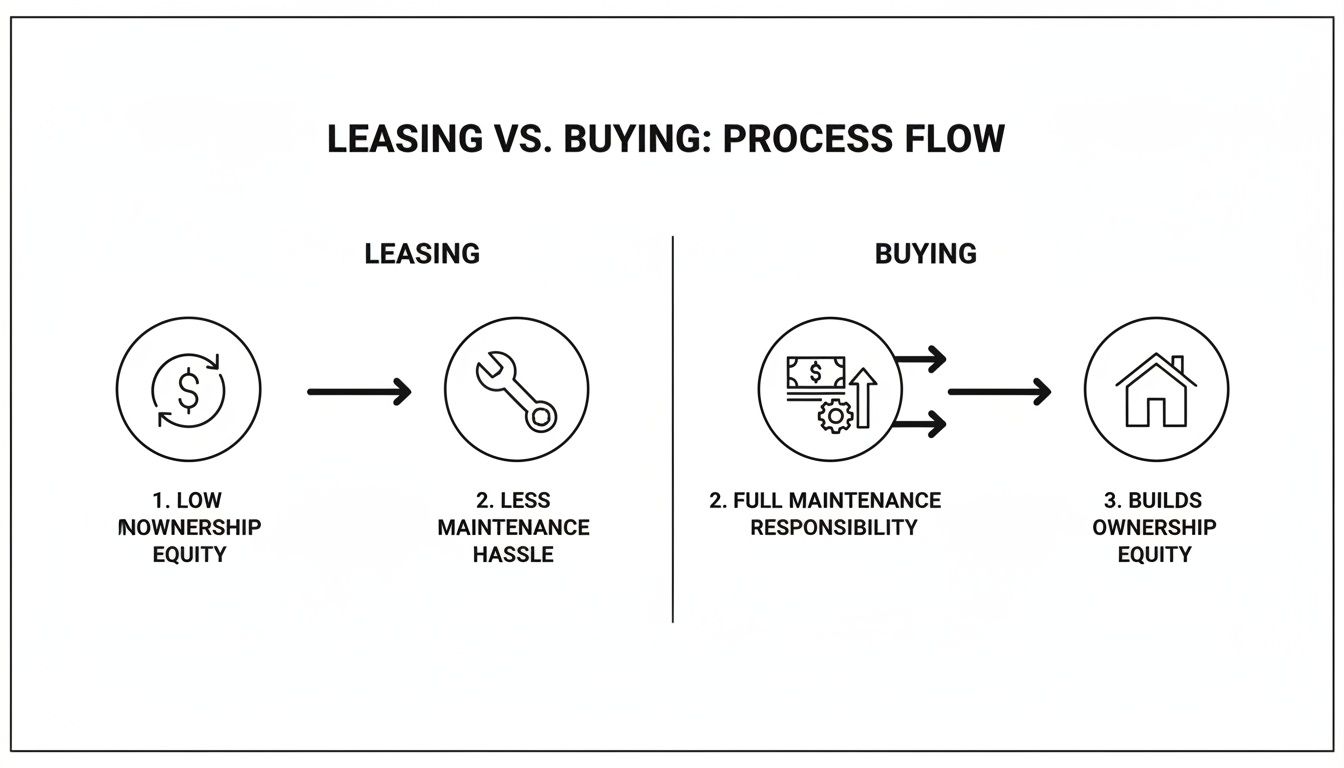
As you can see, leasing keeps initial costs low and bundles in maintenance, while buying is a bigger investment upfront but you own the asset outright.
Finding a Machine That Fits Your Kitchen
Once you have your daily production number nailed down, you can start matching it to the right hardware. The layout and workflow of your kitchen are just as critical as the ice output.
For a tight bar space in downtown Seattle, an under counter refrigerator style ice machine is almost always the answer. It keeps a ready supply of ice right where your bartenders need it, saving precious steps. These little units are absolute workhorses.
If you're running a larger restaurant, a modular ice machine is the way to go. These systems have a separate ice-making "head" and a storage bin, which gives you a ton of flexibility. You could pair a 500-pound production head with a 700-pound bin, for example. This lets you build up a surplus of ice before the dinner rush even begins.
Finally, don't forget about the type of ice itself. Big, solid full cubes melt slowly, making them perfect for high-end cocktails. Softer, chewable nugget ice is a customer favorite in sodas and is ideal for healthcare settings. The type of ice you choose is a small detail that makes a big difference to the customer experience. By thinking through all these points, you'll have no problem finding the perfect unit among the available Seattle ice machine lease options.
Understanding Your Ice Machine Lease Agreement
Diving into a lease agreement can feel like you’re wading through legal jargon, but this is where you protect your business from some serious future headaches. Trust me, overlooking the fine print is a rookie mistake that can cost you big time. Let's break down the key parts so you can sign on the dotted line with total confidence.
The first big fork in the road is the type of lease you’ll sign. While there are a few variations out there, nearly all of them fall into two main buckets. How they play out at the end of the term is completely different, and understanding that is critical for your long-term financial planning.
Fair Market Value vs. The Buyout Option
The two most common paths you'll see are the Fair Market Value (FMV) lease and the $1 Buyout lease. They might sound a bit similar, but they lead to very different places once your term is up.
- Fair Market Value (FMV) Lease: Think of this as a true rental. Your monthly payments are lower because you're just paying to use the machine for a set number of years. When the lease is up, you can return it, sign a new lease for a newer model, or buy the machine for whatever its appraised market value is at that time.
- $1 Buyout Lease: This one acts a lot more like a financing plan. The monthly payments are a bit higher, and for good reason—you’re basically paying off the full value of the ice machine over the lease term. At the end, you get to purchase it for a symbolic fee, usually just $1.
So, which one is right for you? It all comes down to strategy. The FMV lease is a great fit if you want the lowest possible monthly payment and you like the idea of upgrading to the latest and greatest model every few years. On the other hand, the $1 buyout is the way to go if you plan to own the machine in the long run but prefer to spread the cost out.
Critical Clauses to Scrutinize
Beyond the type of lease, a few specific clauses in that contract demand your full attention. These are the terms that spell out your responsibilities and protections, so you need to read them with a fine-tooth comb before signing anything.
First up, find the maintenance and service clause. It’s not enough for it to just be there; your agreement needs to explicitly state what’s covered. Does it include the routine stuff like cleanings, descaling, and filter changes? What’s the guaranteed response time if you have an emergency repair on a busy Friday night? Getting this crystal clear from the start prevents a lot of arguments down the road.
Next, hunt down the liability and damage section. Most leases will cover repairs from normal wear and tear, but you need to know who’s on the hook if the machine gets damaged because of staff error or some other accident. Make sure you understand your financial responsibility in those worst-case scenarios.
Finally, take a close look at the end-of-lease options. The contract should clearly outline the exact process for returning the machine, renewing the agreement, or exercising that purchase option. You don’t want to leave these crucial details up to interpretation when the time comes.
The True Cost of Leasing Beyond the Monthly Payment
When you’re looking at leasing an ice machine, it’s all too easy to fixate on that monthly payment. But trust me, that number is just the starting point. If you want to build a real-world budget and avoid some nasty surprises down the road, you have to dig into the total cost of ownership.
Thinking about the full financial picture is a must for any major equipment purchase. It doesn't matter if you're eyeing new commercial freezers, a solid pizza prep table for your Seattle spot, or a couple of heavy-duty deep fryers—a smart operator always plans for the total investment, not just the sticker price.
Unpacking the One-Time Costs
Before your machine ever spits out its first cube of ice, you’re going to run into a few initial costs. These often get overlooked in the excitement of getting new gear, but they are absolutely critical for getting your equipment up and running the right way.
- Installation Fees: Let's be clear: professional installation isn’t a nice-to-have, it’s essential. You need it for safety, for efficiency, and to keep the health department happy. This covers hooking up water lines, making sure the drainage is correct, and handling the electrical connection safely.
- Delivery Charges: A lot of suppliers offer delivery, but you always need to ask if there are charges based on your location. Getting that heavy machine from a warehouse to your kitchen in Kent or Everett isn't free.
- Initial Setup: This could mean buying the right water lines, drain hoses, or specific electrical fittings if your space isn't already prepped for a commercial ice maker.
These upfront costs are just part of the game when you're outfitting a kitchen, whether you're adding a small under counter refrigerator or a massive walk-in.
Budgeting for Ongoing Expenses
Once it’s installed, your leased ice machine has continuous costs you need to plan for. Factoring these in from the start keeps your monthly budget predictable. The two biggest culprits here are utilities and filtration.
Water and electricity are the fuel for your machine. An older, less efficient model can quietly bleed your bank account through higher utility bills month after month. To put it in perspective, an ENERGY STAR certified machine can be 15% more energy-efficient and 10% more water-efficient than a standard model. That translates into real cash savings over time.
A high-quality water filtration system isn't a luxury; it's a necessity. It protects the machine’s guts from scale buildup, which is the number one reason these things break down. Even more importantly, it makes sure your ice is clean, clear, and doesn't taste funky—something your customers will definitely notice.
Your lease might include filter replacements, but if it doesn't, that’s a recurring cost you absolutely have to budget for. Just like the refrigerators in a Seattle coffee shop need to hold a consistent temp, your ice machine needs clean water to do its job.
By anticipating all these costs, leasing an ice machine becomes a much more transparent and manageable investment. You can learn more about how equipment costs fit into your bigger financial picture with our guide to restaurant equipment financing options.
Getting Your Leased Machine Installed and Maintained
Getting your new ice machine up and running is a little more involved than just finding a spot and plugging it in. A professional, by-the-book installation is your first line of defense against future breakdowns and performance issues. Honestly, it's just as critical as getting the placement of your commercial refrigerators or sandwich prep tables right.
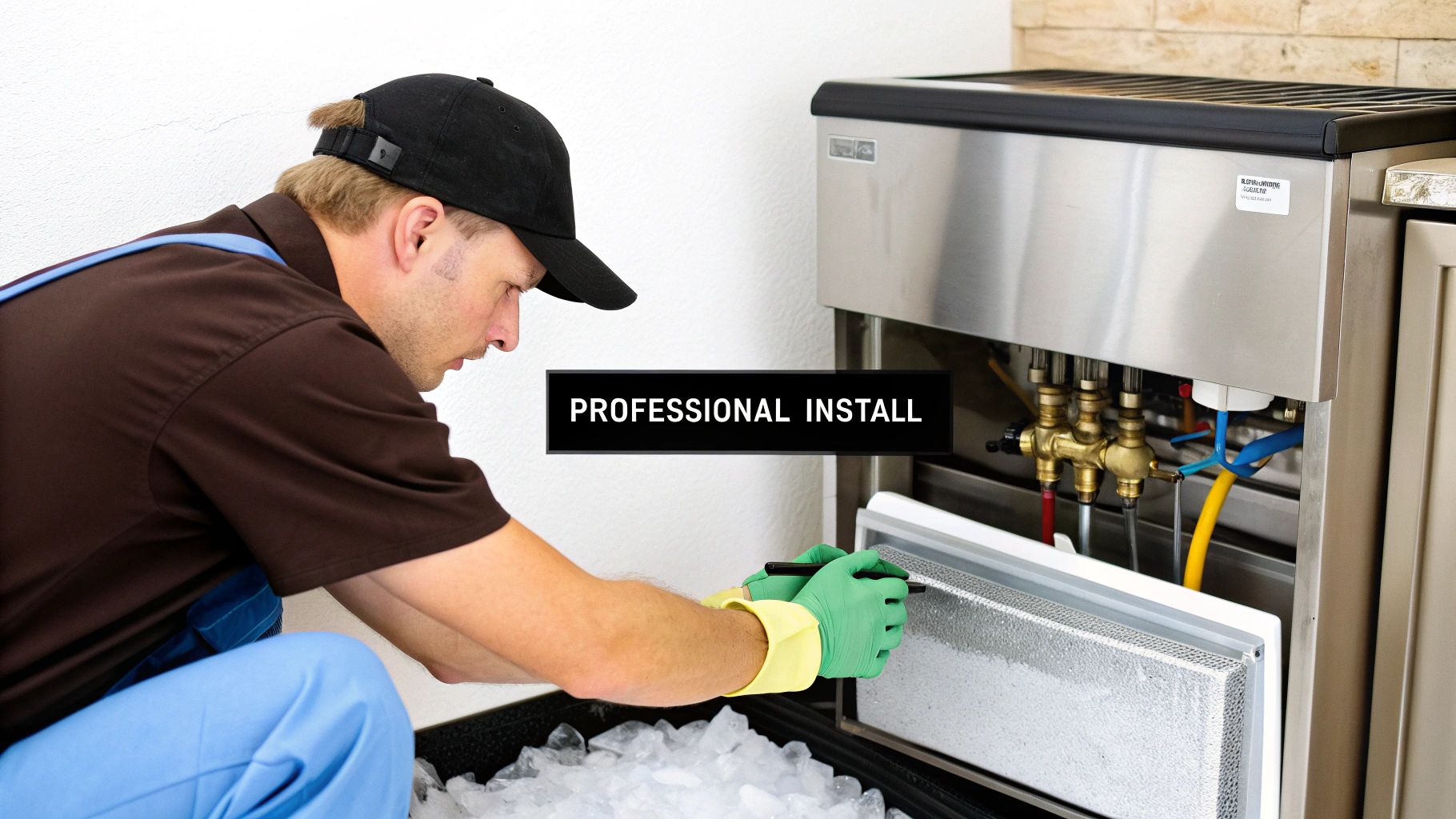
This isn't a DIY weekend project. To work correctly and safely, the machine needs its own dedicated utility connections. You'll need a licensed plumber and an electrician to handle the setup, ensuring everything is to code from day one. It's a non-negotiable step, whether you're adding a small under counter freezer or a massive pizza prep table.
Your installer should be checking off these boxes:
- A dedicated water line with its own shut-off valve is a must for a clean, consistent water supply.
- Proper drainage (usually a floor drain) is needed to handle meltwater and cleaning cycles without turning your floor into a slippery mess.
- The right electrical circuit has to match the machine's voltage and amperage specs perfectly to avoid tripping breakers or damaging the unit.
Keeping Your Machine in Top Shape
Once your machine is humming along, the game shifts to maintenance. Now, one of the best parts of leasing an ice machine is that the leasing company typically handles the big, scary repairs. But the day-to-day cleaning and basic upkeep? That’s on your team.
Don't underestimate this. If you let routine cleaning slide, you're asking for trouble—health code violations, expensive breakdowns that your lease won't cover, and the ultimate sin: serving cloudy, funky-tasting ice to your customers. Your ice machine needs daily attention, just like the espresso machine in a Seattle coffee shop or the Seattle bar equipment you wipe down every night.
Think of your lease's maintenance plan as your safety net for major failures. Your team’s daily and weekly cleaning routine is what prevents those failures from happening in the first place.
Who's Responsible for What? A Clear Breakdown
Your lease agreement is the rulebook. It will spell out exactly who handles what. It's crucial to read this section closely so you know your duties and can keep the machine running smoothly.
What the Leasing Company Usually Covers:
- Scheduled preventative maintenance visits, often twice a year.
- Major repairs and part replacements for things like the compressor or motors.
- Emergency service calls when the machine unexpectedly quits on you.
What Your Team Is Usually Responsible For:
- Wiping down the exterior and cleaning the ice scoop daily.
- Deep cleaning and sanitizing the storage bin every week or two.
- Checking and changing water filters as needed (unless your lease specifically includes them).
- Keeping the area around the unit clean and clear to ensure good airflow.
This partnership approach ensures the machine remains a reliable workhorse, just like your deep fryers or commercial freezers. For a more detailed walkthrough, take a look at our guide on using an ice machine cleaner and sanitizer the right way.
Why Washington Businesses Are Choosing to Lease
Leasing isn't some new fad; it's a smart, strategic move for countless Washington restaurant operators. The choice to lease equipment—whether it’s a high-capacity ice machine or a new bank of deep fryers—is all about staying financially nimble in a cutthroat market. For many, it's the difference between a predictable monthly expense and a risky capital drain that ties up cash better spent elsewhere.
This isn't just a local trend, either. The global commercial ice machine market is massive and getting bigger. Valued around $1.47 billion in 2025, it’s expected to explode to $4.5 billion by 2035. North America leads the pack, holding a 41.2% market share valued at $800 million, and it's no surprise why. Our huge foodservice industry and strict food safety rules demand regular equipment upgrades. This growth just proves how vital ice machines are, and you can dig into more insights on the commercial ice machine market to see the whole picture.
Flexibility for a Fast-Moving Market
Picture this: you run a popular Renton brewery, and your new canned cocktails are flying out the door. Suddenly, your ice needs have doubled, but you don't have a pile of cash ready to buy a bigger machine. By leasing an ice machine, you can upgrade to a higher-capacity model without taking a huge financial hit. It lets your business scale up right when the demand hits.
That kind of flexibility is everything. The power to swap out an underperforming machine or upgrade to a more energy-efficient model is what keeps you competitive. It ensures your equipment is an asset that grows with you, not an anchor holding you back. This is just as true for your ice machine as it is for the commercial refrigerators keeping your ingredients perfectly chilled.
The real beauty of leasing is how it turns a major capital expense into a manageable operating expense. That simple shift on your books is a game-changer for preserving cash flow and reinvesting in your growth.
A Laser Focus on Your Core Business
For a small cafe owner in Vancouver, every dollar and every minute is precious. Their expertise is in pulling the perfect espresso shot and creating a vibe customers love—not troubleshooting a busted compressor. Leasing takes the operational headache of equipment maintenance completely off their plate.
- Predictable Costs: A fixed monthly payment makes budgeting a breeze. No more surprise repair bills for your ice machine or your under counter freezers.
- Access to Better Gear: You can get your hands on a newer, more reliable model you might not be able to afford outright. This often means better energy efficiency, which quietly lowers your utility bills month after month.
- Way Less Downtime: Most lease agreements bundle in service and maintenance. One quick call gets a technician heading your way, minimizing the damage a breakdown can do to your business.
This all-in-one service is a huge reason why operators from Spokane to Tacoma are going the lease route. It lets them focus on what they actually do best: serving amazing food and drinks. The leasing company handles the rest, making sure essential gear like your Seattle coffee shop refrigerators, pizza prep tables, and other Seattle bar equipment are always ready to go. You get to concentrate on your customers and your bottom line.
Still Have Questions? Let's Clear Things Up
Making the leap to lease an ice machine can bring up a lot of questions. That's completely normal. You're making a big decision for your restaurant, and you need all the facts. Below, I've answered some of the most common questions we hear from operators just like you.
What happens if the ice machine breaks down?
This is probably the #1 concern, and for good reason. A broken ice machine during a dinner rush is a nightmare.
With a full-service lease, you simply make a phone call. The leasing company is responsible for dispatching a technician and covering all the costs for parts and labor. Most providers guarantee a certain response time, so you're not left hanging. This is the biggest advantage of leasing—peace of mind.
If you have a finance lease, you're on the hook for repairs, just as if you owned it.
Can I upgrade my machine if my restaurant gets busier?
Absolutely, and this is a huge perk of leasing. Most leasing companies understand that business needs change. If you find your 500 lb machine can't keep up with your new patio seating, you can typically upgrade to a larger model mid-lease.
There might be an adjustment to your monthly payment, but it’s far easier and cheaper than selling a machine you own and buying a new, larger one.
Is my credit score a major factor?
Yes, your credit history will be considered, just like with any financing agreement. However, leasing companies that specialize in restaurant equipment often have more flexible criteria than a traditional bank.
Even if your credit isn't perfect, don't assume you won't qualify. Many local Washington providers are used to working with new businesses and startups and may have options available.
What's included in the monthly payment?
This is where you need to read the fine print.
- A full-service lease usually bundles the machine, preventive maintenance, repairs, and sometimes even standard water filter replacements into one predictable monthly fee.
- A finance lease payment only covers the cost of the equipment itself. All maintenance, repairs, and consumables are extra expenses for you.
Always ask for a detailed breakdown of what is and isn't included before you sign anything.
What about routine maintenance and cleaning?
With a full-service lease, the leasing company schedules and performs routine maintenance. This is a game-changer. They'll handle the deep cleaning and descaling that keeps your machine running efficiently and your ice safe and sanitary. It's one less thing for you to worry about.
If you opt for a finance lease, you're responsible for all of it—either doing it yourself or hiring a service to handle it.