

Anyone who's opened a restaurant in Washington knows the feeling. You've got a killer concept, a great location, but one massive hurdle stands in your way: finding quality kitchen equipment that won't completely gut your budget.
This guide is your inside track to sourcing affordable, reliable gear. We're going to look past the shiny price tags and get into what true value really means for your business. Our entire model is built around cutting out the expensive showrooms and commissioned salespeople, so we can pass those savings directly on to you.
Equipping Your Washington Kitchen Without Breaking the Bank
Think of this as your game plan for outfitting that new Seattle cafe, your Spokane food truck, or the Tacoma restaurant you've been dreaming of. Whether you're building a kitchen from scratch or just upgrading a few key pieces, the right equipment is the heart and soul of your operation. It sets the pace for your workflow, determines the quality of your food, and ultimately, drives your profits.
We'll walk through practical advice on budgeting smart, picking the right tools for the job, understanding your financing options, and using local advantages to give your business the edge it needs.
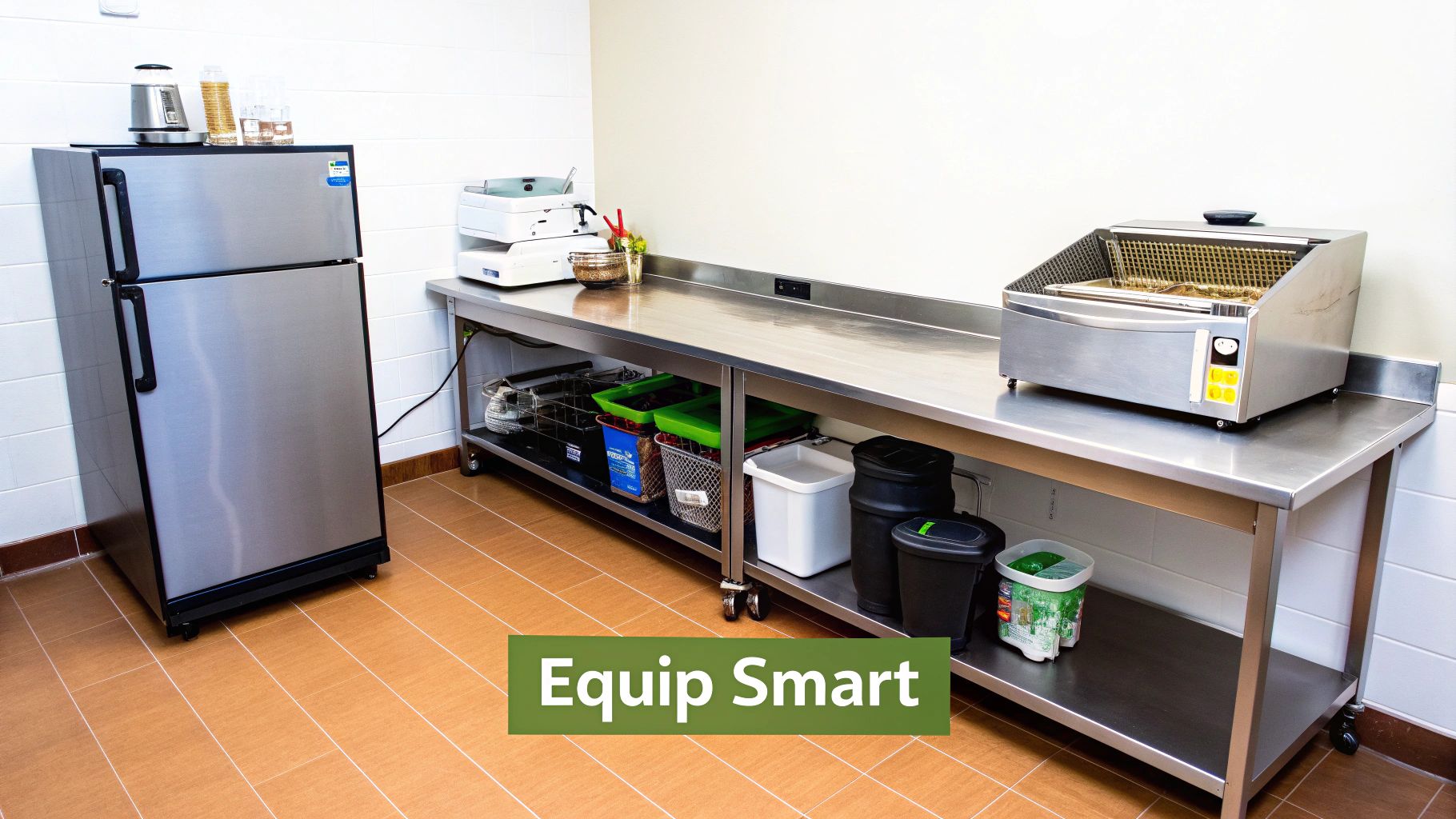
Core Equipment for Seattle Operators
Finding affordable restaurant equipment is all about prioritizing the workhorses of your kitchen. Every spot is different, of course, but there's a core lineup of commercial-grade appliances that forms the backbone of any successful foodservice operation.
A refrigerator for a bustling Seattle coffee shop, for instance, has a completely different job than a high-capacity freezer in a Tacoma steakhouse. The trick is to match the specs—size, power, and features—to what your menu and daily rush actually demand.
Here are the essentials you'll want to build around:
- Commercial Refrigerators & Freezers: This is ground zero. These units protect thousands of dollars in inventory. The category covers everything from massive walk-ins to handy under counter refrigerators and under counter freezers that save precious floor space.
- Specialized Prep Tables: On a slammed line, workflow is king. Sandwich prep tables and pizza prep tables are genius designs, with built-in refrigerated wells that keep ingredients perfectly chilled and right at your fingertips. They're a game-changer for speed.
- Cooking & Bar Equipment: This is where the magic happens. It could be powerful deep fryers for a pub cranking out fish and chips, or the specific Seattle bar equipment needed to keep the drinks flowing on a Saturday night. For cafes, having reliable Seattle coffee shop refrigerators is key.
A well-equipped kitchen isn't about having the most expensive toys; it's about having the right tools. You want to invest in reliable, efficient gear that empowers your staff to pump out consistent, quality food without sinking your startup capital.
Before you buy a single thing, you have to understand the flow of your space. Getting this right from the start is crucial. For a deeper dive into that initial planning, check out our guide on setting up a commercial kitchen. Nailing the layout ensures every piece of equipment you bring in has a purpose, making the most of every square foot and every dollar spent.
Budgeting for Your Essential Kitchen Equipment
Let’s be honest: building a smart equipment budget is the foundation of a profitable restaurant. Before you even start daydreaming about specific models or shiny new toys, you need a rock-solid financial plan. This isn't just about making a shopping list—it's about creating a strategic blueprint that ties every dollar you spend directly to your menu and how you operate.
The very first step is getting real about your needs versus your wants. It’s a classic trap for new operators to blow their budget on impressive-looking specialty gadgets that aren't actually critical for getting food out the door. This is where you need to get ruthless and separate your "Day One Essentials" from your "Future Upgrades."
Day One Essentials
These are the absolute non-negotiables. Think of the equipment you simply cannot open without. For most Seattle foodservice spots, this list is surprisingly focused and will be the heart of your investment in affordable restaurant equipment.
- Commercial Refrigerators & Freezers: This is the bedrock of your entire operation, ensuring food safety and keeping your inventory fresh. We’re talking about everything from a main walk-in cooler to the smaller workhorses like under counter refrigerators and under counter freezers that keep your prep line humming.
- Prep Tables: Efficiency is born on the prep line. If you're running a sandwich shop, a dedicated sandwich prep table is a game-changer. For a pizzeria, your pizza prep tables are where the magic happens. These units keep ingredients perfectly chilled and right at your fingertips, which is key to speeding up service when the orders start flying in.
- Primary Cooking Equipment: This part is all about your menu. It could be a lineup of dependable deep fryers for a pub, a versatile six-burner range for a classic diner, or the specific Seattle bar equipment and Seattle coffee shop refrigerators you need to pour drinks and serve pastries.
The goal with your Day One budget isn't to buy cheap; it's to buy smart. For these core items, you want to focus on new, reliable equipment that comes with a solid warranty. Why? Because if your main refrigerator goes down on a Friday night, it can shut down your entire business.
Total Cost of Ownership
Focusing only on the sticker price is one of the biggest mistakes you can make. A truly savvy owner thinks about the Total Cost of Ownership (TCO). This just means looking at what a piece of equipment will really cost you over its entire life, including energy bills, maintenance, and any repair costs down the road.
Sure, an energy-efficient commercial freezer might have a higher price tag upfront, but it could easily save you thousands in electricity over the next five years. That makes it the more affordable choice in the long run.
This kind of forward-thinking is becoming the norm. The foodservice equipment market is growing fast, expected to jump from $41.47 billion in 2025 to $71.12 billion by 2033. The segment for kitchen essentials—like the prep tables and coolers we just talked about—is predicted to grow even faster.
What does this tell us? More and more operators are figuring out that smart investments in efficient, reliable equipment are a direct line to better profits. You can dig into more foodservice market trends on Grand View Research. By focusing on TCO, you’re making a business decision based on long-term value, not just a low initial price.
New Vs Used Equipment: A Strategic Comparison
When you're trying to find affordable restaurant equipment, one of the first big decisions is whether to go new or used. That low price tag on used gear can look really good, especially when cash is tight. But chasing that initial bargain can be a risky move, one that often costs you a lot more down the road.
Picture this: you save a few hundred bucks on a used commercial freezer. Six months later, it quits on a hot July weekend, and thousands of dollars in inventory melts along with it. Now you're in a panic, trying to find an emergency replacement, losing sales, and staring at a repair bill that completely erases your "savings." That's the gamble with used equipment—it comes with a mystery history, zero warranty, and the constant risk of breaking down at the worst possible time.
Choosing new equipment, on the other hand, is about buying yourself peace of mind and long-term stability. It’s a strategic move that sets your kitchen up for reliability and profit.
This decision tree can help you map out the thought process when you're budgeting for a piece of equipment your kitchen can't live without.
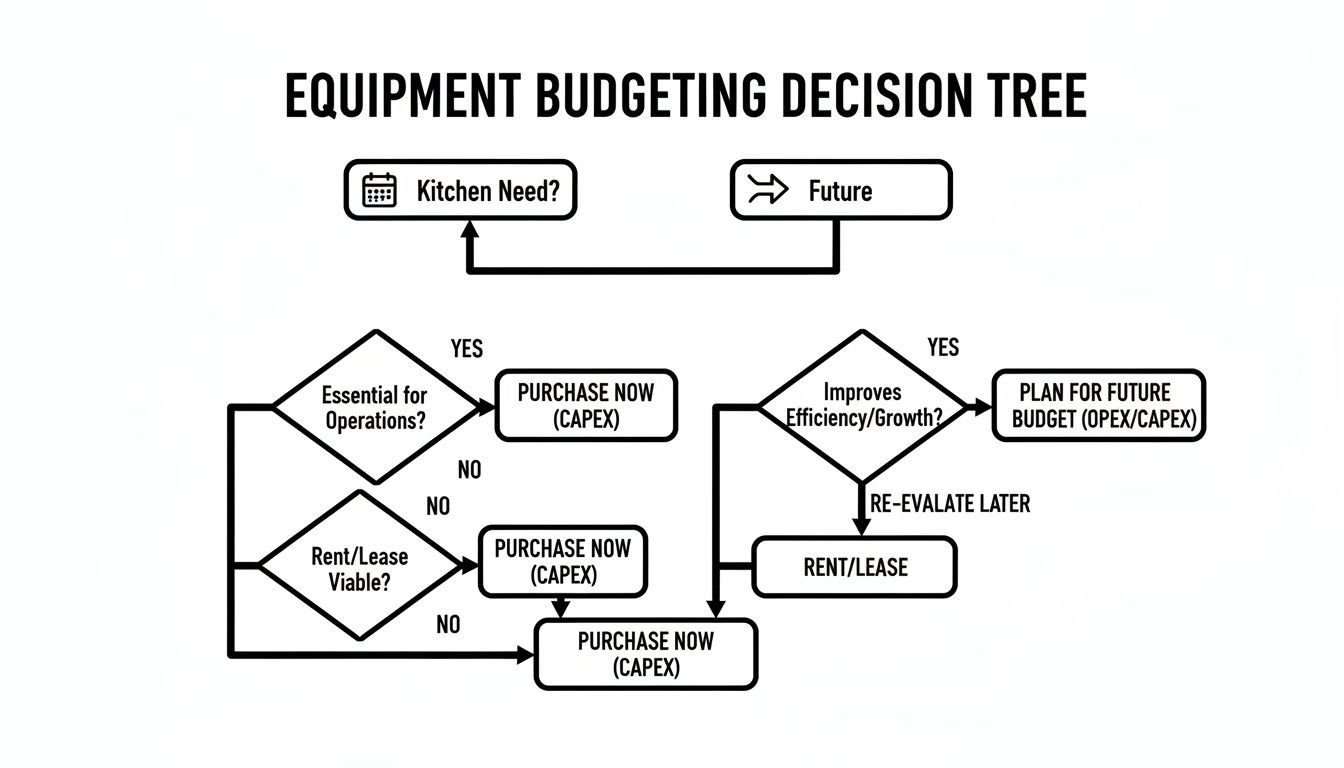
The main takeaway here is simple: your essential, day-one equipment should always be a priority purchase. It’s the reliable foundation your whole operation is built on.
The True Cost of a Bargain
We get it—the appeal of a second-hand deal is strong. But the potential downsides are huge, especially for core items that need to run 24/7.
Here are a few common risks you run with used gear:
- No Warranty Protection: If that used commercial refrigerator dies, you're on the hook for the full cost of repairs and any food you have to throw out.
- Unknown Service History: You have no clue how the last owner treated it. Was it maintained properly, or was it neglected and on its last legs?
- Lower Energy Efficiency: Older models are almost always energy hogs. That "cheap" under counter freezer could easily add hundreds of dollars to your yearly utility bills.
- Safety and Compliance Issues: There's a real chance used equipment might not meet current health and safety codes, putting your business at risk during the next inspection.
"The cheapest option is rarely the most affordable one. True affordability is measured in uptime, efficiency, and the absence of catastrophic failures. A new unit with a strong warranty is an investment in operational continuity."
The restaurant equipment market is growing fast—it's projected to jump from $3.88 billion in 2024 to $5.58 billion by 2029. Part of what's driving this growth are new food safety and energy efficiency rules. Manufacturers are responding by creating better, more affordable, and compliant gear, making new equipment an even smarter choice. You can explore the full restaurant equipment market report on giiresearch.com for more on these trends.
Why New Equipment Is the Smarter Long-Term Play
Picking new equipment isn’t just about getting something shiny; it's about guaranteeing your kitchen's workflow from day one. When you buy a new sandwich prep table or pizza prep table for your Seattle spot, you're investing in performance you can count on.
To help you weigh the options, here's a side-by-side comparison.
New vs Used Restaurant Equipment Comparison
| Factor | New Equipment | Used Equipment |
|---|---|---|
| Upfront Cost | Higher initial investment. | Lower initial investment. |
| Warranty | Comes with manufacturer warranty, covering repairs. | Typically sold "as-is" with no warranty. |
| Reliability | High. Ready to work out of the box. | Unknown. Could fail at any time. |
| Energy Efficiency | High. Often Energy Star rated, saving on utilities. | Low. Older models consume more power. |
| Compliance | Guaranteed to meet current health & safety codes. | May not meet current standards. |
| Lifespan | Full expected lifespan of the unit. | Shorter, unpredictable lifespan. |
| Financing | Easier to finance through suppliers or lenders. | Difficult or impossible to get financing. |
While the initial cost is higher, the long-term value of new equipment is clear.
The benefits directly protect your bottom line:
- Manufacturer Warranty: This is your safety net. When a compressor fails on your Seattle coffee shop refrigerator, the warranty covers it, protecting your cash.
- Peak Energy Efficiency: New, Energy Star-rated models are designed to sip electricity, leading to immediate and ongoing savings on your utility bills.
- Latest Technology and Features: Modern deep fryers and Seattle bar equipment often have features that improve safety, make cleaning faster, and boost performance.
- Guaranteed Compliance: You can rest easy knowing your new equipment meets all current health and safety codes, helping you avoid fines or forced shutdowns.
A value-focused supplier can make new equipment more affordable than you might think. By cutting out expensive showrooms and commissioned salespeople, we pass those savings directly on to you. This approach makes it possible to outfit your kitchen with dependable, brand-new gear without draining your budget. For a deeper dive, check out our detailed comparison of new versus used commercial kitchen equipment.
Ultimately, new equipment delivers the stability you need to stop worrying about your gear and start focusing on what really matters: running your business.
Choosing Your Core Kitchen Equipment
Okay, so you’ve nailed down your budget and decided that new equipment is the smarter long-term play. Now for the fun part: picking the core pieces that will power your kitchen. This isn't just about filling empty space; it’s about choosing the absolute workhorses that define your workflow, protect your inventory, and ultimately, make you money.
For any Washington foodservice operator, from a busy Seattle bar to a cozy Everett coffee shop, the right gear is everything.
Think of your kitchen equipment as your most reliable employees. They have to show up every day, perform consistently under pressure, and contribute directly to your bottom line. Investing in affordable restaurant equipment that’s perfectly matched to your menu and volume is one of the most important decisions you’ll make. Let's walk through the essentials to help you build a kitchen that’s both efficient and tough.
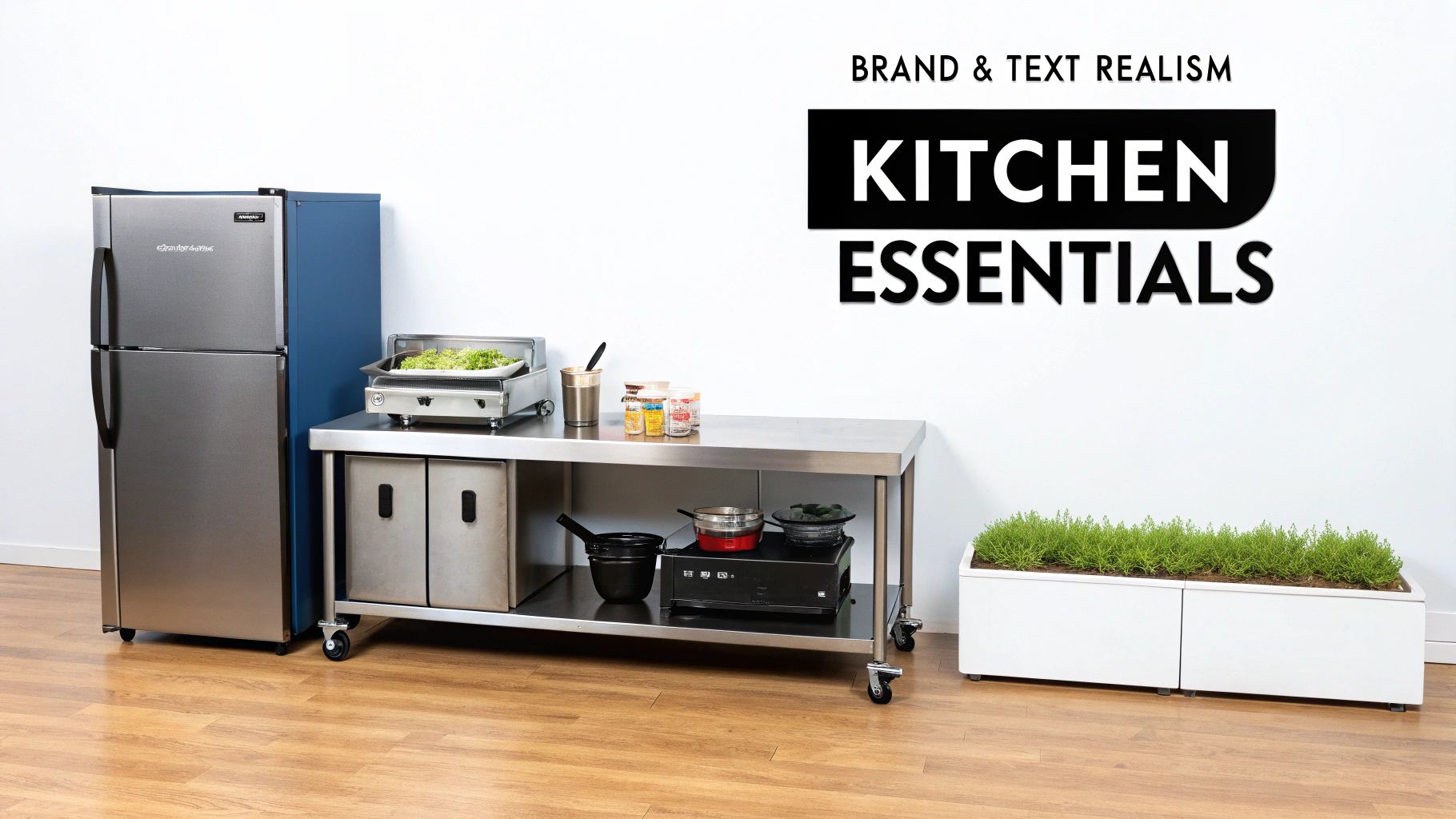
Mastering Cold Storage: Refrigeration and Freezers
Your refrigeration system is the unsung hero of your kitchen. It runs 24/7, safeguarding thousands of dollars in perishable ingredients. If it goes down, it's not just an inconvenience—it’s a financial disaster. That's why picking out new, reliable commercial refrigerators and commercial freezers is a non-negotiable for any smart operator.
These units come in all shapes and sizes, each built for a specific job. A reach-in refrigerator is your go-to for daily prep ingredients, while a chest freezer is the champ for long-term storage of bulk items.
Consider your refrigeration the silent partner in your business. It works tirelessly behind the scenes to ensure food safety and quality. Investing in a new, energy-efficient model with a solid warranty isn't an expense—it's insurance against lost product and lost revenue.
When you're looking at different models, pay attention to the compressor. Top-mount compressors are great for hot kitchens because they don't suck up dust from the floor. Bottom-mount units, on the other hand, are easier on your back since the bottom shelf is higher up. Also, keep an eye out for ENERGY STAR® certified models. They can slash electricity use by up to 40%, which adds up to huge savings on your utility bills.
The Power of Specialized Prep Tables
In the heat of service, speed and organization are king. This is where specialized prep tables prove their worth. They're designed to make the assembly process for specific menu items faster and smoother by combining refrigerated storage with a handy workspace. The result? A better workflow and faster ticket times.
Two of the most common types are:
- Sandwich Prep Tables: For any deli, cafe, or spot with a lunch rush, a sandwich prep table is an absolute game-changer. It has refrigerated wells up top for holding meats, cheeses, and toppings at safe temps, with a cutting board right in front for assembly. Below, you’ve got refrigerated cabinets for all your backup ingredients.
- Pizza Prep Tables: In the same way, pizza prep tables are custom-built for pizzerias. They feature a raised, refrigerated rail that holds deep pans of sauce, cheese, and toppings. The workspace is usually wider and deeper, often made of marble to help keep the dough cool.
These tables aren't just about saving a few steps. By keeping ingredients perfectly chilled and right where you need them, they cut down the risk of food safety issues and help you deliver a more consistent product every time.
Undercounter Units: Maximizing Your Space
For kitchens where every square foot counts—think food trucks or tiny urban cafes—under counter refrigerators and under counter freezers are lifesavers. These compact units slide neatly under your countertops, turning what was once dead space into valuable cold storage.
You can stick an under counter refrigerator right on the cooking line to hold sauces and prepped veggies, so your chefs aren't constantly walking back and forth to the main cooler. An under counter freezer is perfect for stashing appetizers or desserts right near where you serve them. This "point-of-use" refrigeration is a core principle of smart kitchen design, and it shaves precious seconds off every single order.
Essential Equipment for Bars and Coffee Shops
The right gear is just as vital for beverage-focused businesses. For a packed Seattle bar, reliable Seattle bar equipment is the key to fast, consistent service. We're talking back bar coolers to keep bottled drinks ice-cold and easy to grab, plus high-performance ice machines and glass washers that can keep up with the rush.
For cafes, you'll need specialized Seattle coffee shop refrigerators. This includes things like glass-door merchandisers for showing off grab-and-go drinks and snacks, plus milk coolers designed to keep dairy at the perfect temperature right next to your espresso machine. These pieces are built for both function and presentation, helping you drive those profitable impulse buys.
Choosing the Right Cooking Equipment
While refrigeration and prep are the foundation, your cooking equipment is where your menu really comes to life. For a lot of places, one of the most profitable pieces of gear you can own is a deep fryer.
A solid commercial deep fryer can be a serious money-maker, cranking out everything from French fries and onion rings to chicken wings and doughnuts. When you're shopping for one, think about the fuel type (gas or electric), the size of the fry pot (which dictates your output), and the recovery time. That's how quickly the oil gets back up to temperature after you drop in a batch of frozen food. A fryer with a fast recovery time means crispier, less greasy food and a line that keeps moving during your busiest hours. A quality fryer is a direct investment in the speed and quality of your most popular dishes.
Navigating Financing and Washington State Advantages
Outfitting a commercial kitchen is a serious investment. But tying up all your cash in equipment right at the start can be a recipe for disaster. It doesn't have to drain your capital, though. Think of strategic financing as a tool—one that lets you get the kitchen you need now while keeping your money free for things like payroll, inventory, and marketing. This isn't just about borrowing money; it's about setting your business up for long-term success.
Instead of one massive, bank-account-clearing expense, financing breaks that cost down into predictable monthly payments. You can manage your budget without any nasty surprises, keeping your cash flow healthy. And in the first few years of business, healthy cash flow is everything.
Unlocking Your Kitchen with Smart Financing
Financing puts top-tier, reliable equipment within reach right from day one. For new restaurants, bars, and food trucks, that's a game-changer. You don't have to roll the dice on questionable used gear that could die mid-service. You can build your kitchen with the confidence that comes with brand-new, fully warrantied appliances.
This approach just makes sense:
- Preserves Working Capital: Keep cash on hand for daily costs, unexpected repairs, and those moments you need to jump on a growth opportunity.
- Predictable Budgeting: Fixed monthly payments mean no guesswork. You know exactly what you owe and when.
- Access to Better Equipment: Get the efficient, reliable models you actually want, not just what you can afford to pay for in cash today.
- Builds Business Credit: Making your payments on time is a great way to build a solid credit history for your business.
By financing your core equipment, you're really investing in uptime. You get the peace of mind that a full manufacturer's warranty provides, protecting you from the crippling cost of a sudden breakdown and the sales you'd lose because of it.
Financing turns a huge capital expense into a manageable operating cost. It means you can get essential workhorses like commercial refrigerators, sandwich prep tables, and deep fryers without sacrificing financial flexibility. To dig deeper, check out our guide on how to finance restaurant equipment. You get to focus on what matters most: launching strong and serving customers.
The Washington Advantage: Local Delivery and Speed
Beyond the money, working with a local Washington supplier gives you a massive logistical edge that out-of-state vendors can’t touch. Shipping heavy commercial equipment across the country is slow and expensive. Freight charges can quietly add hundreds, sometimes thousands, to your final bill, and you could be left waiting weeks for a critical piece of your kitchen to arrive.
Picture it: you order a new commercial freezer from a company back east. First, you get hit with a huge freight fee. Then, they give you a vague delivery window of one-to-three weeks. Every single day you’re waiting is a day your kitchen isn't making money.
Now, imagine working with a local supplier instead. You could get free delivery on your whole order, often in just a day or two.
Here’s what that local advantage really means for you:
- Fast, Free Delivery: Get your gear delivered to places like Renton, Kent, Bellevue, Tacoma, or Vancouver without spending an extra dime on shipping.
- Reduced Downtime: If a fryer goes down, you can get a replacement delivered in days, not weeks. That keeps your business running.
- No Hidden Freight Costs: The price you see is the price you pay. Your budget stays on track.
- Local Support: You’ve got a team nearby that actually understands the Washington foodservice scene.
A smarter, faster supply chain is a real competitive edge. You can open your doors sooner, bounce back from equipment failures faster, and keep your operation humming without the headaches and high costs of long-distance shipping.
Don’t Overlook the Warranty
When you’re hunting for affordable restaurant equipment, it’s so easy to get laser-focused on the sticker price. But the real cost of a machine isn't just what you pay today—it's what it costs you over its entire life in your kitchen. An equipment warranty isn't just a piece of paper; it’s a critical safety net, shifting the conversation from a one-time purchase to your long-term financial health.
Think of a strong commercial warranty as your shield against those gut-wrenching, budget-destroying surprises that can shut a restaurant down. Picture this: your main commercial freezer gives out on a busy Friday night in Seattle. Without a warranty, you're looking at a domino effect of disasters: thousands of dollars in spoiled inventory, a room full of angry customers, lost revenue, and a massive emergency repair bill.
With a solid warranty, that nightmare scenario turns into a manageable service call.
What a Good Warranty Actually Covers
Breaking down what a warranty includes really shows you its value. A comprehensive policy is designed to protect the most essential—and most expensive—parts of your equipment, so you’re not left high and dry.
Here’s what you should expect from a good warranty:
- Parts Coverage: This covers the cost of the actual components if something breaks. That could be anything from a bad thermostat in your sandwich prep table to a busted heating element in a deep fryer.
- Labor Coverage: This is a huge one. It pays for the certified technician's time to come out, diagnose the issue, and actually fix it. Labor costs can pile up fast, often costing more than the part itself.
- Compressor Coverage: For anything with refrigeration—like your commercial refrigerators and pizza prep tables—the compressor is the heart of the machine. They are incredibly expensive to replace, so a separate, longer warranty on the compressor is a must-have.
A warranty takes an unpredictable, potentially catastrophic expense and turns it into a fixed, predictable operating cost. It’s what makes equipment truly affordable, because it buys you reliability and peace of mind for years.
This focus on long-term value is especially important right now. The global restaurant equipment market is booming, expected to jump from $4.8 billion in 2025 to $10.2 billion by 2035. That growth, especially here in North America, means more options for restaurant owners, but it also makes it even more critical to invest in equipment that’s built to last. You can check out more details about the restaurant equipment market on futuremarketinsights.com. A good warranty ensures your investment is protected as you grow with the market.
Common Questions We Hear From Washington Operators
When you're in the trenches, trying to find affordable equipment, the same questions pop up again and again. Getting straight, honest answers is the only way to make a smart buy for your business. We've heard them all, so we've put together answers to the most common queries from local chefs and owners.
This is the no-fluff advice you need, whether you're launching a new Seattle food truck or just trying to keep your Tacoma diner's kitchen humming.
What’s the Smartest Way to Buy Restaurant Equipment in Seattle?
Honestly? The best deals on workhorse items like commercial refrigerators or Seattle bar equipment are almost never at the traditional brick-and-mortar suppliers. You want to look for online-first companies that have cut out the expensive showrooms and commissioned sales teams. That direct-to-you model is how real savings get passed on.
For example, if you're shopping for Seattle coffee shop refrigerators or need a new under counter freezer, focus on new, ENERGY STAR® rated models. Yes, the sticker price might be a little higher upfront, but the long-term savings on your power bill will make it the cheaper option in the long run. It's a classic rookie mistake to do otherwise.
The biggest trap new owners fall into is obsessing over the initial price tag. True affordability is about reliability and low running costs. That "cheap" used deep fryer that dies mid-service will cost you more in lost sales and emergency repairs than you ever "saved."
What Equipment Do I Absolutely Need for a New Restaurant?
When you're just starting out, stick to the basics. Your money needs to go toward the essential gear that actually produces your menu and keeps your line moving. Don't get tempted by fancy, single-use gadgets until you've got a solid foundation.
Here's your must-have list:
- Cold Storage: This is non-negotiable. Start with a dependable commercial refrigerator and commercial freezer. Then, add a few under counter refrigerators right on the prep line to keep everything flowing smoothly.
- Prep Stations: A dedicated sandwich prep table or pizza prep table isn't a luxury; it's a game-changer for speed and organization. It keeps all your ingredients perfectly chilled and right where your cooks need them.
- Cooking Lineup: Your menu dictates this, but a reliable deep fryer is a profit center for many businesses, from bars to cafes.
For these core pieces, always buy new. You need the peace of mind that comes with a full manufacturer's warranty.
Ready to build a kitchen that works as hard as you do? Seattle Restaurant Equipment has a massive selection of brand-new commercial gear with free, fast shipping anywhere in Washington. Check out our inventory and get the reliable, affordable equipment you need at https://seattlerestaurantequipment.com.