

For any restaurant owner in Seattle, the best commercial refrigeration is more than just a box that keeps things cold—it's the heart of your entire kitchen operation. A solid setup isn't just one unit; it's a team of workhorses: robust commercial refrigerators and freezers for your bulk ingredients, efficient sandwich and pizza prep tables to keep the line moving, and specialized Seattle bar equipment to pour the perfect chilled drink. This guide from Seattle Restaurant Equipment is your roadmap to picking the right gear that keeps your food safe and your kitchen humming.
Why the Right Refrigeration Is Your Kitchen’s Backbone
Choosing the best commercial refrigeration is one of the most foundational investments you'll make in your restaurant. Think of it as the central nervous system of your kitchen; if it goes down, everything grinds to a halt. From the moment fresh ingredients are delivered to the second a finished plate hits the pass, your refrigeration units are working around the clock to protect your inventory, guarantee food safety, and keep your whole operation efficient.
The right equipment does way more than just hold a temperature. It directly impacts your bottom line. A well-chosen unit cuts down on food waste, lowers your energy bills, and helps your staff work faster and smarter. Whether you're running a busy Pike Place Market eatery or a cozy Capitol Hill cafe, that translates to real savings and a much smoother, more profitable business.
A Look at Essential Seattle Kitchen Equipment
Here at Seattle Restaurant Equipment, we offer a focused selection of equipment built for the real-world demands of Washington foodservice businesses. The exact combination of units you'll need really depends on your menu and workflow.
Here’s a quick breakdown of the core pieces every successful kitchen is built on:
- Commercial Refrigerators and Freezers: These are the workhorses. They’re for your bulk storage, keeping everything from produce to proteins at safe, consistent temperatures.
- Sandwich and Pizza Prep Tables: These units are all about speed, combining refrigerated storage right below an accessible prep surface. They are essential for delis, pizzerias, and cafes trying to speed up their assembly lines.
- Undercounter Refrigerators and Freezers: Perfect for tight spots, these compact units put critical cold storage right where you need it—in your service or prep lines.
This guide will help you cut through the noise and give you a clear path to making a smart, informed decision that will support your business for years to come.
The core principle is simple: match the equipment to the menu. A kitchen outfitted with the right tools—from commercial freezers to deep fryers—operates with less friction and higher output, directly contributing to profitability.
Expanding Your Kitchen's Capabilities
Once you have the basics covered, specialized equipment can solve unique operational challenges. For instance, Seattle bar equipment includes specific refrigeration designed just for chilling glasses and storing kegs—absolutely crucial for any spot serving drinks. In the same way, Seattle coffee shop refrigerators often have glass doors for displaying pastries and grab-and-go items.
Even equipment that seems unrelated, like deep fryers, depends on proper refrigeration to hold frozen products like fries or onion rings until they're ready to cook. When you start to see your kitchen as an interconnected system, you realize how every piece of equipment—especially your refrigeration—plays a vital role. Making the right choice from day one sets you up for long-term success.
Matching Refrigeration Types to Your Menu and Space
Picking out the right commercial refrigeration isn't a one-size-fits-all deal. It's more like building a custom cold storage system that fits your specific menu and the unique layout of your kitchen. The right unit in the right place can completely change your workflow for the better, speed up ticket times, and keep your expensive inventory safe. For any restaurant operator in Washington, figuring this out is the first step toward a smoother, more profitable kitchen.
This decision is more important than ever. The global commercial refrigeration market was valued at around USD 51.26 billion in 2025 and is expected to hit USD 67.31 billion by 2030. That growth isn't just a number—it shows how central these machines are to modern kitchens and signals a big industry push for newer, more efficient tech. You can dig deeper into the commercial refrigeration market growth and see what it means for business owners like you.
To help you get started, here's a quick cheat sheet to match our refrigeration types to your business needs.
Quick Guide to Commercial Refrigeration for Seattle Businesses
Use this table to quickly match the ideal refrigeration type to your business model and primary kitchen needs.
| Refrigeration Type | Best For (Business Type) | Core Advantage | Example Seattle Restaurant Equipment Model |
|---|---|---|---|
| Reach-In Units | Any high-volume kitchen, from bistros to catering operations. | Bulk storage, maximizing vertical space. The backbone of your back-of-house. | Dukers D55R 2-Door Reach-In Refrigerator |
| Prep Tables | Delis, pizzerias, salad bars, and sandwich shops. | Streamlined assembly line workflow with ingredients at your fingertips. | Dukers DPU72-S3 3-Door Pizza Prep Table |
| Undercounter Units | Compact kitchens, food trucks, bars, and specific prep stations. | Space-saving design, adding cold storage exactly where it's needed most. | Dukers DUC48R 2-Door Undercounter Refrigerator |
| Merchandisers | Cafes, markets, convenience stores, and grab-and-go spots. | Customer-facing display that chills products and boosts impulse buys. | Dukers DGG48-S1 2-Door Glass Merchandiser |
This table is a great starting point, but let's dive into the specifics of why each one might be the perfect fit for your operation.
The Workhorses: Reach-In Refrigerators and Freezers
Every busy kitchen in Seattle, whether it’s a bustling downtown spot or a big catering outfit, absolutely needs a dependable reach-in refrigerator or freezer. These are the unsung heroes of the back-of-house. They’re built for holding everything in bulk, from fresh produce and meat to entire cases of frozen goods. Their upright design gives you a ton of storage without eating up all your precious floor space.
Think of a reach-in as your kitchen's central food bank. It has to be tough enough to get back to a safe temperature fast, even when the doors are constantly being opened during a chaotic dinner service. Here at Seattle Restaurant Equipment, our commercial refrigerators and commercial freezers are built for exactly that kind of abuse, making sure your ingredients stay safe, no matter how crazy the rush gets.
Streamlining Your Assembly Line with Prep Tables
If your business is all about speed and consistency—think delis, pizzerias, or salad bars—then prep tables are non-negotiable. These are genius units that combine refrigerated wells on top for your ingredients with undercounter cold storage below, all built into a tough workspace. This setup puts everything a cook needs right in front of them, cutting way down on wasted motion and getting orders out the door faster.
- Sandwich Prep Tables: These tables have refrigerated wells that are perfectly sized for pans of sliced meats, cheeses, veggies, and sauces. Picture a lunch rush where your crew can build sandwich after sandwich without taking a single step. That's the kind of efficiency a good sandwich prep table delivers.
- Pizza Prep Tables: It’s the same idea for pizza prep tables. They’re designed with a raised, refrigerated rail to keep toppings like pepperoni, mushrooms, and cheese perfectly chilled and easy to grab. The countertop is extra wide, giving you plenty of room to stretch dough and build pies, making the whole process seamless.
A well-placed prep table is the difference between a chaotic service and a smooth, synchronized assembly line. By minimizing unnecessary steps, you empower your staff to work faster and more accurately, directly improving customer satisfaction and your bottom line.
Maximizing Space with Undercounter Units
In a lot of Seattle kitchens, especially in older buildings or tight food trucks, every square foot is gold. This is where undercounter refrigerators and undercounter freezers really shine. These compact workhorses slide right under your countertops, giving you extra cold storage exactly where you need it most.
You could put an undercounter freezer right next to the deep fryers to hold bags of fries and onion rings, keeping that station stocked and ready. An undercounter fridge at a barista station is perfect for milk and cream, or you could place one at a server station to hold desserts and garnishes. This kind of strategic placement gets rid of bottlenecks and keeps your main kitchen walkways clear.
Specialized Solutions for Bars and Coffee Shops
Beyond the main kitchen, some businesses need very specific types of refrigeration. Our lineup of Seattle bar equipment includes units built just for the job, like back bar coolers with glass doors to show off bottled beers and kegerators to pour the perfect draft. These are essential for creating a bar that's both good-looking and efficient.
It’s a similar story for cafes. Seattle coffee shop refrigerators are often glass door merchandisers. These units are designed to face the customer, beautifully displaying grab-and-go items like bottled drinks, yogurt parfaits, and pre-made sandwiches. They don't just keep things fresh; they act as a silent salesperson, encouraging those impulse buys that really add up.
Calculating Your True Refrigeration Needs
Guessing games are expensive in this business. Pick a refrigeration unit that’s too small, and you’re suddenly risking food safety and making last-minute runs to the supplier. Go too big, and you're just lighting money on fire with inflated energy bills while eating up precious floor space that could've held another fryer or prep station.
This is a real problem in Seattle, where a lot of us are working in historic buildings or quirky spaces with tight layouts. You can't just pick the best commercial refrigeration from a catalog photo and hope for the best. You need a game plan that matches your workflow and the four walls you work within.
This quick visual guide breaks down how to match the right unit to the right job, from back-of-house storage to the front-of-house grab-and-go.
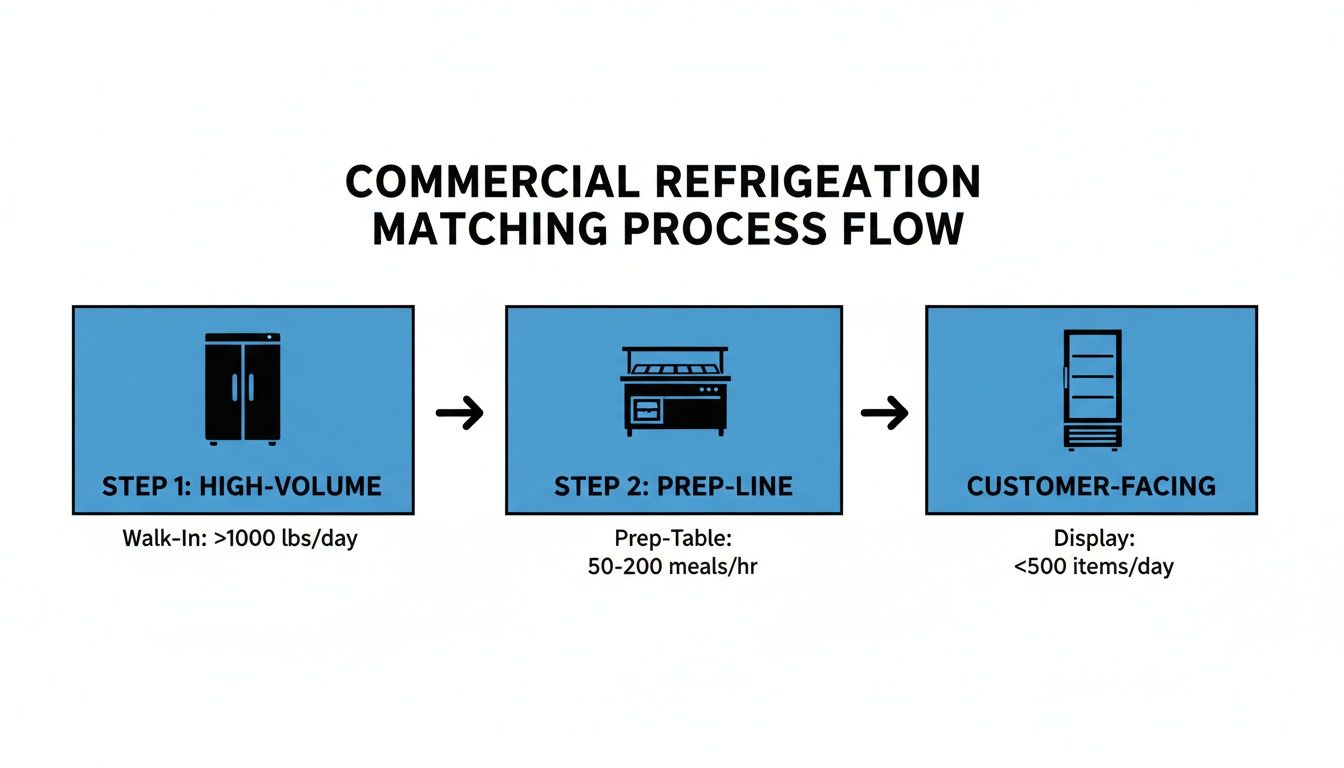
As you can see, a smart setup isn’t about one giant box; it’s about having dedicated units for each task to keep things moving smoothly from delivery to the customer's plate.
From Cubic Feet to Foot Traffic
First thing’s first: you need to figure out the sheer volume of cold storage you actually need. This is less about your menu size and more about the speed and rhythm of your kitchen.
Think through these key factors:
- Customer Volume: How many plates are you pushing out on your busiest night? More customers mean more prepped ingredients and bulk product, which points toward larger commercial refrigerators and freezers.
- Delivery Schedule: If you’re getting fresh produce dropped off every single day, you can probably get by with less storage. But if your truck only comes twice a week, you'll need the capacity to hold several days of inventory without compromising quality or safety.
- Menu Complexity: A sprawling menu with dozens of fresh ingredients means you need more separated storage to keep flavors from mingling and prevent cross-contamination. This might push you toward multiple smaller units, like undercounter refrigerators, to supplement your main reach-in.
Measure Twice, Install Once
After you’ve got a rough idea of the internal capacity you need, it's time for the most practical step—one that people mess up all the time. Get out the tape measure. Seriously. That brand-new pizza prep table is a very expensive paperweight if you can't get it through the back door.
One of the most common—and costly—mistakes we see is forgetting to measure every single doorway, hallway, and tight corner on the delivery path. The unit’s listed dimensions don't include things like door swing, casters, or the 2-3 inches of breathing room needed on all sides for ventilation.
Before you even think about placing an order with us, map out the entire journey from the curb to its final spot in your kitchen. Are your doorways wide enough and tall enough? Are there any sharp turns that will be impossible to navigate? Make sure the spot you've picked can actually fit the unit and leave enough room for your staff to work around it.
Getting this right from the start means your new equipment will fit your building just as well as it fits your business. For a deeper dive on this, check out our guide to undercounter refrigerator sizes and how to measure properly.
Features That Actually Impact Your Bottom Line
Today's commercial refrigerators aren't just simple cold boxes anymore. They're sophisticated machines, packed with smart features designed to save you money, cut down on stress, and protect your expensive inventory. Trying to make sense of the technical specs can feel like a chore, but if you know what to look for, you can pick a unit that actively helps your restaurant's profitability.
From real energy savings to heavy-duty build quality, these are the details that separate an average piece of equipment from the best commercial refrigeration for your kitchen.
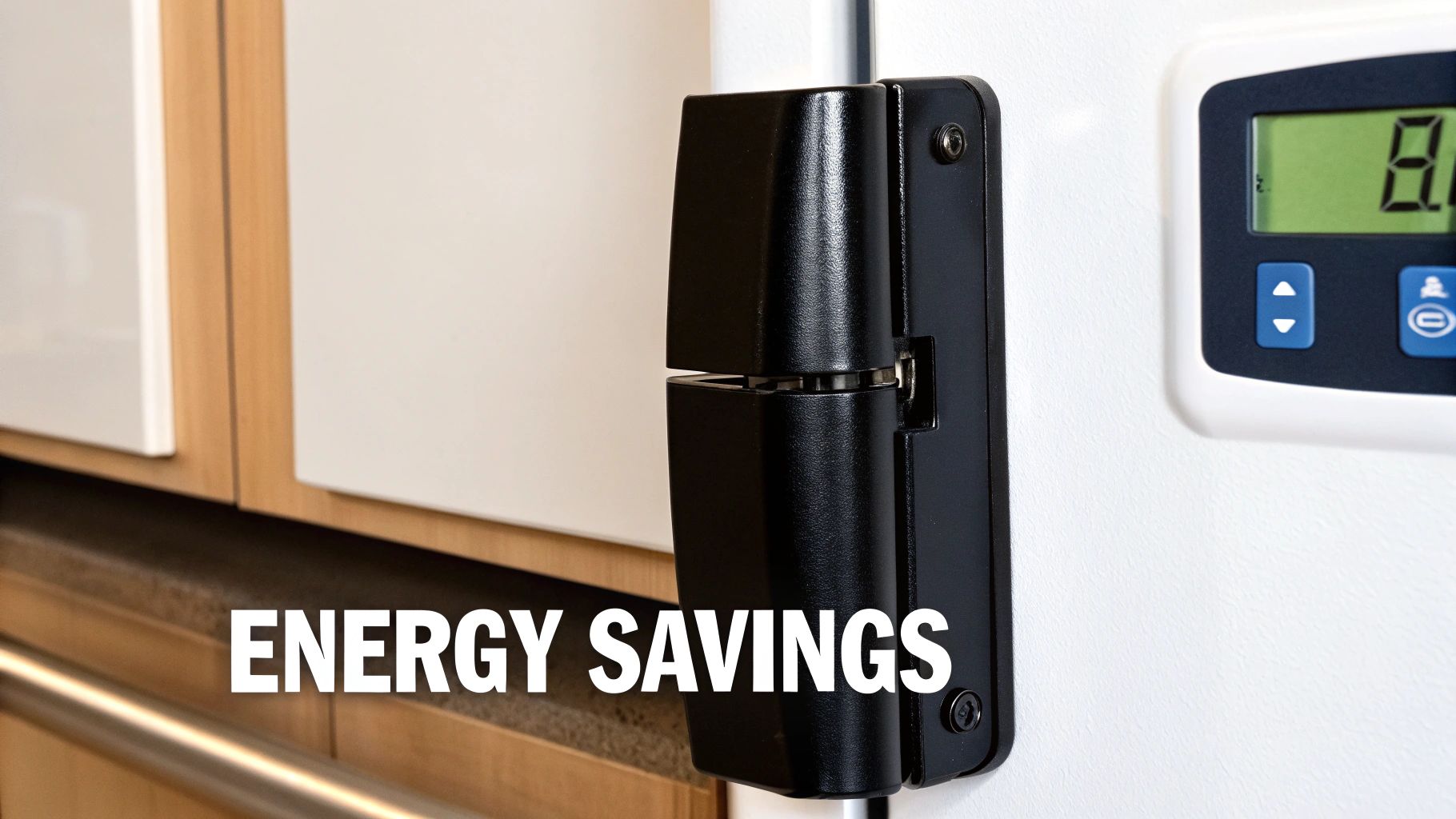
Modern systems, especially those with advanced temperature management, can slash your energy use by up to 30% compared to those old clunkers. For any Seattle restaurant owner, that translates directly into real savings on your monthly power bill. You can dig deeper into these innovations in commercial cooling to see just how much the technology has improved.
Decoding Compressor Placement: Top-Mount vs. Bottom-Mount
One of the first technical choices you'll run into is where the compressor is located. This isn't some minor design detail—it has real consequences for your kitchen's workflow and how often you'll be calling for maintenance.
-
Top-Mount Compressors: These are perfect for kitchens that kick up a lot of flour, dust, or grease from the floor. Since the compressor sits up high, it pulls in cleaner, cooler air. This helps it run more efficiently and stops it from getting clogged with kitchen grime. The only catch? The condenser coils can be a bit trickier to reach for routine cleaning.
-
Bottom-Mount Compressors: These are often a bit more user-friendly, as they raise the lowest shelf to a comfortable height—no more bending all the way down. They're also a breeze for technicians to service since no ladder is needed. The trade-off is that they pull in warmer air from near the floor and are magnets for dust and grease, meaning you'll need to clean those coils more often.
Think of your compressor as the lungs of your refrigerator. A top-mount unit breathes cleaner air above the kitchen chaos, while a bottom-mount is closer to the ground where dust and spills happen. Choose based on what your kitchen environment throws at it.
Features That Drive Efficiency and Safety
Beyond the compressor, a few other key features work together to keep your operating costs low and your food safe. When you're browsing our selection of commercial refrigerators or sandwich prep tables here at Seattle Restaurant Equipment, keep an eye out for these money-saving details.
ENERGY STAR Certification That little blue sticker is your best friend. An ENERGY STAR certified commercial refrigerator has been independently tested to meet strict energy performance standards set by the EPA. It’s a guarantee of lower utility bills from day one, without ever compromising on cooling power.
Digital Thermostats When it comes to food safety, precise temperature control is non-negotiable. Digital thermostats give you exact temperature readings and are way more accurate than old-school analog dials. That precision prevents the temperature swings that lead to spoilage and waste, protecting your valuable inventory.
Self-Closing and Stay-Open Doors This is one of those simple but brilliant features. Self-closing doors make sure cold air stays inside, even when your crew is scrambling during a busy service. Many also have a "stay-open" feature that kicks in past 90 degrees, making it easy to load and unload full sheet pans without having to wrestle with the door.
Built to Withstand the Daily Grind
How a unit is built is just as critical as what’s inside it. The daily abuse in a commercial kitchen will absolutely destroy equipment that isn't up for the job.
- Stainless Steel Construction: Always look for high-grade stainless steel, inside and out. It’s tough, a snap to sanitize, and won't rust from spills or harsh cleaning chemicals. This kind of solid construction is vital for everything from a pizza prep table to an undercounter freezer.
- Heavy-Duty Door Gaskets: A worn-out, leaky door gasket is a massive energy vampire. High-quality gaskets that are easy to replace create a tight seal, keeping cold air in and warm air out. This one small part plays a huge role in the efficiency of any unit.
By focusing on these practical, battle-tested features, you’re not just buying another piece of equipment. You're making a smart investment in a reliable tool that will protect your food, lower your operating costs, and support your kitchen for years to come.
Looking Beyond the Price Tag to Total Cost of Ownership
That initial price on a commercial refrigerator is always the number that jumps out at you, but it’s only telling a fraction of the story. If you want to make a truly smart investment, you have to look at the Total Cost of Ownership (TCO). This number accounts for every single dollar that unit will cost you over its entire working life—the purchase price, the monthly energy bills, and any maintenance or repair costs that pop up along the way.
Focusing only on a low upfront cost is a classic trap. A cheaper, less efficient commercial freezer might save you a few hundred bucks today, but it can easily bleed you for thousands more in electricity and surprise repair bills over the next five to ten years. The best commercial refrigeration isn't the one with the lowest sticker price; it's the one that delivers rock-solid reliability and low operating costs day in and day out.
A Tale of Two Refrigerators
Let's break it down with a real-world scenario. Imagine you're choosing between two similar-sized commercial refrigerators for your Seattle coffee shop.
- Model A (Budget Unit): This one has a temptingly low initial cost, but it's not ENERGY STAR certified. It’s built with standard-grade components and only comes with a bare-bones one-year warranty.
- Model B (Efficient Unit): This unit costs more upfront, but it’s ENERGY STAR certified. It’s got a high-efficiency compressor, durable stainless steel construction, and a solid three-year parts and labor warranty.
At first glance, Model A looks like the smart buy. But hold on. Model B’s energy-efficient design could save you $100 or more per year on your electricity bill. Over an eight-year lifespan, that’s $800 in savings, which often completely wipes out the initial price difference.
Now, factor in the much higher chance of Model A needing a costly repair right after its short warranty expires. Suddenly, Model B doesn't just look better—it becomes the more profitable long-term investment, hands down.
The real cost of a refrigerator isn't what you pay on day one; it's the sum of all its expenses over its lifetime. An efficient, reliable unit is an asset that pays you back, while a cheap one becomes a liability that constantly drains your budget.
Making Top-Tier Equipment Affordable
We get it. Managing cash flow is everything for any Washington foodservice business. A higher upfront cost for a superior unit like a durable pizza prep table or a reliable under counter freezer can feel like a big hurdle, even when you know it will save you money down the road. This is where accessible financing becomes a game-changer.
Financing lets you get the best equipment—from commercial refrigerators to deep fryers—without torching your startup capital. Instead of one massive expense, you get predictable monthly payments that actually fit into your budget. This empowers you to choose long-term efficiency and reliability over a deceptively low purchase price. You can learn more about how to invest wisely in our guide to energy-efficient commercial refrigeration.
By thinking in terms of TCO and using financing to your advantage, you can equip your Seattle bar or restaurant with high-performance tools that will support your success for years to come, not just for the opening rush.
Your Smooth Purchase and Installation Checklist
You’ve done the hard work. You've mapped out your kitchen's flow, crunched the numbers on capacity, and zeroed in on the features you can't live without. Now, it's time to bring your new workhorse home. But finding the best commercial refrigeration is more than just picking a model; making sure the purchase and installation go off without a hitch is what gets that unit running and making you money.
Think of this checklist as your final walkthrough. It’s designed to make sure every last detail is covered, from the electrical panel right down to the path it will take through your door.
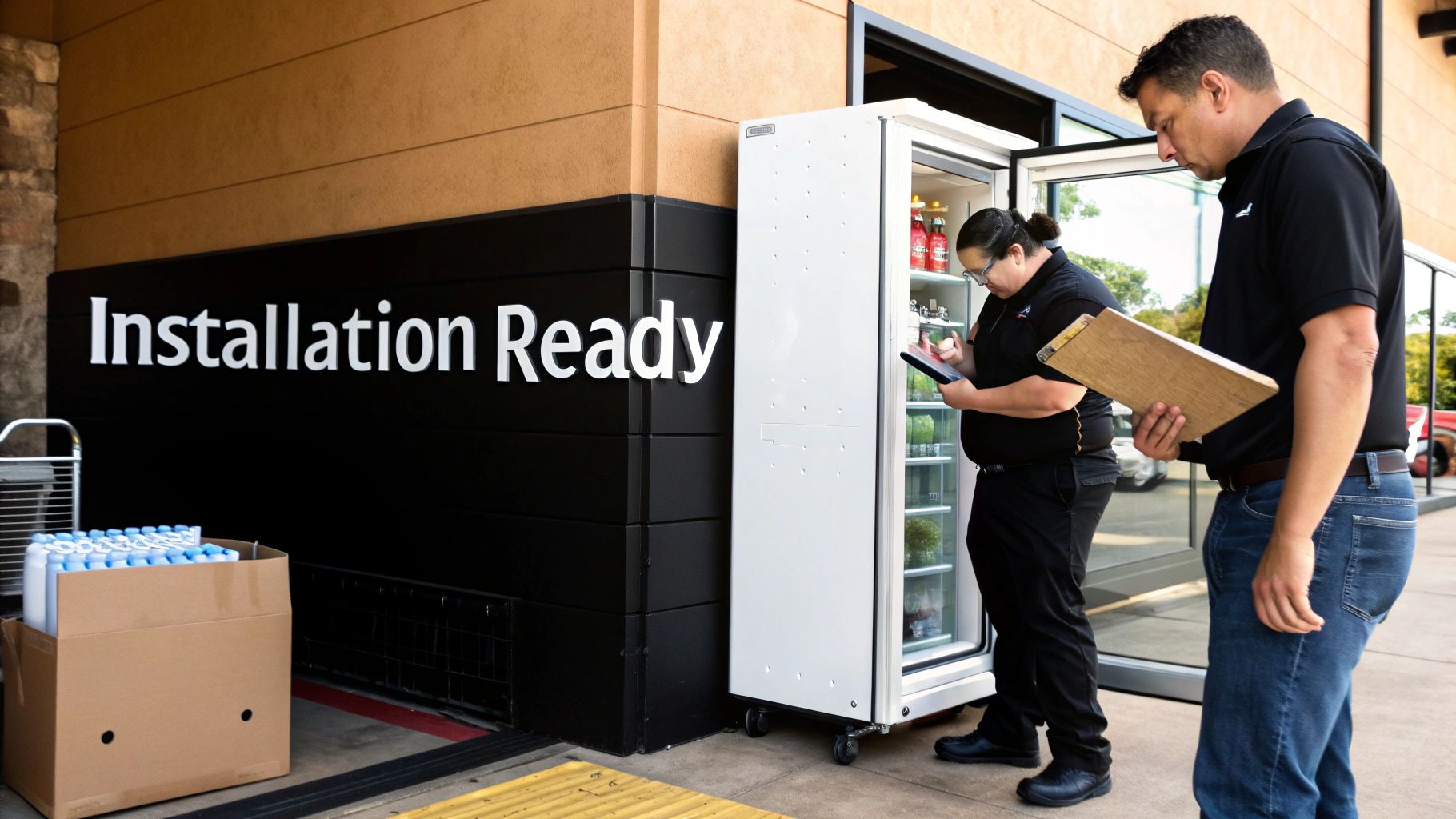
Pre-Delivery Preparation
A little prep work before your equipment shows up can save you from a world of hurt on installation day. You're setting the stage for a smooth performance.
- Check Your Power: Commercial units are thirsty for electricity. Double-check that your kitchen has the right dedicated circuit and outlet (like a NEMA 5-15P or 5-20P) for your specific unit. And whatever you do, don't use an extension cord—it’s a fire hazard that will instantly void your warranty.
- Clear the Path: Get out the tape measure. Measure every single doorway, hallway, and tight corner from the delivery truck to where the unit will live. Make sure that path is completely clear of boxes, carts, or anything else before the delivery crew arrives.
- Prep the Site: The spot where your new unit will sit needs to be clean, level, and have room to breathe. Plan for at least 2-3 inches of clearance on all sides for good ventilation. If it can't breathe, the compressor works overtime, your energy bill spikes, and the unit will die an early death.
Making the Right Choice with Expert Guidance
With so many options out there, from pizza prep tables to the specific refrigerators a Seattle coffee shop needs, getting a second opinion is just plain smart. Here at Seattle Restaurant Equipment, our team is non-commissioned. Our only job is to help you find the right tool for your kitchen.
An expert consultation isn't about getting you to spend more money. It’s about making absolutely sure the unit you've picked is a perfect match for how your kitchen actually works. It's that final gut-check to protect your investment.
This simple step can steer you clear of common mistakes we see all the time. After all, the right equipment is the foundation of your success. For more tips on making smart buys, check out our guide on used commercial kitchen equipment.
Scheduling Your Delivery
Once you're confident in your choice, the last step is getting it through the door. We offer free shipping on all orders across Washington, from Kent to Everett, usually within one or two business days.
Scheduling your delivery means your new commercial refrigerator or under-counter freezer arrives right when you and your team are ready for it. This keeps the disruption to your service at a minimum. A smooth delivery is the final, critical step in getting your kitchen the upgrade it deserves.
Got Questions? We've Got Answers.
Even when you've done your homework, pulling the trigger on a big investment like new refrigeration can bring up a few last-minute questions. Let's tackle some of the most common ones we hear from restaurant operators right here in Washington. We want you to be completely confident in your choice.
What's the Real Difference Between Commercial and Residential Fridges?
This is a big one. Thinking you can get by with a residential fridge in a pro kitchen is probably the most costly mistake a new operator can make. They just aren't the same beast.
Commercial refrigerators are engineered from the ground up for the chaos of a busy service. They have powerhouse compressors that can pull the temperature back down in a flash, even when the doors are swinging open every 30 seconds. That rapid temperature recovery is non-negotiable for food safety.
They're also built with rugged, easy-to-clean stainless steel and have to meet strict NSF sanitation codes. A home unit would burn itself out in weeks under that kind of pressure, instantly voiding its warranty and leaving you with a big red tag from the health inspector. This holds true for everything, from undercounter freezers to the specialized fridges in a Seattle coffee shop.
How Often Should I Get My Commercial Units Professionally Serviced?
Think of it like an oil change for the most critical equipment in your kitchen. We strongly recommend having a professional service your units at least twice a year.
Proactive maintenance isn't a cost—it's an investment in uptime. A scheduled service call to clean condenser coils, check refrigerant levels, and inspect door seals will stop the vast majority of expensive, middle-of-a-rush emergency repairs before they ever happen.
This simple routine is vital for every piece of your cold line, whether it's a sandwich prep table, an undercounter refrigerator, or a massive pizza prep table. Consistent care doesn't just protect your food; it keeps your energy bills from creeping up. It's the secret to getting years and years of reliable service out of everything, from your main commercial freezer to your Seattle bar equipment.
Can I Just Use an Extension Cord for My New Refrigerator?
Let's make this crystal clear: Absolutely not. This is one of the most important safety rules in any kitchen, period. Commercial refrigeration units and other heavy-hitters like deep fryers are power-hungry and demand their own dedicated electrical circuit.
Plugging one into an extension cord is a serious fire hazard. The cord will overheat, and the inconsistent voltage will slowly destroy the unit's compressor, leading to a much shorter lifespan. On top of the danger, it will also immediately void your manufacturer's warranty. Always, always have a licensed electrician install a proper outlet for each major appliance.
Ready to equip your kitchen with refrigeration you can count on? The non-commissioned experts at Seattle Restaurant Equipment are here to help you find the perfect fit for your menu and space, with free, fast shipping across Washington. Explore our full collection of commercial refrigerators, prep tables, and more. Shop our full collection today!