

Choosing the right commercial refrigerator isn't just about hitting a certain temperature. It's about matching the machine to the real-world rhythm of your kitchen. A high-volume restaurant in Seattle needs a tough-as-nails reach-in, while a busy coffee shop can't live without the quick access of an undercounter unit. You have to look past the spec sheet and think about how a piece of equipment will fit into your daily grind.
Your Guide to Selecting Commercial Refrigerators in Seattle
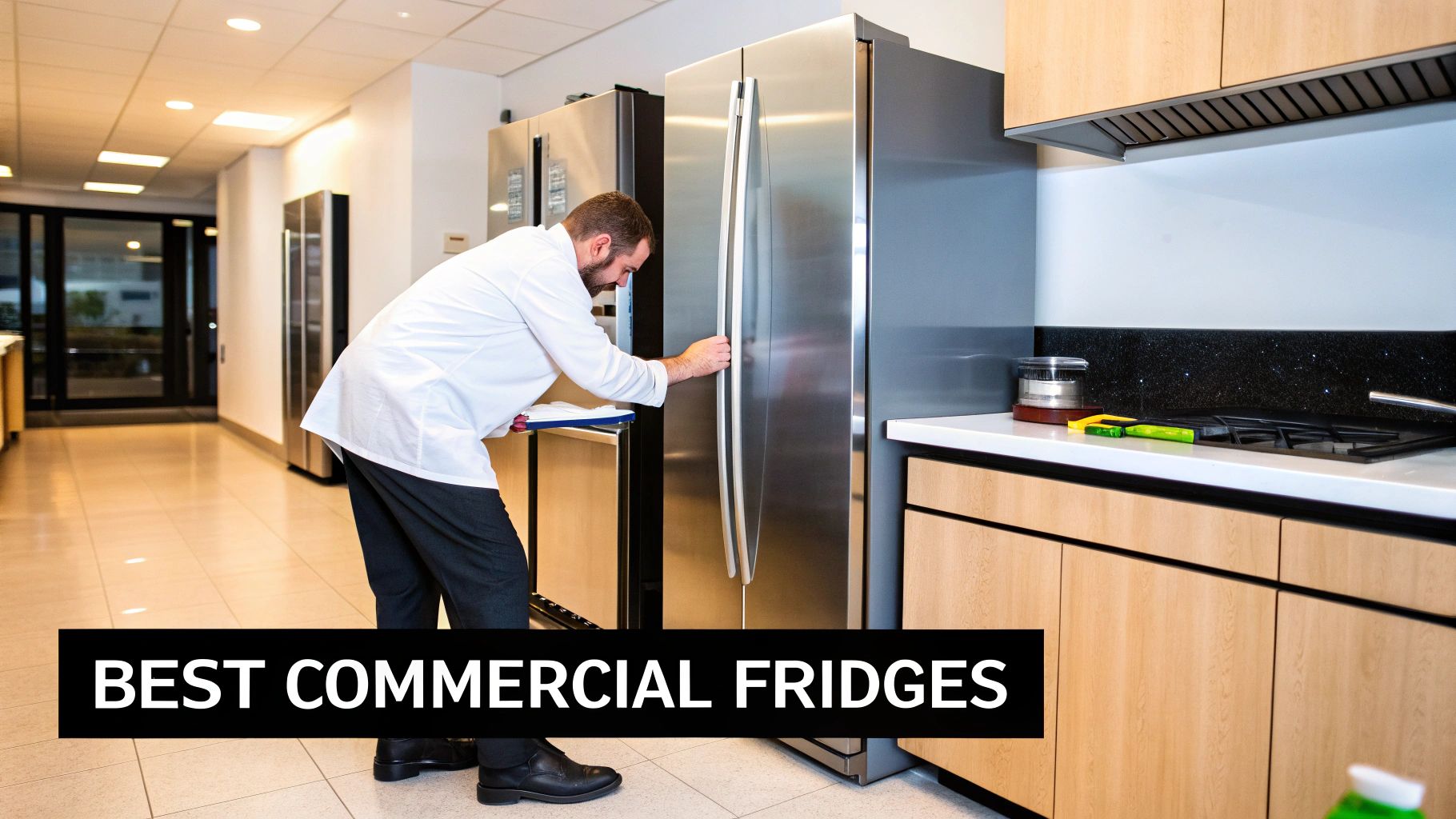
Putting your money down on a new commercial refrigerator is a big deal for any Seattle food business. The right unit does so much more than keep food cold—it’s your first line of defense for inventory, a key part of food safety, and a major factor in your kitchen’s workflow. Picking the right one prevents headaches like costly downtime and spoiled product, which hits your bottom line directly.
This guide cuts through the generic advice and gives you practical, real-world insights for Washington’s food scene. We’ll break down the essential equipment you can get from Seattle Restaurant Equipment to help you find the perfect match.
Comparing Seattle's Essential Cooling Equipment
First things first, you need to understand the core differences between each type of unit. Every piece of equipment is built for a specific job, and getting it right can completely change how smoothly your kitchen runs. From bulk storage to fast-paced prep work, the right tool makes all the difference.
| Equipment Type | Best For | Key Feature | Primary Benefit |
|---|---|---|---|
| Commercial Refrigerators | General restaurant storage | High-capacity, robust cooling | Bulk ingredient preservation |
| Commercial Freezers | Long-term inventory holding | Sub-zero temperature stability | Reduces food waste and cost |
| Sandwich Prep Tables | Delis, cafes, ghost kitchens | Integrated cold wells & board | Speeds up assembly line workflow |
| Pizza Prep Tables | Pizzerias and Italian eateries | Raised rail for toppings | Keeps ingredients fresh & accessible |
| Undercounter Refrigerators | Bars, coffee shops, food trucks | Compact, space-saving design | Point-of-use cold storage |
| Deep Fryers | Restaurants with fried foods | High-volume oil heating | Consistent cooking and food quality |
Commercial refrigeration is a massive, multi-billion-dollar industry, which is great news for you. It means manufacturers are in a fierce race to build better, more efficient machines. The global market was valued at USD 85.6 billion in 2024 and is expected to nearly double by 2034.
All that competition and investment leads to better technology. For kitchen owners, that translates into more energy-efficient models that can seriously lower your long-term operating costs. You can learn more by checking out these commercial refrigeration market trends.
Comparing Essential Commercial Refrigerator and Freezer Types
Choosing the right commercial refrigerators and freezers for your Seattle spot isn't just about picking a box that gets cold. It's a critical decision that dictates how smoothly your kitchen runs. Every single unit, from a massive reach-in to a tiny undercounter freezer, is a specialized tool. Get it right, and your workflow sings; get it wrong, and you create daily headaches for your staff.
Let's be honest, the differences between these units are what make or break a kitchen's efficiency. Understanding these nuances is the first real step to building a kitchen that’s not just functional, but profitable. Let’s break down the workhorses of commercial cooling so you can find the perfect match for your operation.
Reach-In Refrigerators and Freezers: The Workhorses
For just about any high-volume restaurant in Seattle, the reach-in commercial refrigerator is the anchor of the back-of-house. These things are built for one job: holding a ton of ingredients at safe, steady temperatures, even when the kitchen is in full-blown chaos during a dinner rush. They’re the central hub for your fresh produce, prepped sauces, and everything in between.
Its counterpart, the commercial freezer, is just as crucial for your long-term storage needs. This is where you’re stashing bulk proteins, frozen goods, and anything you need to keep for weeks or even months. The real power of a commercial-grade freezer is its ability to snap back to temperature after the door has been opened—a feature that literally protects thousands of dollars in inventory.
Prep Tables: Where Workflow Meets Cooling
While reach-ins are for bulk storage, prep tables are where the action happens. A sandwich prep table or a pizza prep table brings refrigerated storage right to your assembly line. For delis, pizzerias, and cafes where every second counts, this design is an absolute game-changer.
Instead of your crew constantly walking back and forth to a main fridge, every essential cold ingredient is right there in refrigerated wells, within arm's reach. This setup slashes ticket times and keeps the line moving without a hitch.
A key operational insight is that prep tables aren't just refrigerators with a cutting board on top. They are specialized workflow stations. A well-placed pizza prep table can increase production capacity by over 20% during peak hours simply by eliminating wasted movement.
Undercounter Refrigerators and Freezers: Maximizing Every Inch
In the notoriously tight spaces of a Seattle coffee shop or bar, every square inch of real estate is gold. This is where under counter refrigerators and under counter freezers prove their worth. These compact units are designed to slide neatly under your countertops, turning what was once dead space into valuable, point-of-use cold storage.
For a barista, having an under counter fridge with milk and cream right next to the espresso machine is non-negotiable. For a bartender, it means garnishes and juices are perfectly chilled and ready to go without ever leaving the well. These units put ingredients exactly where they're needed. If you want to dig deeper into fitting these in your space, you can learn more about finding the right under counter refrigerator sizes in our detailed guide.
Commercial Refrigeration Comparison for Seattle Businesses
Seeing how these units stack up in real-world Seattle scenarios can make the decision much clearer. Here’s a quick breakdown to help you match the right equipment to your specific business needs.
| Equipment Type | Ideal for Seattle Business Type | Key Feature | Primary Benefit |
|---|---|---|---|
| Reach-In Refrigerator | High-volume restaurants, catering kitchens | High-capacity, durable shelving | Centralized bulk storage for raw ingredients. |
| Commercial Freezer | Any business needing long-term storage | Rapid temperature recovery | Preserves thousands in inventory, reducing food waste. |
| Sandwich Prep Table | Delis, cafes, ghost kitchens | Integrated refrigerated wells and cutting board | Drastically speeds up food assembly and service. |
| Pizza Prep Table | Pizzerias, fast-casual restaurants | Wide rail for dozens of topping pans | Organizes high-volume prep for complex orders. |
| Under Counter Refrigerator | Coffee shops, bars, food trucks | Compact, fits under standard counters | Puts essential cold items at the point of use. |
| Under Counter Freezer | Bars, dessert stations, small cafes | Small footprint for specialized items | Perfect for ice cream, frozen garnishes, or small-batch goods. |
This table shows there’s a specific tool for every job. Your goal is to build a system where each piece supports your unique menu and service style.
Specialized Equipment For Unique Needs
Beyond the basics, the Seattle food scene often calls for more specialized gear. Think about the bustling breweries in Ballard—their bar equipment must include back bar coolers with glass doors to show off local craft beers while keeping them at the perfect serving temperature.
A busy Seattle coffee shop might need multiple undercounter units: one for dairy, another for alternative milks, and a third for grab-and-go snacks. Each piece is chosen to solve a specific operational problem. Even a deep fryer, while not a cold unit, has to be placed strategically alongside your cold line for a smooth workflow. The end game is to create a cohesive kitchen ecosystem where every appliance, hot or cold, works together to make your business hum.
Looking at Key Specs for Performance and Value
Once you've got a handle on the type of commercial refrigerator your Seattle spot needs, it's time to get into the nitty-gritty. The technical specs are what really separate a decent appliance from a true workhorse investment. These details directly impact your day-to-day performance, how much you're spending on utilities, and how long the unit will last.
Honestly, getting these details right means your fridge will work for you, not against you. The difference between a top-mount and a bottom-mount compressor, for example, can completely change your maintenance routine and efficiency depending on your kitchen's layout and what you're cooking.
This little decision guide can help you visualize that first big choice, steering you toward the right category based on what you need most.
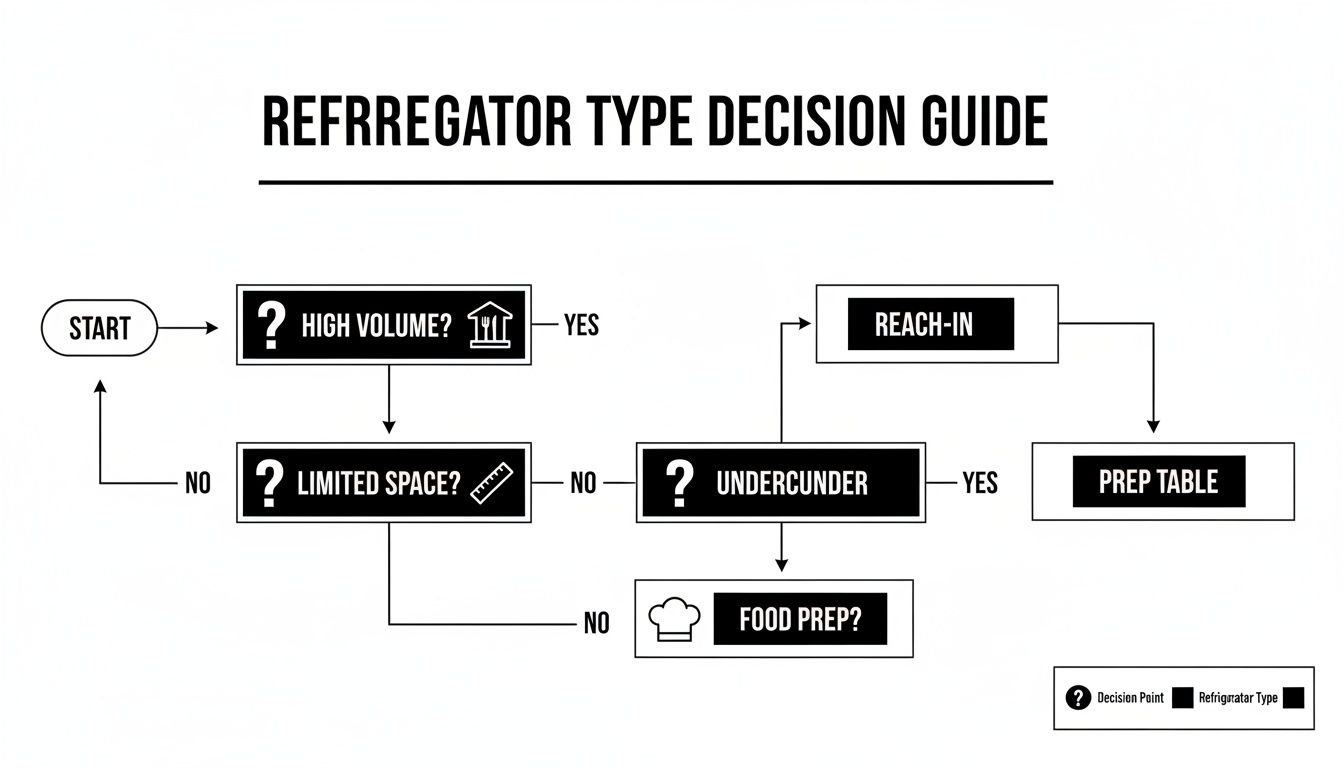
Whether you’re dealing with high-volume storage, a tight footprint, or a fast-paced prep line, this flowchart helps point you in the right direction from the get-go.
Compressor Placement Matters
Where the compressor lives is one of the most important decisions you'll make. It’s all about how the unit will deal with your kitchen's environment and how much of a headache maintenance will be.
A top-mount compressor is your best bet for hot kitchens or places with a lot of dust in the air, like a bakery churning out flour. Heat rises, so the compressor pulls in cooler, cleaner air from above. This helps prevent clogs and keeps the unit running efficiently, far away from floor spills and dirt.
On the other hand, a bottom-mount compressor is great for cooler, cleaner kitchens. The big win here is ergonomics—the bottom shelf is higher, so your staff isn't constantly bending over to grab things. The downside is that it's right in the line of fire for dust and debris from the floor, meaning you'll need to clean the condenser coils more often.
Door Styles and Shelving Options
The doors on your fridge affect both your kitchen's flow and your energy bill. Solid doors are the champs of insulation, making them more energy-efficient for back-of-house storage where you don't need to see what's inside. Glass doors are perfect for Seattle bar equipment or front-of-house merchandisers, letting everyone see the goods without letting all the cold air out.
For shelving, you want something tough and simple to clean. Epoxy-coated wire shelves are pretty standard because they allow for good air circulation and resist rust. But if you’re storing heavy items or dealing with frequent spills, nothing beats stainless steel shelves for durability and easy sanitizing.
A non-negotiable feature for any commercial kitchen is NSF certification. This little mark means the unit has been tested by the National Sanitation Foundation to meet tough public health and safety standards—something you absolutely need to pass health inspections in Washington.
The True Cost of Energy Consumption
The price tag is just the beginning. The best commercial refrigerators save you money over the long haul by keeping energy use low. This is where you need to pay attention to labels like ENERGY STAR.
An ENERGY STAR certified commercial refrigerator can be up to 40% more energy-efficient than a standard model. That's a direct saving on your utility bills, month after month. For a busy Seattle restaurant, that can add up to hundreds, even thousands, of dollars over the life of the unit.
To figure out the real cost, you have to look beyond the initial price:
- Initial Purchase Price: The upfront cost of the unit.
- Annual Energy Costs: You can estimate this using the unit's energy data and our local electricity rates.
- Maintenance Expenses: Don't forget to factor in routine cleaning and the possibility of repairs.
Spending a bit more upfront on an efficient model often pays for itself surprisingly quickly through lower energy bills. To see how you can maximize these savings, check out our insights on energy-efficient commercial refrigeration options. It's a smart move that makes your equipment a contributor to your bottom line, not just another operational cost.
Choosing Specialized Equipment for Your Niche Operation
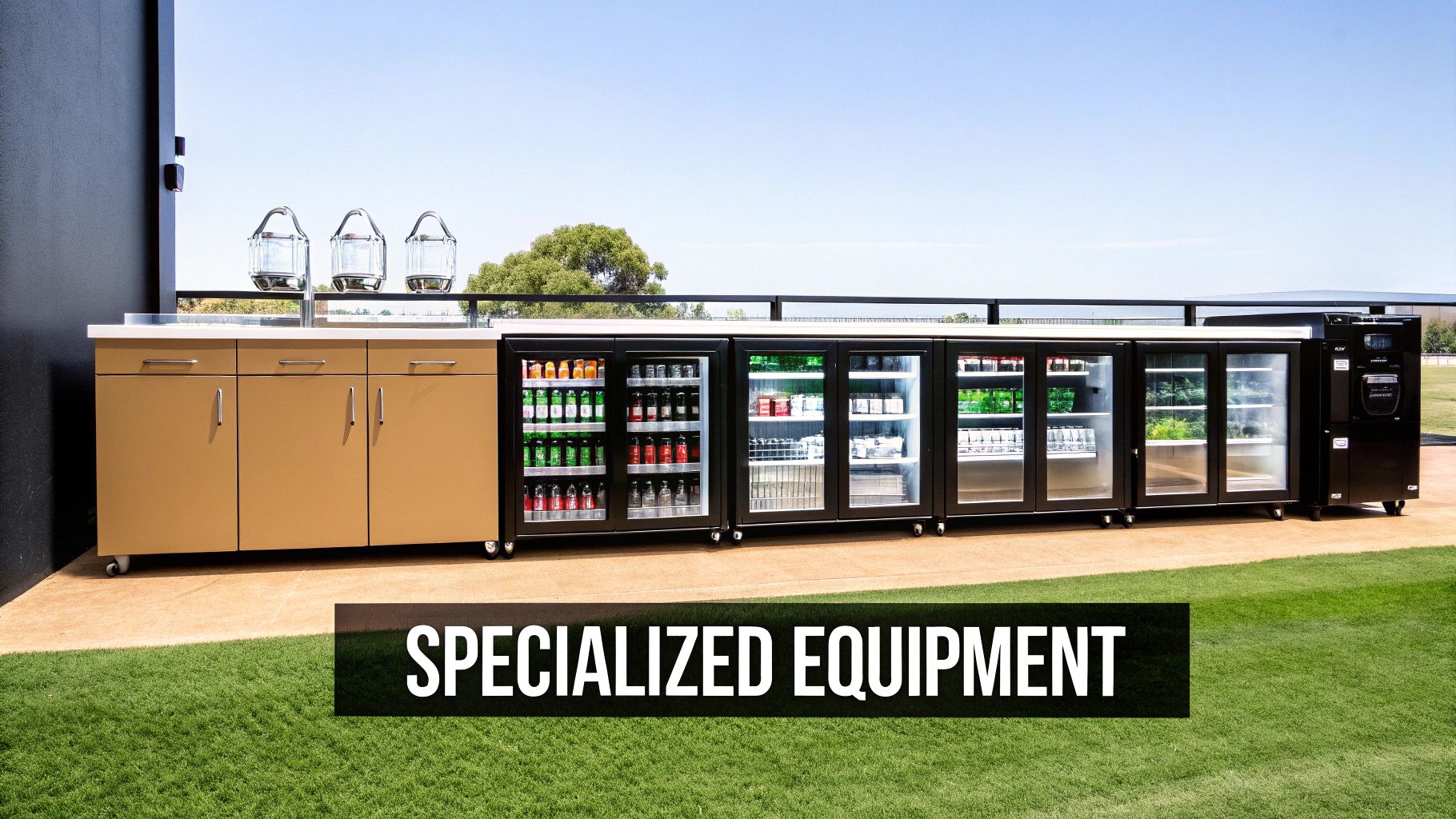
Sure, a general-purpose refrigerator gets the job done. But a truly efficient Seattle business is built on specialized equipment. Picking the right unit for a specific task can completely transform your workflow, turning a functional kitchen into a high-performance machine. It’s all about minimizing wasted steps, speeding up service, and making your customer's experience better.
You have to think beyond just basic storage. Take a hard look at your menu and how you serve your customers. A craft cocktail bar has totally different needs than a high-volume pizzeria, and their equipment should show that. This is where you find your edge—giving your team the exact tools they need to do their job right.
Optimizing Seattle Coffee Shop and Bar Workflows
In a packed Seattle coffee shop, speed is king. The foundation of that speed is usually a few well-placed Seattle coffee shop refrigerators, often in the form of undercounter units. Imagine one unit just for dairy and another for oat and almond milk, both tucked right under the counter next to the espresso machine. That simple setup can shave precious seconds off every single latte you make.
It's the same story for Seattle bar equipment, where it’s all about presentation and quick access. Glass-door back bar coolers are a must-have for showing off your craft beers and chilled wines, letting bartenders see what they need without constantly opening doors. Add an undercounter freezer nearby for specialty ice or frozen garnishes, and you've got a station where your bartender can make the perfect drink without taking a single step away.
The Heart of the Pizzeria and Sandwich Shop
For any business built around assembly—think pizzerias and delis—the prep table is command central. A pizza prep table with a raised, refrigerated rail is non-negotiable. It holds all your toppings, from cheese and pepperoni to veggies, keeping them perfectly chilled and right at your fingertips. This setup is the only way to handle a relentless dinner rush full of custom orders.
A sandwich prep table does the same heavy lifting for cafes and delis. It pulls together a refrigerated base, ingredient wells for meats and cheeses, and a cutting board into one smooth station. One employee can build multiple orders quickly and safely, which is absolutely critical for getting through a busy lunch hour.
Investing in a specialized prep table is one of the smartest moves you can make for an assembly-focused kitchen. The right model can cut ticket times by 15-30%. In a business where speed equals money, that's a huge deal.
Integrating Fryers and Other Cooking Equipment
Even your hot line needs to work in harmony with your cold storage. Think about where your deep fryers are. A smart kitchen layout puts the fry station right next to the commercial freezers holding fries, onion rings, and appetizers. This simple proximity cuts down on how much your staff has to move between hot and cold zones, which is safer and way more efficient.
Your equipment choices should create a natural flow. Here’s how different pieces support specific Seattle businesses:
- Seattle Coffee Shop Refrigerators: Multiple undercounter units for different milk types to avoid cross-contamination and keep the line moving.
- Bar Coolers and Freezers: Glass-door back bar coolers for display and undercounter freezers for top-quality ice and garnishes.
- Pizza Prep Tables: "Mega-top" rails give you maximum space for ingredients, perfect for places with big, customizable menus.
- Sandwich Prep Tables: Streamlines everything from grabbing ingredients to final assembly.
- Deep Fryers & Freezer Placement: Putting a commercial freezer near your fryer station creates a seamless, efficient workflow for all your fried foods.
At the end of the day, picking the right commercial refrigerators and other gear is about matching your equipment to your menu. When you invest in specialized units from Seattle Restaurant Equipment, you’re not just buying appliances—you’re building a kitchen that’s optimized to win.
The Seattle Restaurant Equipment Advantage for Local Businesses
Trying to find the right commercial refrigerator can feel like a maze, but having a local expert on your side changes everything. When you choose Seattle Restaurant Equipment, you're not just buying a machine. You're getting a partner who gets the unique grind and opportunities of running a food business here in Washington. We know what a packed Seattle kitchen needs versus a laid-back coffee shop in Spokane.
That local know-how gives you real advantages that the big national chains just can't touch. When your main freezer dies on a busy Friday, you can't afford to wait days for a truck to cross the country. Our fast, free shipping across Washington gets to you in just 1-2 business days, cutting your downtime and protecting your profits.
Your Local Partner in Commercial Kitchen Success
Our commitment is about more than just fast shipping; we hand-pick equipment that’s built for the real world of a busy kitchen. That means tough commercial refrigerators and freezers that can handle the rush, efficient sandwich prep tables, and the kind of specialized pizza prep tables that are the heart and soul of any pizzeria. We also keep a full stock of essential Seattle bar equipment and the compact Seattle coffee shop refrigerators you need to make the most of your space.
We get it—a kitchen is a living, breathing thing. That's why we also carry the gear that makes it all work:
- Undercounter refrigerators and undercounter freezers to squeeze productivity out of every square inch.
- Heavy-duty deep fryers to complete your cooking line.
- A whole lineup of cooking, storage, and display solutions.
When you go with a local supplier, you get more than just a piece of equipment. You get a direct line to someone who understands Washington's health codes, your workflow, and the bottom-line reality of the food business here.
Protecting Your Investment with Warranties and Financing
Dropping serious cash on new equipment should feel good, not scary. Every new piece of gear we sell comes with a solid warranty, so you can have peace of mind that your investment is protected. We stand by our products because we know they're built to work hard from day one.
We also believe that a tight budget shouldn't stop you from getting the best commercial refrigerators for your business. We offer flexible financing options to help restaurants, bars, and food trucks get what they need without draining their cash reserves. This lets you keep your capital free for things like marketing, payroll, or that new menu idea you've been wanting to try. For those looking to stretch every dollar, checking out quality pre-owned gear is another smart move. You can learn more in our guide on the benefits of buying used commercial kitchen equipment.
At the end of the day, our goal is to build relationships that last. By providing quick delivery, strong warranties, and real-world financing, Seattle Restaurant Equipment is more than just a supplier—we're a partner who's truly invested in seeing you succeed.
Commercial Refrigerator FAQs
Jumping into the world of commercial refrigeration can bring up a lot of questions. Getting straight answers is the key to making a smart investment that will support your business for years. To help you feel confident in your final decision, we’ve put together some of the most common questions we hear from Seattle-area business owners.
This is where we get into the real-world differences, costs, and care that go into the equipment you depend on every single day.
What's the Real Difference Between a Commercial and a Residential Refrigerator?
The gap between a commercial and a residential fridge is massive, and it goes way beyond just size or price. A commercial refrigerator is built from the ground up for the brutal, non-stop pace of a professional kitchen. They’re packed with powerful, oversized compressors and heavy-duty parts designed to snap back to a safe temperature even when the doors are constantly being opened during a chaotic dinner rush.
They’re also built with tough materials like stainless steel to take a beating in a high-traffic environment. Most importantly, they have to meet strict NSF (National Sanitation Foundation) standards for food safety. Trying to use a residential unit in your business is a recipe for disaster—it will break down fast, get you in trouble with Washington health codes, and immediately void its own warranty.
Top-Mount vs. Bottom-Mount Compressor: Which One's for Me?
Picking the right compressor location isn't a minor detail; it’s a strategic choice you should make based on your specific kitchen environment.
A top-mount compressor is hands-down the best choice for hot kitchens, bakeries, or any place where flour, grease, and other gunk get airborne. Since heat rises, the unit pulls in cooler, cleaner air from above, keeping the condenser coils from getting choked with floor debris. This simple design trick makes it more efficient and less likely to overheat.
On the other hand, a bottom-mount compressor is a solid option for cooler, cleaner spaces. Its main benefit is all about ergonomics. The bottom shelf is raised to a comfortable height, so your staff isn't constantly bending over to grab ingredients. Just know that it’s sitting on the floor, so it will suck up dust and dirt, meaning you'll need to be more diligent about cleaning the coils.
Here's a simple rule of thumb to remember: If your kitchen is hot and messy, go top-mount. If it’s cooler and cleaner, a bottom-mount can make your team's day a little easier.
What's the Best Way to Set Up My Specific Business?
Every food business has its own unique flow, and your equipment needs to match it. A one-size-fits-all approach just doesn't cut it. The goal is to pick units that directly support your menu and service style, creating a workflow that’s smooth and fast.
- Seattle Coffee Shop Refrigerators: For a cafe, a couple of undercounter refrigerators are a must. Keep one for dairy and another for alternative milks to avoid cross-contamination and keep the barista line moving.
- Seattle Bar Equipment: Bars run on speed and presentation. Glass-door back bar coolers are non-negotiable for showing off craft beers, and an undercounter freezer is perfect for chilling glasses or storing frozen garnishes.
- Pizza and Sandwich Prep Tables: If your business is all about assembly, a dedicated pizza prep table or sandwich prep table is the heart of your operation. These units keep all your cold toppings organized and right where you need them, slashing your ticket times.
- Deep Fryers and Freezers: Even your hot line setup matters. Sticking your deep fryers right next to a commercial freezer creates a perfect station for fried apps and sides, cutting down on wasted steps and boosting safety.
How Much Should I Actually Budget for a New Commercial Refrigerator?
The sticker price on a new unit can swing wildly, from around $1,500 for a small undercounter to over $5,000 for a big, multi-door reach-in. But looking only at the purchase price is a rookie mistake. The smarter way to think about it is the total cost of ownership.
For example, an ENERGY STAR certified model might have a higher upfront cost, but it can save you hundreds of dollars in electricity every single year. Those savings add up fast, often making the more efficient unit the cheaper option over its lifetime. Here at Seattle Restaurant Equipment, we offer financing options to help you get the best, most efficient gear without draining your cash reserves.
What Kind of Maintenance Does a Commercial Refrigerator Need?
Regular, proactive maintenance is the single most important thing you can do to keep your refrigeration running for years. If you neglect it, you’re just asking for poor performance, sky-high energy bills, and expensive emergency calls to a repair tech.
The absolute most critical job is cleaning the condenser coils at least once every 90 days. Clogged coils are the #1 cause of compressor failure, period. You should also check the door gaskets regularly to make sure they’re sealing tight, look at your temperature logs daily, and keep the inside clean to help air circulate properly. A simple maintenance routine is easy to stick to and can add years to the life of your unit, preventing the kind of breakdown that can shut down your entire kitchen.
Ready to get your Washington business set up with cooling solutions you can count on? Seattle Restaurant Equipment has a huge selection of new commercial refrigerators, freezers, and prep tables with fast, free shipping across the state. Check out our inventory and build a kitchen that’s ready for anything at https://seattlerestaurantequipment.com.