

Choosing the right cooking equipment is easily the biggest decision you'll make for your food truck. It’s what will define your menu, your workflow, and ultimately, your profits. Your success hinges on picking durable, space-conscious, and powerful gear that can handle the daily grind of mobile operations. You have to think of your truck as more than just a vehicle—it's a high-performance commercial kitchen on wheels.
Building Your Food Truck Kitchen From the Ground Up
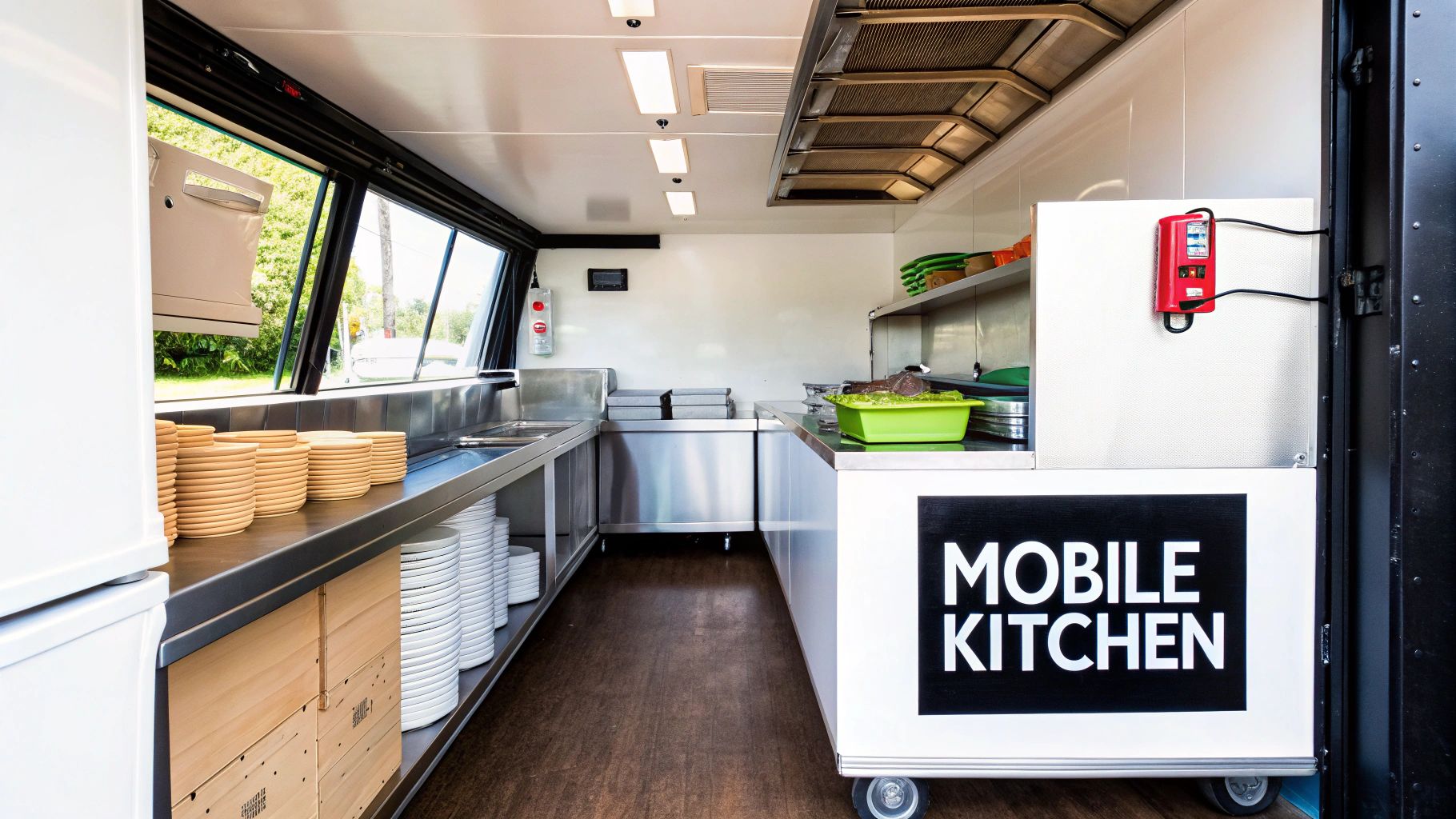
Outfitting a food truck is a unique puzzle, a blend of culinary dreams and hard logistics. Unlike a brick-and-mortar restaurant with plenty of room, every single square inch inside a mobile kitchen has to earn its keep. This is where partnering with a specialist like Seattle Restaurant Equipment really makes a difference for local Washington entrepreneurs. We can give you access to a huge inventory of commercial-grade appliances built specifically for these tight, high-demand spaces.
Essential Refrigeration and Prep Stations
Your cold line is the backbone of food safety and speed. Keeping ingredients fresh and easy to grab during a chaotic lunch rush isn't just a goal; it's a must. Our selection at Seattle Restaurant Equipment is built for exactly that.
- Commercial Refrigerators & Freezers: Compact under counter refrigerators and under counter freezers are lifesavers for maximizing your workspace. They tuck neatly underneath your prep surfaces, keeping your most-used ingredients right where you need them.
- Sandwich Prep Tables: These units are absolute workhorses, combining refrigerated wells for toppings with a built-in cutting board. They are non-negotiable for trucks slinging sandwiches, tacos, or salads.
- Specialty Prep Tables: For more specific menus, pizza prep tables offer specialized compartments for sauces and cheeses, making your assembly line a well-oiled machine.
The name of the game in a mobile kitchen is efficiency. Every piece of equipment has to support a logical flow from cold storage to the cooking line to the service window, cutting down on steps and cranking up output.
Outfitting Your Hot Line and Bar Service
Once your cold line is set, the cooking and service equipment you choose will determine what your menu can truly be. Seattle Restaurant Equipment stocks the heavy-duty gear you need to bring your concept to life. This includes powerful deep fryers that can keep pace with endless orders for fries or wings—often a food truck's bread and butter.
For trucks centered around beverages, getting the right gear is just as important. Our selection of Seattle bar equipment and specialized Seattle coffee shop refrigerators ensures that whether you're mixing craft mocktails or pouring iced lattes, your setup is professional and dependable. The same rules of durability and smart use of space apply here, too.
Putting a mobile kitchen together from scratch can feel like a huge task, but breaking it down into these core components is the best way to start. For a deeper look at the fundamentals, check out our guide on setting up a commercial kitchen—many of the same principles apply to getting your truck ready to roll.
Matching Your Menu to the Right Equipment
Before you even think about shopping for equipment, let's talk about the most important step: nailing down your menu. Outfitting your food truck isn't a shopping spree; it's a strategic mission. Think of it like packing for a long journey—every single item you bring has to serve a critical purpose. Your menu is the map that shows you exactly what gear is essential.
It just makes sense, right? A gourmet burger truck and a mobile espresso bar are going to have completely different equipment needs. The burger joint will live and die by its big, powerful griddle and a deep fryer that can keep up with the lunch rush. On the other hand, a taco truck's success is all about keeping ingredients fresh and cold, making a multi-pan sandwich prep table the real star of the show. Your menu writes the blueprint for your kitchen.
The Foundation Your Menu Demands
Every single dish you plan to serve points directly to a piece of hardware you'll need. Let's break down how different food ideas rely on specific equipment, much of which you can find right here at Seattle Restaurant Equipment.
- Commercial Refrigerators & Freezers: Everyone needs cold storage, but the type is what really matters. A truck selling pre-packaged ice cream bars needs a totally different freezer than one blending up fresh-fruit smoothies. Your menu’s balance of frozen versus fresh ingredients will tell you whether you need more commercial refrigerators or commercial freezers.
- Sandwich and Pizza Prep Tables: These units are absolute game-changers for any menu that involves assembly. A sandwich prep table is perfect for building salads, bowls, and tacos, keeping all your toppings chilled and right where you need them. In the same way, a pizza prep table is designed with deep wells for sauce and cheese, making the whole pizza-making process flow smoothly.
- Deep Fryers: If you're serving fries, wings, donuts, or anything that needs to be crispy and delicious, a commercial deep fryer isn't just a nice-to-have, it's a must. The trick is to get one that's sized for your expected sales so it can keep up during a rush without the oil temperature plummeting.
This menu-first strategy is exactly what we're seeing across the industry. Today's food trucks aren't just old vans with a stove tossed in; they are compact, high-powered commercial kitchens built for profit. This shift is reflected in the market's growth, with the U.S. food truck industry expected to hit $1.51 billion by 2030. A huge chunk of that market is made up of 16–25 ft trucks—a size that's big enough for a full, professional cookline but still nimble enough for city streets. You can learn more about these food truck market trends and their impact on equipment choices.
Specialized Equipment for Niche Menus
Beyond the basics, some menus call for very specific gear. A mobile coffee business, for instance, would put Seattle coffee shop refrigerators with glass doors at the top of its list to show off drinks and keep milk perfectly chilled. A truck slinging craft mocktails would need specific Seattle bar equipment like ice bins and speed rails to work efficiently.
Here’s a piece of advice I always give new owners: Don't get caught buying equipment for a menu you might have someday. Buy exactly what you need to make your current menu perfectly, every single time. Every unnecessary piece of gear eats up precious space and cash.
In the end, your goal is to build a smart, cohesive system where every appliance directly supports what you're selling. When you start with a final menu, you get a clear, logical shopping list. It takes the guesswork out of the process, helps you avoid expensive mistakes, and sets your food truck up for success from the very first day you open the window.
Mastering Cold Storage in a Mobile Kitchen
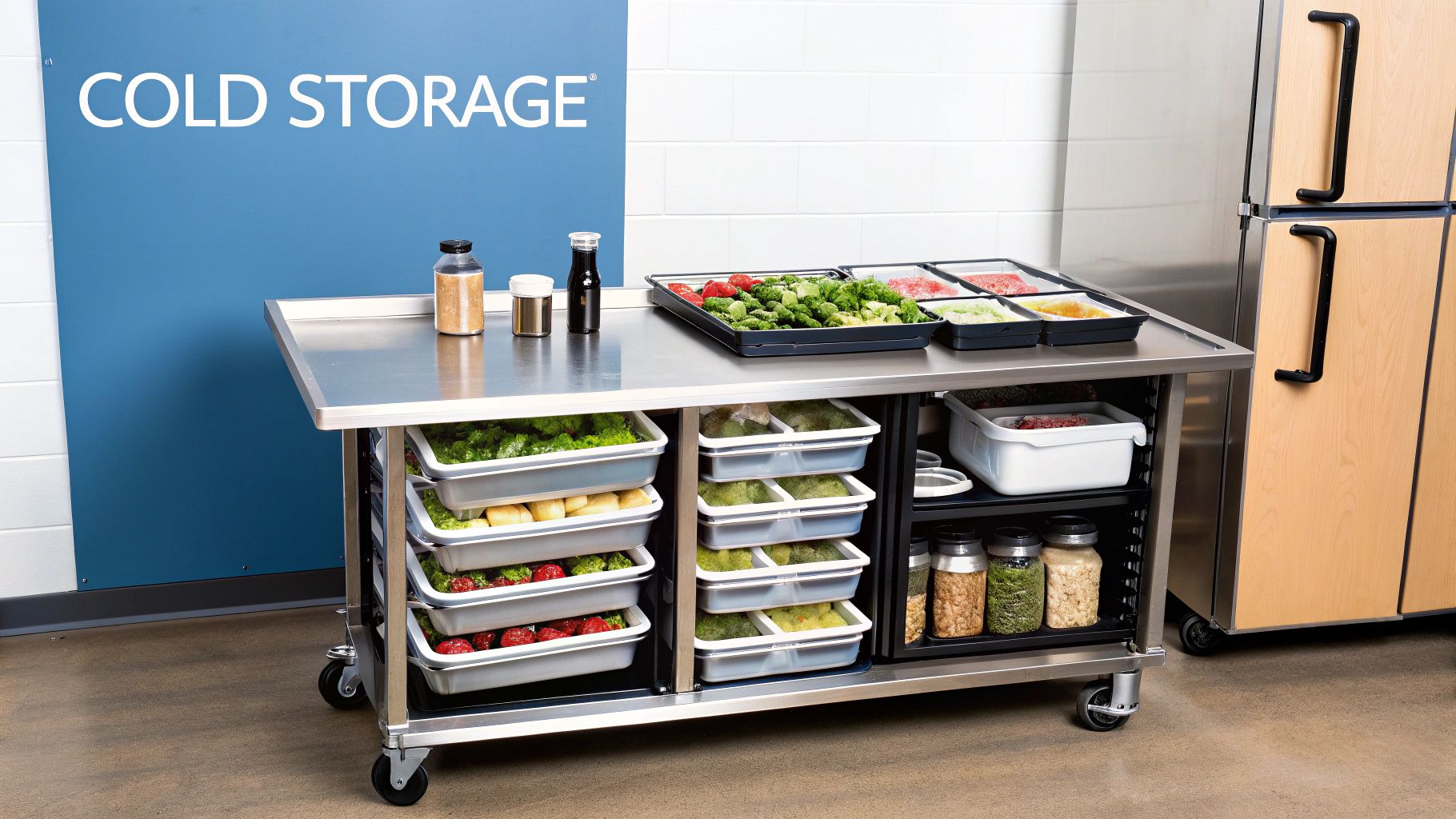
Reliable refrigeration isn't just another piece of cooking equipment for a food truck. It's the lifeline that keeps your ingredients safe, your menu consistent, and the health inspector happy. In the tight quarters of a mobile kitchen, figuring out your cold storage is one of the biggest puzzles you'll solve.
Think of it as the foundation of your kitchen. Without dependable commercial refrigerators and commercial freezers, even the best deep fryers or griddles are useless. At Seattle Restaurant Equipment, we've helped countless food truckers find commercial-grade cold storage solutions that can handle the unique grind of a mobile business.
Maximizing Space with Undercounter Units
One of the golden rules of food truck design is to build up, not out, and keep your countertops clear for action. This is where under counter refrigerators and under counter freezers really shine. These compact workhorses slide right under your prep surfaces, turning what would be dead space into prime, accessible cold storage.
When you tuck your refrigeration right into your prep stations, you create an incredibly efficient workflow. Your ingredients are always an arm's length away, which cuts down on frantic movement and speeds up service when the lunch rush hits. It's a simple layout trick that makes all the difference.
A food truck’s refrigeration is its heart, silently working to protect inventory and profits. The right units not only keep food safe but also optimize every square inch, turning a cramped space into a high-output kitchen.
These units are also built to handle the constant vibration and bumps of being on the road—something a standard commercial model just can't do. Choosing durable, NSF-rated equipment means you're investing in gear that meets health codes and is tough enough for mobile life.
The Power of Integrated Prep Tables
If you're slinging tacos, sandwiches, salads, or pizzas, a prep table is a complete game-changer. These are hybrid units that combine a refrigerated base for backstock with a series of cold wells up top, all capped with a handy cutting board.
- Sandwich Prep Tables: These are the ultimate efficiency tool. They keep all your toppings—lettuce, tomatoes, cheese, sauces—chilled and organized right where you're building your orders.
- Pizza Prep Tables: Made for pizzerias on wheels, these tables have deeper, wider rails to hold sauce, cheese, and all the toppings you can imagine, making the pizza-building process a smooth, fast operation.
This all-in-one design slashes your prep time. Instead of constantly opening and closing refrigerator doors, your crew can just reach into the chilled wells, grab what they need, and assemble everything on the spot.
Specialized Refrigeration for Niche Concepts
Of course, not every food truck has the same needs. A mobile coffee cart has a totally different shopping list than a burger truck, and that's where specialized cold storage comes in.
For beverage-heavy businesses, having the right gear from Seattle Restaurant Equipment is key. A glass-door merchandiser or one of our specialized Seattle coffee shop refrigerators keeps milk, creamers, and cold brew at the perfect temp while showing off bottled drinks to customers. In the same way, a mobile bar would depend on our tough Seattle bar equipment, like underbar refrigerators designed for lightning-fast access to garnishes and mixers.
Your choice in refrigeration also has a big impact on your power draw. Picking modern, energy-efficient models can ease the strain on your generator, saving you fuel and lowering your running costs. At the end of the day, investing in the right cold storage—from under counter freezers to sandwich prep tables—is an investment in your food truck's efficiency, safety, and profitability.
Choosing Your High-Performance Cooking Line
The hot side of your truck is where all the magic happens. Think of it as the engine room of your mobile kitchen—it's where raw ingredients get turned into the signature dishes that build your name and bring in the money. Pulling together the right cooking line isn't just about picking out appliances; it's about engineering a whole system that can take the heat of a lunch rush while fitting into a space the size of a walk-in closet.
This is where your menu gets translated directly into BTUs and stainless steel. Every single piece of cooking equipment for a food truck has to be a real powerhouse, delivering consistent heat and recovering temperature in a flash. Propane is almost always the fuel of choice for the big stuff like deep fryers and griddles. It packs a serious punch without hogging all the power from your generator, which you'll need for your essential refrigeration.
Building Your Hot Line with Seattle Restaurant Equipment
Here at Seattle Restaurant Equipment, we live and breathe this stuff. We specialize in outfitting Washington’s mobile kitchens with the tough, compact, and powerful gear they need to succeed on the road. Our inventory is hand-picked to solve the unique problems food truck owners face, with a laser focus on reliability and performance.
- Deep Fryers: For a lot of menus, this is non-negotiable. A commercial deep fryer has to have a lightning-fast temperature recovery rate. When you drop a basket of cold fries in, the oil temp tanks. A good fryer brings it right back up almost instantly, which is the key to a crispy, not greasy, product.
- Griddles and Charbroilers: The absolute workhorse of so many trucks. A 36-inch or 48-inch griddle gives you a massive, versatile cooktop for everything from smash burgers to morning pancakes. If your menu needs that distinct flame-grilled flavor, a charbroiler is a must-have for getting those perfect sear marks.
- Ranges and Cooktops: Even if you have a big griddle, a set of gas burners adds a ton of flexibility. You'll need them for simmering sauces, boiling water, or sautéing side dishes. It's what really rounds out your cooking capabilities.
The golden rule for a food truck cookline is simple: get the most output from the smallest footprint. Every appliance has to be a multi-tasker, powerful enough to serve long lines, and tough enough to handle the bumps and vibrations of the road.
This idea of building a compact, full-service kitchen is a huge trend, especially in the booming food truck scenes out here in Washington. What works here reflects both what people want to eat and the practical realities of the business. The U.S. food truck market is expected to jump from USD 1.09 billion to USD 1.51 billion by 2030, and the West is leading that growth. This boom is pushing owners towards super-efficient layouts in 16–25 ft trucks. Those are the most popular because you can fit a complete, code-compliant cookline—fryers, a griddle, a range, and under counter refrigerators—and still be nimble enough for city streets. For anyone buying in Washington, this just goes to show how important it is to invest in durable gear that will support you for the long haul. You can find more details on the growing food truck market and its influence on equipment selection.
Comparing Your Food Truck Cooking Equipment Options
Not sure where to start? This table breaks down the most common pieces of cooking equipment to help you match your menu to the right hardware.
| Equipment Type | Best For Menus Featuring... | Key Consideration | Power Source |
|---|---|---|---|
| Deep Fryer | French fries, wings, donuts, fried chicken, tempura. | Fast temperature recovery is critical for crispy results. | Propane |
| Griddle | Burgers, cheesesteaks, pancakes, quesadillas, breakfast items. | Look for thick plates that hold heat evenly across the surface. | Propane |
| Charbroiler | Steaks, gourmet burgers, grilled chicken, kebabs. | Essential for getting authentic grill marks and smoky flavor. | Propane |
| Gas Range | Soups, sauces, pastas, sautéed vegetables. | Adds versatility for items that can't be cooked on a flattop. | Propane |
| Convection Oven | Baking, roasting, pizza, finishing dishes. | A half-size countertop model is a space-saving powerhouse. | Electric/Propane |
Choosing the right combination is a puzzle, but getting it right means a smoother, faster, and more profitable service.
Integrating Cold Storage into Your Cooking Workflow
We've talked about your main cold storage, but bringing it right up to the cookline is what really makes your service fast. This is where specialized units from our collection make all the difference. A strategically placed under counter freezer next to the deep fryer can hold your frozen fries and proteins, while a sandwich prep table can be your final assembly station before food heads out the window.
For more specialized trucks, the right support equipment is just as important. A mobile café will live or die by its Seattle coffee shop refrigerators keeping milk at the perfect temperature. A truck focused on drinks will rely heavily on our Seattle bar equipment to keep service flowing smoothly.
This tight integration of hot, cold, and prep gear is the real secret to a slick operation. To see how it all fits together, check out our complete food truck equipment list. It will help you map out how all the pieces, from commercial freezers to pizza prep tables, create one cohesive, high-performance kitchen on wheels.
Designing for Workflow, Power, and Safety
A successful food truck isn't just a collection of cool equipment; it's a finely tuned system built for speed, efficiency, and—above all—safety. A smart layout is often what separates a smooth, profitable service from a chaotic mess. It all boils down to mastering three key areas: your workflow, your power supply, and your local code compliance.
Think of your kitchen layout as a logical assembly line. The goal is to minimize how much your crew has to move around and prevent them from bumping into each other. You want to map out the journey of an order: from cold storage to the prep station, over to the cooking line, and finally out the service window. Each step needs to flow seamlessly into the next.
For example, placing under-counter refrigerators directly across from your main cooking station is a simple move that saves countless wasted steps and keeps your line cook right where they need to be.
Creating a Logical Kitchen Layout
A powerful workflow is all about eliminating bottlenecks. If you're running a deli truck, it just makes sense to put your sandwich prep table right next to the service window, since that's the final stop before food goes to the customer. This keeps the assembly process separate from the hot line, cutting down on crossover and confusion.
Here at Seattle Restaurant Equipment, we’ve seen countless operators succeed by mapping out this flow before they buy a single appliance. They think through how a deep fryer needs a landing station right next to it, or how commercial freezers should be easy to get to but kept out of the main traffic path. In a food truck, it's a game of inches, and that kind of smart planning really pays off during a lunch rush.
This diagram shows a classic horizontal cooking line, giving you a good idea of how different stations can work in harmony.
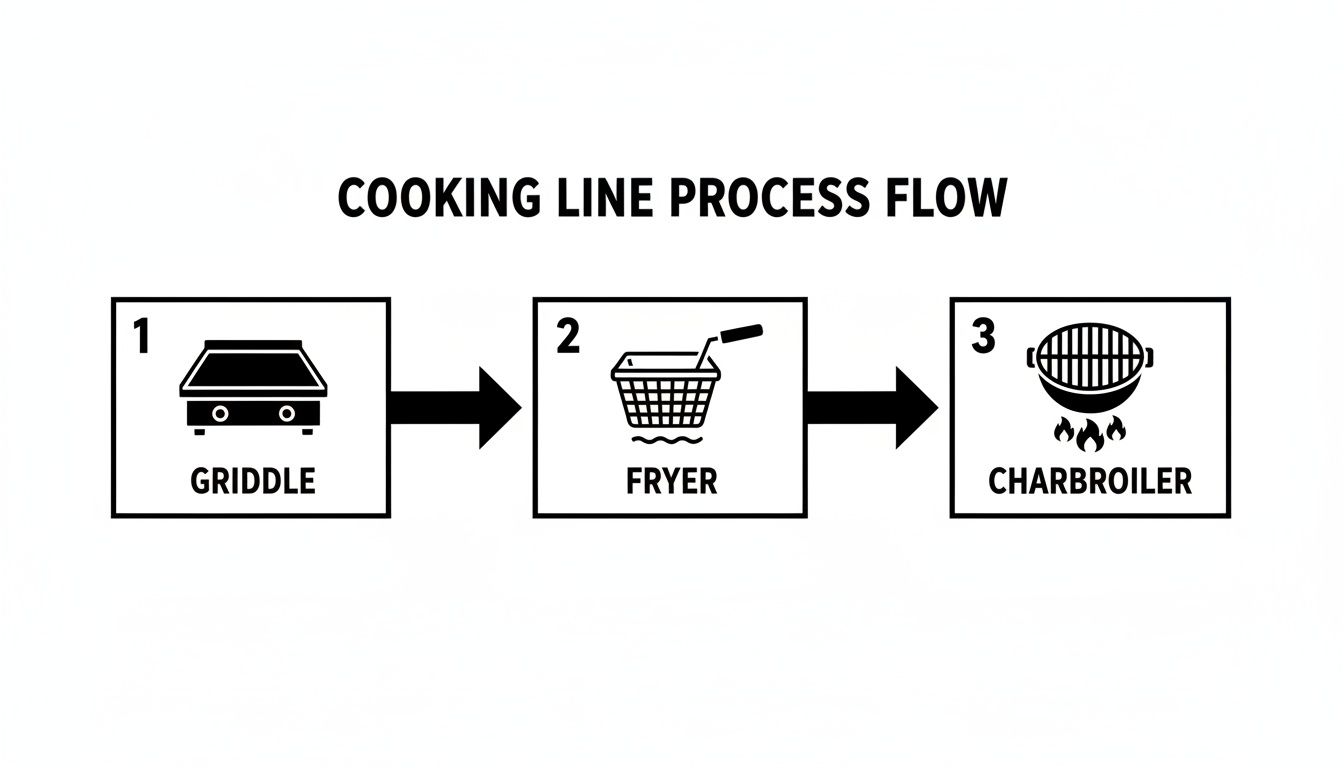
As you can see, creating a logical sequence—like from the griddle to the fryer to the charbroiler—makes it much easier to put together complex orders without tripping over your own feet.
Calculating Your Power Needs
Once your layout is locked in, you have to figure out how to power it all. This is a critical step that a surprising number of new owners get wrong. You have to add up the total energy requirements for every single piece of cooking equipment for a food truck to make sure your generator and propane tanks can handle the load.
- Gas Equipment: For propane-fueled gear like griddles and deep fryers, you'll need to calculate the total BTUs (British Thermal Units).
- Electric Equipment: For appliances like commercial refrigerators, under-counter freezers, or even Seattle coffee shop refrigerators, you'll be calculating the total amperage.
Your generator needs to handle the absolute peak power draw when all your electrical equipment kicks on at once—especially those power-hungry refrigeration compressors. Undersizing your power source is one of the most common, and most costly, mistakes you can make in a food truck build.
Meeting Safety and Compliance Codes
Finally, let's talk about the non-negotiable part: safety. Your local health and fire departments have strict codes you must follow to operate legally. The two most important safety systems on your truck will be your ventilation hood and your fire suppression system.
You are required to have a commercial-grade ventilation hood over any equipment that produces heat or grease. It's responsible for pulling smoke, heat, and greasy vapor out of your tiny space, which keeps things safer and way more comfortable for your crew.
Built right into that hood is an automatic fire suppression system, specifically designed to extinguish a grease fire in an instant. These systems aren't optional—they are an absolute must-have for passing your inspections and protecting your team and your entire investment.
Sourcing and Financing Your Food Truck Equipment
You’ve mapped out your workflow and crunched the numbers on your power needs. Now for the exciting part: turning that vision into a real, working kitchen by sourcing your appliances. This is where your equipment list stops being a blueprint and starts becoming your reality. For any entrepreneur in Washington, this whole process gets a lot easier when you partner with a supplier who truly gets the unique challenges of a mobile kitchen.
At Seattle Restaurant Equipment, we specialize in the tough, commercial-grade gear that food trucks absolutely must have. We're not your typical showroom. Our whole model is built on providing brand-new, high-quality equipment at transparent prices, and you'll never have to deal with commissioned salespeople. This way, you get exactly what your concept requires, whether that's a high-volume deep fryer or a space-saving under counter refrigerator.
Your Local Partner for Food Truck Success
Finding the right supplier is more than just a simple transaction. It's about building a relationship with a team that understands your business inside and out. We aim to be that partner for Washington's amazing food truck community, offering a few key advantages that make outfitting your truck easier and more affordable.
One of the biggest headaches for any new food truck owner is just getting the equipment to your build site. That’s why we offer fast, free shipping on every single order across Washington State. Getting a heavy commercial refrigerator or a bulky sandwich prep table delivered quickly—whether you're in Seattle, Spokane, or anywhere in between—means you can stay on schedule and hit the road that much sooner.
Investing in your food truck is a major commitment. We believe in making that process as straightforward as possible by offering solid warranties on our equipment, providing the peace of mind you need to focus on your food and your customers.
Financing Options to Get You Rolling
For most new food trucks, cash flow is the single biggest challenge. The upfront cost of buying all your cooking equipment for a food truck at once can feel like an impossible hurdle. To help lower that barrier, we offer accessible financing options through our partnership with The Restaurant Warehouse.
These programs are built specifically for food businesses like yours. They offer flexible plans that help you get the essential gear you need now while keeping your startup budget in check. That means you can outfit your truck with reliable, top-tier appliances—from pizza prep tables to Seattle coffee shop refrigerators—without draining all your cash.
- Preserve Your Capital: Keep your cash for important things like your first food order, marketing, and all those other launch-day expenses.
- Get High-Quality Gear: Don't settle for less on the equipment that runs your entire business. Finance the dependable appliances you need from day one.
- Simple Application Process: The process is designed to be quick and easy, so you can get an approval and order your equipment without any long delays.
How to Get Started with Us
Ready to start building out your kitchen on wheels? Our process is simple. You can browse our huge online inventory of commercial freezers, Seattle bar equipment, and more to find the exact models that fit your layout and menu. If you need some advice, our team is always ready to help you pick out the perfect equipment package for your entire truck.
Questions We Hear All the Time About Food Truck Gear
Jumping into the world of food truck equipment brings up a ton of questions. It makes sense—every single choice you make affects your space, your wallet, and how smoothly your kitchen runs. Let's walk through some of the most common things we're asked by new and seasoned pros alike, focusing on the kind of durable gear we stock at Seattle Restaurant Equipment.
What’s the One Piece of Cooking Equipment I Absolutely Can’t Live Without?
This really boils down to your menu, but if you're looking for the most versatile combo, a commercial griddle and a two-basket deep fryer are hard to beat. A good 36-inch or 48-inch griddle is a true workhorse; it can handle the morning breakfast rush just as easily as it can churn out burgers all afternoon. A solid fryer opens up a whole world of high-profit, fan-favorite items like fries, wings, and more.
But honestly? The single most critical piece of equipment on any truck is your refrigeration. A combination of an under counter refrigerator and a sandwich prep table is the backbone of your entire operation. It's all about food safety and workflow. Without reliable cold storage, even the fanciest cooking line is completely useless.
Should I Go with Gas or Electric Equipment?
For your main cooking line—we're talking griddles, charbroilers, and deep fryers—propane is the hands-down winner for food trucks. It provides that powerful, consistent heat you need without draining your generator. You want to save your generator's precious power for running refrigeration, lights, and smaller plug-in appliances.
Electric cooking equipment is incredibly power-hungry. It pulls a ton of amperage, which usually means you'd need a bigger, more expensive, and thirstier generator to keep up. While electric can be perfectly fine for smaller things like a panini press, your primary cooking line should almost always run on propane. It's just more practical and reliable out on the road.
Think of it this way: Your generator is the brain of the truck, keeping the essentials like refrigeration and lights running. Your propane tanks are the heart, fueling the high-heat cooking line that pumps out your signature dishes.
How Do I Make Sure All My Equipment Will Actually Fit?
This is where planning becomes your best friend. Start by drawing up a precise, to-scale floor plan of your truck's kitchen space. You need to use the exact dimensions—width, depth, and height—from the spec sheets for every single piece of gear you're looking at from Seattle Restaurant Equipment, from commercial freezers to pizza prep tables.
Once you have your blueprint, start placing the equipment. You have to leave at least 36 inches for your main walkways and double-check all the local fire and health code clearance requirements around your cooking appliances. This is also when you need to do the math on your power load. Add up the BTUs for all your gas appliances and the total amperage for everything electric, including things like your Seattle coffee shop refrigerators and any Seattle bar equipment. This simple calculation tells you if your propane system and generator can handle the demand when you're slammed, helping you avoid some very expensive surprises later.
Ready to build a kitchen that can handle whatever the road throws at it? Seattle Restaurant Equipment has a huge selection of new, commercial-grade cooking and refrigeration gear that's perfect for your food truck. Come check out our inventory and get your dream kitchen on wheels started today at https://seattlerestaurantequipment.com.