

Designing a restaurant kitchen is about more than just picking out shiny new equipment. It’s about creating a blueprint for profitability and speed. Every single step, from the moment a delivery truck arrives to the final plate hitting the pass, needs to be optimized for total efficiency.
This whole process means you have to map out your entire operational flow before you even think about buying a single piece of equipment. Getting this right from the start ensures your layout supports your menu and your staff perfectly.
Building Your Kitchen's Blueprint for Efficiency
The heart of any successful Seattle restaurant beats in its kitchen. A well-designed kitchen isn't just a place to cook; it's a strategic asset that directly impacts your service speed, your team's morale, and, most importantly, your bottom line.
Think about the journey your food takes. It starts the second supplies are wheeled in through the receiving door and doesn't end until a finished dish is in a server's hands. A logical flow is what prevents utter chaos and dangerous cross-contamination, making sure ingredients move seamlessly from one stage to the next.
The Five Stages of Kitchen Workflow
Every kitchen, no matter the size or what's on the menu, follows a fundamental sequence. Getting a handle on this flow is the first real step in designing a kitchen that actually works for you, not against you.
- Receiving: This is ground zero. It's your initial checkpoint where ingredients are inspected, weighed, and double-checked against invoices before they go anywhere else.
- Storage: Right after receiving, everything needs a home. This means dedicated dry storage for non-perishables, commercial refrigerators for produce and dairy, and commercial freezers for anything frozen.
- Preparation: Here’s where the real work begins. Raw ingredients are washed, chopped, mixed, and portioned out. This area absolutely needs plenty of counter space and easy access to sinks and cold storage.
- Cooking: The main event. This is the hot line—where your ranges, deep fryers, and ovens live. How you lay out your cook line is critical for firing orders quickly and consistently.
- Plating & Service: This is the final stop. Dishes are assembled, garnished, and passed off to the front-of-house staff. This station has to be close to the dining room exit to make sure food gets to the table while it's still hot.
This simple graphic breaks down the core design process, showing how your menu is the foundation for your entire layout and station setup.
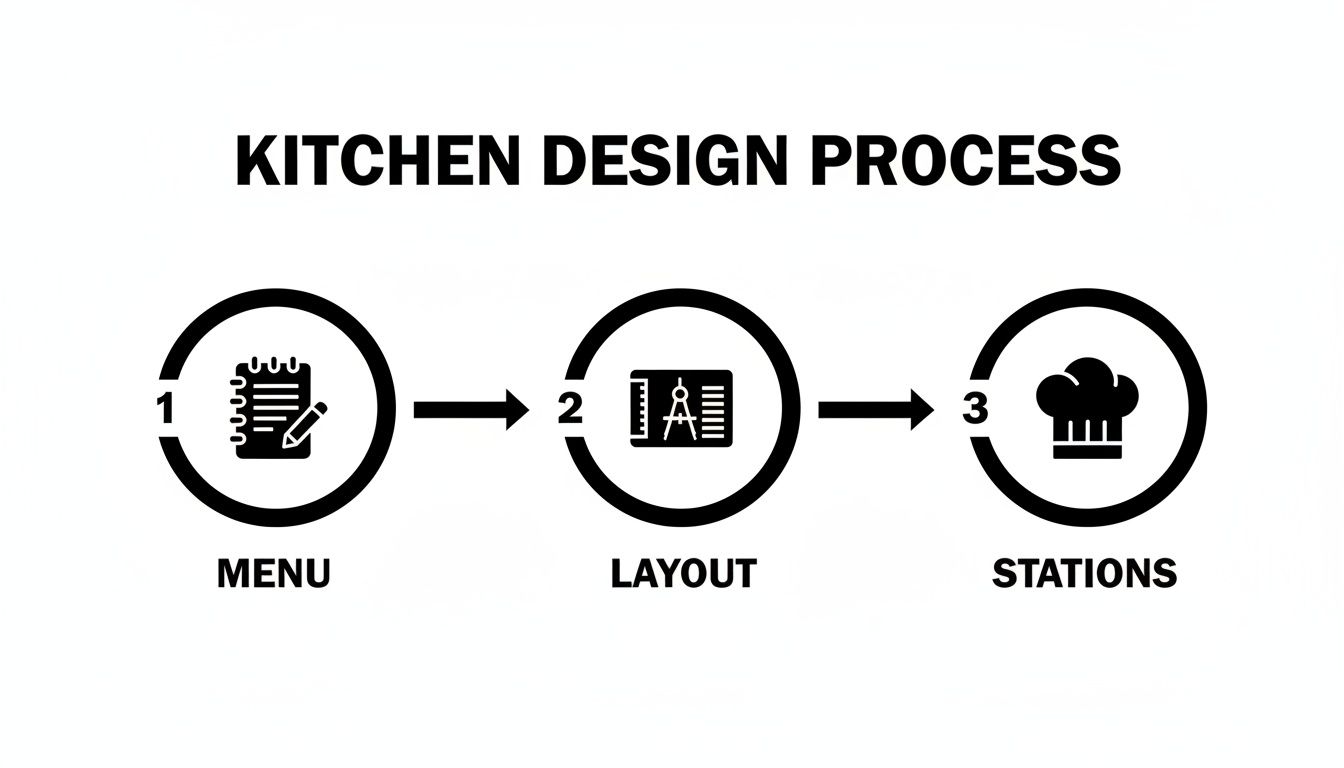
As you can see, a smart kitchen design always starts with the menu. The menu dictates the physical layout you'll need and the specific work zones required to pull it off.
Matching Your Layout to Your Concept
The kind of layout you pick has to make sense for your restaurant's concept. A high-volume fast-food joint has completely different needs than an intimate fine-dining spot. It’s not one-size-fits-all.
For example, an assembly-line layout is a no-brainer for pizzerias or sandwich shops where the food moves in a straight line from one station to the next. On the other hand, an island layout, with the cooking equipment smack in the middle, is great for communication and works well in large kitchens with complex menus. For those tight spaces, like food trucks or Seattle coffee shops, a galley layout is king, making the most of every last inch.
A well-planned kitchen layout is your best defense against service bottlenecks. The goal is to minimize the number of steps your staff takes, which directly translates to faster ticket times and less physical strain.
Demand for thoughtfully designed kitchens is on the rise. The global market for commercial kitchen design services is set to grow, fueled by a boom in new restaurant openings and the absolute necessity of efficient, code-compliant spaces.
Ultimately, a good design blueprint ensures that every square foot of your kitchen has a purpose. For a deeper dive into the nuts and bolts, check out our detailed guide on setting up a commercial kitchen. It’s packed with actionable advice to get you started on the right foot.
Setting Up Your Stations: Creating Dedicated Kitchen Zones
Once you've settled on the overall layout, it's time to get granular and map out your work zones. This is where the real magic happens in a high-performance kitchen. Think of it like a pit crew at a racetrack; every station has a specific job, and they all need to work together flawlessly. Carving out these dedicated areas is the key to cutting down on chaos, preventing costly mistakes, and empowering your staff to hit their stride.
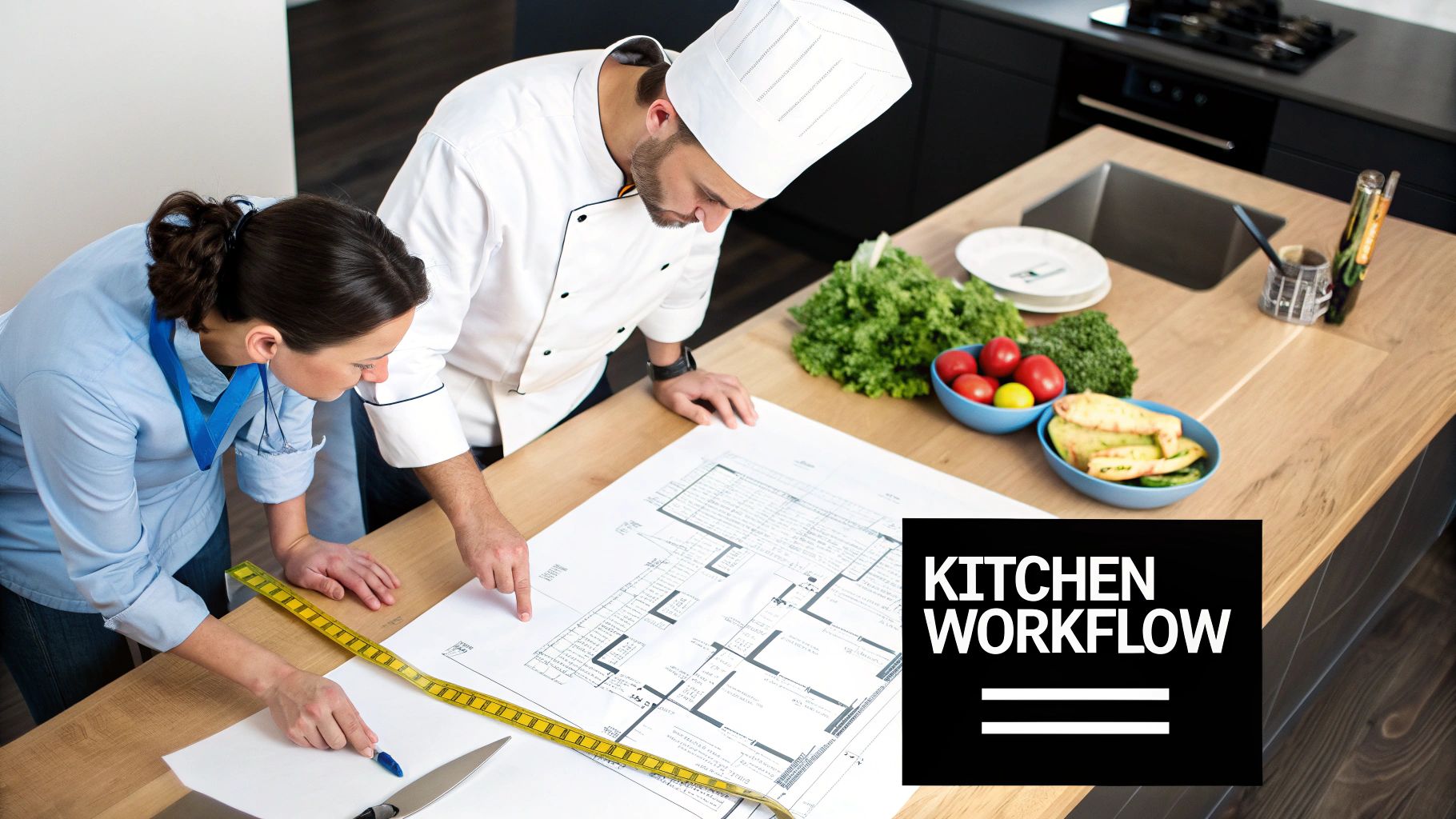
This zone-based approach is all about creating a logical flow. The goal is simple: a chef should have everything they need for a particular task right at their fingertips. When you nail this, you eliminate wasted steps and watch ticket times drop.
The Hot and Cold Lines
The most fundamental zones you'll create are your hot and cold lines. The hot line is the heart of the operation, built around all your cooking equipment. This is where you'll group your high-heat gear. For instance, placing your deep fryers right next to a range and a charbroiler just makes sense—it creates a cohesive, high-output cooking battery.
The cold line, on the other hand, is for building salads, plating appetizers, and finishing desserts. Here, it's all about precise temperature control and fast, clean assembly. This is where your refrigeration really shines.
Essential Cold Line Equipment from Seattle Restaurant Equipment:
- Commercial Refrigerators: Your standard reach-in units are workhorses for holding everything from produce and house-made sauces to prepped ingredients.
- Commercial Freezers: Absolutely critical for keeping proteins, fries, and other frozen goods locked in the safety zone.
- Sandwich Prep Tables: The command center for any deli or café, these units combine refrigerated wells for toppings with a built-in cutting board and cold storage right underneath.
Getting these zones properly equipped means your team isn’t running back and forth across the kitchen for a container of feta during the dinner rush.
Specialized Prep and Assembly Stations
Beyond the main lines, your menu is going to call for some specialized prep areas. These stations are usually built around a single, mission-critical piece of equipment that defines their entire purpose. This is your chance to really tailor the workflow to your specific concept.
Just think about the difference between a pizzeria and a Seattle coffee shop. A pizzeria's main prep zone will be built around heavy-duty pizza prep tables. These give you wide, refrigerated rails for all your cheeses, meats, and veggies, plus a big marble or stainless steel surface for stretching dough. Every ingredient is right there, ready to go.
A Seattle coffee shop has a completely different flow. Its prep station would probably center on Seattle coffee shop refrigerators for milks and creamers, parked next to an ice machine, with counter space for blenders and espresso machines. Their whole setup is streamlined for creating beverages, not assembling plates.
A well-designed prep station should just feel right. Placing under counter refrigerators and under counter freezers directly beneath the workspace is a game-changer. It anchors your staff to one spot, saving hundreds of wasted steps over a single shift. It's a small detail that makes a huge difference.
Bar and Beverage Zones
If you have any kind of beverage program, a dedicated bar zone is non-negotiable. This space needs its own equipment and its own distinct workflow to keep bartenders from tripping over kitchen staff—and vice versa.
Essential Seattle bar equipment is more than just shakers and glassware. Back bar coolers are crucial for keeping bottled beers and wines chilled to the perfect serving temp, while underbar ice bins and sinks make drink building a breeze. Just like in the kitchen, organizing this zone logically—grouping refrigeration, ice, and glassware—is what leads to fast, consistent service.
By creating these dedicated, well-stocked zones, you turn a simple floor plan into a dynamic, efficient workspace that’s ready for anything.
Choosing the Right Commercial Kitchen Equipment
Alright, you've zoned your kitchen layout. Now for the fun part: picking the gear that will bring your menu to life. This isn't just a shopping trip; it’s a strategic investment. The equipment you choose will define your kitchen's efficiency, the quality of every plate that goes out, and your ability to keep up when you're slammed on a Friday night. Get this right, and you're building a foundation for success.
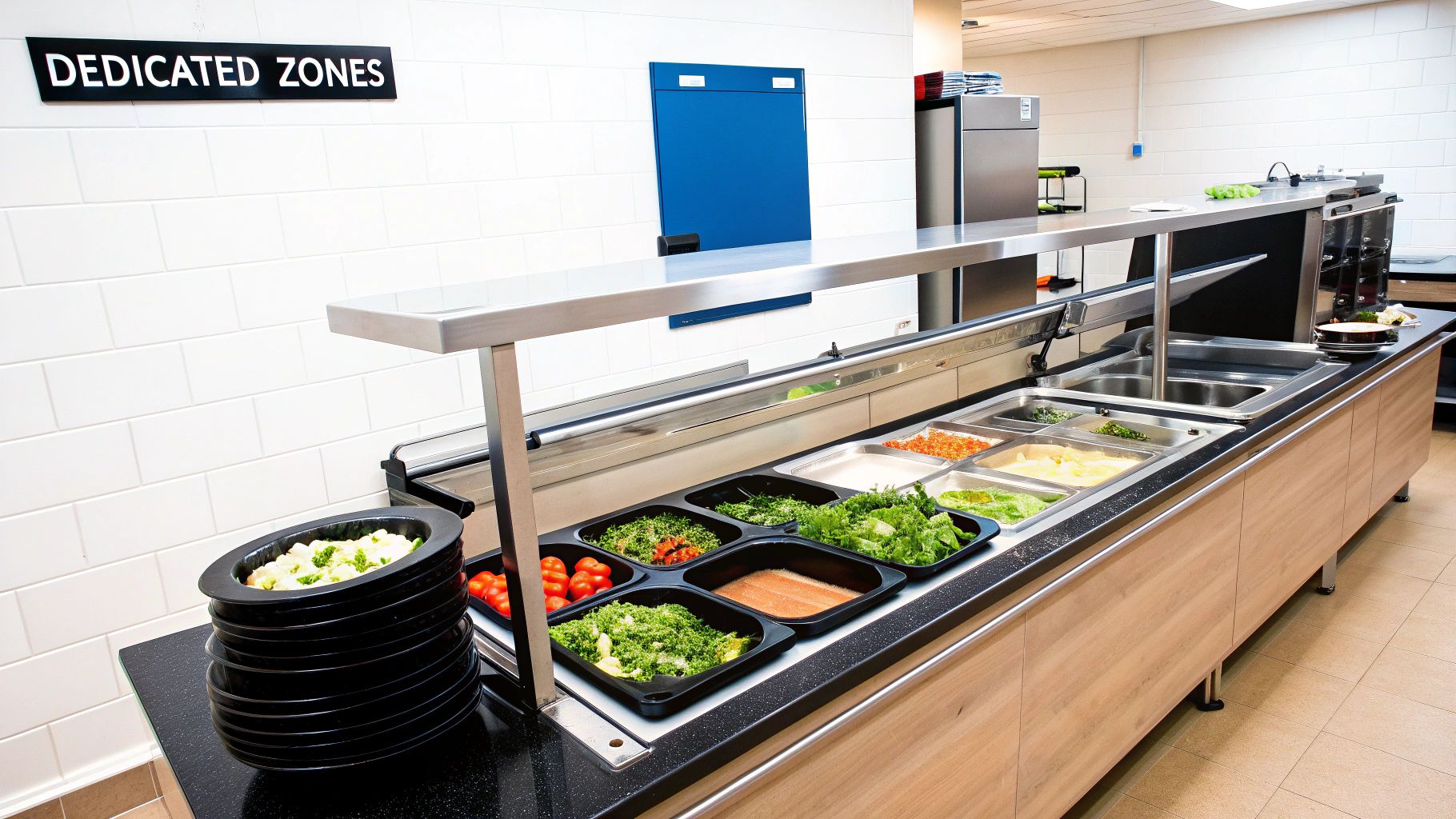
This isn't a small decision, and the market reflects that. Globally, commercial kitchen appliances were a USD 98.34 billion market in 2024, expected to hit USD 149.34 billion by 2030. That growth tells you one thing: restaurants are constantly investing in better, more reliable equipment to stay competitive. You should, too.
Your Cold Storage: The Heartbeat of the Kitchen
Before a single flame is lit, your cold storage is working. It’s the absolute bedrock of food safety and smart inventory control. The commercial refrigerators and commercial freezers you buy need to match your volume, menu, and the physical footprint of your kitchen.
A busy Seattle spot isn't going to get by with just one unit. You need a mix to support different stations.
- Walk-In Coolers & Freezers: If you’re doing any kind of volume, a walk-in is non-negotiable for bulk produce, proteins, and dairy.
- Reach-In Refrigerators & Freezers: These are the workhorses of your cook line and prep stations. They keep portioned ingredients right where you need them.
- Under Counter Refrigerators & Freezers: I love these for maximizing tight spaces. They slide right under a prep table, keeping key items at arm's reach and cutting down on wasted steps.
If you’re running a bar or a coffee shop, you’ll need even more specialized gear. Proper Seattle bar equipment always includes back bar coolers to keep drinks chilled and ready. For a cafe, a dedicated Seattle coffee shop refrigerator ensures your milk and cream are held at the perfect, consistent temperature.
Choosing the right refrigeration can feel overwhelming, but matching the unit to your business model is key.
Essential Refrigeration for Different Foodservice Concepts
| Business Type | Primary Need | Recommended Equipment | Key Feature |
|---|---|---|---|
| Busy Downtown Restaurant | Bulk ingredient storage and line access | Walk-In Cooler & Reach-In Commercial Refrigerators | High-capacity storage to minimize daily deliveries and line units for quick access during service. |
| Seattle Food Truck | Compact, efficient cold holding | Under Counter Refrigerator/Freezer | Maximizes limited space while keeping ingredients fresh and accessible in a mobile environment. |
| Neighborhood Pizzeria | Topping organization and dough storage | Pizza Prep Table | Refrigerated rails for toppings and a large, insulated base for holding proofed dough. |
| Capitol Hill Coffee Shop | Milk, cream, and cold brew storage | Seattle Coffee Shop Refrigerators | Precise temperature control for dairy and visibility for grab-and-go items. |
Ultimately, a smart refrigeration plan keeps your food safe, reduces waste, and makes your entire operation run smoother.
Prep Tables Built for Speed
If your concept is built on assembly—think sandwiches, salads, or pizza—a specialized prep table is your secret weapon for speed and consistency. These units aren’t just tables; they’re self-contained stations that combine refrigerated storage with a dedicated workspace.
A deli or sandwich shop absolutely lives and dies by its sandwich prep tables. They have refrigerated wells up top for all your meats, cheeses, and toppings, with a cutting board right in front. One cook can knock out multiple orders in minutes without taking a single step away from their station.
It's the same story for a pizzeria, but with pizza prep tables. These have deeper, wider rails to hold big pans of sauce, cheese, and pepperoni, often with a marble or stone top that’s perfect for stretching dough.
The right prep table isn't a luxury; it's a workflow multiplier. By centralizing ingredients and workspace, you can significantly reduce ticket times and improve order accuracy—two factors that directly impact customer satisfaction and your bottom line.
Outfitting the Hot Line for Peak Performance
The cook line is where the magic happens, and it needs equipment that can handle the heat—literally. The gear you choose here is dictated entirely by your menu.
For a huge number of restaurants, deep fryers are a must-have. Whether you're turning out fries, fried chicken, or tempura, a solid commercial fryer gives you the consistent temperature you need for that perfect crispy finish. Think about your menu—can you get by with a single-vat model, or do you need multiple vats to keep seafood flavors separate from your potatoes?
Your range and oven are the true heart of the hot line. A standard range with burners on top and an oven below is a versatile starting point. But many kitchens find a huge advantage in adding a convection oven. By using fans to circulate hot air, they cook faster and more evenly—a game-changer for bakeries or anyone doing high-volume roasting.
Making these decisions can feel like a lot when you're just starting. To help you stay organized, we put together a guide. Take a look at our commercial kitchen equipment checklist to make sure you don’t miss a single essential piece for your new kitchen.
Navigating Health and Safety Regulations
Let’s be honest, designing a commercial kitchen isn't just about creating a beautiful, efficient workflow. At its core, it's about building a space that's safe, clean, and up to code. Washington State and our local health departments here in Seattle don’t mess around, and overlooking their rules is a recipe for disaster. Think failed inspections, expensive rebuilds, and a grand opening that keeps getting pushed back.
This whole process is really about creating an environment that protects both your customers and your team. Every single choice, from the type of flooring you pick to where you place a hand sink, is going to be scrutinized. Understanding these regulations from day one will save you a world of headaches later on.
Core Food Safety and Health Department Rules
Your local health inspector is your first line of defense against foodborne illness, so their requirements are non-negotiable. They are laser-focused on preventing cross-contamination and making sure food stays out of the temperature danger zone.
Food storage, for example, is a huge deal. Your commercial refrigerators absolutely must maintain a temperature of 41°F or below. For your commercial freezers, that magic number is 0°F or below. These aren’t just suggestions; they’re hard and fast rules. Inspectors will bring their own thermometers, so investing in reliable, quality units is one of the smartest moves you can make.
Handwashing is another critical point. Health codes demand dedicated handwashing sinks—totally separate from your prep or dishwashing sinks—that are conveniently located for staff. Surfaces get the same level of attention. All your countertops and prep areas need to be made from non-porous, smooth, and easily cleanable materials. Stainless steel is the undisputed king here for a reason.
Think of health codes less as a list of hurdles and more as a detailed roadmap for building a professional, safe kitchen. A good, respectful relationship with your local health inspector can be one of your most valuable assets.
Fire Safety and Ventilation Codes
The moment you bring heat and grease into the equation, fire safety becomes priority number one. This is especially true for any equipment that creates grease-laden vapors, which is where your ventilation system becomes the star of the show.
A properly sized commercial kitchen hood and ventilation system isn’t just a good idea—it’s mandatory over most cooking equipment like ranges, griddles, and charbroilers. It is absolutely non-negotiable for high-heat, grease-pumping workhorses like deep fryers. The hood's entire job is to capture smoke, heat, and grease before they build up and create a serious fire hazard.
This system also has to include an integrated fire suppression setup. These systems are designed to automatically blast fire-retardant chemicals if a flare-up happens, which can be the difference between a minor scare and a catastrophic fire. When you're designing a restaurant kitchen, trust me, the fire marshal will be looking at your mechanical plans for ventilation and fire suppression with a fine-toothed comb.
Accessibility and Employee Safety
A truly safe kitchen is one that's safe for everyone working in it. That means following Americans with Disabilities Act (ADA) standards and just plain good workplace safety practices. Even though customers won't be in your kitchen, ADA compliance ensures your workspace is accessible to all potential employees.
This boils down to things like providing adequate clearance in your walkways. As a rule of thumb, main kitchen pathways should be at least 36 inches wide to allow people to pass through clearly, even when you're in the middle of a chaotic dinner rush. It’s all about creating a space where your crew can move safely and freely without slamming into hot surfaces or sharp corners.
This kind of foresight prevents accidents and shows your team you value their well-being. Simple things often overlooked, like non-slip flooring and proper, bright lighting, are just as crucial as the big-ticket equipment.
Ultimately, navigating these regulations is a foundational step. Get this part right, and you’re not just building an efficient kitchen—you’re building a responsible, secure, and lasting business.
Future-Proofing Your Kitchen with Smart Design
The restaurant business never sits still. It's constantly shifting and evolving. If you want to stay ahead, a forward-thinking approach to designing a restaurant kitchen isn't just a nice idea—it's your biggest competitive advantage.
Building a kitchen for tomorrow means you have to look past today's menu. You've got to anticipate the changes that will define your business for years to come. This means building in flexibility, running efficiently, and being ready to adapt on the fly. From open kitchens that put on a show to hyper-compact layouts for ghost kitchens, a modern design is what will keep you in the game.
Designing for Transparency and Smaller Footprints
One of the most exciting trends we're seeing is the rise of the open-kitchen concept. It completely removes the wall between your culinary team and your guests, creating an atmosphere built on trust and a little bit of entertainment. It definitely demands top-notch cleanliness and a sharp, well-trained team, but the payoff in customer experience can be massive.
At the same time, the industry is seeing a huge boom in concepts that need a much smaller footprint. Ghost kitchens, food trucks, and delivery-only operations need designs that squeeze value out of every single square inch. That often means investing in multi-functional equipment and smart vertical storage to create a super-efficient, compact workspace.
A recent analysis confirms kitchens are moving toward smarter, health-conscious spaces. According to the 2026 Kitchen Trends Report, even as U.S. home sizes shrink, 76% of designers expect kitchen footprints to grow, turning them into multi-purpose hubs driven by smart technology. You can dig into more insights from the NKBA's full report on kitchen trends.
The Critical Role of Energy-Efficient Equipment
Let's be honest, utility bills can be a killer. Future-proofing your kitchen means making smart, sustainable investments that directly attack these costs. Energy-efficient appliances aren't a luxury anymore; they're a business necessity that pays you back over time.
Modern commercial refrigerators and commercial freezers are built to use way less power than older models, all while holding rock-solid temperatures. This doesn't just lower your monthly energy bill—it also shrinks your environmental footprint.
- Smart Refrigeration: Keep an eye out for units with better insulation, high-efficiency compressors, and smart features like self-closing doors to stop energy waste.
- Induction Cooking: Making the switch from traditional gas ranges to induction cooktops can slash your energy use and create a cooler, safer kitchen.
- High-Efficiency Fryers: Newer deep fryers have superior insulation and recover heat much faster, meaning they use less energy to keep your oil at the perfect temperature.
Investing in these technologies from day one is one of the smartest things you can do to control your long-term operating costs. For a deeper dive on how these units can impact your bottom line, check out our guide on energy-efficient commercial refrigeration.
Building in Flexibility with Modular Design
Your menu is going to change. Your customers' tastes will evolve. A kitchen built with rigid, single-purpose stations is going to have a hard time keeping up.
The answer is to think modular. Use equipment that's versatile and can be moved around easily.
Think mobile prep tables, countertop cooking equipment, and under counter refrigerators and freezers that can be shifted to support different workflows as needed. This kind of flexibility allows you to adapt your layout for a special event, test-drive a new menu idea, or even pivot your entire business model without needing a costly, disruptive renovation.
When you combine smart energy efficiency with a flexible, modular design, you're not just building a kitchen that's productive today. You're building one that's ready to grab whatever opportunities come your way tomorrow.
Of course. Here is the rewritten section, crafted to sound completely human-written and natural, following the provided style guide and examples.
Common Questions About Designing a Restaurant Kitchen
As you start turning your restaurant dream into an actual floor plan, the questions really start to fly. It’s a complex process, no doubt, but tackling it piece by piece is how you get it done. Let's dig into some of the most common questions we hear from Seattle operators just like you.
How Much Does It Cost to Equip a Commercial Kitchen?
This is the big one, and the honest answer is: it depends. The final bill is a moving target based entirely on your restaurant’s size, concept, and whether you go for brand-new or used gear.
A cozy Seattle coffee shop might get fully equipped for $20,000-$50,000. But a full-service restaurant? That number can easily blow past $150,000. Your ventilation hood system and walk-in coolers are almost always the most expensive items. From there, every specialized piece of cooking equipment adds to the tab. The best thing you can do is create a detailed equipment list early on and start getting quotes to build a budget that’s grounded in reality.
What Are the Most Common Kitchen Design Mistakes?
We see the same handful of missteps over and over, and they can be a nightmare to fix once the walls are up. The most common slip-ups are a poorly planned workflow, not leaving nearly enough room for storage, and seriously underestimating ventilation needs.
A bad workflow creates traffic jams that bring your whole service to a screeching halt. Not having enough storage, especially for cold ingredients, quickly leads to a disorganized, unsafe kitchen. This is where planning for enough commercial freezers and tucking under counter refrigerators into the right spots can make all the difference.
And finally, a ventilation system that can't keep up with your cook line isn't just an inconvenience—it's a massive fire risk and a surefire way to fail your inspection. Always, always plan for more capacity than you think you need.
The single most common—and avoidable—mistake is under-investing in cold storage. Running out of refrigerated space during a busy service is a nightmare that impacts food safety, quality, and speed. Don't skimp here.
What Is the First Step in Designing My Kitchen Layout?
Before you draw a single line, you need to lock in your menu. Your menu is the blueprint for everything. It dictates the exact equipment you need, how many stations you’ll have, and the entire flow of your kitchen.
Think about it: a burger joint is going to be built around its griddles and deep fryers. A neighborhood deli, on the other hand, will be designed around a long line of sandwich prep tables. Once that menu is set in stone, you can build a detailed equipment list from Seattle Restaurant Equipment, and that list becomes the true foundation of your floor plan.
How Can I Maximize Space in a Small Kitchen?
When you’re stuck with a tight footprint, every single inch has to work for you. The secret is to think vertically and choose equipment that can do more than one job.
Start by getting things off the counters. Install wall-mounted shelving for your smallwares and dry goods to free up precious prep space. Then, be strategic about the equipment you choose.
- Go Undercounter: Instead of bulky reach-in units, use under counter refrigerators and under counter freezers. They slide right under your prep surfaces, keeping ingredients at your fingertips without eating up floor space.
- Embrace Multi-Functionality: Why buy a separate steamer and convection oven when a combi oven can do both? It’s a major space-saver on the cook line.
- Choose Specialized Prep: For concepts like pizzerias or delis, a pizza prep table is a game-changer. It combines your workspace with all the cold holding for toppings in one compact, efficient unit.
In a small kitchen, a ruthless organization system isn't just helpful—it's absolutely essential to keeping things moving smoothly and safely.
Ready to find reliable, high-performance appliances for your new kitchen? The team at Seattle Restaurant Equipment is here to help you pick out the perfect commercial refrigerators, prep tables, and cooking gear to bring your vision to life.
Explore our full range of commercial kitchen equipment and get free shipping anywhere in Washington.