

Let's be honest, smart equipment financing is the secret weapon for launching or upgrading your restaurant without torching your cash reserves. It’s how you get the essential, money-making tools in your kitchen now, turning a massive capital expense into a predictable monthly payment. For any restaurant in Washington, this is how you get the gear you need to compete and win.
Why Smart Financing Is Your Restaurant's Secret Ingredient
Stop thinking of financing as just another debt. It's a strategic tool for growth. In Seattle's ridiculously competitive food scene, having the right equipment can be the one thing that separates you from the place next door. For so many operators I talk to, the huge upfront cost of quality gear is the single biggest wall standing between them and expansion.
This is exactly where financing comes in. It’s what allows a brand-new Seattle coffee shop to get the best Seattle coffee shop refrigerators for a lightning-fast workflow, or lets an established bistro finally add those new deep fryers to launch a killer happy hour menu. The goal is simple: get the equipment that makes you money working for you before you've had to pay for it in full.
Powering Your Kitchen Upgrade
Financing puts those crucial upgrades within reach, right now. Instead of waiting years to save up, you can immediately bring in the tools that boost your efficiency and your output.
This could be:
- Commercial refrigerators and commercial freezers that lock in food safety and slash spoilage costs.
- Specialized sandwich prep tables or pizza prep tables to streamline your chaotic lunch rush.
- The essential Seattle bar equipment that lets you serve more drinks, faster, including handy under counter refrigerators and under counter freezers.
Here's the thing: the right equipment pays for itself. A new, energy-efficient commercial freezer immediately cuts your utility bill. A high-capacity deep fryer can literally double the output of your best-selling appetizer. These aren't just costs; they're investments that translate directly to more cash in the register.
I’ve seen it time and again—financing has become a non-negotiable growth tool for restaurant owners who want to modernize without draining their working capital. Done right, the monthly payment for new equipment should easily be covered by the extra revenue you're bringing in from higher output and faster service.
A Pathway to Profitability
At the end of the day, financing is about building a more resilient and profitable restaurant. The global restaurant equipment market is expected to balloon to USD 206.07 billion by 2035, and financing is the engine driving that growth.
By using equipment financing, restaurant owners in Washington can grab the tools they need to thrive. If you want to dig deeper into how financing is fueling restaurant growth, the team at peppr.com has some great insights.
Building Your Must-Have Kitchen Equipment Wishlist
Before you even think about filling out a loan application, you need a plan. The smartest move you can make is to build a strategic equipment wishlist. This isn't just about dreaming big; it's about creating a targeted list that connects every single piece of equipment directly to your restaurant's bottom line.
Trust me, when lenders see a well-thought-out plan, your request for equipment financing becomes much more compelling. It shows you’re a serious operator.
Start by walking through your own kitchen during a busy service. Where are things getting bogged down? What’s the one piece of equipment that, if you upgraded it, would have the biggest positive ripple effect on your entire operation? Maybe it's a new bank of high-capacity deep fryers to finally keep up with your best-selling fried chicken. Or perhaps it's a modern sandwich prep table to bring some order to the chaotic lunch rush.
Pinpointing Your Highest Impact Items
Your goal here is to zero in on items that will either generate more revenue, improve kitchen safety, or give you a major efficiency boost. You need to think about the direct, tangible impact each piece will have on your daily service and, ultimately, your profitability.
Let's get practical. Imagine a busy Bellevue coffee shop. For them, a simple Seattle coffee shop refrigerator might be the top priority. Think about it: that single piece of equipment could speed up the barista line, slash customer wait times, and sell more lattes every single hour. It’s a small footprint with a massive impact on revenue.
Or consider a Tacoma pizzeria that's getting slammed during the dinner rush. A new pizza prep table would be a game-changer. More space and better organization mean more pizzas flying out the door, turning a kitchen bottleneck into a money-making machine. If you're building your list, our commercial kitchen equipment checklist is a great place to start.
Here's a quick way to think about prioritizing gear based on your specific restaurant concept.
Prioritizing Equipment for Financing Based on Restaurant Type
| Restaurant Type | High-Priority Equipment | Business Impact |
|---|---|---|
| Coffee Shop | Seattle Coffee Shop Refrigerators | Speeds up drink prep, reduces barista movement, and increases sales per hour. |
| Pizzeria | Pizza Prep Tables | Streamlines the assembly line, increases pizza output during peak hours, and improves order accuracy. |
| Bar/Tavern | Seattle Bar Equipment (Glass Washers, Ice Machines) | Ensures fast drink service, improves turnover, and maintains high standards of cleanliness and efficiency. |
| Deli/Sandwich Shop | Sandwich Prep Tables | Organizes ingredients, accelerates sandwich making, and reduces ticket times during the lunch rush. |
| Fine Dining | Deep Fryers & Charbroilers | Provides precise cooking control for high-quality dishes, ensuring consistency and enhancing menu complexity. |
| Food Truck | Commercial Griddles & Under Counter Freezers | Maximizes limited space for high-volume cooking and efficient cold storage, crucial for mobile operations. |
This table shows how different kitchens in Washington have different "must-have" items. The key is linking the equipment need directly to a business problem you're trying to solve.
Essential Gear for Nearly Every Washington Restaurant
While every kitchen has its unique quirks, some categories are just non-negotiable. These are the workhorses, the foundational pieces that keep your business running smoothly day in and day out. They should be at the top of any financing wishlist.
- Commercial Refrigerators & Freezers: This is the absolute backbone of your food safety and inventory management. Upgrading to reliable commercial refrigerators and commercial freezers, including specialized Seattle coffee shop refrigerators or compact under counter freezers, is an investment against costly food spoilage.
- Specialty Prep Stations: Whether for sandwiches, pizzas, or salads, a sandwich prep table or a pizza prep table is designed to make specific workflows faster and more organized. They cut down prep time and improve order accuracy—a win-win.
- Seattle Bar Equipment: If you serve drinks, you know that efficient Seattle bar equipment is critical. A fast, clean, and well-organized bar maximizes drink sales and keeps your thirsty customers happy.
The bottom line is this: you have to be able to justify every single item on your list. Lenders want to see you’ve done your homework. They need to be confident that each piece of equipment is a strategic investment, not just a shiny new toy.
And you’re not alone in needing this gear. The demand for capable foodservice equipment is exploding. The market was valued at USD 40.04 billion and is projected to climb to USD 59.02 billion by 2032. Full-service restaurants like yours are driving 72% of that demand, so getting the right equipment is key to staying competitive.
Figuring Out Your Financing: Leases vs. Loans
When you’re ready to get that essential kitchen gear, you'll hit a fork in the road: should you lease it or get a loan? Getting this right is a huge deal for your restaurant's finances, but it's simpler than you might think. It all boils down to one simple question: do you want to own it?
Let's break it down. A lease is basically like renting your equipment. You make monthly payments to use a shiny new commercial refrigerator or deep fryer, but the financing company holds the title. A loan, on the other hand, is more like a mortgage for your kitchen. You borrow the cash, buy the equipment, and it's yours from day one.
The Equipment Lease: Your Flexible Rental Plan
Leasing is usually the smartest move for equipment that either doesn't last forever or gets outdated fast—think POS systems or certain specialty cookers. It's also a fantastic route if you need to keep your upfront spending on a tight leash. For a lot of Seattle restaurant owners I talk to, the lower monthly payments on a lease are a lifesaver, freeing up cash for payroll, inventory, or that marketing push you've been planning.
So, what are the perks of leasing?
- Lower Upfront Costs: Most leases require little to no down payment. This means you can get high-ticket items like pizza prep tables or specialized Seattle bar equipment into your kitchen without draining your bank account.
- Predictable Monthly Payments: You’ll have a fixed payment every month. No surprises, which makes budgeting a whole lot easier.
- Always Have the Latest Gear: When your lease is up, you can just trade up for the newest model. Your kitchen stays modern and efficient.
- Tax Advantages: Lease payments are usually considered an operating expense, which often means you can write off the entire amount. (Always check with your accountant, of course!)
The main downside? You’re not building any equity. After years of payments, you don’t own the machine unless you go for a buyout at the end of the term, and that can sometimes come with a hefty price tag.
The Equipment Loan: The Path to Ownership
An equipment loan is your best bet when you're investing in the heavy-duty workhorses of your kitchen. I'm talking about a big walk-in commercial freezer or a six-burner range that you know will be with you for the next decade. With a loan, every single payment builds equity. Once it's paid off, that piece of equipment is 100% yours.
The big wins with a loan are:
- Full Ownership: From the moment it arrives, that equipment is an asset on your business's balance sheet.
- No Restrictions: It's yours. You can modify it, sell it, or do whatever you need to without asking for permission.
- Tax Benefits: You can typically depreciate the value of the equipment over its lifespan and deduct the interest you pay on the loan. This can add up to some serious tax savings over time.
The trade-off here is that loans usually demand a bigger down payment, and the monthly payments might be higher than a lease. But for core, long-lasting gear like under counter refrigerators or under counter freezers, the long-term value of owning it almost always makes up for the initial cost. To see how these choices fit different scenarios, you can finance restaurant equipment through programs built specifically for this kind of flexibility.
Look, the choice between a lease and a loan isn't about which one is "better." It's about what's better for the specific piece of equipment you're getting. For a fast-evolving POS system, leasing is a no-brainer. For a stainless steel sandwich prep table that will probably outlast the building it's in, a loan is a rock-solid investment.
How To Get Your Financing Application Approved
Getting your application approved for the equipment financing restaurant owners rely on isn't about crossing your fingers and hoping for the best. It's about preparation. Plain and simple. Lenders aren't just buying you a new machine; they're investing in your business plan. You have to show them a clear, logical path from their investment to your bottom line.
Think of your application package as your restaurant's resume. It needs to tell a compelling story about where you've been and, more importantly, where you're headed. A well-organized packet shows you’re a serious operator who has crunched the numbers on how a new commercial freezer or sandwich prep table will make your Seattle spot more money.
Assembling Your Essential Documents
Before you even think about filling out a form, get your paperwork in order. Having everything ready to go from the start not only speeds things up but also tells the lender you're organized and on top of your game.
Here’s what you’ll want to have in your toolkit:
- A Detailed Business Plan: This is your roadmap. It should spell out your concept, who your customers are, and exactly how this new equipment fits into your plan for growth.
- Recent Financial Statements: We’re talking about your profit and loss (P&L) statements and balance sheets. Lenders will pour over these to get a read on your restaurant's financial health.
- Business and Personal Tax Returns: Most lenders will want to see the last two or three years of returns to get a solid picture of your financial history.
- Bank Statements: Pull together the last three to six months of your business bank statements. This gives them a real-time snapshot of your cash flow and day-to-day stability.
Crafting a Compelling Narrative
Your documents tell a story, and you need to make it a convincing one. It’s not enough to just ask for money. Connect the dots for them.
For example, if you're requesting funds for a new pizza prep table, don't just say you need it. Explain how its larger capacity will let you increase your peak-hour output by 25%. Show them the math: more pizzas flying out the door every hour means higher nightly sales. Suddenly, it’s not just a piece of equipment—it’s a direct investment in generating more revenue.
This logic works for any piece of gear. Need new Seattle bar equipment? Explain how a high-capacity ice machine and a faster glass washer will slash drink wait times, leading to quicker table turnover and a busier bar. Financing Seattle coffee shop refrigerators? Detail how under-counter units will create a more efficient workflow for your baristas, letting you serve more customers during that critical morning rush.
This chart breaks down the simple journey from figuring out what you need to getting the cash for a lease or a loan.
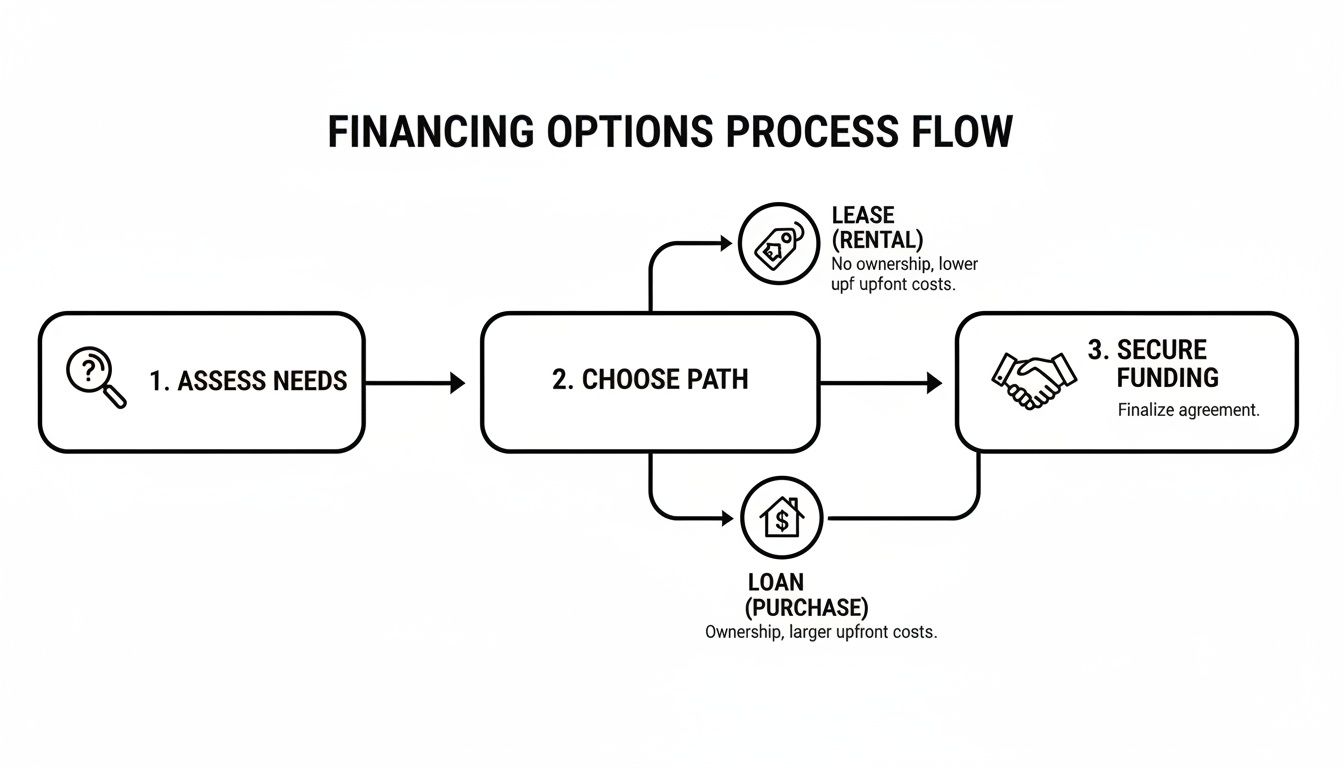
Ultimately, it all comes down to picking the right tool for the job—renting with a lease or owning with a loan—based on how that equipment will work in your kitchen.
Lenders need to see a direct, logical line connecting the new equipment—whether it's an under counter refrigerator, under counter freezer, or a new set of deep fryers—to a stronger, more profitable business.
This isn't just good advice; it's becoming the standard as the global restaurant equipment market keeps growing. Projections show it jumping from USD 4.8 billion to USD 10.2 billion by 2035 as smart operators invest in efficiency. You can dig into the numbers and learn more about the restaurant equipment market trends to see how these dynamics are shaping financing decisions.
Putting Your New Funds to Work with the Right Supplier
Alright, the hard part is over—your financing is approved! This is where the real fun starts. With cash in hand, the next big move is picking a supplier who can actually help you build out your kitchen, not just sell you a bunch of boxes. You're looking for a partner, someone who gets the Washington restaurant scene and helps you stretch every dollar of that new financing.
Choosing the right supplier makes a world of difference. For example, when you work with a company like Seattle Restaurant Equipment, you can immediately take advantage of free shipping to cities all over Washington, like Seattle, Tacoma, and Spokane. That might seem like a small detail, but it saves you real money and a ton of logistical headaches. More of your financing goes directly into the gear itself.
Fast delivery is another massive win. When your walk-in freezer suddenly dies mid-week or you decide to add a new fryer to boost sales, you can’t afford to wait around. Find a supplier who can get equipment on your doorstep in just 1 to 2 business days. That kind of speed keeps you operational and prevents expensive downtime.
Outfitting Your Kitchen with Confidence
Now it’s time to start allocating that approved equipment financing to the workhorses that will power your restaurant. A good supplier should have a deep stock of new, commercial-grade equipment to fit any concept, whether you’re running a busy downtown bistro or a cozy neighborhood coffee shop.
Your business plan should be your guide here. Focus on the core of your operation:
- Essential Cold Storage: This means durable commercial refrigerators and commercial freezers. They’re the backbone of food safety and keeping your inventory fresh.
- Specialized Prep Stations: A quality sandwich prep table or pizza prep table can make a night-and-day difference in your kitchen's speed and efficiency during a rush.
- Bar & Beverage Centers: If you run a bar or cafe, the right Seattle bar equipment or dedicated Seattle coffee shop refrigerators are non-negotiable for serving customers quickly.
- Compact Solutions: Don't overlook versatile pieces like under counter refrigerators and under counter freezers. They are perfect for maximizing every single square inch of your kitchen.
Here's a piece of advice I always give: stick with new, warrantied equipment. I know used gear can look tempting with its lower price tag, but the peace of mind that comes with a manufacturer's warranty is priceless. It protects your investment from day one and saves you from the gut-punch of an unexpected repair bill.
From Deep Fryers to Final Delivery
The whole point is to make this process seamless, from browsing an online catalog to seeing that new equipment roll through your door. A great supplier will offer a solid online store but also have real people you can talk to if you need some guidance. Whether you're buying a couple of powerful deep fryers for your pub or outfitting an entire food truck from scratch, it should feel easy and affordable.
This final step in your financing journey really sets the stage for your future success. By picking a reliable supplier, you're making sure the funds you worked so hard to get are invested in quality equipment that will serve your business well for years.
For more on sourcing the right gear in the area, check out our guide on finding restaurant equipment near me.
Common Questions About Restaurant Equipment Financing
Look, I get it. Diving into the world of equipment financing for a restaurant can feel like you're reading a different language. As you get closer to pulling the trigger on that kitchen upgrade, a few last-minute questions always pop up. Let's walk through some of the most common ones we hear from restaurant owners all over Washington and get you some straight answers.
What Credit Score Do I Really Need for Equipment Financing?
This is the big one, the question on everyone's mind. While every lender has its own rulebook, a good benchmark to aim for is a personal credit score of 600 or higher.
But don't panic if your score isn't quite there. A lot of modern lenders, especially those who live and breathe the restaurant world, know that a credit score is just one part of the story. They'll often dig a little deeper to see the full picture of your business's health—things like your recent cash flow, how long you've been in business, and the actual value of the equipment you're buying. Sometimes, a strong business plan can speak louder than a less-than-perfect credit history.
Can I Get a Loan for Used Restaurant Equipment?
Absolutely. Financing used equipment is a well-traveled path for many restaurateurs, but you need to know what you're getting into. The terms will likely be a bit different compared to financing something fresh out of the box.
- Shorter Loan Terms: Lenders might tighten the repayment window for used gear. It makes sense—the equipment's lifespan is a bit more of a guessing game.
- Potentially Higher Rates: You might see a slightly higher interest rate. This is just the lender's way of balancing the risk that comes with equipment that doesn't have a factory warranty.
- Possible Inspections: Don't be surprised if a lender wants an inspection to confirm the equipment is in good working order before they cut the check.
The lower sticker price on used equipment is definitely tempting. Just be sure to weigh that initial savings against the value and peace of mind you get from new, warrantied items like a commercial refrigerator or a reliable deep fryer.
How Long Does It Take to Get Approved for Financing?
The timeline can really vary, but it's often a lot quicker than you might expect. The biggest factor is who you're working with.
If you're going through an online lender or a financing program offered by a supplier, the process can be incredibly fast. We often see approvals come through in just 24 to 48 hours, especially for standard workhorse items like under counter freezers or sandwich prep tables.
Your traditional bank, on the other hand, will probably have a more detailed process. It could take them several days or even a couple of weeks to give you the final word. If you're in a hurry to get cooking, going through a supplier's financing partner is usually your fastest route.
Ready to build a kitchen that can handle the rush? At Seattle Restaurant Equipment, we get you the reliable, commercial-grade gear you need without the hassle. From pizza prep tables to Seattle bar equipment, we offer fast, free shipping across Washington to make it happen. Check out our inventory and financing options today.