

Outfitting your food truck with the right kitchen equipment is arguably the most critical decision you'll make. This isn't just about buying gear; it's about striking a delicate balance between durability, space, and meeting health codes—all while everything is constantly in motion. Your success truly hangs on making smart, high-performance investments right from the start.
Building Your Mobile Kitchen for the Road Ahead
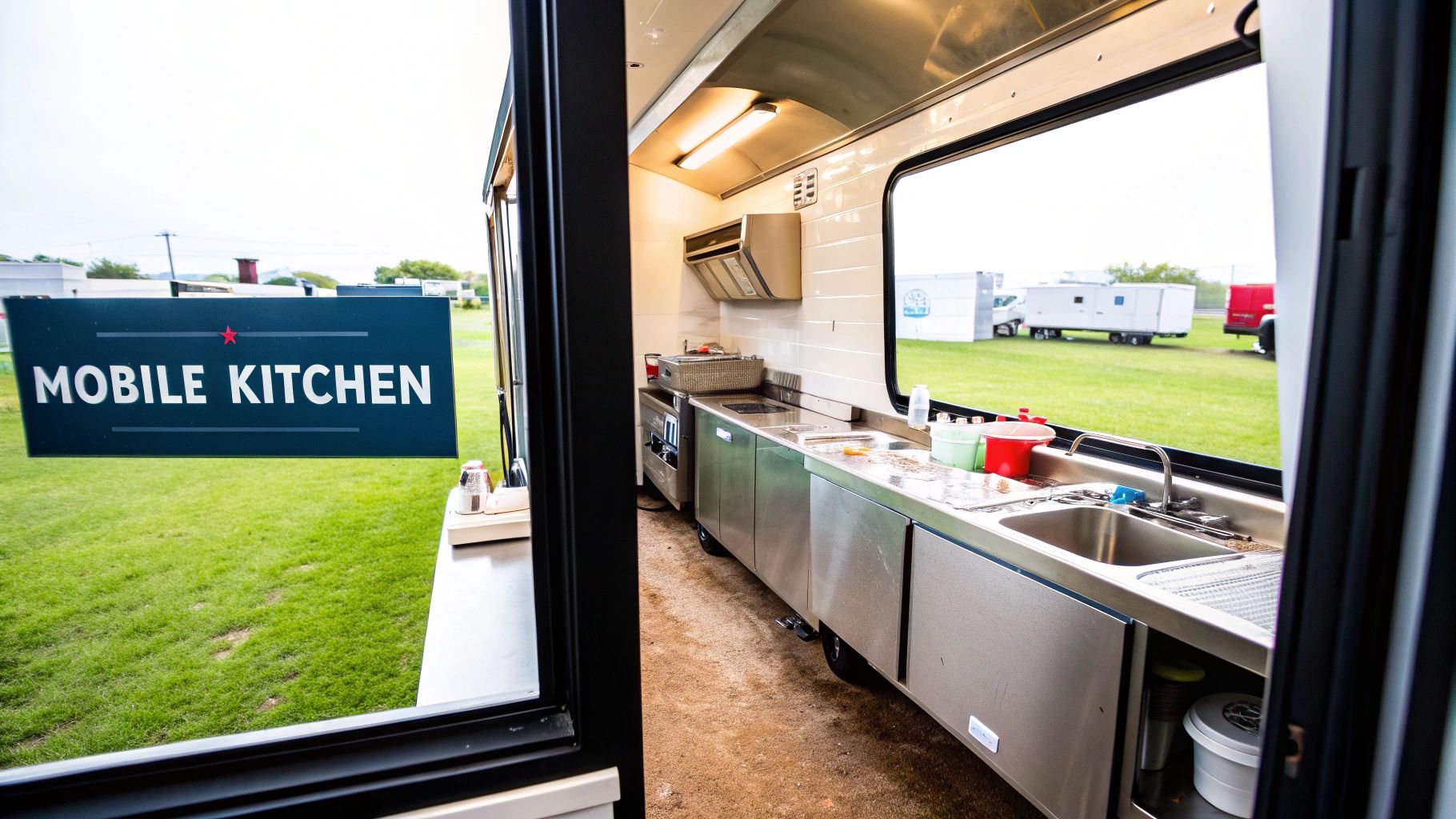
Think of your food truck not as a vehicle, but as a complete commercial kitchen squeezed into a tiny, high-stakes box. Every single square inch is precious real estate, and the equipment you choose has to perform flawlessly under intense pressure. The real challenge is finding gear that’s powerful but also smart about its footprint and energy use. This is where working with a specialized local supplier like Seattle Restaurant Equipment gives Washington truck owners a massive advantage.
This guide is your roadmap. We’ll break down the essentials, category by category—from refrigeration that can handle the bumps in the road to cooking and sanitation gear that keeps you serving. We’ll show you why the right tools are the foundation of your speed, profit, and ability to keep customers safe and happy. Making the right calls now will save you from expensive downtime and killer operational headaches down the line.
Foundational Equipment for Washington Food Trucks
Here in the Pacific Northwest, the food scene is no joke, and that demands total reliability from your kitchen. Your menu is the ultimate guide, of course, but a few key pieces form the backbone of nearly every successful food truck. You have to think about your workflow and exactly what it takes to produce your dishes.
A rock-solid lineup almost always includes:
- Commercial Refrigerators and Freezers: These are non-negotiable for food safety. They're built much tougher than home units to handle road vibrations and changing temperatures. Space-savers like under counter refrigerators and under counter freezers are your best friends in a truck.
- Versatile Prep Tables: A good sandwich prep table is a game-changer, combining chilled storage with a dedicated workspace to make assembly a breeze. If you’re slinging pizzas, a pizza prep table gives you that same efficient setup, tailored for your specific needs.
- High-Powered Cooking Gear: For so many popular street foods, a dependable deep fryer is a must-have. Matching your cooking line perfectly to your concept is what allows for fast, consistent service when the line gets long.
Think of your food truck as a puzzle. Every piece of equipment has to fit perfectly—not just in size, but in power and function. The end goal is a seamless workflow that lets you pump out incredible food, fast, even when you're working elbow-to-elbow.
This industry is exploding. The U.S. food truck market has been growing at a rate of 13.2% annually between 2020 and 2025, and there are now nearly 100,000 trucks in operation. That boom means you have to start with a solid, professional setup to even have a chance. You can learn more about the food truck industry's remarkable growth and see why getting it right from day one matters so much.
Mastering Cold Storage in a Compact Space
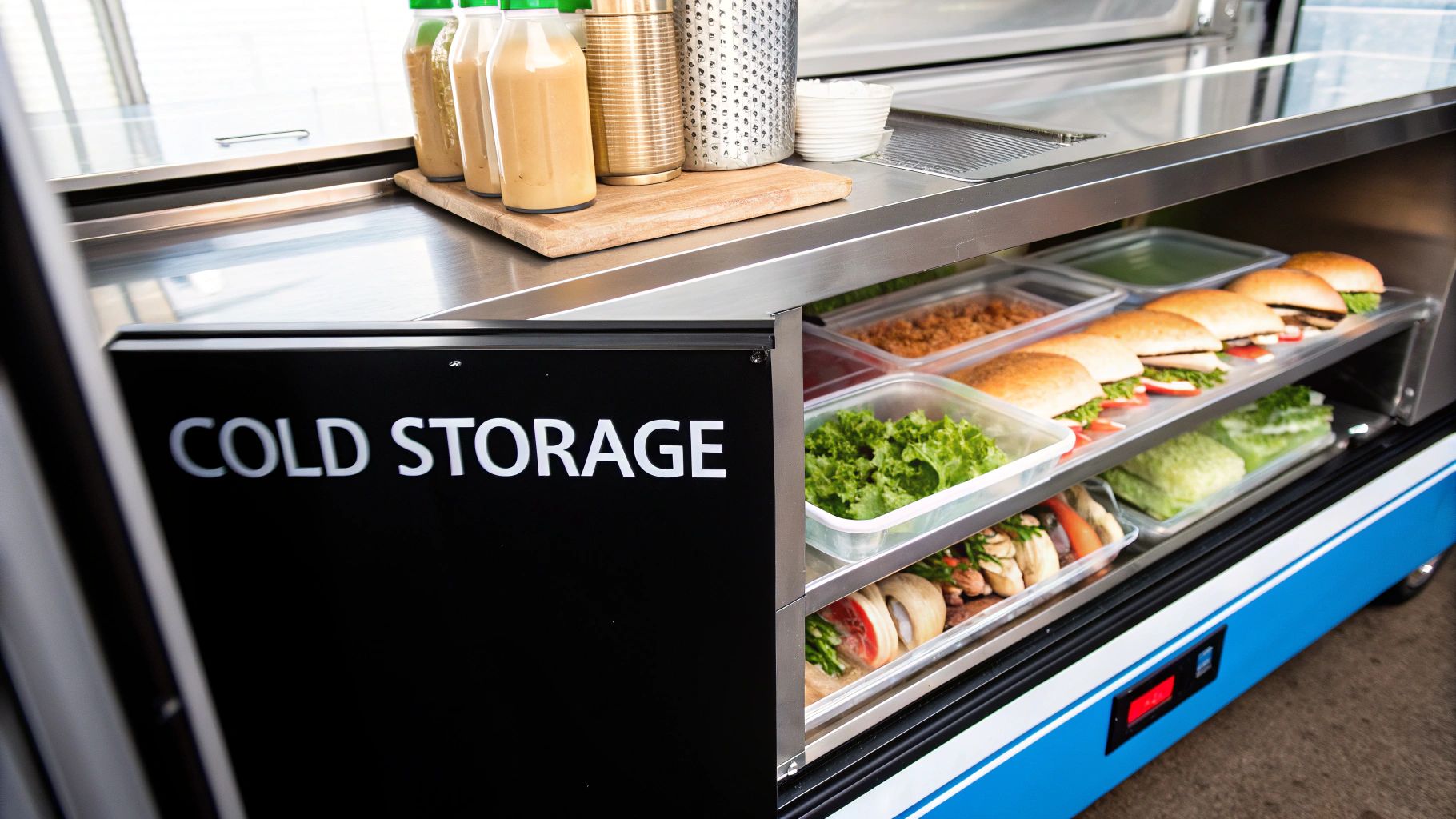
Let's talk about the unsung hero of your food truck: your refrigeration system. It's the silent, steady heart that keeps everything fresh, safe, and ready to go. A fridge in your house just sits there, but the food truck kitchen equipment you pick has to be tough enough to handle constant vibration, sudden stops, and the wild temperature swings of a mobile kitchen.
Choosing the right cold storage isn't just about keeping things cold; it’s a core part of food safety and making your day-to-day work easier. Commercial-grade units, from commercial refrigerators to commercial freezers, are built for the road. They protect your ingredients—and your reputation—with every single mile you drive.
Maximizing Every Inch with Undercounter Units
In a food truck, space is everything. You don’t have a lot of it, so you have to be smart. This is where undercounter refrigerators and undercounter freezers are absolute game-changers. These workhorses slide right under your prep counters, turning what would be dead space into prime real estate for cold storage.
Think of them as the foundation of your kitchen's flow. When your refrigeration is built right into your prep line, you cut out wasted steps. Your ingredients are always an arm's length away, which makes a massive difference in how fast you can serve customers during that chaotic lunch rush.
The Power of Prep Tables
Want to take that efficiency even further? Meet the sandwich prep table, the ultimate multi-tasker for a mobile kitchen. It’s an undercounter refrigerator with a refrigerated rail on top designed to hold pans of ingredients. This gives you a completely self-contained workstation where everything is chilled and ready.
Imagine building your signature sandwich or taco. Your lettuce, tomatoes, meats, and cheeses are all perfectly organized right in front of you. This setup minimizes how much you have to move around, reduces the risk of cross-contamination, and keeps your service line moving like a well-oiled machine.
- Pizza Prep Tables: If you're slinging pies, these offer a wider, deeper workspace and rails made specifically for pizza toppings.
- Sandwich Prep Tables: Perfect for trucks focused on delis, burgers, or salads, these keep standard food pans chilled for lightning-fast assembly.
Your prep table isn't just a piece of equipment; it's the command center for your entire menu. It dictates the pace and rhythm of your service, making it one of the most important investments for a streamlined operation.
Your choice of refrigeration depends entirely on your menu and workflow. The right units will not only keep your food safe but also make your service faster and more efficient.
Essential Food Truck Refrigeration Equipment Comparison
Here’s a quick look at the core refrigeration units and where they fit best in a mobile kitchen.
| Equipment Type | Best For | Space Efficiency | Key Feature |
|---|---|---|---|
| Undercounter Refrigerator | Storing bulk ingredients like produce, meats, and sauces right where you need them. | Excellent. Tucks under prep surfaces, maximizing workflow without taking up floor space. | Keeps ingredients at your fingertips, speeding up prep and service. |
| Undercounter Freezer | Holding frozen goods like fries, burger patties, or pre-portioned items. | Excellent. Fits seamlessly under counters, often next to the fryer or griddle station. | Essential for menus with frozen components; frees up valuable upright space. |
| Sandwich/Pizza Prep Table | High-volume assembly of sandwiches, salads, tacos, burritos, or pizzas. | Good. Combines workspace and cold storage, but has a larger footprint than a standard counter. | Creates an all-in-one station, drastically improving speed and organization. |
| Glass Door Merchandiser | Displaying and selling bottled drinks, desserts, or pre-packaged grab-and-go items. | Moderate. Typically an upright unit, so it requires dedicated vertical floor space. | Boosts impulse buys by making drinks and snacks visible and appealing to customers. |
Ultimately, the best setup is a mix of these units tailored to your specific menu and the physical layout of your truck.
Specialized Refrigeration for Niche Concepts
Beyond the basics, your specific menu might call for something more specialized. A mobile coffee bar needs something different than a BBQ rig, and that’s where getting the right advice comes in handy.
For example, a Seattle coffee shop refrigerator might be a compact glass-door merchandiser that's perfect for showing off bottled drinks and milk cartons. If you’re running a beverage-focused truck, dedicated Seattle bar equipment like a back bar cooler or a kegerator could be non-negotiable. These units are built to keep drinks at the perfect serving temperature, every single time.
Picking the right refrigerators is a huge decision that affects your daily workflow and food safety. For a deeper look, check out our guide on the best commercial refrigerators to help you choose the perfect units. Your cold storage is the life support for your ingredients—investing in the right gear is the first step toward a safe, efficient, and profitable food truck.
Choosing Your High-Performance Cooking Line
Alright, with your cold storage sorted, let's turn up the heat. The cooking line is the real engine of your food truck. It's where the magic happens, transforming simple ingredients into the food people will line up for. This is the heart of your operation, and having the right food truck kitchen equipment makes all the difference in speed, quality, and keeping your sanity during a rush.
Putting your money into a solid, high-performance cooking line is about more than just making food—it's how you build your reputation. Every piece of equipment needs to be a total workhorse, ready to handle the chaos of a lunch or dinner crush without breaking a sweat. The name of the game is cooking efficiently and safely in a space that’s smaller than most walk-in closets.
Gas vs Electric: The Core Power Decision
Before you even think about buying a griddle or a fryer, you have to make one huge decision: gas (propane) or electric? This choice impacts everything. It affects the initial build-out of your truck, your generator needs, and what you'll spend on power every single day. There’s no right or wrong answer here; it all comes down to your menu, your budget, and how you’re powering the whole rig.
- Gas (Propane): A lot of chefs swear by gas for its raw power and immediate heat control. It’s perfect for anything that needs high heat, like charbroiling or wok cooking. Gas gear tends to heat up faster, but it also means you’ll need professionally installed propane lines and a safe, secure place to store your tanks.
- Electric: This option is fantastic for its super-consistent temperatures and is often simpler to install. Electric appliances like induction burners also throw off less ambient heat, which is a massive bonus in a tight, hot truck kitchen. The downside? They’re power hogs and will put a serious strain on your generator.
Many truck owners land on a hybrid setup, maybe pairing a gas griddle with an electric deep fryer to get the best of both worlds. The key is to do the math. Add up the total power draw of every single appliance to make sure your generator can handle the load without popping a breaker right in the middle of service.
Selecting Your Culinary Workhorses
Your menu is the only blueprint you need for your cooking line. Don't waste money and space on equipment you might use one day. Invest in the gear that directly supports the dishes you sell the most. Every appliance should be there to maximize what you can pump out and fit perfectly into your workflow.
A commercial deep fryer is a must-have for so many trucks, cranking out everything from french fries to crispy chicken sandwiches. Look for countertop models that have a small footprint and recover their heat quickly. If you’re slinging burgers, tacos, or pancakes, a powerful flat-top griddle is probably the most versatile tool you can own, letting you cook a bunch of orders all at once.
Thinking about grilled meats or veggies? A charbroiler will give you that smoky, flame-kissed flavor that people go crazy for. Whatever you choose, make sure it’s commercial-grade. These things are built to take a beating.
Think of your cooking line like a specialized pit crew. Every tool has a specific job, and they all must work together in perfect harmony to achieve top speed and flawless execution. A bottleneck at the fryer or griddle can bring your entire service to a halt.
The Unsung Heroes: Holding and Finishing
Cooking the food is only half the battle. When you’re slammed with orders, you need a way to keep finished items at a safe, delicious temperature without turning them to mush. That’s where hot-holding equipment saves the day.
Food warmers and heat lamps are the unsung heroes of a fast service. They give you a buffer, letting you cook ahead of the orders and assemble dishes in seconds. This means customers get their food faster, the line keeps moving, and every plate goes out just as good as the last. Without this step, you’re stuck serving lukewarm food or creating a traffic jam on the line.
Ultimately, designing your cooking line is a game of strategy. For a more detailed look at your options, you can check out our complete guide to food truck cooking equipment. Making smart choices here ensures your kitchen’s engine runs smoothly, powering your business toward success.
Designing a Smart and Efficient Workflow
Having the best food truck kitchen equipment is a fantastic start, but that’s only half the story. The real magic happens when you nail the layout, turning your truck into a high-speed service machine. Think of it like a perfectly choreographed dance—every step has a purpose, and not a single second is wasted.
A smart workflow is what separates a smooth, profitable service from a stressful, chaotic mess. Let's break down how to design a flow that gets you from raw ingredients to a happy customer holding their meal, seamlessly.
Creating Your Kitchen Zones
First things first, you need to map out distinct zones for each job. This isn't just about staying organized; it's a core requirement for passing health inspections and preventing dangerous cross-contamination. Plus, it keeps your staff from tripping over each other.
- Prep Zone: This is where the magic begins—washing, chopping, and portioning. You'll want this right next to your cold storage, like an under counter refrigerator, so you can grab what you need without taking a hike.
- Cooking Zone: The hot line is the heart of your truck. This is where your griddle, deep fryers, and other cooking appliances live.
- Service Zone: This is the finish line, right by the service window. It’s where you plate dishes and often includes hot-holding units to keep food perfect while you hand it off.
- Sanitation Zone: Your sinks for handwashing and dishwashing need their own dedicated space, kept separate from any food prep areas to meet health codes.
Your layout is the invisible engine driving your efficiency. A solid workflow lets a small crew move with purpose, cutting down on physical strain and mental stress when the lunch rush hits. Each zone should flow right into the next, creating a natural assembly line for every item on your menu.
Strategic Equipment Placement
Once you've got your zones figured out, placing your equipment is the next critical step. The goal is simple: minimize how many steps your team has to take to get an order out the window.
For a burger truck, that means putting your sandwich prep table right next to the griddle. The cook can flip patties, turn around to grab a bun, and assemble the burger with all the chilled toppings in one fluid motion, all within a few square feet.
If you’re slinging pizzas, it just makes sense to have your pizza prep table directly across from the oven. It becomes a simple two-step process: build it, then bake it. For a coffee-focused truck, placing a Seattle coffee shop refrigerator or other Seattle bar equipment right under the service counter means you can grab milk and syrups instantly.
This diagram shows a basic cooking process and how a logical left-to-right flow on a hot line works.
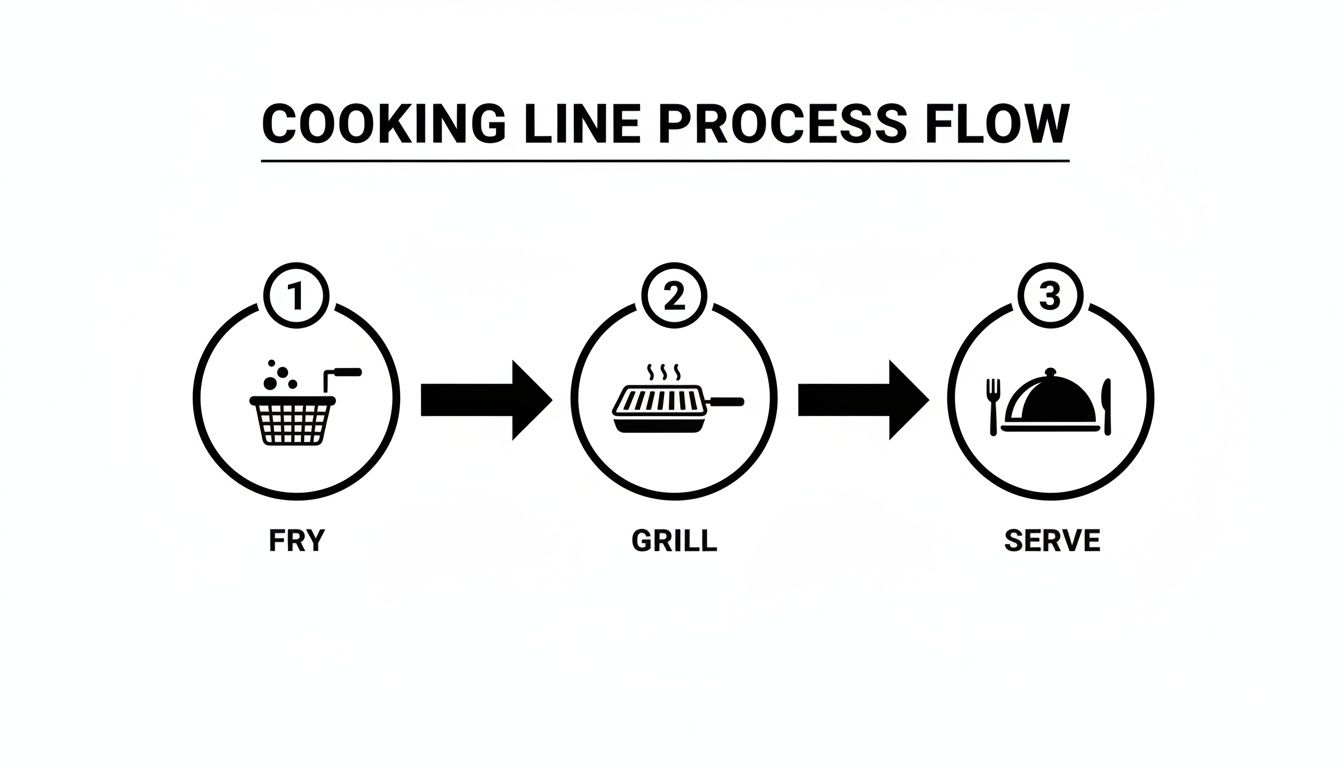
As you can see, each station—frying, grilling, and serving—follows a clear sequence. This is how you prevent bottlenecks when things get busy.
Safety and Weight Distribution
Beyond just workflow, your layout has to account for some non-negotiables. Proper weight distribution is crucial for the truck itself. You absolutely have to place heavy gear like a commercial freezer or a big fryer directly over the axles to keep the vehicle stable on the road.
You also have to integrate your ventilation and fire suppression systems from day one. Your exhaust hood must cover any equipment that produces grease-laden vapors, and the fire suppression system has to be installed and certified to meet local fire codes. Cutting corners here can lead to dangerous situations and an immediate shutdown from an inspector.
This stuff is especially important in an industry where only 40% of businesses survive beyond three years, making reliability and safety your top priorities. You can learn more about the diverse entrepreneurs in the food truck industry and the unique challenges they navigate.
Powering Your Truck and Navigating Local Regulations
So you've picked out your state-of-the-art food truck kitchen equipment. That’s the exciting part. Now for the nuts and bolts: none of it matters without a steady, reliable source of power. This is the technical side of the business that can feel a bit daunting, but getting it right is the foundation of your entire operation.
Think of it this way: without consistent electricity, your commercial refrigerators stop chilling, your deep fryers won't heat up, and your entire service grinds to a dead stop. Your power system is the central nervous system of your kitchen on wheels. It connects every single appliance, from the under counter freezer to your payment system, and keeps everything humming along. Making the right call here will save you from those mid-service meltdowns that cost you sales and hurt your reputation.
Generators Versus Shore Power
First things first, you need to decide how to get juice to your truck. You’ve really got two main options: an onboard generator or shore power. The best one for you boils down to where and when you plan on parking and slinging food.
-
Onboard Generators: This is the go-to for most food truck owners, and for good reason—it gives you total freedom. A generator means you can set up shop anywhere, whether it’s a grassy field at a music festival or a busy downtown corner, without having to hunt for an outlet. The trick is to pick one that’s quiet enough not to annoy your customers (and the neighbors) and powerful enough to handle everything you throw at it.
-
Shore Power: This is just a fancy way of saying you’re plugging your truck directly into an electrical source. It’s a fantastic choice for fixed locations like food truck pods, brewery patios, or private catering gigs where you know power is available. It’s totally silent, you never have to refuel it, and it's cheaper to run. The only catch? It tethers you to that spot.
Plenty of savvy operators use a hybrid approach. They rely on their generator for roaming service and then plug into shore power whenever they get the chance. This saves a ton on fuel costs and keeps things quiet.
Calculating Your Electrical Load
You can’t just eyeball it when buying a generator. You have to do the math and figure out the total electrical demand of your equipment. Overloading your system is a rookie mistake that leads to tripped breakers and costly downtime right in the middle of a rush.
Start by making a complete list of every single thing in your truck that plugs in. Don't just think about the big cooking appliances. Remember the commercial freezer, the sandwich prep table, your lights, the exhaust fan, and even the water pump. Every piece of equipment will have a label on it that lists its power needs in watts or amps.
Add up the startup wattage (the extra jolt of power an appliance needs to kick on) and the running wattage for everything. Your generator's capacity, measured in watts, needs to be comfortably above that grand total. This ensures it can handle the load without sputtering, especially when multiple appliances turn on at the same time.
Choosing a generator is like picking an engine for a race car. If it's underpowered, you'll never leave the starting line. Sizing it correctly ensures you have the power you need to win the race, even during the most demanding service rush.
Ventilation and Washington State Compliance
Power is only half of the safety puzzle—the other half is proper ventilation. Any equipment that creates grease-laden vapors, like your griddles, charbroilers, or deep fryers, is required by law to be installed under a commercial exhaust hood.
This isn’t a friendly suggestion; it’s a non-negotiable health and safety rule here in Washington. A correctly sized hood system is designed to pull heat, smoke, and greasy air out of your truck. This prevents dangerous fire hazards and keeps the air quality safe for you and your staff. If a health or fire inspector shows up and your ventilation isn't up to code, they can shut you down on the spot.
At the end of the day, a successful food truck is much more than just amazing food. It’s a fully functional, and fully compliant, mobile kitchen. To dig deeper into the local rules, check out our guide on Washington food truck permit requirements.
The global food truck market is absolutely booming, with some projections showing it could hit $7.87 billion by 2030. That growth spells huge opportunity for operators who build their business on a solid, safe, and legally compliant foundation. You can read more about the growing global food truck market on jekeenfoodtruck.com.
Budgeting for Success and Finding the Right Partner
Alright, you’ve got your dream equipment list. Now comes the moment of truth: turning that list into a real-world financial plan. Budgeting for your food truck kitchen equipment isn't about hunting for the absolute cheapest price tag. It's a balancing act between what you spend upfront and the value you get down the road. This is where choosing the right supplier becomes one of the most important decisions you'll make.
A classic rookie mistake is fixating only on the initial cost. That's how you end up with unreliable gear that dies in the middle of a lunch rush. The smart move is to think about the total cost of ownership. Sure, a heavy-duty commercial refrigerator or a high-recovery deep fryer might sting a little more at the checkout, but it will save you thousands in lost sales and emergency repair bills later. Your budget needs to be built around quality that protects your business.
Why a Local Washington Partner Matters
This is exactly why working with a local supplier like Seattle Restaurant Equipment gives Washington operators such a huge leg up. When your equipment partner is rooted in your own community, you’re getting more than just a delivery driver dropping off a pallet. You're gaining a partner who is genuinely invested in seeing you succeed.
Think about it. Your commercial freezer gives up the ghost on the morning of the Fremont Solstice Parade. If you bought it from some faceless national website, you could be waiting days for a technician, watching your profits melt away. A local partner gets it. They understand the urgency and can get you warranty service fast, minimizing your downtime and saving your weekend.
A reliable local supplier does more than just sell you equipment; they provide the tools, support, and regional expertise needed to help you build a durable and profitable mobile business from the ground up.
The Benefits of Local Support and Expertise
The perks of a local partnership go way beyond just emergency service calls. Need advice on which under counter freezer is going to fit the weird corner in your truck? Wondering if a certain sandwich prep table can handle the pace of the Seattle lunch crowd? That’s when you get real, practical guidance tailored to the Pacific Northwest market.
Here’s what that actually looks like:
- Faster, More Affordable Shipping: Get your essential gear—from under counter refrigerators to Seattle coffee shop refrigerators—delivered across Washington, often in just a day or two.
- Accessible Warranty and Service: When something goes wrong, you have a local person to call who can help you solve the problem quickly. That means you stay on the road, making money.
- Tailored Equipment Recommendations: Get solid advice on the best pizza prep tables or Seattle bar equipment for our local scene, ensuring your money is well-spent on gear that fits your menu.
- Flexible Financing Options: Local suppliers often have financing programs built for foodservice businesses like yours, making it easier to get the quality equipment you need without torching all your cash.
Let's be honest, outfitting a food truck is a massive job. By building a smart budget focused on long-term value and teaming up with a dedicated local partner, you're not just buying stuff. You're laying a rock-solid foundation for a business that can truly thrive in Washington’s awesome food scene.
Common Questions About Food Truck Equipment
Jumping into the food truck world kicks up a ton of questions, especially when you start looking at food truck kitchen equipment. We see new operators in Washington wrestling with the same issues time and again. Let's clear the air with some straight, practical answers to help you outfit your truck like a pro.
Can I Use Residential Equipment in My Food Truck?
This is usually the first question on everyone's mind, and the answer is a hard no. Trying to outfit your truck with home appliances is a rookie mistake for two big reasons. First, they just aren't built to handle the constant shaking and rattling of a moving vehicle—they'll break down fast.
More importantly, residential gear isn't NSF-certified. That's a deal-breaker for passing local health and safety inspections. You absolutely need commercial-grade equipment, like a tough commercial refrigerator or deep fryer, designed for the grind of a mobile kitchen.
What Is the Single Most Important Piece of Equipment?
Everything in your truck has a job to do, but your refrigeration system is the undisputed MVP. Solid cold storage, from commercial refrigerators to commercial freezers, is the bedrock of food safety. If you can't hold a consistent, safe temperature, your entire inventory is at risk. That's a direct path to foodborne illness and, frankly, the end of your business.
Think of your refrigeration as the life support system for your ingredients. If it fails, everything else fails with it. Prioritizing high-quality under counter refrigerators and under counter freezers isn't just a good idea—it's a non-negotiable investment in your truck's future.
How Do I Know What Size Equipment to Buy?
Figuring out the right size for your equipment is like a game of Tetris. Your choices have to be guided by three things: your menu, your available space, and how much food you realistically expect to sell. Don't go buying a monster six-burner range if all you need is a griddle and a fryer.
Start by mapping out how you'll actually work in the space. If you're slinging a ton of burgers, a sandwich prep table is essential for keeping things moving. Running a mobile cafe? A compact Seattle coffee shop refrigerator is a much smarter move than a giant freezer. Measure your truck's interior like your business depends on it (because it does) and plan your layout before you buy a single thing. It's always better to start with the right-sized essentials and add more gear later if you need it.
Ready to build a mobile kitchen that can handle the hustle? Seattle Restaurant Equipment has the durable, commercial-grade gear you need, from prep tables to fryers, with fast, free shipping across Washington. Explore our full selection of food truck kitchen equipment and get expert advice at https://seattlerestaurantequipment.com.