

Starting a food truck is the dream, but outfitting it with the right food truck cooking equipment is what makes that dream profitable. Your truck isn't just a vehicle; it's a compact, high-stakes kitchen on wheels. Every single piece of equipment has to pull its weight, fitting perfectly into the puzzle to keep service fast, safe, and successful. This is your blueprint for building a mobile kitchen that’s truly built for business.
Building Your Mobile Kitchen From The Ground Up
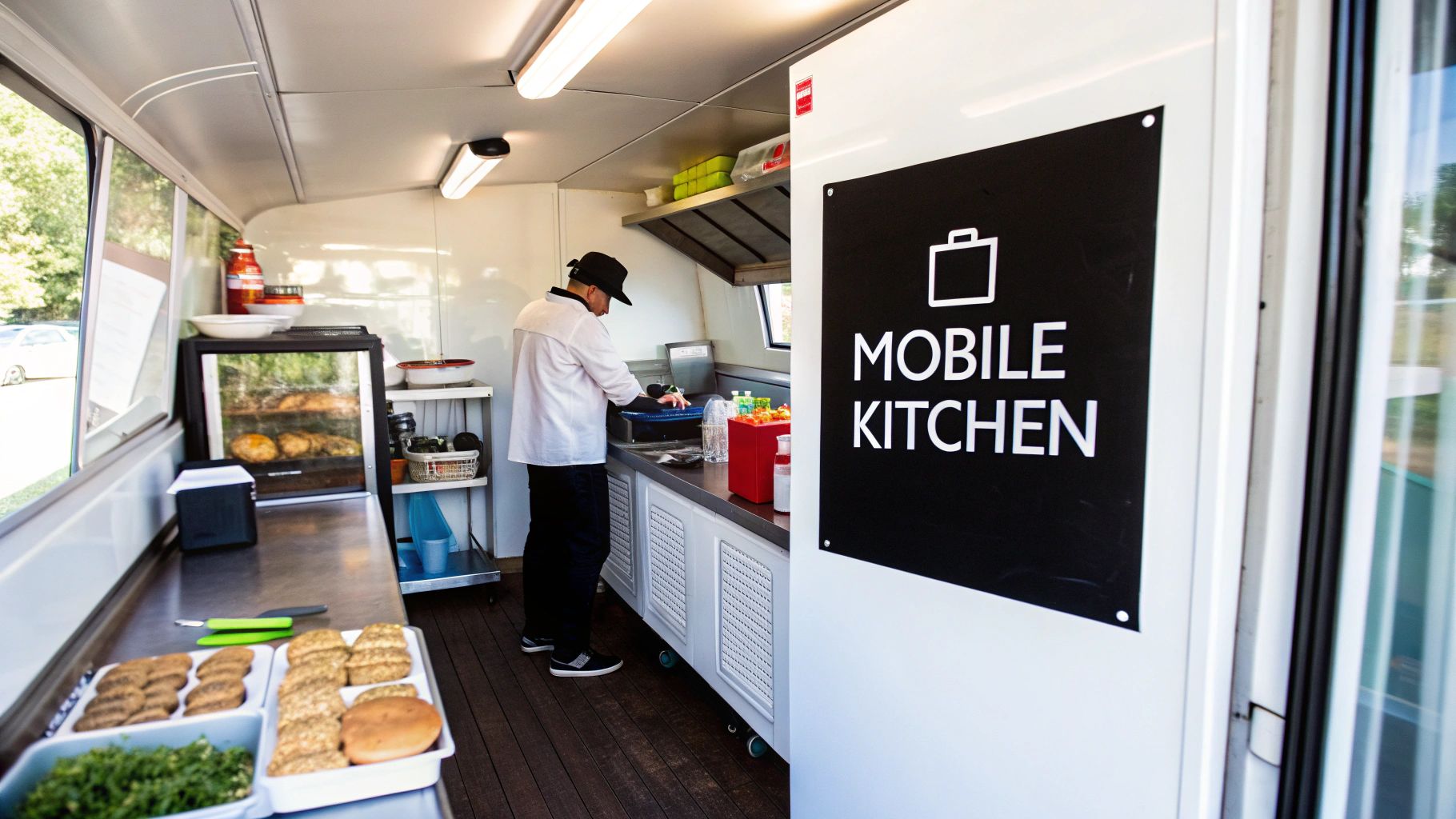
There’s a reason you see more food trucks on the streets every year—it's a booming industry. The global food truck market hit about USD 2.4 billion in 2024 and is expected to race past USD 3.6 billion by 2030. The growth here in the U.S. is even more impressive, which spells huge opportunity for anyone with a great concept and the drive to make it happen. You can dig into the numbers yourself over at Strategic Market Research.
But turning that opportunity into cash starts with a smart kitchen plan. Unlike a brick-and-mortar restaurant, you have zero room for error. Every appliance has to be tough, space-efficient, and powerful enough to crush a lunch rush.
The Foundation of Freshness: Refrigeration
Before you even think about what you’re going to cook, you need to figure out how you're going to keep it cold. Your refrigeration is the bedrock of your entire operation. Without it, food safety goes out the window, ingredients spoil, and you're literally throwing money away. This is one area where you absolutely cannot cut corners—commercial-grade units from a supplier like Seattle Restaurant Equipment are a must.
Here’s the essential cold storage gear every food truck needs to consider:
- Commercial Refrigerators: These are the workhorses. They're built to maintain safe temperatures even when the door is swinging open every 30 seconds during a busy service.
- Commercial Freezers: Crucial for storing everything from your bulk proteins to frozen fries, making sure you’re stocked for a long, profitable day.
- Under Counter Refrigerators: These are a food truck owner's best friend. They slide right under your prep counters, saving critical floor space and keeping your most-used ingredients right at your fingertips.
- Under Counter Freezers: Same idea, but for your frozen goods. They give you that essential frozen storage right in the middle of the action, without taking up an inch of walkway.
- Sandwich and Pizza Prep Tables: These specialized units combine refrigerated storage below with chilled ingredient wells on top, streamlining your assembly process for maximum speed.
Choosing the right refrigeration isn't just about holding temps; it's about designing a smooth workflow. When your ingredients are chilled correctly and easy to grab, your ticket times shrink and your customers leave happier.
The Heart of the Kitchen: Core Cooking Appliances
Once your cold side is locked in, it's time to bring the heat. Your hot line is where your menu comes alive, and the equipment you choose here directly defines the quality and speed of your service. For a huge number of food truck concepts, the undisputed king of the cooking line is a powerful deep fryer.
From perfectly crispy fries to golden-brown fried chicken, a commercial deep fryer is often one of the biggest money-makers in the truck. When you're shopping for one, pay close attention to its recovery time—that’s how fast the oil gets back up to cooking temperature after you drop in a basket of cold food. A fast recovery time means you can serve more people, more quickly. And during a lunch rush, that speed is everything. For more tips on choosing essential gear, our complete guide on setting up a commercial kitchen has you covered.
Matching Your Menu to The Right Machines
Your menu is the heart of your food truck, but the equipment? That’s the engine that brings every single dish to life. Every item you dream up has a direct line to the hardware you'll need.
Trying to run a killer sandwich truck without a proper prep table is like asking a race car driver to compete on a bicycle—you’ll be working twice as hard for half the results. The secret is to nail down your menu first. Only then can you pick the food truck cooking equipment that makes your operation fast, consistent, and profitable.
Think of it like this: for every signature dish, there's a hero appliance. A mobile pizzeria's success lives and dies by its pizza prep tables. These keep toppings perfectly chilled and organized, letting your crew build pies in seconds. If you're slinging tacos, a high-octane griddle and a powerful deep fryer are non-negotiable for getting that perfect sear on your meats and keeping the tortilla chips crispy.
Aligning Equipment with Your Culinary Concept
The link between your food and your hardware is direct and unforgiving. A mobile coffee bar is dead in the water without specialized Seattle coffee shop refrigerators designed to hold dairy at exact, safe temperatures. In the same way, a mocktail or craft soda truck is going to lean heavily on specific Seattle bar equipment like ice bins and undercounter coolers to keep the drinks—and the service—flowing.
Let’s break it down with a few common concepts:
- The Gourmet Sandwich & Salad Truck: Your entire game is speed and freshness. A sandwich prep table is mission-critical here. It combines refrigerated wells for ingredients up top with a cutting board and cold storage below, basically creating a self-contained assembly line. This one piece of equipment helps prevent cross-contamination, keeps your greens crisp, and shaves precious seconds off every order.
- The Burger & Fries Truck: This classic concept is all about executing two things perfectly. A beast of a gas griddle gives you the intense, even heat needed for that perfect burger crust. Meanwhile, a commercial deep fryer with a fast recovery time makes sure every single batch of fries comes out golden, even when you're slammed during the lunch rush.
- The Mobile Pizzeria: You absolutely need a dedicated pizza prep table. These units are built with extra-deep refrigerated rails to hold a wide variety of toppings in big pans. Pair this with a compact, high-heat pizza oven, and you've just turned your truck into a serious pizza-making machine.
Your equipment shouldn't just cook your food—it should amplify your workflow. The right machine for your menu feels like an extra set of hands, making every step from prep to plating smoother.
Smart Refrigeration for Specialized Menus
Sure, every truck needs a basic fridge for bulk storage. But what about the ingredients you need to grab right now? This is where getting strategic with smaller, specialized refrigeration becomes a total game-changer.
Compact under counter refrigerators and under counter freezers are worth their weight in gold. You can tuck them directly under your main prep station, which means your crew isn't walking across the truck to grab a block of cheese or a bag of frozen shrimp. This simple layout choice saves precious seconds on every order, and over a busy shift, that adds up to real money.
This is exactly why so many operators are going custom. In fact, customized trucks now command a 35% market share, a number driven by chefs who need kitchens tailored to their unique menus. You can discover more insights about food truck market trends and see how others are designing their mobile kitchens for success.
When you're ready to build that perfect setup, choosing the right supplier like Seattle Restaurant Equipment ensures your kitchen is perfectly matched to your vision.
Designing a High-Efficiency Food Truck Layout
In a food truck, every single square inch is prime real estate. A well-planned layout is the difference between a smooth, profitable service and a shift full of chaos and frustration. Think of it like choreographing a dance inside a phone booth—every movement and every piece of food truck cooking equipment has to be perfectly placed to keep things moving.
Your main goal is to create a seamless workflow that takes your team from raw ingredients to a finished plate in as few steps as possible. A smart layout leads directly to faster ticket times, less tired staff, and a much safer kitchen. It's not just about cramming everything in; it's about making the space work for you.
This flow chart breaks down how your menu should directly guide your equipment choices, which in turn dictates your entire layout.
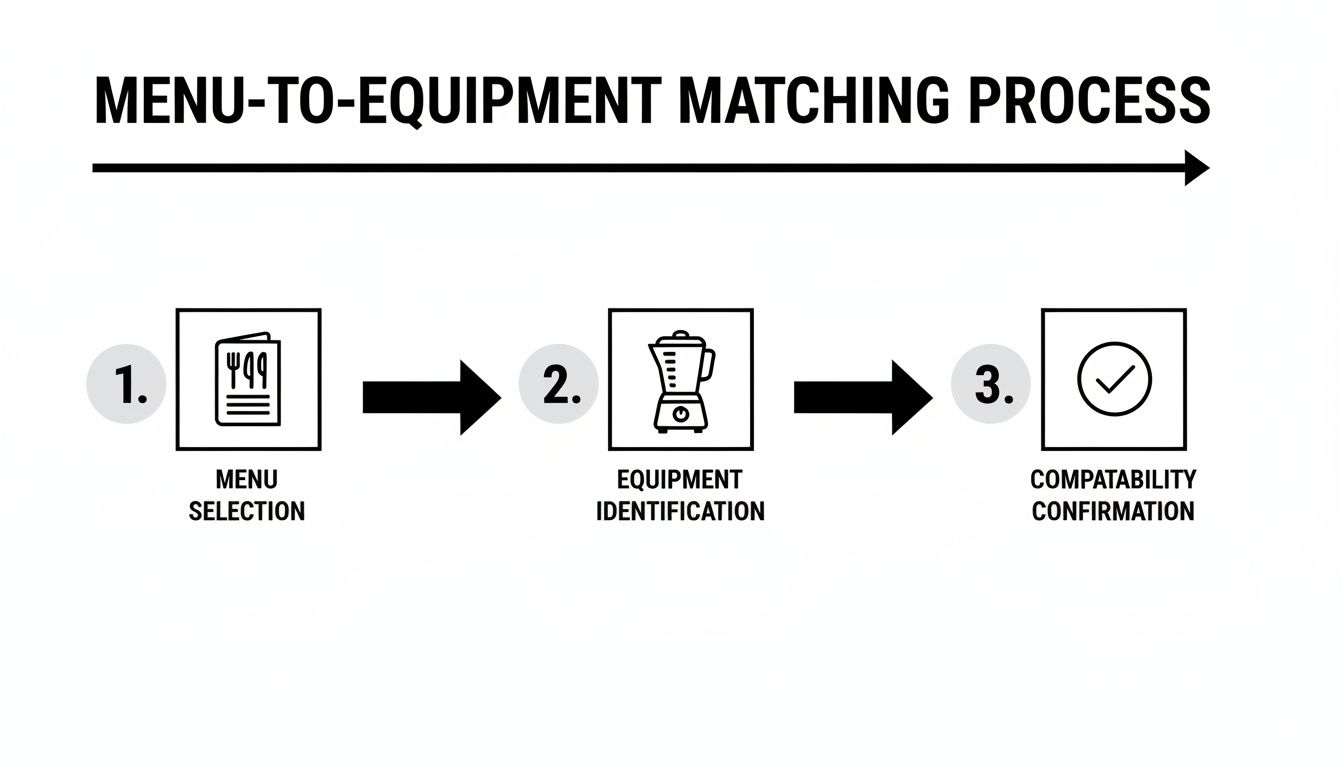
As you can see, a great layout doesn't start with moving equipment around. It starts with a solid menu and a clear strategy for the gear you'll need to pull it off.
Establishing Logical Work Zones
The most effective food truck kitchens are built around distinct work zones, with each one dedicated to a specific part of the cooking process. This assembly-line approach keeps your crew organized and stops them from tripping over each other during a rush.
There are three main zones you'll want to map out:
- Cold Prep and Storage: This is where you'll be washing, chopping, and assembling ingredients. It should be centered around your refrigeration units, like commercial refrigerators and especially sandwich prep tables. Sticking under counter freezers here also keeps frozen goods right where you need them.
- Hot Line: This is where the real cooking action happens. This zone holds all your main appliances—think deep fryers, griddles, and ranges. It absolutely must be situated directly under your ventilation hood. You'll want to organize it based on your most popular menu items, giving the fastest-moving dishes the most convenient placement.
- Service and Plating: Located right next to the service window, this is where finished dishes get plated, garnished, and handed off to hungry customers. It needs clear counter space and should give you easy access to disposables, condiments, and your payment system.
An ergonomic layout isn’t a luxury; it's a core business strategy. By minimizing unnecessary movement—like walking back and forth for ingredients—you can shave seconds off every order, which adds up to hundreds of dollars over a busy shift.
Optimizing Your Kitchen Workflow
Once you've defined your zones, the next move is to arrange the equipment inside them to create a logical path. For example, a sandwich prep table should be placed so a crew member can grab chilled ingredients, build the sandwich, and pass it straight to the hot line for grilling without taking more than a step or two.
Likewise, a pizza prep table needs to be right next to the oven for a quick prep-to-bake transfer. If you're running a coffee or beverage truck, having Seattle coffee shop refrigerators or other Seattle bar equipment directly behind the service counter means the cashier never has to leave their post.
The same principles that apply to a big commercial kitchen are even more critical in a tight space. To go deeper on creating an efficient workspace, check out our detailed guide on restaurant kitchen layout design.
By really thinking through the journey of each menu item from storage to service, you can design a layout that truly fuels your business, turning your food truck into a lean, mean, mobile profit machine.
Powering Your Passion: Utilities and Ventilation
Your powerful cooking equipment is only as good as the system that fuels it. Think of your food truck's utility setup—the power, gas, and ventilation—as its central nervous system. If that system isn't planned out, even the best food truck cooking equipment will let you down, leading to painfully slow service, serious safety risks, and failed inspections.
The first big decision you'll make is whether to go with gas (propane) or electric for your main cooking line. This choice will directly impact everything from how fast you can crank out orders to your daily running costs.
The commercial kitchen equipment market is always innovating, which is great news for you. With the market projected to grow by USD 41.81 billion by 2029, there are more powerful and efficient options than ever before. You can get a sense of the industry trends by checking out this commercial cooking equipment market research.
Gas vs. Electric: The Great Power Debate
Picking your power source is a fundamental step that defines what appliances you can even consider. In a tight mobile space, each option comes with its own set of pros and cons.
-
Gas (Propane): When it comes to raw power and high-volume cooking, propane is the undisputed king. Gas-powered deep fryers and griddles deliver the intense heat and quick temperature recovery you need to survive a lunch rush. The trade-off? You’ll need a professionally installed and secured propane system, complete with regular, meticulous safety checks.
-
Electric: This is the perfect choice for equipment that needs steady, consistent temperatures, like food warmers, induction burners, or certain ovens. Electric gear runs off your generator, so you have to do the math. Add up the total electrical load—or wattage—of every single appliance to make sure your generator can handle the demand when everything is running at once. Most trucks end up with a hybrid system: gas for the heavy-duty cooking and electricity for refrigeration and support gear.
Your generator is the heart of your truck. If it's undersized, it simply can't pump enough power to keep your kitchen alive during the busiest hours. A supplier like Seattle Restaurant Equipment can walk you through the spec sheets of different appliances to make sure your power plan actually adds up.
The Unseen Hero: Commercial Ventilation
While the sound of a sizzling griddle gets all the glory, your ventilation system is probably the single most important piece of safety equipment you'll install. A commercial hood system isn't a friendly suggestion; it’s a legal must-have for any food truck using equipment that produces grease, like fryers, griddles, or charbroilers.
This system does a lot more than just clear out a little smoke. It actively pulls grease-filled vapor out of the air, which dramatically lowers the risk of a catastrophic fire. It also helps manage the blistering heat inside the truck, making it a safer and more bearable place for your crew to work.
Showing up with an undersized or non-compliant hood system is one of the fastest ways to get your operation shut down by a health or fire inspector.
To help you get started, here’s a quick breakdown of what different pieces of equipment typically require.
Utility Planning for Common Food Truck Equipment
This table compares the usual power and ventilation needs for essential food truck appliances, helping you map out your truck's core systems.
| Equipment Type | Typical Power Source | Ventilation Requirement | Key Planning Consideration |
|---|---|---|---|
| Griddle/Flat Top | Gas (Propane) | Required (Type I Hood) | Needs a reliable propane line and must be under a fire-suppression hood. |
| Deep Fryer | Gas or Electric | Required (Type I Hood) | The biggest fire risk; ventilation is non-negotiable. |
| Range/Oven | Gas or Electric | Required (Type I Hood) | Electrical models have high wattage; gas models need proper venting. |
| Charbroiler | Gas (Propane) | Required (Type I Hood) | Produces heavy smoke and grease; needs a very powerful hood system. |
| Food Warmer | Electric | Usually Not Required | Low wattage, but factor it into your total generator load. |
| Refrigerator | Electric | Not Required | Must run 24/7, so it needs constant power from a generator or shore power. |
For certain specialized setups, you might have other options. Our guide on understanding commercial ventless hoods can offer some alternative ideas.
Getting your utilities and ventilation right from day one is non-negotiable. It's the foundation that ensures your equipment runs perfectly, your team stays safe, and your truck operates smoothly and legally from the moment you open the window.
Budgeting and Sourcing Your Equipment Smartly
Let’s talk about one of the biggest investments you'll make: outfitting your mobile kitchen. This is where your dream starts to feel very real, and where smart financial decisions are absolutely critical. It’s not about pinching pennies on the cheapest gear you can find; it’s about getting the best possible value for your money and making sure your food truck cooking equipment is built for the long haul.
Right out of the gate, you'll face the classic dilemma: new or used? The low price tag on a used piece of equipment can be incredibly tempting, I get it. But that initial savings often comes with a whole lot of hidden risk. A second-hand deep fryer might look fine, but it could have a history of breakdowns, a non-existent warranty, and an already short lifespan. The last thing you want is a critical piece of gear failing on a busy Saturday, costing you a weekend's worth of profit.
New vs. Used: The True Cost of Ownership
Investing in new, warrantied equipment from a supplier you trust isn't just a purchase—it's a strategic business move. New appliances are guaranteed to be up to health code, they run at peak energy efficiency, and they come with a manufacturer's warranty. Think of that warranty as a safety net for your entire operation.
Here’s a practical way to look at it: a brand-new under counter freezer will hold its temperature without a second thought, protecting thousands of dollars in food inventory. A used unit with a tired compressor could die overnight, spoiling everything inside. Suddenly, that "deal" on the used freezer just cost you way more than you saved. The peace of mind and reliability that come with new equipment are priceless for a food truck just starting out.
Sourcing Smart: The Seattle Restaurant Equipment Model
This is where finding the right partner makes all the difference. We built Seattle Restaurant Equipment to change the game. By ditching the expensive showrooms and commissioned sales staff, we cut out huge overhead costs. And where do those savings go? Directly to you. This approach means you can get your hands on new, commercial-grade equipment at prices that are often as good as, or even better than, used gear from other places.
The real value isn't just in the price tag; it's in the combination of affordability, reliability, and support. Getting a new, warrantied sandwich prep table for a great price means you can focus on your food, not on worrying about your equipment.
Our direct-to-you model keeps things simple and honest. You see clear pricing on everything from pizza prep tables to Seattle bar equipment, and it’s all backed by a solid warranty you can count on.
Making High-Quality Equipment Attainable
Even with our competitive prices, we know that outfitting a food truck is a big financial lift. That's why having access to good financing options can be a total game-changer, letting you get the professional-grade kitchen you need without wiping out your cash reserves.
- Preserve Your Cash Flow: Financing frees up your capital for all the other things you need—inventory, marketing, permits, and paying yourself.
- Get Better Equipment: Don't settle for less reliable gear just to save a few bucks upfront. Finance the durable, efficient machines that will help you succeed.
- Build Business Credit: Making your equipment loan payments on time is a fantastic way to build a positive credit history for your new business.
On top of that, things like fast, free shipping across Washington can seriously cut down on your setup costs and timeline. When your essential commercial freezer or Seattle coffee shop refrigerators show up in a day or two, you're that much closer to getting inspected, licensed, and out there serving customers. It’s this blend of smart sourcing, accessible financing, and quick logistics that makes building your dream food truck more achievable than ever before.
Installation, Maintenance, and Staying Compliant
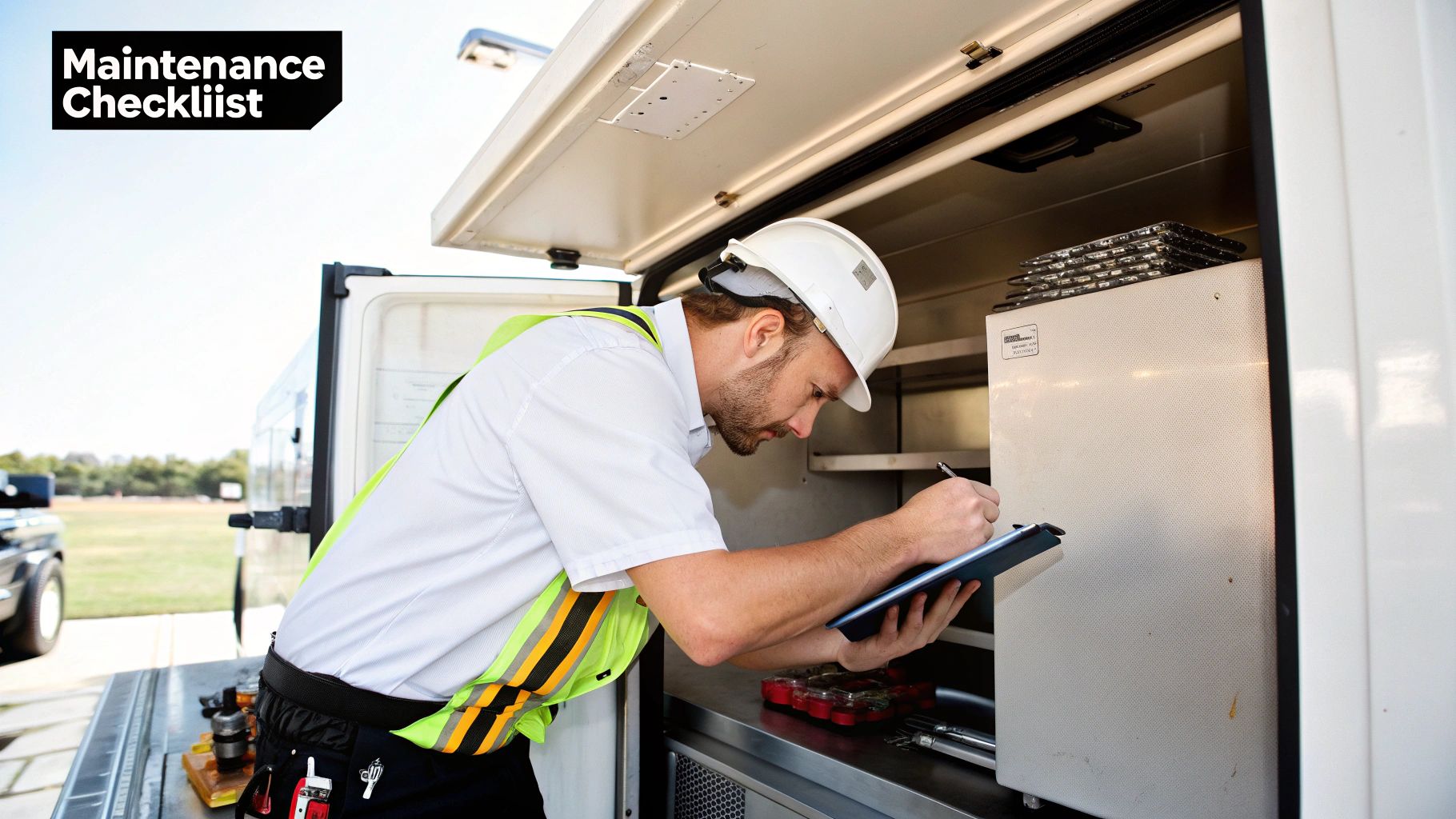
Your shiny new food truck cooking equipment has arrived. Now the real fun starts. Proper installation in a food truck isn't just about plugging things in—it's one of the most critical safety steps you'll take. Every single piece, from a heavy deep fryer to a compact under counter freezer, has to be professionally installed and bolted to the truck's frame. No exceptions.
If you don't anchor your gear, you're asking for trouble. A sudden stop or a sharp turn can send equipment flying, cause dangerous gas leaks, or create serious electrical hazards. Make sure you follow every manufacturer guideline and local code, and always have certified pros handle your gas and electrical connections. Think of this as your first line of defense against accidents and repairs that could sink your business before it even gets rolling.
Creating a Preventative Maintenance Schedule
Once your kitchen is locked and loaded, the secret to a long, profitable run is a simple maintenance schedule. This isn't just a "nice-to-have"; it's a non-negotiable routine that keeps you from experiencing that soul-crushing, profit-killing downtime. A little proactive work prevents small problems from turning into weekend-ruining catastrophes.
Your maintenance checklist should be as routine as prepping your ingredients. Here are the absolute must-dos:
- Refrigeration Gaskets: Once a week, check the seals on your commercial refrigerators and sandwich prep tables. A torn gasket makes your compressor work overtime, burning through electricity until it eventually gives up the ghost.
- Fryer Care: Don't just change the oil in your deep fryers—give them a proper "boil out" at least weekly. This gets rid of that nasty carbonized grease, making your food taste better and helping the fryer last years longer.
- Grease Traps and Vents: Clean your hood filters daily or weekly, depending on how greasy your menu is. A clogged vent is a massive fire hazard. It’s also one of the first things an inspector will shut you down for.
- Burner and Pilot Light Checks: For any gas equipment, make it a habit to check that burners and pilot lights are clean and burning strong. This ensures your gear is running safely and not wasting fuel.
"In a food truck, preventative maintenance isn't just 'a good idea'—it's your business insurance. An hour of cleaning and inspection on a quiet Monday can save you from losing a thousand-dollar Saturday service to an equipment failure."
Navigating Washington Health Codes and Permits
Staying on the right side of the law is the final, crucial piece of the puzzle. Health inspectors in Washington are serious about mobile kitchen safety, and they don't miss a thing. Choosing NSF-certified equipment right from the start from a trusted supplier like Seattle Restaurant Equipment gives you a huge head start. NSF gear is built for the rigors of commercial cooking, meaning it’s easier to clean, won't harbor bacteria, and is exactly what inspectors want to see.
When that inspector steps on board, they'll be checking everything from the temperature logs for your refrigerators to the clearance around your griddle. Showing up with properly installed, well-maintained, and certified equipment tells them you're a professional who takes food safety seriously. It makes for a smooth inspection and sets the foundation for a business that's built to last.
Common Questions About Food Truck Equipment
Starting a food truck brings up a ton of questions, especially when it's time to pick out your food truck cooking equipment. Making the right calls now saves you a world of headaches, time, and money later on. We put together this list of quick, straight-to-the-point answers to help you build a kitchen that’s ready to roll from day one.
We've heard these questions from countless new operators just like you. Let's clear things up so you can move forward with confidence.
What Is The Most Essential Piece of Cooking Equipment for a New Food Truck
While every menu is different, the two things you absolutely can't skimp on are solid refrigeration and a versatile cooking surface. A quality under counter refrigerator or a sandwich prep table is your first line of defense, keeping ingredients fresh, safe, and right where you need them. If your cold storage isn't reliable, you're risking food safety and quality before you even sell your first dish.
Next, you need a hot-line workhorse. For most trucks, a powerful gas griddle or a multi-burner range gives you the flexibility to handle a huge variety of menu items. And of course, a good deep fryer is a must-have for high-profit crowd-pleasers like fries or wings. Starting with these core pieces from a trusted source like Seattle Restaurant Equipment gives you a solid foundation to build on as your business takes off.
How Do I Know if I Need Gas or Electric Equipment for My Truck
The gas vs. electric debate really comes down to your power source and what you're cooking. Gas equipment, powered by propane, is the king of high-heat, high-volume cooking. Most commercial fryers and griddles use it because it heats up fast and delivers serious power. The trade-off? You’ll need a professionally installed and secured propane system.
Electric gear runs off your generator, which means you have to do the math. You need to add up the total electrical load of every single appliance to make sure your generator can handle it all running at once. Most operators use a mix: gas for the heavy hitters on the cook line and electricity for refrigeration—like Seattle coffee shop refrigerators or under counter freezers—and smaller appliances. Our best advice is to calculate your total wattage needs before you buy a single thing.
Can I Use Residential Appliances in My Food Truck to Save Money
We get this question a lot, and the answer is a hard no. Using home appliances in a commercial food truck is almost always illegal and a really bad idea. Health departments mandate NSF-certified, commercial-grade equipment for a few very important reasons. Commercial gear is built to take a beating day in and day out and is designed to be cleaned and sanitized properly.
A home stove or fridge just can't handle the bumps of a mobile environment or keep food at safe temperatures during a crazy-busy lunch rush. More importantly, it will get you shut down during a health inspection. Investing in proper commercial equipment from the start is non-negotiable for safety, reliability, and staying in business.
What Refrigeration Is Best for a Small Food Truck
In a small food truck, every single inch of space counts. This is where under counter refrigerators and under counter freezers really shine. They tuck right under your prep counters, keeping your key ingredients close without eating up precious floor space. It’s the smartest way to maximize your layout.
If your menu involves a lot of assembly—think gourmet sandwiches, tacos, or salads—a sandwich prep table or a pizza prep table is a game-changer. These units combine your refrigerated storage, cutting board, and cold topping wells all in one compact station. It’s an all-in-one powerhouse that massively boosts your speed and workflow when things get hectic.
Ready to gear up your mobile kitchen with reliable, affordable equipment that’s built to last? The team at Seattle Restaurant Equipment can walk you through finding the perfect appliances for your menu and your truck. Check out our complete lineup of food truck cooking equipment online and get one step closer to your dream. https://seattlerestaurantequipment.com