

In a bustling commercial kitchen, the right undercounter refrigerator size isn't just about measurements—it's the secret to a smoother, faster workflow. The difference between a chaotic scramble for ingredients and a streamlined, profitable service often comes down to inches.
Getting the size right reduces staff movement, speeds up ticket times, and completely transforms what your kitchen is capable of.
Why the Right Undercounter Refrigerator Size Changes Everything
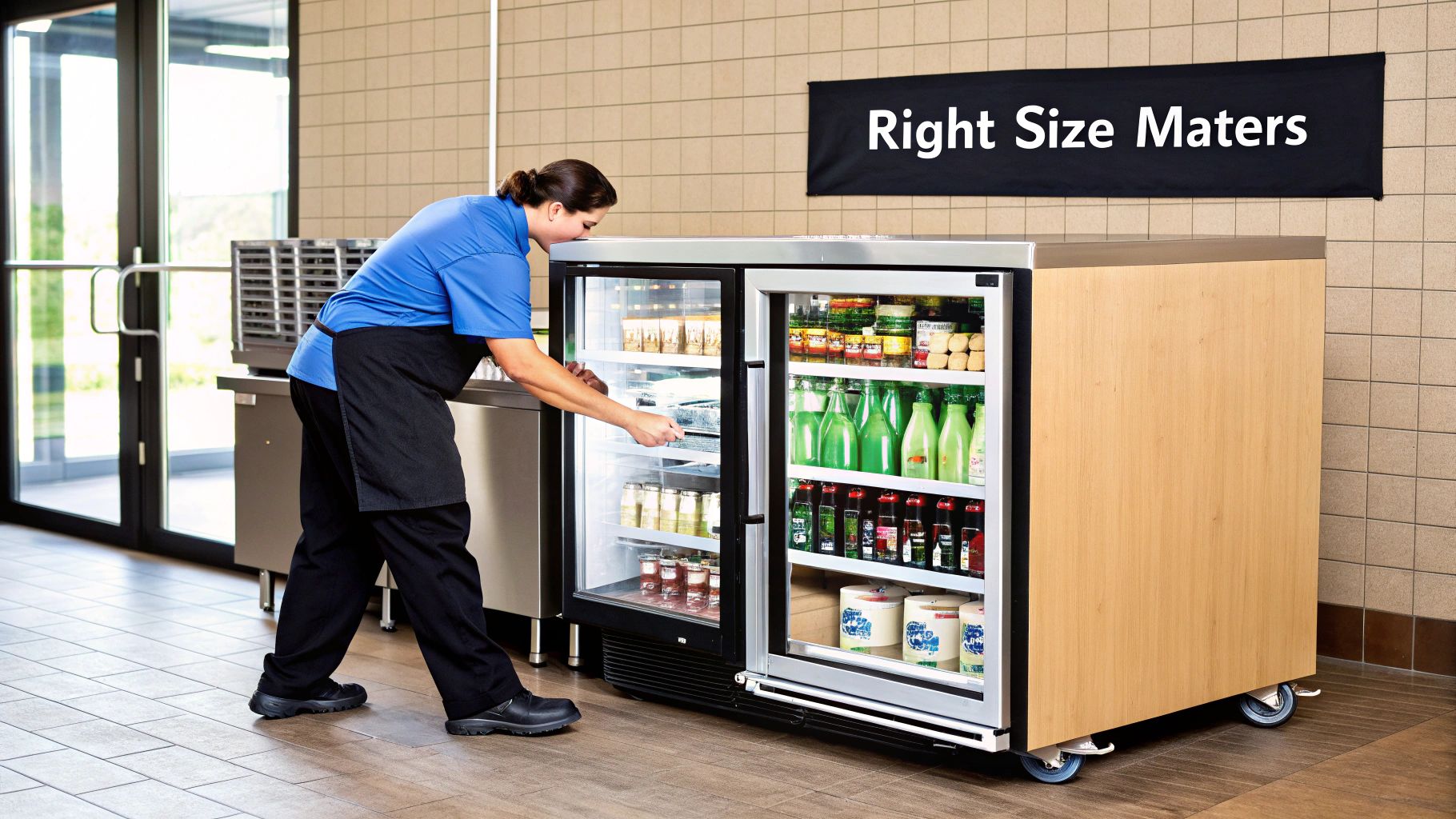
When you’re staring at a tight prep line or a crowded bar back, you know that every square inch is money. Picking the right undercounter unit isn't just about finding a place to keep things cold; it's a strategic move that directly shapes how your team operates.
Think of your kitchen like a highway. The wrong piece of equipment creates a traffic jam, forcing your crew to take long, inefficient routes. But a perfectly sized undercounter refrigerator? That’s like a well-placed exit ramp, putting essential items exactly where they’re needed, right when they're needed.
From Coffee Shops to Prep Lines
This idea holds true across all of Washington's diverse food scenes. For a Seattle coffee shop, a small, single-door undercounter fridge for milk and cream is a non-negotiable part of banging out espressos quickly. At Seattle Restaurant Equipment, we see how essential specific units like Seattle coffee shop refrigerators are.
In contrast, a high-volume Bellevue deli needs a much beefier multi-door sandwich prep table to keep up with the lunch rush. It's all about matching the tool to the job.
This takes a real understanding of not just your physical space but also your menu and what your busiest hours look like. The best unit feels like it was always meant to be a part of your line.
A well-placed undercounter unit can cut ingredient retrieval time by over 50% during a busy service. That directly translates to faster ticket times and higher table turnover. This one choice has a powerful ripple effect on your bottom line.
Beyond Simple Dimensions
This guide goes way beyond generic measurements. We’re here to give you a practical way to think about this so you make a smart investment that pays you back with every single service.
From commercial freezers to the specialized Seattle bar equipment Seattle is known for, the right size unlocks efficiency. Making an informed choice is a critical step in optimizing your workflow. You can learn more about how equipment placement impacts efficiency in our comprehensive guide to restaurant kitchen layout and design.
By thoughtfully selecting your undercounter refrigerator size, you’re not just buying a box—you’re building the foundation for a more productive and profitable kitchen.
Decoding Standard Undercounter Refrigerator Dimensions
Trying to make sense of commercial refrigeration specs can feel like reading a foreign language. All those numbers and terms might seem complicated, but they directly impact how well your kitchen actually runs. Let's break down the standard dimensions and what they really mean for your day-to-day operations in a busy Seattle spot.
Commercial refrigerators usually stick to standard widths, which is a huge help when planning your kitchen layout. These units can be as slim as 24 inches—perfect for a coffee shop's milk fridge—or as wide as 72 inches or more for a high-volume pizza prep table. The most common sizes, like 48 and 60 inches, hit that sweet spot, offering a great balance for most growing kitchens.
Depth and height are just as important. Most models have a standard depth around 30-32 inches so they line up neatly with commercial countertops. The height is also standardized to sit right under the counter, typically 34-36 inches, giving you that seamless, built-in look.
Finding the Sweet Spot for Capacity
While the outside dimensions tell you how much floor space a unit will take up, it's the internal capacity that determines what you can actually store inside. When you're sizing up undercounter refrigerators, capacity is king.
The 5-10 cubic foot range is a workhorse in the industry, perfectly suiting independent eateries where counter space is precious but the demand for fresh ingredients is high. A single-door unit with 5-7 cubic feet can easily support a bar, while a two-door model with 10-12 cubic feet gives you the flexibility needed for a busy prep line.
Understanding this balance helps you match the machine to the mission. If you're also looking at even smaller, on-counter solutions, you might want to check out our guide on countertop refrigeration options.
Matching Size to Common Kitchen Tasks
To make things even clearer, let's connect these numbers to real-world kitchen jobs. The key to making the right choice is thinking about how you'll use the unit every day—is it for back-bar storage, a sandwich prep station, or an under counter freezer?
The goal is to choose a size that doesn't just fit the space but actively improves your workflow. A unit that’s too small creates constant restocking headaches, while one that’s too large wastes valuable energy and space.
Here’s a simple table to help you visualize how different undercounter refrigerator sizes fit into various foodservice setups, from a neighborhood deli to a specialized bar.
Matching Undercounter Refrigerator Size to Kitchen Tasks
This table pairs common refrigerator dimensions with their ideal applications in today's fast-paced foodservice environments, from coffee bars to high-volume prep lines.
| Width (Inches) | Typical Doors | Capacity Range (Cu. Ft.) | Best For (Common Equipment Examples) |
|---|---|---|---|
| 24" - 36" | 1 Door | 5 - 8 | Seattle bar equipment, coffee shop refrigerators, single-station drink coolers. |
| 48" - 60" | 2 Doors | 10 - 15 | Sandwich prep tables, small pizza prep tables, general-purpose kitchen line storage. |
| 72" and up | 3+ Doors | 18+ | High-volume pizza prep tables, large commercial kitchens, extensive back-bar storage. |
Picking the right size from the start saves you a world of trouble down the road. It ensures your team has what they need, right where they need it, keeping service smooth and efficient.
How to Measure Your Space for a Perfect Fit
There's nothing worse than the sinking feeling you get when a brand-new commercial refrigerator arrives, only to find it doesn't fit. It’s a costly, frustrating, and surprisingly common mistake. To get it right the first time, you need to measure like a pro—and that means looking beyond just the simple width, height, and depth of the spot you’ve picked out.
A successful installation is about planning for how the unit actually works and mapping out its entire journey into your kitchen.
Think of your under counter refrigerator as needing its own personal space to breathe. Just like an athlete needs oxygen to perform, your fridge’s compressor needs airflow to get rid of heat. If you cram it into a tight spot with no ventilation, the unit will overwork itself, driving up your energy bills and shortening the lifespan of crucial equipment like your undercounter freezers and sandwich prep tables.
This simple infographic gives you a quick visual reference for the typical sizes you'll come across, from small single-door units to larger multi-door models.
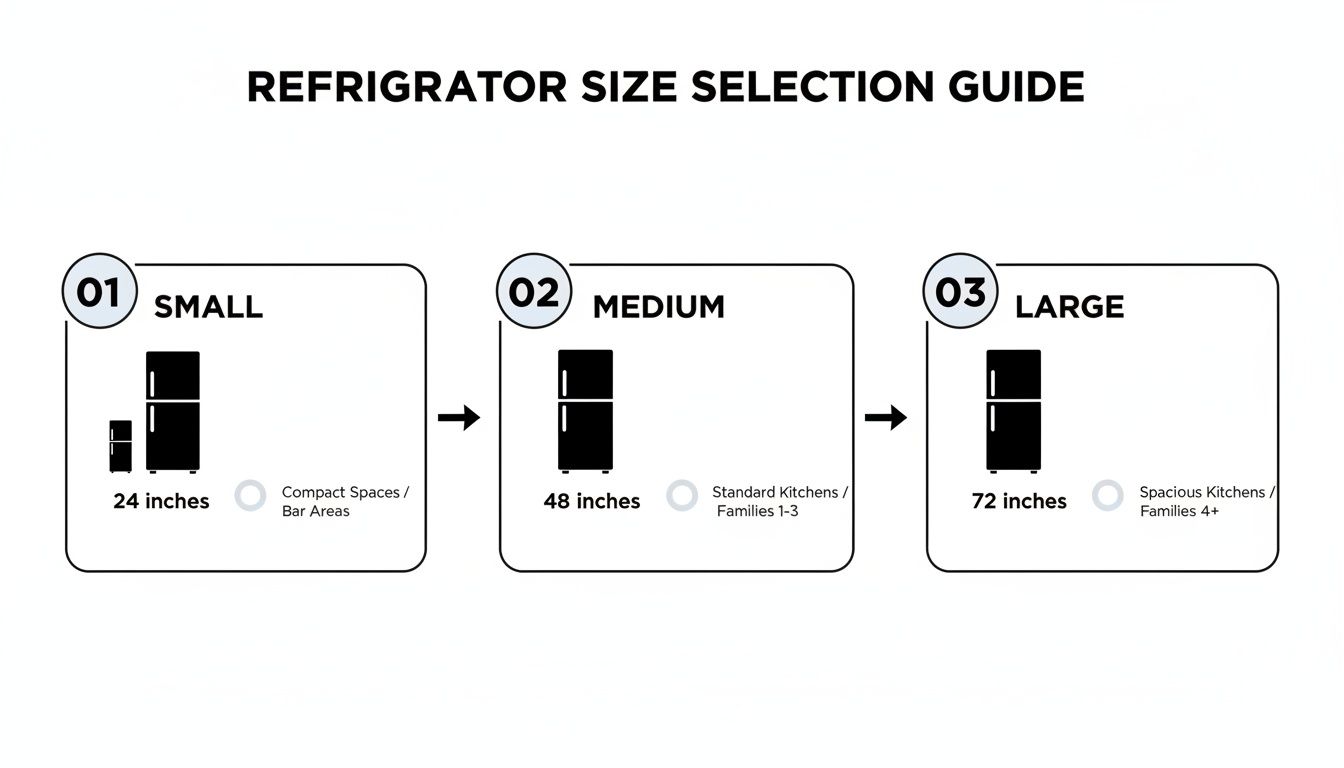
It helps put things in perspective, showing how a compact 24-inch unit compares to a standard 48-inch or a high-capacity 72-inch model in a real-world kitchen.
Measure for Ventilation and Clearance
The most important measurement, after the unit's actual dimensions, is its clearance space. How much room you need to leave depends entirely on how the unit is designed to ventilate.
- Front-Venting Models: These are the champs of built-in applications. Think of the sleek Seattle bar equipment that fits perfectly into a custom back bar. They pull air in and push it out through a front grille, so they need very little clearance on the sides and back.
- Rear/Side-Venting Models: Much more common for freestanding units tucked under prep tables. These absolutely must have at least 2-3 inches of open space around the back and sides to breathe. Blocking these vents is a guaranteed recipe for equipment failure.
Account for Door Swing and Workflow
Next, think about the door. When it's open, is it going to block a main walkway during the chaos of a dinner rush? Will it smack into your deep fryer or pizza prep table? Get your tape measure out and map the full arc of the door swing to make sure you’re not creating a bottleneck.
Don't just measure the space for the refrigerator; measure the space for a working refrigerator. This means accounting for an open door, a staff member grabbing ingredients, and the flow of foot traffic around it.
If your space is tight, undercounter models with drawers or sliding doors are fantastic solutions. They give you the access you need without getting in the way, which is a game-changer for high-efficiency Seattle coffee shop refrigerators or cramped food truck kitchens.
Confirm the Delivery Path and Utilities
Finally, walk the delivery route. Start from the curb and measure every single doorway, hallway, and tight corner the unit has to pass through to get to its final destination. A refrigerator that fits the space is completely useless if you can't get it into the building in the first place.
While you're at it, check your utilities. Are the electrical outlets and plumbing connections (if you need one for an ice maker) within reach? Using extension cords for heavy-duty commercial refrigerators is a major no-go—it’s often a health code violation and a serious fire hazard. Taking these steps ensures you only have to "measure twice, order once."
Matching Refrigerator Size to Your Menu and Workflow
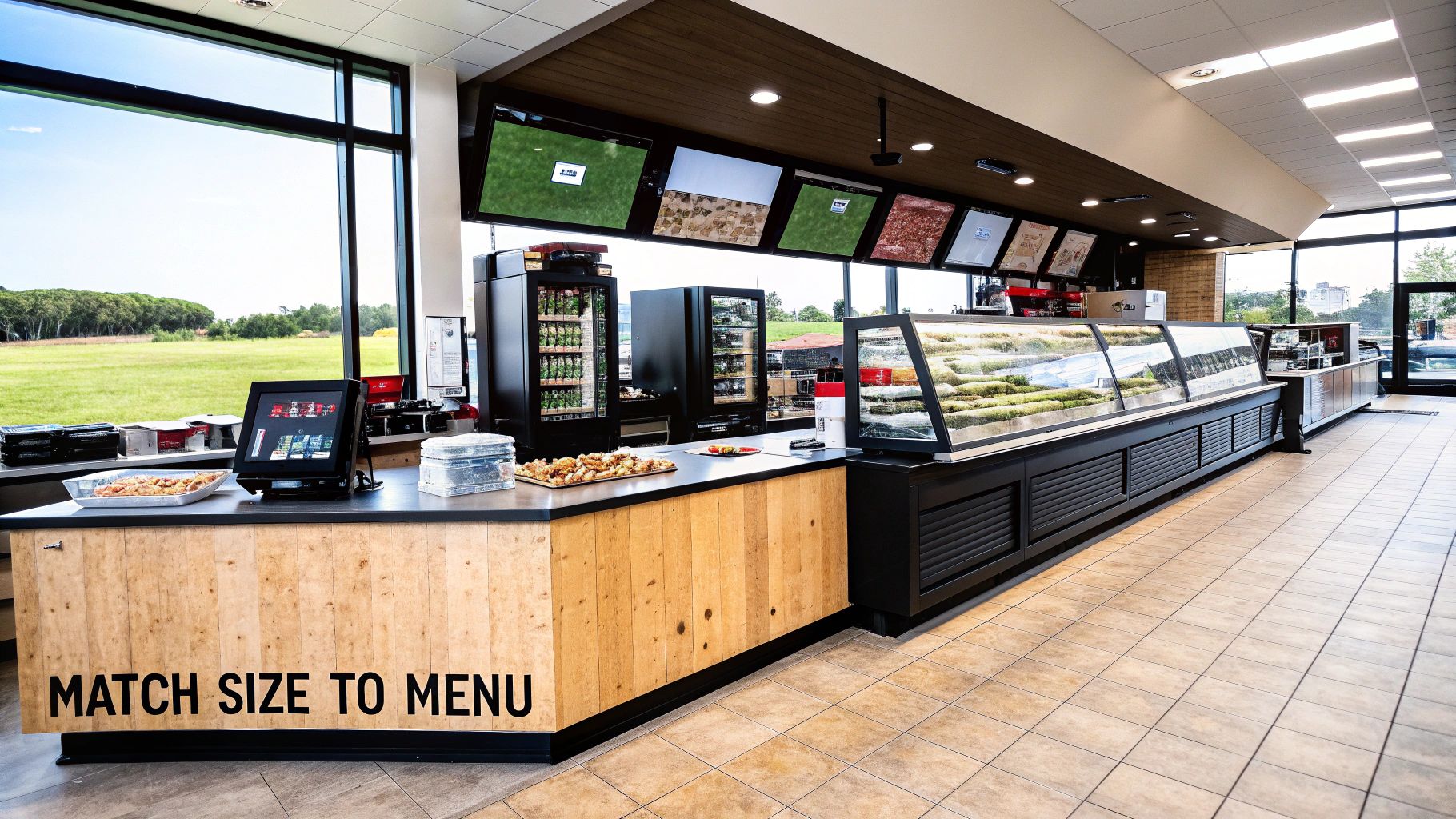
The best undercounter refrigerator isn't just the one that slides perfectly under your counter—it's the one that fits your menu. When you get the size right, that unit stops being just a cold box and becomes a real tool that makes your whole operation faster and more efficient. Think of it this way: your menu is the script, and your workflow dictates what equipment you need to pull it off.
Your equipment pieces are like actors in a play. Each one has a specific role, and for a smooth performance, they all need to nail their part. It's about turning a simple measurement in inches into a practical, profit-driving part of your kitchen.
For Bars and Breweries
If you're running a bar or brewery in Seattle, you know that speed and presentation are everything. People want their drinks now, and they often decide what to order based on what they can see. This is exactly why a narrow, glass-door back bar cooler is pretty much non-negotiable.
- Size: Look for models in the 24-inch to 48-inch range. They're perfect for showing off a great selection of craft beers, ciders, and wines without eating up your whole back bar.
- Workflow: Glass doors are a game-changer. Bartenders can spot what they need in a split second, which cuts down search time and gets drinks out faster. Plus, when customers can see the goods, it often leads to impulse buys.
This kind of specialized Seattle bar equipment is built specifically for this fast-paced world, seamlessly blending storage with merchandising.
For Pizzerias and Delis
A busy pizzeria or deli has a completely different set of needs. Here, it’s all about assembly-line speed and having a ton of fresh ingredients ready to go. A regular commercial refrigerator just isn't going to keep up.
This is where a wide pizza prep table or sandwich prep table becomes the heart of the kitchen. These are brilliant hybrid units that give you refrigerated storage down below and chilled ingredient wells right on top. Everything from pepperoni to sliced tomatoes is kept cool and right at your fingertips. A 60-inch to 72-inch unit can easily accommodate a couple of staff members working shoulder-to-shoulder during a chaotic lunch rush.
The right prep table isn't a luxury; it's a necessity. It streamlines the entire order fulfillment process, allowing your team to build orders faster and more accurately, directly impacting your output and customer satisfaction.
It's no surprise that the global undercounter refrigerator market is booming, largely thanks to space-conscious businesses like food trucks and pizzerias that depend on these compact units. As noted by market analysts at dataintelo.com, efficient cooling is essential for maximizing their output in tight quarters.
For Coffee Shops and Cafes
Even a small Seattle coffee shop refrigerator has a huge impact on workflow. A compact 24-inch solid-door undercounter unit, tucked right next to the espresso machine, can change everything. It keeps milk and dairy alternatives at the perfect temperature, saving the barista from taking extra steps and shaving precious seconds off every single latte order.
In a coffee shop, every movement matters. The right size undercounter refrigerator ensures your most-used items are exactly where they need to be, helping you keep up when the line of customers starts stretching out the door. Whether it's undercounter freezers for frozen pastries or deep fryers for the lunch menu, every piece of equipment has to support your specific needs.
Built-In vs Freestanding: What Your Kitchen Really Needs
When you're picking out an undercounter refrigerator, one of the first big decisions is whether to go with a built-in or a freestanding model. It's a common stumbling block, but the choice really comes down to a single, critical word: ventilation. Getting this right from the start is the key to making sure your unit runs safely and efficiently for years.
Think of it like choosing between a sleek sports car and a rugged pickup truck. Both get you from A to B, but they’re engineered for completely different environments. The main difference is how they get rid of heat.
The Polished Look of Built-In Models
Built-in undercounter refrigerators are the champions of any customer-facing space. These units are specifically engineered with front-venting systems. This means they pull in cool air and push out warm air through a grille right on the front, usually near the bottom.
This smart design is what allows them to be installed completely flush within your cabinetry, creating that seamless, polished look that elevates a professional setup.
- Best For: Customer-facing areas like a stylish bar, a modern coffee counter, or a high-end service station.
- Application: Perfect for Seattle bar equipment where looks matter just as much as performance. A front-venting Seattle coffee shop refrigerator keeps milk perfectly chilled while blending right into the custom millwork.
A built-in unit is an aesthetic choice that signals professionalism and a sharp eye for detail. Its front-venting design is a must-have for any installation that needs a clean, zero-clearance look without risking compressor burnout.
The Workhorse Freestanding Unit
Freestanding units, on the other hand, are the dependable workhorses of the back-of-house. These models are designed to vent from the back or sides, which means they absolutely need "breathing room" to get rid of heat. You can't just slide them into a tight, enclosed cabinet without leaving plenty of clearance.
These are your go-to refrigerators for placing under stainless steel prep tables or in any open area where airflow isn't an issue. They might not offer that same integrated look, but they deliver incredible flexibility and tough-as-nails performance in the most demanding kitchens. For these units, you have to factor in an extra 2-3 inches of clearance on the sides that vent.
This versatility makes them a perfect fit for all kinds of jobs, from holding ingredients in sandwich prep tables to storing goods in undercounter freezers. They are built to perform in the heart of the action, right alongside heavy-duty equipment like deep fryers and pizza prep tables where raw efficiency wins out over appearance every time.
Your Final Checklist Before You Buy
You’re so close. You’ve done the research and are just about ready to make a smart investment. But before you pull the trigger on that new commercial refrigerator, let's run through one last quick checklist.
Think of it as your final pre-flight check. A few minutes now will guarantee a smooth installation and prevent any costly, headache-inducing surprises on delivery day.
Measurements and Placement
Have you looked at the installation spot from every possible angle? It's about more than just the footprint of the unit itself.
- Final Dimensions: Have you triple-checked the width, depth, and height of your space? Grab that tape measure one last time.
- Ventilation Clearance: Did you account for the 2-3 inches of breathing room most rear-venting models need to work efficiently?
- Delivery Path: Is the path clear? Measure every doorway, tight hallway, and tricky corner from the delivery truck to its final home in your kitchen.
- Door Swing: When the door opens, will it block a busy walkway or slam into your deep fryers or other equipment?
Utilities and Workflow Integration
Okay, the physical fit is confirmed. Now, let’s make sure your new under counter freezer or refrigerator can plug in and play nicely with your existing setup.
Choosing the right unit is about supporting your team. A glass door model works wonders for Seattle bar equipment where bartenders need to see inventory at a glance, while drawers are a game-changer for fast-paced sandwich prep tables. Always match the feature to the function.
Next up, the power source. Do you have a dedicated, commercial-grade electrical outlet within reach? Using a standard extension cord for heavy-duty equipment like commercial freezers is not only unsafe but often a direct health code violation.
Finally, remember that an efficient model can seriously lower your operational costs over time. Completing this final review ensures your new equipment will be a hardworking asset from the moment it arrives.
Your Questions, Answered
Let's tackle some of the most common questions we hear from restaurant and bar owners trying to pick the right undercounter refrigerator. These are the practical, real-world concerns that can make or break your decision.
What Is the Best Undercounter Refrigerator Size for a Small Coffee Shop?
For most Seattle coffee shop refrigerators, a compact 24-inch to 36-inch wide single-door unit is the sweet spot. This gets you about 5-7 cubic feet of storage—plenty of room for milk, cream, and oat milk without eating up your precious floor space. It keeps all the essentials right at the barista's fingertips.
How Much Space Do I Need for Undercounter Refrigerator Ventilation?
Ventilation is everything. If you're sliding a unit into a custom cabinet cutout, it absolutely must be a front-venting model designed for that built-in life.
For a standard freestanding unit, a good rule of thumb is to leave at least 2-3 inches of breathing room on the sides and back. This gives the compressor the airflow it needs to stay cool and avoid burning out.
Think of this clearance as a non-negotiable part of the installation. It’s vital for the health and efficiency of every piece of commercial refrigeration, from a small bar cooler to a massive walk-in freezer. Proper airflow is what prevents surprise breakdowns and eye-watering repair bills.
Can I Use a Residential Undercounter Fridge in My Commercial Kitchen?
We get this question a lot, and the answer is a hard no. It's a bad idea. Commercial-grade refrigerators, like the ones you'll find in sandwich prep tables or used as Seattle bar equipment, are built completely differently.
They have powerful compressors and heavy-duty parts made to survive the constant door-opening and high heat of a professional kitchen. A residential unit just can't keep up. You'll end up with poor performance, a voided warranty, and a potential red flag from the health inspector.
Do Drawers Take Up More Space Than Doors?
Yes, drawers can shave off a little bit of the total usable cubic footage compared to a classic door-and-shelf model. But what you lose in sheer volume, you gain back tenfold in organization and speed.
For a fast-paced pizza prep line or a busy deli, that instant, easy access to ingredients is a game-changer. The small trade-off in space is almost always worth the massive boost in workflow.
At Seattle Restaurant Equipment, our job is to outfit Washington’s foodservice businesses with the durable, reliable, and perfectly sized commercial refrigeration they need to thrive. From compact undercounter units to full-scale walk-in freezers, we have the gear to make your kitchen hum. Find the right fit for your business today.