

The sweet spot for a walk-in cooler temperature is somewhere between 35°F and 41°F. This isn't just a suggestion; it's the critical range that keeps your perishable foods perfectly chilled without freezing them over. Nailing this temperature protects your inventory, your customers, and your reputation from the very real risks of spoilage and foodborne illness.
Your First Line of Defense in Food Safety
Think of your walk-in cooler as the unsung hero of your commercial kitchen. It’s the heart of the operation, circulating cold air to preserve the quality and safety of every single ingredient you bring through the door. If you get the temperature right, you've set the foundation for a smooth, successful food service business.
The main job of any commercial refrigerator, from a small under-counter unit to a massive walk-in, is to keep food out of the FDA's infamous "Temperature Danger Zone". This zone sits between 41°F and 135°F, and it's where harmful bacteria throw a party, multiplying at an alarming rate. When that happens, fresh inventory quickly becomes a health hazard. Precise temperature control isn’t just about following the rules—it’s a core strategy for preventing waste and protecting the good name you've worked so hard to build.
The Impact of Precise Temperature Control
Holding that perfect temperature has a direct impact on your bottom line. It stretches the shelf life of everything from crisp produce to prime cuts of meat, which means less spoilage and more value out of every food order you place. This kind of control is vital whether you're running a high-volume restaurant with a fleet of commercial freezers or a cozy Seattle coffee shop with a single Seattle coffee shop refrigerator. The principles of cold storage are the same for everyone, and they are absolutely fundamental to success.
A stable and correct walk-in cooler temperature is the single most effective tool you have for preventing inventory loss and ensuring the consistent quality that keeps customers coming back.
It's no surprise that the demand for reliable cold storage is booming. The global market for walk-in coolers and freezers pulled in around USD 8.995 billion and is expected to skyrocket to USD 25.154 billion by 2030. This growth just goes to show how essential a solid refrigeration backbone is for every other piece of equipment, from your pizza prep tables to your deep fryers. Properly setting up a commercial kitchen truly begins with mastering these temperature fundamentals.
Setting the Ideal Temperature for Different Foods
Think about your walk-in cooler for a minute. It’s not just a big, cold box—it's the heart of your kitchen's inventory management. Just like a chef wouldn't cook a delicate fish the same way as a hearty stew, you can't treat all your ingredients to the same temperature. A one-size-fits-all approach is a recipe for disaster, leading to wilted produce, spoiled dairy, and unsafe meat.
Getting this right is crucial. It all comes down to understanding what each food category needs to stay fresh and safe.
A Balancing Act of Cold
Let's start with the basics. Delicate greens and fresh vegetables are happiest in a slightly "warmer" cold, usually between 38°F and 40°F. This keeps them crisp and vibrant without the risk of frostbite that can turn them into a mushy mess. But that same temperature range is way too warm for your high-risk proteins.
Raw meat, poultry, and fish need to be kept much colder to slam the brakes on bacterial growth. You're aiming for a temperature between 32°F and 36°F. This is just above freezing, the perfect sweet spot to preserve texture and flavor while keeping everything safely out of the danger zone until it hits the line.
Food Safety Isn’t a Suggestion—It’s the Law
Every single person in the food service industry needs to have the "Danger Zone" burned into their brain. This is the temperature range where bacteria throw a party and multiply like crazy.
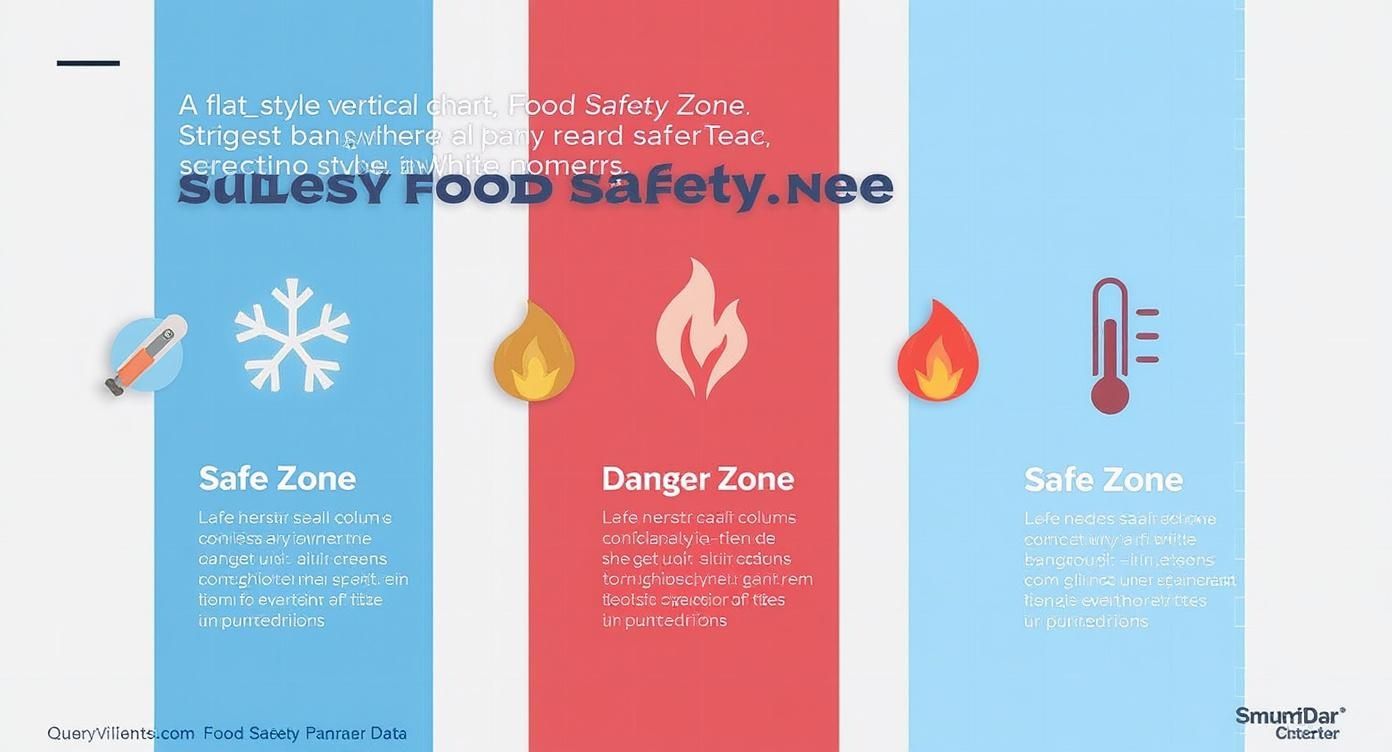
As the chart clearly shows, your walk-in cooler's job is to keep perishable foods firmly in the safe cold zone, which is anything below 41°F according to most health departments. Anything between 41°F and 135°F is a no-go.
Recommended Walk-In Cooler Temperatures by Food Category
To help you manage this day-to-day, we've put together a quick reference guide. Think of this as your cheat sheet for a perfectly organized and safe walk-in.
| Food Category | Ideal Temperature Range (°F) | Storage Considerations |
|---|---|---|
| Produce | 38°F - 40°F | Keep away from fan blowers to prevent wilting. Store ethylene-producing fruits (apples, etc.) away from sensitive veggies. |
| Raw Meat/Poultry | 32°F - 36°F | Store on the lowest shelves in sealed containers to prevent cross-contamination from drips. |
| Fresh Fish/Seafood | 32°F - 34°F | Pack in self-draining ice. The goal is to keep it as close to freezing as possible without actually freezing it. |
| Dairy & Eggs | 36°F - 40°F | Keep in original packaging and away from strong-smelling foods like onions, as dairy can absorb odors. |
| Deli Meats | 35°F - 38°F | Store in sealed, dedicated containers once opened. Good airflow is key. |
Using this table to map out your cooler isn't just about following rules. It’s a powerful strategy for operational excellence. It protects the quality of the ingredients you’ve invested in, reduces costly spoilage, and ensures every plate you send out is both delicious and safe—whether the food is heading to a sandwich prep table, a pizza station, or the deep fryer.
Choosing the Right Refrigeration for Your Business
Getting your walk in cooler temperature right isn't just about tweaking a dial. It all starts with having the right equipment in the first place. Think of your kitchen's refrigeration as a complete ecosystem. Your walk-in cooler might be the heart of the operation, but specialized gear like prep tables and under counter freezers are the vital organs that keep everything running smoothly and safely.
Investing in high-performance commercial refrigerators and commercial freezers is step one. These aren't your home kitchen appliances; they're built like tanks to handle the grind of a busy kitchen. They boast powerful compressors and top-notch insulation to ensure temperatures stay rock-solid. For any bustling Seattle restaurant, that kind of reliability is everything. You need equipment that can bounce back to the right temperature in a flash after the door has been opened a hundred times during the dinner rush.
Specialized Units for a Smarter Workflow
Beyond just storing bulk ingredients, you have to think about how food moves through your kitchen. This is where specialized equipment becomes a game-changer for both food safety and speed of service.
- Sandwich and Pizza Prep Tables: These units are absolute workhorses. A sandwich prep table or pizza prep table is a brilliant hybrid, giving you refrigerated wells on top for instant access to ingredients and under-counter cold storage below. This design keeps everything from sliced turkey to diced tomatoes perfectly chilled and right where you need them, preventing ingredients from ever creeping into that dreaded temperature danger zone during prep.
- Under Counter Refrigerators and Freezers: Got a tight space? An under counter refrigerator is your best friend. They offer decentralized cold storage, putting ingredients exactly where they're needed. For Seattle bar equipment, an under counter freezer means your bartenders aren't running to the back for juices or garnishes. In a Seattle coffee shop refrigerator, it keeps milk and cream perfectly chilled right next to the espresso machine.
- Deep Fryers and Other Cooking Equipment: Okay, so these aren't refrigeration, but where you put them matters a ton. Keeping hot equipment like deep fryers far away from your coolers and freezers lowers the ambient heat. This simple step helps your refrigeration units work less, run more efficiently, and last longer.
Key Features to Look For
When you're shopping for any piece of commercial refrigeration—from a massive walk-in to a small under counter freezer—a few features are simply non-negotiable. A digital thermostat gives you precise control and makes monitoring a breeze. A powerful airflow system is just as crucial, ensuring cold air gets to every corner and eliminating dangerous warm spots.
Investing in equipment with superior insulation and robust, energy-efficient components is one of the smartest financial decisions a food service operator can make. It lowers utility bills and reduces the risk of costly food spoilage and equipment failure.
Making the smart choice upfront will save you a world of headaches and money down the road. Whether you're setting up a brand-new kitchen or just upgrading an old appliance, exploring your options for both new and used equipment can offer serious value. To get a better handle on balancing cost and quality, check out our guide to used commercial kitchen equipment. Your equipment is the backbone of your business; choosing wisely builds a strong foundation for success.
Mastering Temperature Monitoring and Maintenance
Keeping your walk in cooler temperature in that perfect sweet spot isn’t a "set it and forget it" job. It's a daily commitment, a rhythm of consistent habits and smart, proactive checks. Think of it like a pilot running through their pre-flight checklist; these aren't just tedious tasks, they're the simple, repeatable actions that prevent disaster. For you, that means safeguarding your inventory and, ultimately, your bottom line.
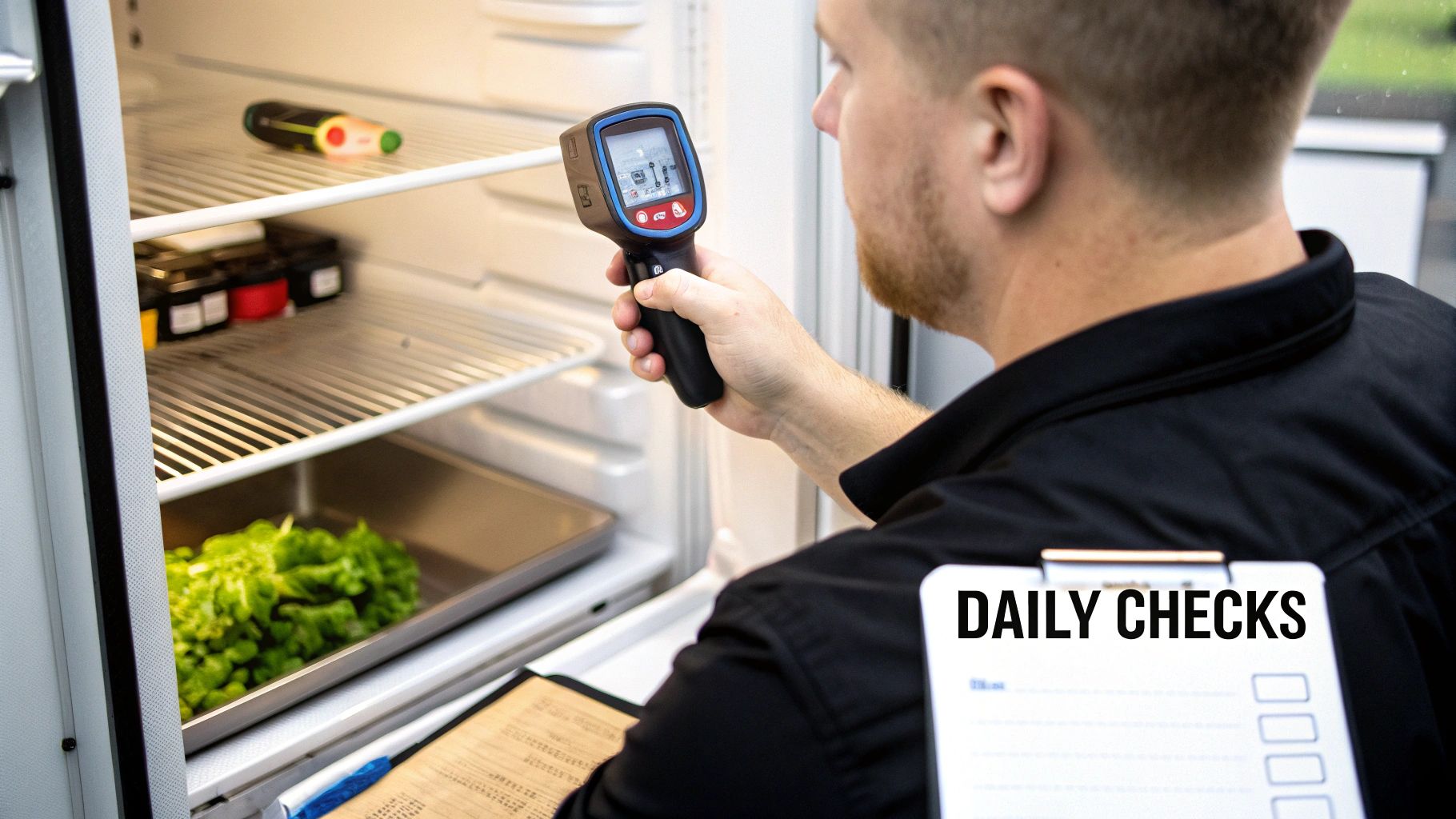
First thing's first: never trust a single temperature reading. The digital display on the outside of your cooler is great for a quick glance, but it’s only giving you part of the story. To get the real picture, you need a calibrated, independent thermometer placed inside the unit—away from the door and any direct airflow from the fans. This simple dual-check system is your guarantee that you’re seeing the true ambient temperature where your food is actually stored.
Building a Proactive Maintenance Routine
A simple checklist can turn your entire staff into the first line of defense against equipment failure. When you weave these quick tasks into your daily, weekly, and monthly operations, you build a culture of vigilance that protects your most valuable assets.
Daily Checks (Less than 5 minutes):
- Log Temperatures: At the start and end of every day, jot down the readings from both the external display and your internal thermometer. No exceptions.
- Listen for Odd Noises: Take a moment to listen. Are there any unusual grinding sounds, loud clicks, or is the compressor running constantly? Make a note of it.
- Check the Door: Give the door a push. Does it close securely? Does the self-closing mechanism actually work?
Weekly Tasks (15-20 minutes):
- Inspect Door Seals: Run your fingers along the door gaskets. Look for any cracks, tears, or spots where they've become hard and brittle. This is where your cold air escapes.
- Clear Debris: Sweep up around the condensing unit. Get rid of any dust, boxes, or other clutter that could be blocking critical airflow.
- Check for Ice Buildup: Peek at the evaporator coils. Is there a thick layer of frost building up? That’s a classic sign of a defrosting problem.
That cooler door gets more use than just about anything in your kitchen, and its integrity is non-negotiable. It’s such a critical component that the walk-in cooler door market is a beast of its own, projected to swell to roughly $160 million by 2033. This just goes to show how vital it is to keep every part, especially the door and its seals, in prime condition to maintain efficiency. If you want to dive deeper into the market's dynamics, you can check out this market research report.
The Power of Staff Training
Finally, you have to empower your team with knowledge. Training your staff on best practices is just as critical as cleaning the coils.
Teach them how to organize inventory to promote proper airflow. Make it a rule to never, ever prop the door open. And drill it into them to report any temperature swings or weird noises immediately. These aren't huge asks, but when everyone does them consistently, these small habits transform into powerful safeguards for your entire business, from your commercial refrigerators to your sandwich prep tables.
How to Troubleshoot Common Temperature Issues
Even the most reliable walk-in cooler can hit a snag. The real trick is catching these problems early before you're looking at a mountain of spoiled inventory and an emergency repair bill. Knowing the warning signs that your walk-in cooler temperature is off allows your team to jump into action, protecting both your products and your profit.
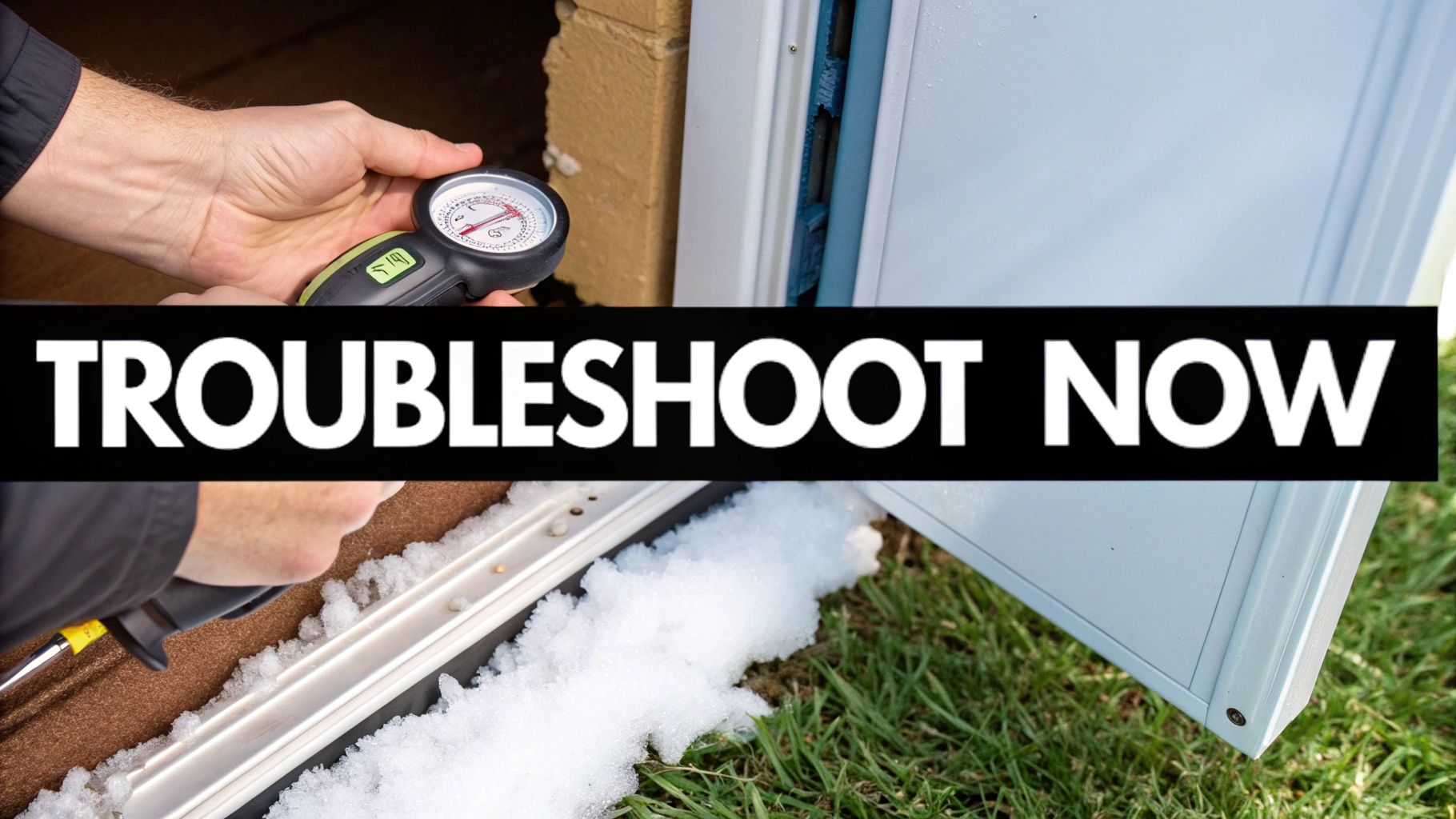
When you notice the temperature creeping up or the unit just won't shut off, the cause is often surprisingly simple. Before you even think about calling a technician, it’s worth running through a quick diagnostic checklist. You’d be surprised how many common issues you can solve yourself without any special tools.
Initial Troubleshooting Steps
Start with the easy stuff. These simple checks solve the vast majority of cooling headaches and are usually tied to airflow—a principle technicians often call "Airflow Before Charge."
- Check for Blockages: Are boxes and inventory shoved right up against the walls or blocking the evaporator fans? Your cooler needs to breathe. Make sure there are a few inches of clear space around the interior walls for air to circulate properly.
- Inspect the Condenser Coil: Take a look at the condenser coil on the condensing unit. If it's caked in dust, grease, or other gunk, it can't release heat effectively. This forces the entire system to work overtime just to keep up.
- Examine the Door Gasket: A brittle, torn, or worn-out door seal is a classic temperature killer. It lets precious cold air seep out while inviting warm, humid air in, which is also a recipe for excessive ice buildup inside.
An overloaded unit or a dirty condenser can force a refrigeration system to work much harder to maintain the correct walk in cooler temperature, leading to higher energy bills and premature component failure.
Common Problems and Simple Fixes
If those basic checks don't solve it, you can dig a little deeper. Many common symptoms point to specific issues that can affect all your equipment, from your commercial freezers to your pizza prep tables.
Symptom: Cooler is Running Constantly
- Possible Cause: The door is being left open too frequently, or the door gasket has failed and isn't sealing.
- Solution: Remind your team to keep the door shut. It's not a living room. Check the gasket by closing the door on a piece of paper; if you can pull it out easily, the seal is shot and needs replacing.
Symptom: Ice is Building Up on the Evaporator Coil
- Possible Cause: The unit's defrost cycle isn't kicking on, or you've got warm, moist air sneaking in through a bad door seal.
- Solution: First, check your defrost timer settings to make sure they're correct. Then, double-check that door seal and make sure any drain lines are clear and not clogged.
Symptom: Temperature is Slowly Rising
- Possible Cause: The condenser coil is dirty and clogged, or the system could be low on refrigerant.
- Solution: Give that condenser coil a thorough cleaning with a stiff brush and a dedicated coil cleaner. If the temperature still won't drop after a good cleaning, it's time to call in a pro. That could signal a refrigerant leak, which is a job for a certified technician.
Saving Energy Without Compromising on Safety
Keeping your walk-in cooler at the perfect temperature doesn't mean you have to brace for a sky-high energy bill. The trick is to combine smart, consistent habits with modern tech. When you get it right, you can slash your utility costs without ever risking food safety—a true win-win for your bottom line and your sanity.
Often, the simplest upgrades pack the biggest punch. Something as basic as installing plastic strip curtains is a cheap, effective way to keep cold air from rushing out every time someone opens the door. Or think about your lighting—swapping old incandescent bulbs for energy-efficient LEDs not only uses less electricity, but it also lowers the heat inside the cooler. That makes your whole refrigeration system's job a little bit easier, and those small changes really add up over time.
Strategic Upgrades for Maximum Efficiency
Once you've handled the easy stuff, you can get even bigger returns by investing in high-performance components. Think about upgrading the parts that do the heavy lifting for your cooler's performance.
- EC Fan Motors: This one is a game-changer. Electronically commutated (EC) fan motors can use up to 70% less energy than the old shaded-pole models. They simply run smarter and cooler, which translates directly to lower energy use.
- Sealed Door Gaskets: A tight seal is absolutely non-negotiable. Make it a habit to inspect and replace worn-out door gaskets. It’s one of the easiest ways to stop cold air leaks and prevent your compressor from working overtime.
- Routine Coil Cleaning: When your condenser coils get caked in dust and grime, your unit has to struggle to release heat. A quick, regular cleaning keeps the system running at peak efficiency, just like it was designed to.
Energy efficiency is a massive focus in modern cooler design, and for good reason. Newer systems are shifting toward natural refrigerants that deliver 30-40% better energy performance compared to the old HFC-based units, which also happens to align with today's sustainability goals. If you're curious, you can learn more about the evolving technology and market trends for walk-in coolers here.
Investing in energy efficiency is a direct investment in your business's profitability. Every dollar saved on electricity is a dollar that goes straight to your bottom line, all while maintaining the highest standards of food safety.
If you're ready to take a deeper dive into choosing the right equipment, we have more insights for you right here on our blog. Check out our detailed guide on selecting energy-efficient commercial refrigeration to help you make the best decision for your kitchen.
Cooler Temperature FAQs
Even with the best walk-in, a few questions always pop up. Here are some quick answers to the common things we hear, whether you're working with a massive commercial refrigerator or a compact under counter freezer.
How Often Should I Log Cooler Temperatures?
At a minimum, you should be checking and logging the temperature twice a day. A quick log at the start and end of each shift is the gold standard. This simple habit gives you a solid record for health inspections and helps you catch any temperature swings before they spoil your inventory.
What Is the Most Common Cooler Mistake?
By far, the biggest and most expensive mistake is cramming the cooler full and blocking the airflow. When you stack boxes right up against the walls or in front of the evaporator fans, you're creating warm spots and forcing the compressor to work way harder than it should. Always leave a few inches of breathing room around the interior walls—it's the golden rule for keeping things consistently cool.
The single most effective way to ensure consistent walk in cooler temperature is to respect its need for airflow. Proper organization prevents warm spots and reduces mechanical strain on your equipment.
Should My Cooler Temperature Change Seasonally?
You might need to make a few small tweaks. During a hot Seattle summer, the kitchen's ambient temperature can climb, making your cooler work overtime to keep up. It’s a good idea to monitor it a little more closely on those really hot days to make sure it’s staying in the safe zone.
If you do need to adjust the thermostat, go slow. Make one tiny change, then give it a full 24 hours to settle before you touch it again. This prevents wild temperature swings and keeps everything from your pizza prep tables to your main walk-in stable and happy.
Whether you need a new walk-in, an under counter freezer, or a reliable sandwich prep table, Seattle Restaurant Equipment has the commercial-grade solutions to keep your kitchen running safely and efficiently. Explore our full selection of new refrigeration equipment today at https://seattlerestaurantequipment.com.