

A blast chiller is a beast of a machine designed for one crucial job: to plummet the temperature of hot food, fast. It’s built to race cooked food through the temperature danger zone—where nasty bacteria love to multiply—at incredible speed. Unlike your standard walk-in or reach-in refrigerator, its purpose isn't just to keep food cold. It's to get it cold, right now, locking in safety, quality, and flavor.
Your Kitchen’s Secret Weapon for Safety and Quality
Think of it this way: a standard commercial freezer is like a local bus, slowly getting your food to its cold destination. A blast chiller? That’s a bullet train, getting it there safely and in record time.
For any Seattle food business—from a restaurant cranking out sauces for the dinner rush to a coffee shop prepping grab-and-go items—this speed changes everything. It’s the critical difference between food that is safe, fresh, and delicious, and food that’s a potential liability.
The main job of this equipment is to conquer the temperature "danger zone." A blast chiller is a total game-changer, rapidly cooling hot food from 160°F all the way down to a safe 41°F in under 90 minutes. This process slams the brakes on bacterial growth, stopping it dead in its tracks. You can explore more insights on rapid cooling technology and its benefits for professional kitchens.
Why Standard Refrigeration Just Can’t Keep Up
Tossing a hot hotel pan of chili or soup directly into a standard commercial refrigerator is one of the most common—and dangerous—mistakes in the kitchen. Here’s what happens when you do:
- You raise the ambient temperature: This forces the unit's compressor to work overtime and can actually warm up other stored items, putting everything in that fridge at risk.
- You create unsafe conditions: The slow cooling process gives harmful bacteria hours to thrive and multiply.
- You destroy food quality: When food cools slowly, large, destructive ice crystals form. These crystals shred the cellular structure of your ingredients, leading to mushy textures and a watery, bland final product.
A blast chiller doesn't replace your other equipment; it works right alongside your existing undercounter refrigerators and sandwich prep tables to create a seamless, safe workflow. It handles the initial heavy lifting of rapid cooling, which then allows your other refrigeration units to do what they do best: hold food at a consistent, safe temperature.
This specialized process is fundamental for any operation that cares about both strict HACCP compliance and serving an incredible product every single time.
The Science of Preserving Perfect Texture and Flavor
Ever pulled a container of soup out of the freezer, only to find it watery and sad when reheated? The culprit isn't your recipe—it's the microscopic world of ice crystals. The real magic of a blast chiller isn’t just about speed; it's about the science of freezing that keeps your food tasting and feeling exactly how you intended.
Think of the journey food takes from piping hot to safely chilled. It has to cross a dangerous temperature range where bacteria thrive.
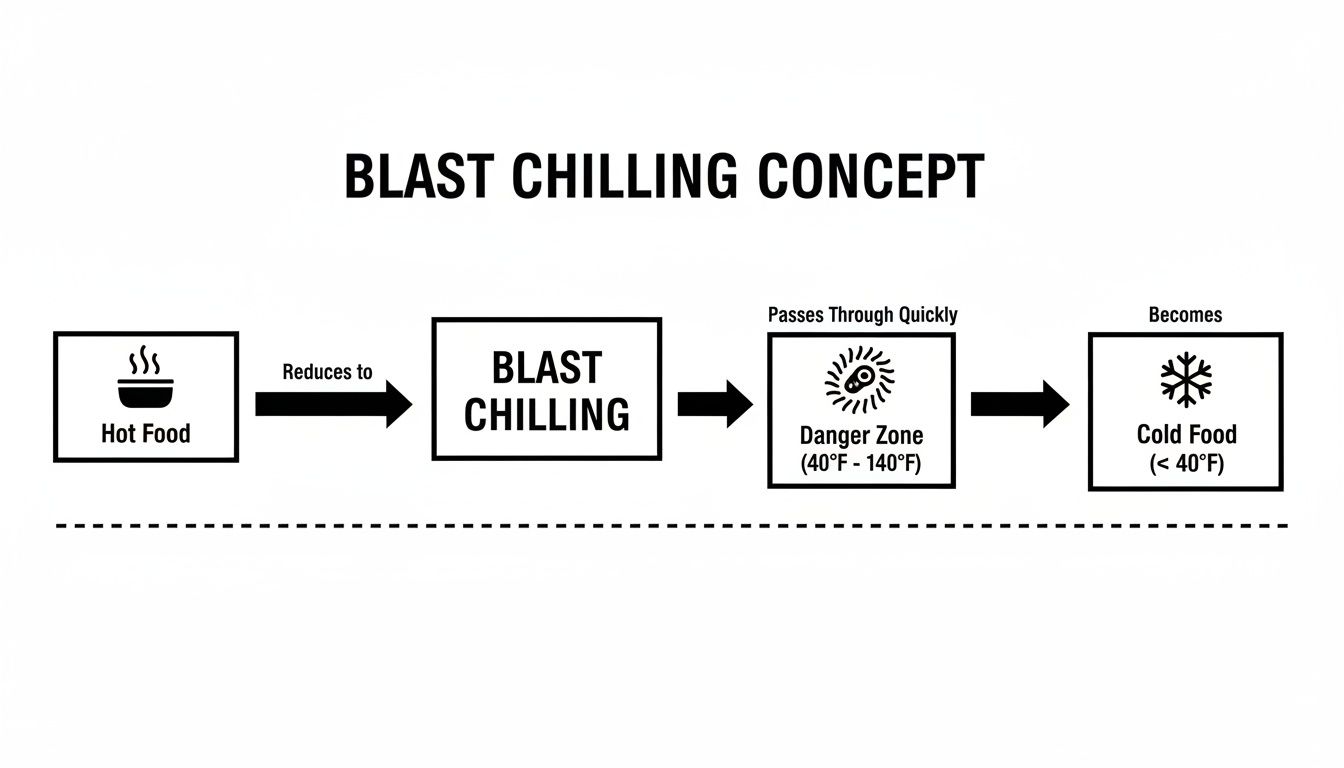
This process shows how a blast chiller acts like a high-speed bridge, getting your ingredients safely past the contamination risk and locking in their quality.
Standard commercial freezers are designed for holding, not rapid cooling. They slowly pull heat out, giving large, jagged ice crystals plenty of time to form. These crystals are like tiny knives, puncturing the cell walls of your ingredients. When the food thaws, all that moisture leaks out, leaving you with a mushy, separated, and disappointing product. It's why a simple undercounter freezer just can't deliver the same results.
A blast chiller, on the other hand, launches an all-out assault on heat. It uses powerful fans to blast frigid air, often down to -40°F, directly over the food. This aggressive method, called forced convection, rips heat away so quickly that only tiny micro-crystals can form inside the food's cells. These micro-crystals are harmless, leaving the cellular structure completely intact.
By forming these minuscule ice crystals, blast chillers effectively lock in the original texture, moisture, and nutritional value. This is how you preserve that "just-cooked" quality, whether it's a sauce destined for a pizza prep table or a big batch of soup for your café.
Soft Chilling vs. Hard Chilling
You wouldn't handle a delicate custard the same way you'd handle a thick pot roast, and a good blast chiller gets that. Modern units let you choose different cycles to match the density and delicacy of the food—a level of control you won’t find on standard commercial refrigerators.
- Soft Chilling: This is the gentler cycle, using air around 32°F to cool down delicate items like custards, sauces, or leafy greens. It prevents the outside from freezing and getting damaged while still rapidly cooling the core. It’s perfect for prepping items for a sandwich prep table or protecting delicate desserts in a Seattle coffee shop refrigerator.
- Hard Chilling: This is the full-power mode. It unleashes sub-zero air to rapidly cool dense foods like thick roasts, hearty stews, or anything fresh out of a deep fryer. This aggressive approach ensures even large batches are brought to a safe temperature within that critical 90-minute window.
This level of precision ensures everything you make maintains its intended quality. If you want to dive deeper, you can explore more about the history of rapid freezing on flash-freeze.net. Ultimately, this scientific approach is what separates a world-class kitchen workflow from an average one, safeguarding every dollar you invest in quality ingredients.
Why a Blast Chiller is a Game-Changer for Your Kitchen
A blast chiller isn't just another shiny box in your kitchen; it’s an investment that pays you back in safety, quality, and cold, hard cash. Forget just the science for a second. The real magic is how it completely changes the way a kitchen runs, whether you’re in a packed Seattle restaurant or a small neighborhood coffee shop. The benefits really boil down to three things: rock-solid food safety, better-tasting food, and some serious efficiency.
The biggest win here is uncompromising food safety. Every minute cooked food sits in the temperature "danger zone" (41°F to 140°F), you're basically rolling out the welcome mat for bacteria. A blast chiller slams that door shut, getting food through that zone in under 90 minutes.
This isn't just a "nice-to-have"—it's the gold standard for meeting strict HACCP (Hazard Analysis Critical Control Point) rules. It gives you a foolproof, repeatable process for making sure every single batch of soup, sauce, or pulled pork is safe. That protects your customers, and it protects your reputation.
Better Food and a Smarter Workflow
Beyond just safety, a blast chiller is your secret weapon for locking in the quality you worked so hard to create. Because it cools so fast, it forms tiny micro-crystals instead of the big, mushy ones that ruin food in a regular freezer. This means the soup you made on Tuesday tastes just as amazing when you serve it on Friday. No loss of texture, flavor, or moisture.
This ability to preserve quality is what makes huge operational efficiencies possible through a 'cook-chill' system. Just imagine cooking big batches of your core menu items when things are slow.
With a blast chiller, you can extend the safe shelf life of prepared foods from just a few hours to several days. This completely changes the game by cutting down daily prep, making better use of your staff, and slashing food waste.
This is how it transforms kitchens all over Washington:
- For Pizzerias: Cook off huge batches of your signature sauce and prep toppings days in advance. When the dinner rush hits, your pizza prep tables are already stocked with perfect, fresh-tasting ingredients. No more scrambling.
- For Caterers: You can prep almost an entire wedding menu on a Wednesday for a Saturday event. Everything gets safely chilled and stored, ready for a quick reheat and plating on the big day. It takes the chaos out of event catering.
- For Cafes: Make large batches of soups, sandwich fillings, and even pastries. Your Seattle coffee shop refrigerators and display cases will always be full of fresh, high-quality grab-and-go options for your customers.
At the end of the day, a blast chiller helps you serve a safer, better product while running a much smarter, more profitable kitchen. For more tips on making your kitchen run better, check out our guide on the benefits of energy-efficient commercial refrigeration.
Blast Chiller vs Blast Freezer: Understanding the Difference
It’s a common question in a busy kitchen: are blast chillers and blast freezers just two names for the same machine? While they might look similar and both use powerful, fan-driven technology, they have very different jobs. Think of them as specialists on your equipment line, each built to master a specific task.
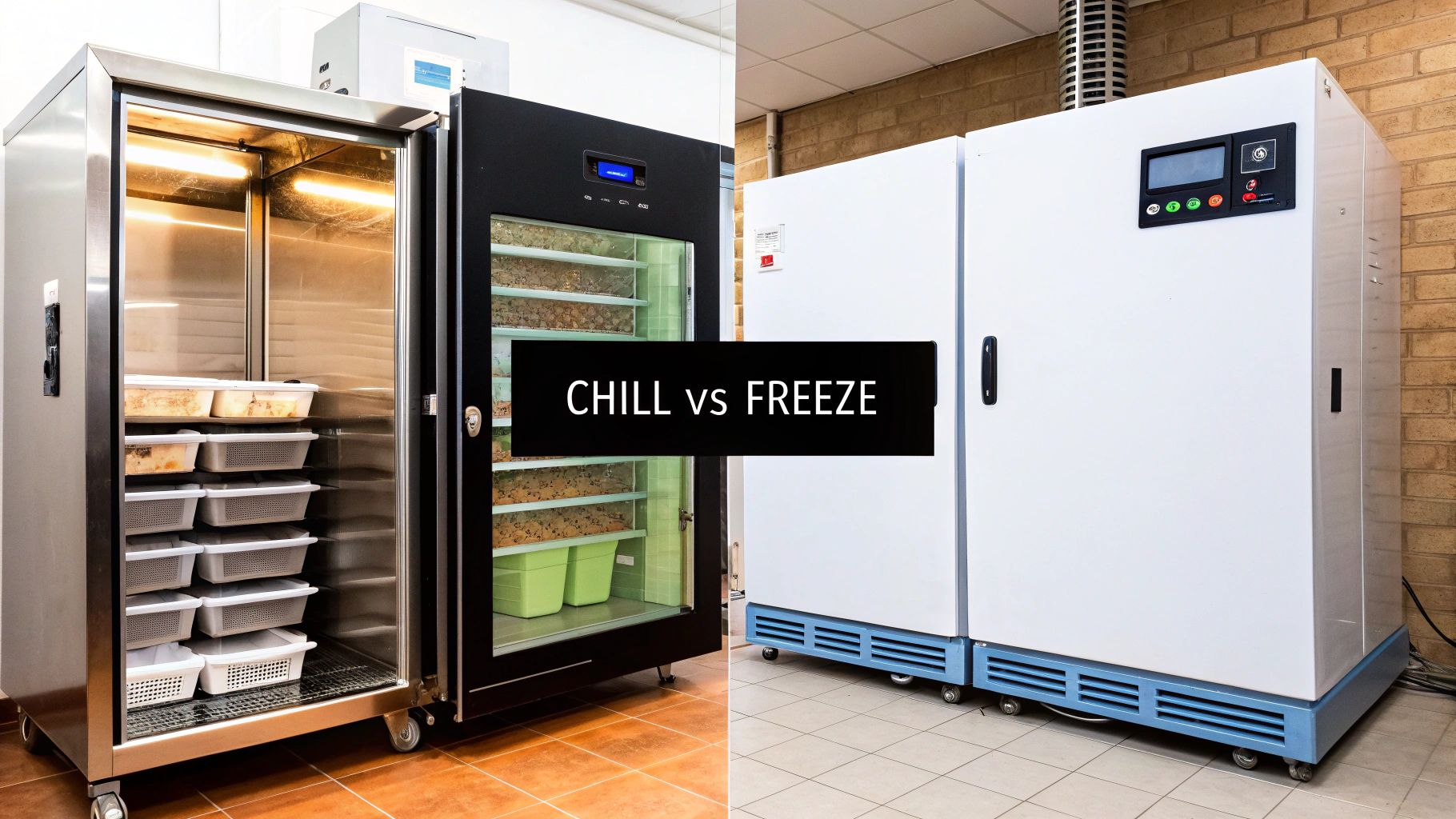
A blast chiller has one primary goal: rapid cooling. Its purpose is to take hot food—like a big pot of marinara or a tray of roasted chicken—and plummet its internal temperature to a safe, refrigerated level of around 37°F. Critically, it does this in 90 minutes or less. This is all about food safety and preserving quality for service within the next few days.
On the other hand, a blast freezer is built for a much colder mission. It’s engineered to push food past the freezing point and lock it in a solid state, reaching core temperatures of 0°F or even lower. This deep-freeze process is designed for long-term storage, allowing you to preserve seasonal ingredients or batch-cooked meals for weeks or months at a time.
Choosing the Right Tool for the Job
So, which one do you need? That decision comes down to your kitchen's workflow. You wouldn't use a deep fryer to boil pasta, and the same logic applies here. Using the wrong machine can hurt both the safety and quality of your food.
A Seattle deli, for instance, would use a blast chiller to quickly cool down large batches of house-roasted turkey breast before it heads to the slicer for their sandwich prep tables. This keeps the meat moist and tender for immediate service. In contrast, a local seafood supplier would rely on a blast freezer to flash-freeze freshly caught salmon, locking in its peak freshness for distribution over the coming months.
Many modern units, like those available from Seattle Restaurant Equipment, are combination "chiller/freezers" that can perform both functions. These versatile machines offer incredible flexibility, letting you switch between chilling and freezing cycles based on your daily production needs.
To make the distinction crystal clear, we've broken it down in a simple table.
Comparing Blast Chillers and Blast Freezers
This quick comparison highlights the core differences between these two essential pieces of kitchen equipment.
| Aspect | Blast Chiller | Blast Freezer |
|---|---|---|
| Primary Goal | To rapidly cool hot food down to safe refrigeration temperatures. | To rapidly freeze food solid for long-term preservation. |
| Target Temperature | Approximately 37°F (3°C) | 0°F (-18°C) or below |
| Ideal Application | Prepping sauces for pizza prep tables, cooling soups, chilling cooked meats. | Preserving seasonal produce, storing batch-cooked meals, preparing frozen goods for sale. |
| Primary Benefit | Enhances immediate food safety and extends shelf life by several days. | Locks in peak quality and extends shelf life for months. |
Ultimately, understanding this difference is the key to equipping your kitchen for success. Whether you need the short-term safety of a dedicated chiller or the long-term preservation of a freezer, choosing the right unit—or a combination model—ensures every ingredient is handled perfectly.
Selecting the Right Blast Chiller for Your Seattle Kitchen
Picking the right blast chiller is a huge leap forward for any kitchen. This isn't just about slotting another stainless steel box into your lineup; it's an investment that can completely change your workflow, tighten up food safety, and lock in the quality of your dishes. To get it right, you need to match the machine's specs to how your kitchen actually runs day-to-day.
First things first, let's talk capacity. This is almost always measured in how many pounds the unit can chill in a single cycle. Don't just pull a number out of thin air—do the math. Picture your busiest service and figure out the total weight of everything you'd need to cool down. A little Seattle coffee shop might just be chilling a couple of pans of soup, but a bustling restaurant will need a much bigger machine to handle sauces, proteins, and prepped veggies all at once.
Finding the Perfect Fit for Your Kitchen
Once you’ve got a handle on capacity, you can start looking at the different types of blast chillers out there. Each one is built for a specific kitchen size and flow, designed to work right alongside your other workhorses like commercial freezers and deep fryers.
There are three main styles you'll run into:
- Undercounter Models: These are the space-savers. They slide right under a counter, often next to an undercounter refrigerator or undercounter freezer. They’re a perfect fit for coffee shops, bars, or food trucks where every single inch counts.
- Reach-In Units: This is what you'll see in most restaurants. They're taller, freestanding units with way more capacity than their undercounter cousins, built to hold multiple pans during a hectic service.
- Roll-In Systems: For the big players—caterers, hotels, or commissary kitchens—these are the heavy hitters. They're designed to fit entire rolling racks of food, making them the backbone of an efficient cook-chill operation.
When you're deciding, think about where this unit will live in your kitchen. Is it going near the ovens for a quick transfer? Does it need to be close to your sandwich prep tables or pizza prep tables to keep the prep-to-chill process smooth?
Key Features and Smart Controls
Beyond just size, modern blast chillers are packed with features that give you incredible precision. You’ll want to look for models with programmable controls. These let you save specific chilling or freezing cycles for different foods, so you get the same perfect result every time, whether you're soft-chilling a delicate panna cotta or hard-chilling a dense pot roast.
An integrated food probe is another feature you shouldn't skip. Instead of relying on timers and guesswork, the probe measures the food's core temperature and stops the cycle automatically when it hits the target. This isn't just a nice-to-have; it's a critical tool for HACCP compliance and for preventing over-chilling that can ruin the texture of your food.
For brewery owners or ghost kitchens getting their gear from Seattle Restaurant Equipment, the capacities really stand out: undercounter units can handle 100+ portions a day, while massive roll-ins can manage 335 x 340g steaks or trays of veggies per cycle. That kind of power enables cook-chill systems that stretch a menu item's life from hours to days. You can learn more about the history of how food preservation technology has evolved over time.
Nailing down these details will help you land a machine that doesn't just fit your space but actually makes your entire kitchen better. And if you're exploring all your refrigeration options, check out our guide on the best commercial refrigerators.
Getting Your Blast Chiller Dialed In
Your new blast chiller isn't just another box in the kitchen; it's a game-changer. But to get the most out of it, you need to integrate it properly into your daily workflow from the moment it lands in your Seattle kitchen. Think of it as a new star player joining your team—you need to set them up for success.
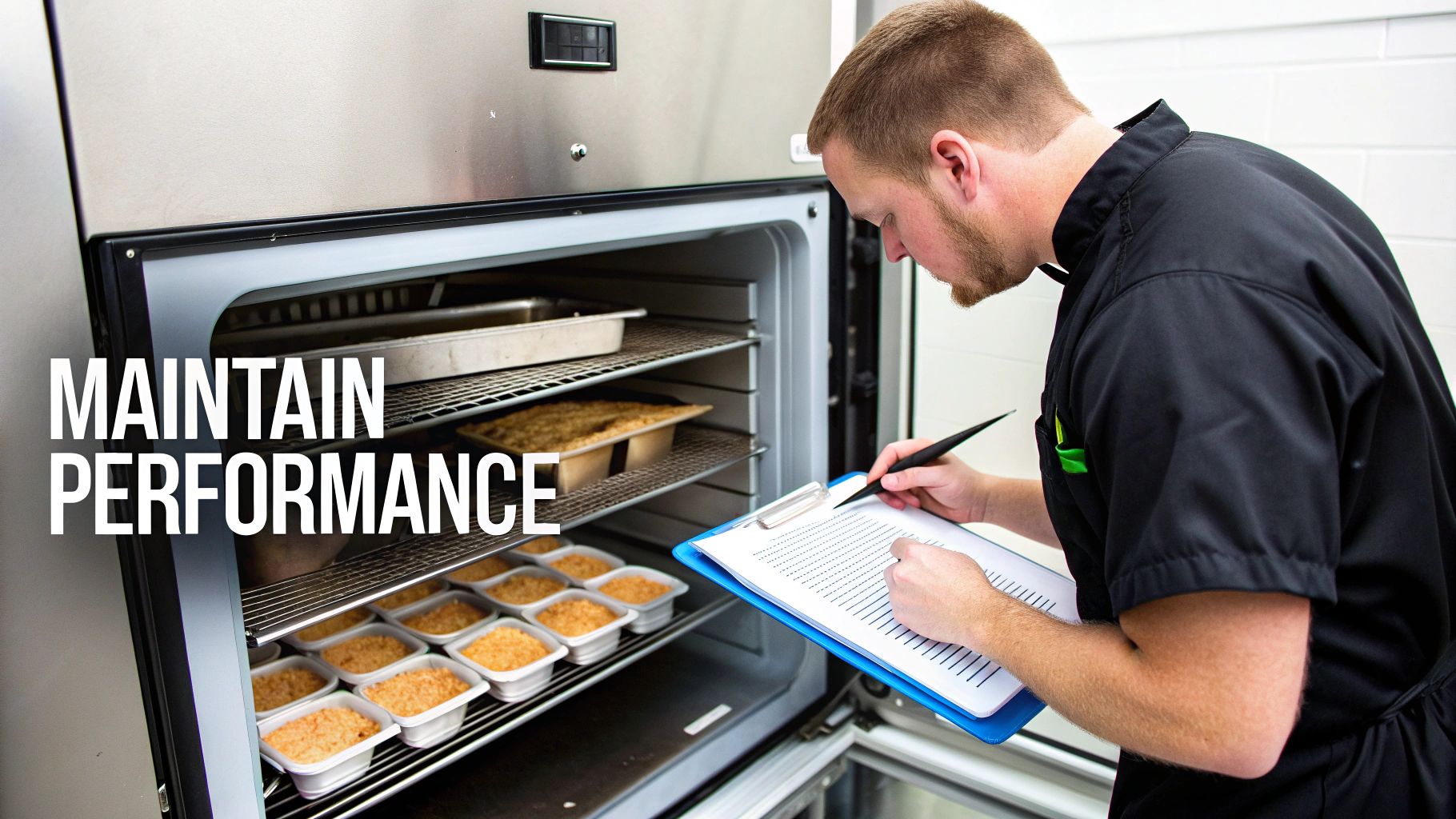
First things first: give it room to breathe. The condenser needs plenty of ventilation to push out all that heat it's pulling from your food. Jamming it into a tight corner is a recipe for an overworked machine. Also, make sure it’s plugged into a dedicated electrical circuit. You don't want it tripping a breaker right in the middle of a critical cooling cycle.
Nail Your Daily Operations
Once you're set up, it's all about building good habits. A few simple rules will keep your blast chiller running at peak performance, ensuring quick chills and protecting the unit from unnecessary wear and tear.
- Don't Overcrowd It: You have to let the cold air circulate. Packing the chamber to the gills is the fastest way to slow down the cooling process, so always respect the recommended capacity.
- Go with Shallow Pans: When you're chilling hot liquids like soups or sauces, spread them out in shallow hotel pans instead of deep stockpots. More surface area means the heat escapes way faster.
- Trust the Probe: That integrated food probe is your best friend. Use it every single time to get an accurate core temperature reading. It takes all the guesswork out of food safety.
A well-maintained blast chiller is a reliable workhorse. Simple daily and weekly checks prevent costly downtime and ensure your investment continues to pay dividends in food safety and quality for years to come.
Simple Upkeep for a Long Life
Protecting your investment is non-negotiable, and regular maintenance is the key. A simple checklist will keep your unit humming along, supporting every other piece of equipment in your kitchen, from your deep fryers to your sandwich prep tables.
Make daily interior cleaning a habit to keep things hygienic. Once a week, give the door gaskets a quick check to make sure you have a perfect seal—you don't want cold air leaking out. Most importantly, keep those condenser coils clean. Dust and grease buildup makes the compressor work overtime, which just burns through energy and money.
It's the same principle that applies across all your cold storage. For a deeper dive into temperature management, check out our guide on maintaining your walk in cooler temperature.
Your Blast Chiller Questions Answered
Even after getting the rundown on what a blast chiller does, plenty of questions pop up when you're thinking about adding one to your kitchen here in Washington. Let's tackle some of the most common ones we hear from local restaurant owners.
Can't I Just Use My Commercial Freezer?
We get this one a lot. While your commercial freezers are the workhorses for long-term storage, they are absolutely the wrong tool for rapidly cooling hot food.
Think about it: when you slide a big, steaming hotel pan of marinara into a standard freezer, you're essentially putting a space heater inside a cold box. The freezer's internal temperature skyrockets, forcing the compressor to work overtime and potentially warming up everything else you have stored, pushing it right into the temperature danger zone.
A blast chiller is built for this exact job. It uses powerful, high-velocity fans to aggressively pull the heat away from food, fast. This is the only safe, HACCP-approved way to handle the initial chill-down. It doesn't replace your other equipment; it partners with your undercounter freezers and commercial refrigerators to create a safe and complete kitchen workflow.
Are Blast Chillers Good for Fried Foods?
You bet they are. For any kitchen running deep fryers, a blast chiller is a game-changer for quality.
When you blast chill freshly fried items—think chicken wings or french fries—you instantly lock in that crispy exterior while keeping the inside perfectly moist.
This simple step stops that disappointing soggy texture that happens when fried foods sit and cool slowly. It lets you prep huge batches of fried items that can be reheated to order in seconds, delivering that perfect "fresh from the fryer" crunch, even when you're slammed.
For any Seattle bar or eatery that prides itself on consistently great fried food, this is a massive advantage. Our selection of Seattle bar equipment is designed to support exactly this kind of high-quality, high-speed service.
How Will a Blast Chiller Change My Kitchen's Workflow?
A blast chiller completely shifts how you approach prep. It makes it possible to adopt a "cook-chill" system, where you prepare massive batches of your sauces, proteins, and sides during slower hours.
Once chilled, these items can be stored safely for days in your Seattle coffee shop refrigerators or sandwich prep tables.
This means less scrambling during daily prep, smarter use of your staff's time, and a serious cutback on food waste. During the dinner rush, your team can grab perfectly prepped, high-quality components and focus on final assembly and getting plates out to customers.
Ready to bring this level of safety and efficiency to your kitchen? Seattle Restaurant Equipment has a wide selection of commercial refrigeration solutions perfect for Washington's dynamic food scene. Check out our blast chillers and other must-have equipment today at https://seattlerestaurantequipment.com.