

Let's cut right to it. A charbroiler is your kitchen's secret weapon for that authentic, smoky flavor and perfect sear marks your customers are looking for. Think of it as a high-performance, indoor version of a classic backyard grill, but built tough enough to handle the relentless pace of a commercial kitchen. It uses intense, direct heat to bring out the best in everything from thick-cut steaks to delicate vegetables.
The Heartbeat of the Modern Kitchen
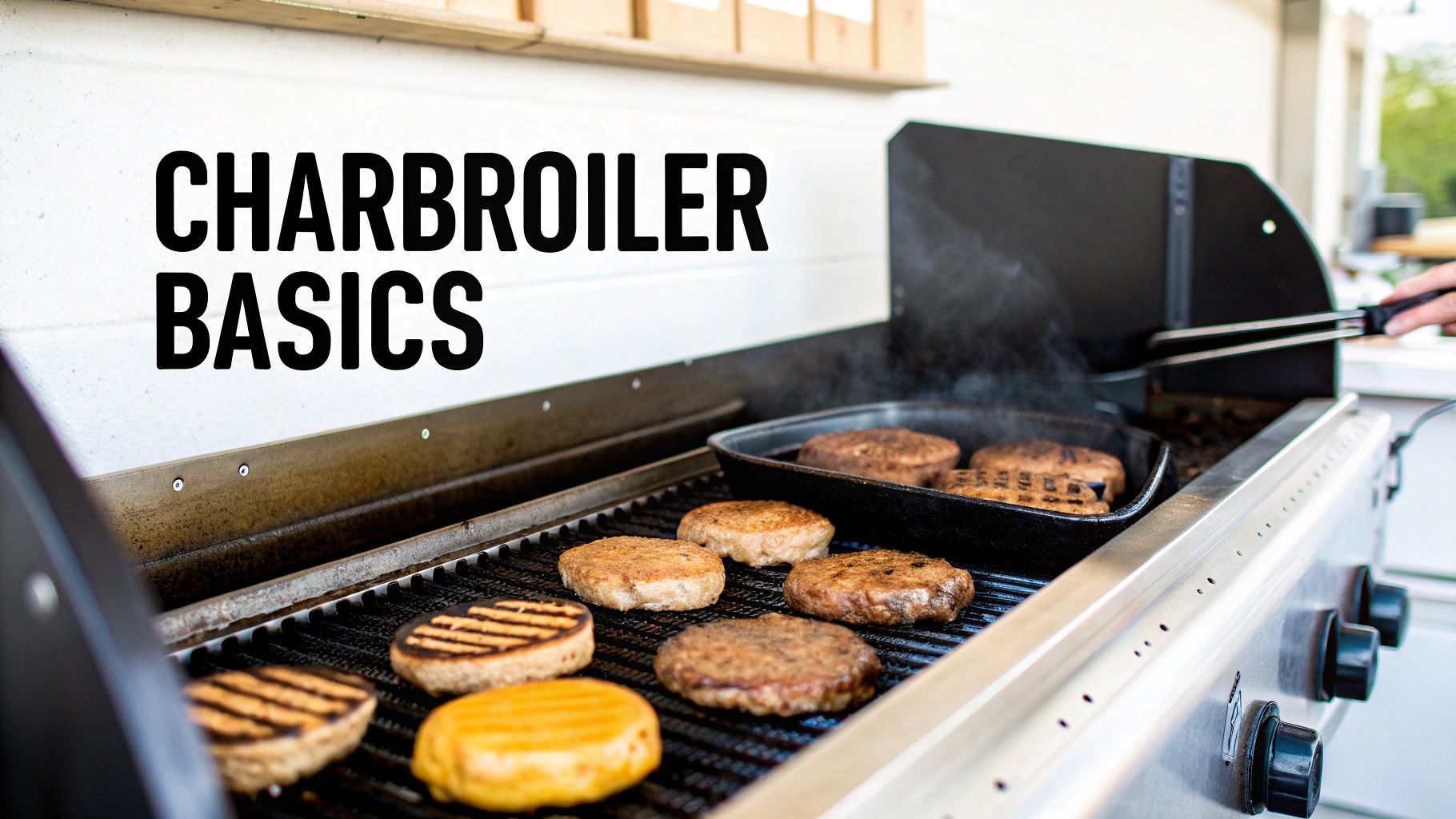
In a busy commercial kitchen, every single piece of equipment has a job to do, all working together like a seasoned line crew. The deep fryers create that perfect crunch, and your commercial freezers keep ingredients fresh, but the charbroiler is the undisputed star when it comes to delivering that flame-kissed taste. It’s a world away from a flat-top griddle, which essentially pan-fries food.
A charbroiler, on the other hand, blasts food with intense, direct heat from below. This is where the magic happens. As fats and marinades drip down, they hit the hot radiants or coals and instantly vaporize. That flavorful smoke rises back up, infusing directly into the food. It's this very process that gives chargrilled dishes a depth of flavor you just can't get any other way.
Why It's a Kitchen Essential
Bringing a charbroiler into your lineup is about more than just adding another cooking station; it's about unlocking new menu possibilities and satisfying that customer craving for high-quality grilled food. Getting one to fit seamlessly into your workflow takes a bit of planning, which is why a smart restaurant kitchen layout and design is so critical.
To put it simply, here’s a quick breakdown of what a charbroiler brings to the table.
Charbroiler At a Glance
| Key Feature | Description |
|---|---|
| Core Purpose | To replicate the authentic flavor and appearance of outdoor grilling in a commercial, indoor setting. |
| Primary Function | Cooks food using intense, direct radiant heat from below, creating distinct sear marks and a smoky taste. |
| Key Benefit | Elevates menu items like steaks, burgers, chicken, and vegetables, justifying premium pricing and boosting customer satisfaction. |
Ultimately, a charbroiler gives a chef the power to deliver on the promise of a perfectly grilled dish, time after time. From the Seattle bar equipment out front to the under counter refrigerators in the back, every piece of your setup matters. But it's the charbroiler that brings the irreplaceable elements of fire and smoke to the party.
The Science Behind the Sizzle: How Charbroilers Create Flavor
Ever wonder what makes that charbroiled flavor so unique and impossible to fake? It’s not just heat. It's a bit of kitchen science—a perfectly timed dance of intense heat, rapid searing, and aromatic smoke that turns good food into something unforgettable.
Think of it this way: a standard griddle cooks with conduction. The food touches the hot metal, and that’s how it cooks. A charbroiler, on the other hand, is all about radiant heat. It’s the same kind of powerful, permeating heat you feel standing near a campfire. The burners don’t cook the food directly; they heat up metal radiants or ceramic briquettes, which then blast that energy upwards.
This intense, contactless heat is what kicks everything off. It hits the surface of a steak, burger, or even vegetables and sears it almost instantly. That triggers the Maillard reaction—the amazing chemical process between amino acids and sugars that gives browned food its signature crust and deep, complex flavor. It’s step one to locking in all those delicious juices.
How Drippings Become Flavorful Smoke
Now for the real magic. As the food cooks, juices, fats, and bits of marinade drip down through the grates. On a griddle, they’d just pool into a greasy mess. But on a charbroiler, they splash onto the scorching hot radiants or briquettes waiting below.
The instant those drippings hit the hot surface, they vaporize. This process is called pyrolysis, and it’s the secret sauce. This rapid breakdown creates a plume of flavorful smoke and vapor that rises right back up, blanketing the food and infusing it with that smoky, chargrilled taste you can't get anywhere else.
This constant cycle of dripping and smoking is what makes a charbroiler so special. It’s like the food is basting itself with its own concentrated flavor, adding a layer of smoky depth that no pan or griddle can ever hope to match. It’s the star of the show, supported by everything from the commercial refrigerators keeping ingredients fresh to the deep fryers handling the fries.
The Key Components Working Together
Every piece of a charbroiler is built to make this flavor-creation process happen. Once you see how they all work in concert, it’s easy to understand why this machine is a must-have for any Seattle kitchen serious about grilling.
- The Burners: This is the engine, supplying the raw heat. They get the radiant medium screaming hot, often well over 500°F.
- The Radiants or Briquettes: This is the heart of the whole operation. They absorb the raw heat and convert it into powerful, even infrared energy. They also double as the vaporization platform for all those tasty drippings.
- The Grates: More than just a shelf, the grates hold the food in the perfect spot above the heat. They’re usually made of heavy-duty cast iron to create those classic, mouth-watering sear marks and are designed to let the drippings fall right through.
From the sandwich prep tables and pizza prep tables where the food gets ready to the final plate, it's the charbroiler’s unique scientific process that delivers that flame-kissed flavor that keeps your customers lining up for more.
Choosing Your Perfect Charbroiler Model
Picking the right charbroiler isn't just about size and price—it's one of the most important gear decisions you'll make for your Seattle kitchen. You're choosing the very heart of your grilling operation, and the model you pick has to match your menu, your workflow, and even your building's utility hookups. Get it right, and you'll consistently nail that perfect chargrilled flavor customers line up for.
The first big question you have to answer is: gas or electric? This choice ripples through everything from how quickly the unit heats up and how much it costs to run, to how complicated the installation will be. It’s like deciding between a classic muscle car and a modern EV—both are fast, but the feel, fuel, and upkeep are worlds apart.
No matter which you choose, the basic science of creating that incredible smoky flavor is the same. The process starts with your heat source and ends with that signature sizzle.
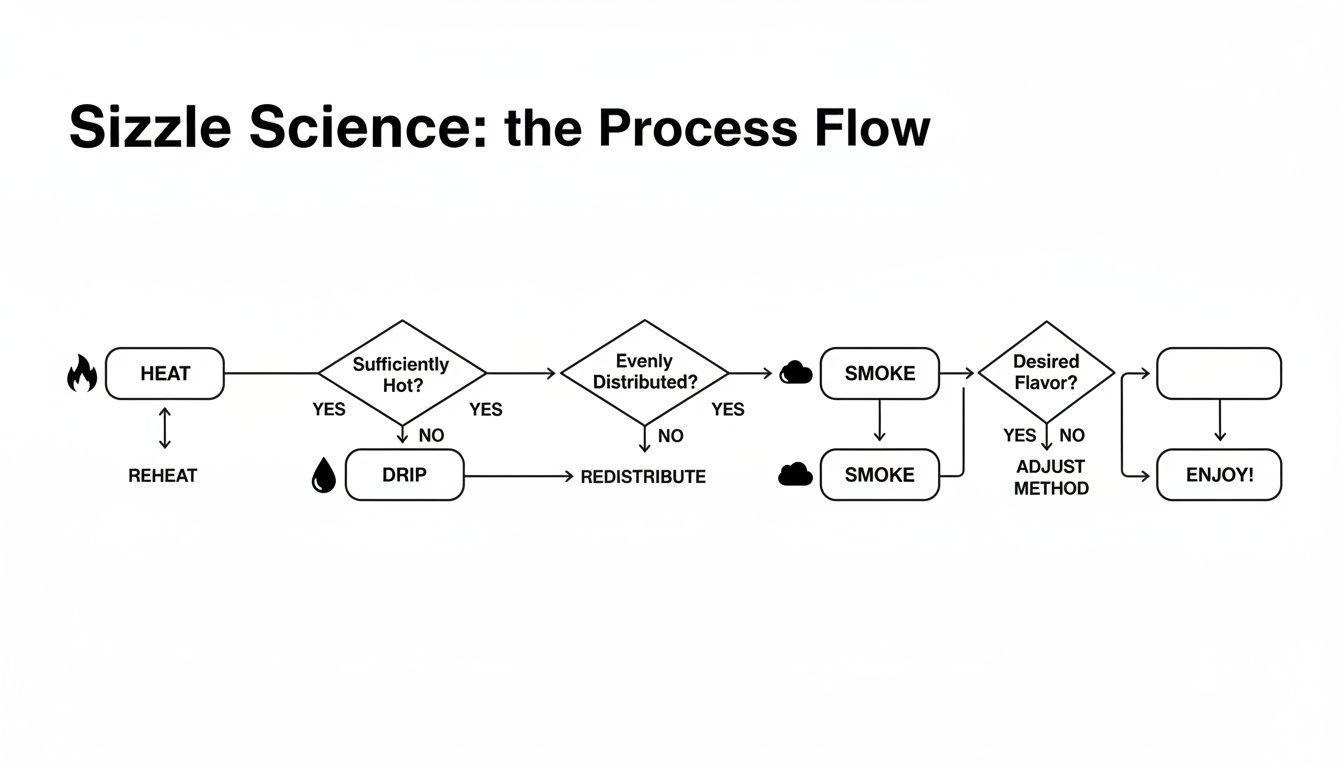
This simple flow—heat, drip, smoke, flavor—is the secret sauce behind every great charbroiler.
Gas vs. Electric Charbroilers: Which Is Right For Your Kitchen?
So, how do you decide between the two main contenders? Gas units are the undisputed champs in most commercial kitchens for their raw power and responsiveness, while electric models bring consistency and convenience to the table. Let's break down the key differences to help you figure out what makes the most sense for your Washington eatery.
| Feature | Gas Charbroiler | Electric Charbroiler |
|---|---|---|
| Heat Control & Power | Incredible responsiveness. Instant heat adjustments. | Slower to heat up and cool down. Very consistent heat. |
| Flavor Profile | Delivers that classic, flame-kissed, smoky flavor. | Clean, consistent grilling flavor but lacks smoky notes. |
| Operating Cost | Generally lower utility costs, especially natural gas. | Typically higher electricity costs for the same output. |
| Installation | Requires a gas line and robust ventilation (Type 1 hood). | Simpler plug-and-play setup. May not require a Type 1 hood. |
| Best For... | Steakhouses, burger joints, high-volume kitchens. | Food trucks, basement kitchens, buildings with gas restrictions. |
Ultimately, your choice comes down to your specific needs. If you're chasing that authentic, smoky sear and have the infrastructure, gas is your go-to. But if you value easy installation and rock-solid temperature consistency, an electric model is a fantastic workhorse.
Understanding How Heat Gets To The Food
Once you’ve picked your fuel source, the next thing to consider is how that heat actually cooks the food. This is all about the heat distribution system, and you'll hear terms like radiant, lava rock, and ceramic briquettes. Each one changes the game when it comes to heat consistency, flare-ups, and the final flavor you get on the plate.
- Radiant Systems: These use angled metal plates sitting right above the burners. They heat up fast, provide very even heat, and are a breeze to clean because grease just rolls off into a drip pan.
- Lava Rock Systems: Think of this as the old-school charcoal grill experience. Porous lava rocks sit above the burners, soaking up heat and vaporizing drippings into thick, flavorful smoke. The trade-off? More flare-ups and a lot more cleaning.
- Ceramic Briquette Systems: This is the happy medium. Ceramic briquettes give you more even heat than lava rocks and are way easier to clean. You still get fantastic smoky flavor with fewer maintenance headaches.
Your choice of heat distribution directly shapes your kitchen's daily reality. Radiant systems prioritize speed and low maintenance, perfect for high-volume operations, while lava rock systems are for flavor purists willing to invest more time in cleaning.
Whether you need a small countertop unit for your cafe or a massive floor model for a busy steakhouse, getting these details right is crucial. Taking the time to explore a curated selection of commercial charbroilers in Seattle lets you compare these different systems side-by-side, making sure you find the perfect match for your restaurant’s unique needs.
Decoding the Specs: What Really Matters When Buying
Alright, let's get past the basic types and dig into what separates a decent grill from a true kitchen workhorse. These are the specs you need to have on your checklist before you buy, ensuring the machine you choose can handle the heat of a busy Seattle kitchen. Getting this right is the key to a smart investment.
First up, and probably most important, is the power output. For gas models, we talk in BTUs (British Thermal Units); for electric, it's all about wattage. Think of this like the horsepower in a car engine—it tells you how fast the charbroiler heats up and, more critically, how quickly it recovers. A higher BTU or wattage rating means your grill gets back to searing temperature faster after you throw on a new round of cold steaks or burgers.
That recovery speed is everything during a dinner rush. A low-powered unit will lag, leading to longer ticket times and food that isn't cooked consistently. For most professional kitchens, you'll want to aim for at least 30,000 BTUs per 12-inch section. That's a solid baseline for reliable performance.
Sizing Up Your Cooking Surface and Grates
Next, you need to think about your cooking surface area and the grates themselves. The right size comes down to your kitchen's output. For instance, a single 48-inch charbroiler can crank out 200-300 burgers per hour, which can boost your throughput by up to 50% during peak times. You can discover more insights about commercial charbroiler performance and components and how they can make your kitchen run smoother.
The material your grates are made from is just as important, since that’s where the food meets the fire. This choice usually boils down to a trade-off between heat retention and how easy it is to clean.
Your choice of grate material directly influences both the final presentation of your food and your kitchen's daily cleaning workflow. It's a balance between classic searing performance and practical, long-term durability.
Let’s break down the two main players:
- Cast Iron Grates: These are the undisputed champs for holding heat. Cast iron soaks up energy and delivers those deep, classic sear marks everyone loves. The downside? They require consistent seasoning and care to keep rust away.
- Stainless Steel Grates: People love these for their incredible durability and simple cleaning. They don't hold heat quite as well as cast iron, but they’re rust-resistant and built to take a beating in a commercial kitchen.
At the end of the day, understanding these core specs ensures you pick a charbroiler that doesn’t just fit your space, but also perfectly matches your menu and how you operate.
Keeping Your Charbroiler in Peak Condition
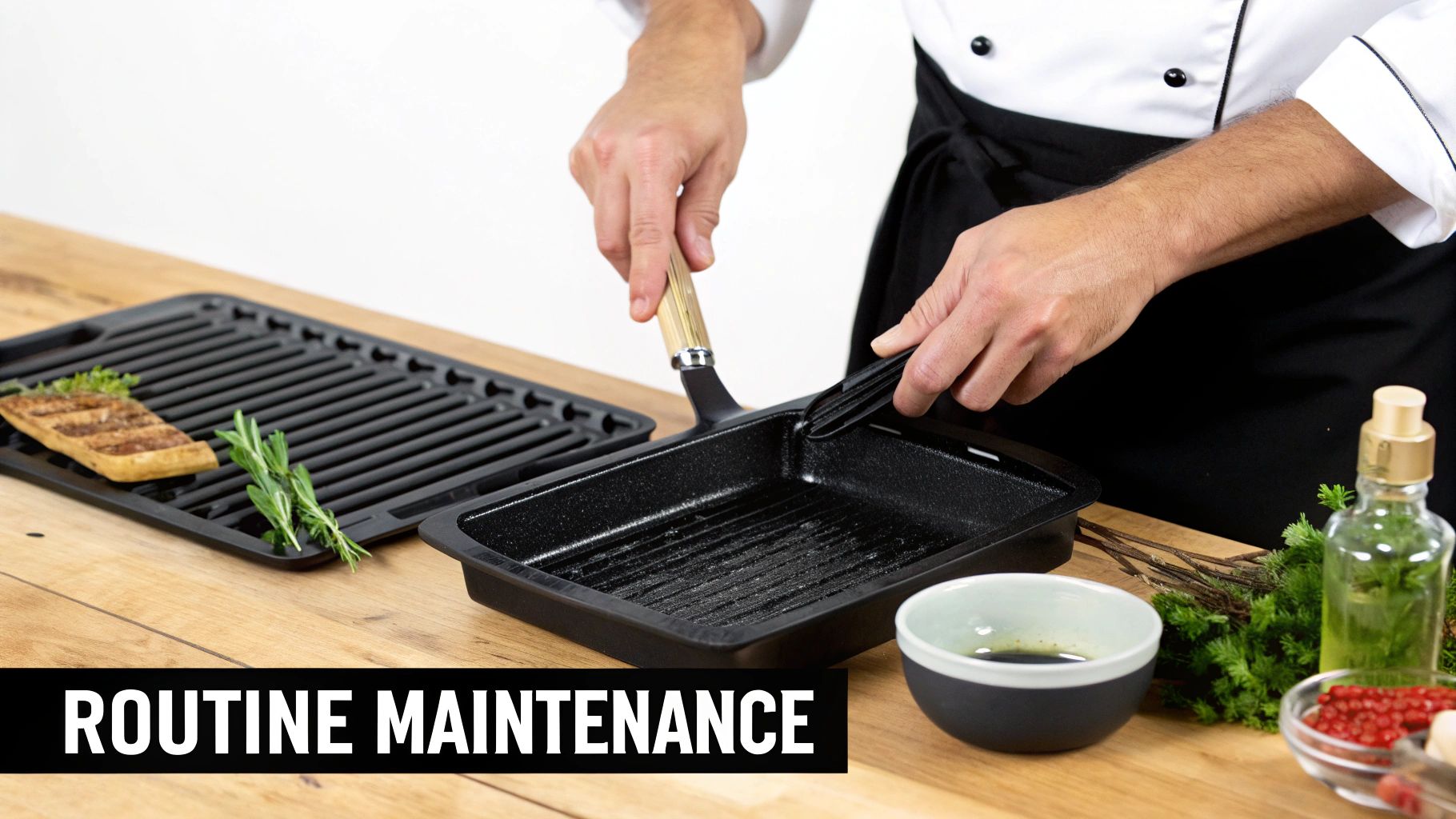
Your charbroiler is a profit-generating beast, pumping out those smoky flavors that keep customers coming back. But if you neglect it, that same powerhouse turns into a performance killer—and a serious fire hazard. Protecting your investment means committing to a simple, non-negotiable cleaning routine.
Think of it like owning a high-performance car. You wouldn't skip oil changes and expect the engine to last. In the same way, consistent upkeep prevents nasty grease buildup, guarantees even heat across your grates, and seriously extends the life of your charbroiler. It's the difference between a reliable workhorse and expensive downtime.
Your Daily Maintenance Routine
Consistency is everything when it comes to charbroiler care. These quick tasks, done at the end of every shift, stop the gunk from building up and causing major problems down the line.
- Scrape the Grates: While the unit is still warm (but not blazing hot!), grab a heavy-duty wire brush or scraper and get all that cooked-on food off. This is crucial for preventing carbon buildup that makes food taste bitter.
- Empty the Grease Trap: This is your #1 daily safety task. An overflowing grease tray is one of the biggest causes of kitchen fires. Empty it after every single service and give it a quick wipe.
- Wipe Down the Exterior: Clean any splatters off the stainless steel. It keeps your line looking professional and sanitary.
Spending just a few minutes on this every day is your best defense against poor performance. For more tips on cleaning similar gear, our guide on how to clean a commercial griddle has some great advice you can adapt for your charbroiler.
Weekly and Monthly Deep Cleaning
Daily wipe-downs handle the surface grime, but your weekly and monthly tasks are about deep cleaning and inspection. Once a week, pull out the cooking grates and the radiants or briquettes. Let them soak in a commercial-grade degreaser and give them a thorough scrubbing to dissolve all that stubborn, baked-on grease.
Regular deep cleaning isn't just about being sanitary—it's your chance to play detective. It lets you spot potential headaches like clogged burner ports or worn-out parts before they fail you during a Saturday night rush.
Once a month, it's time for a more detailed inspection. Check the burner tubes for any blockages that are causing uneven heat and cold spots. Look over all the gas connections and hoses, checking for any cracks or signs of wear. This proactive check-up ensures your charbroiler stays a reliable money-maker, not a liability waiting to happen.
Equip Your Kitchen for Success with the Right Partner
Choosing the right charbroiler—or any major piece of equipment—is a huge decision. But the truth is, the gear itself is only half the battle. You also need a partner who gets it.
At Seattle Restaurant Equipment, our whole approach is different. We stock top-notch commercial refrigerators, freezers, sandwich prep tables, and charbroilers without tacking on a premium markup. We believe you shouldn’t have to pay extra for quality.
- Commercial Refrigerators for rock-solid cold storage.
- Under Counter Refrigerators to maximize every square inch of floor space.
- Commercial Freezers tough enough for the daily grind.
- Under Counter Freezers for those tight, compact spots.
- Sandwich Prep Tables to make your assembly line sing.
- Pizza Prep Tables built for churning out perfect pies, fast.
- Deep Fryers that nail that perfect crisp every single time.
- Seattle Bar Equipment and Seattle coffee shop refrigerators to keep the drinks flowing.
And to get you up and running without delay, we offer free 1-2 day shipping anywhere in Washington. Combine that with strong warranties and straightforward financing, and you’ve got a real partner in your corner, not just another supplier.
We're Here to Help You Grow
Upgrading to a new charbroiler can feel like a big leap, but with hands-on support from experts like Sean Kearney and quick financing approvals, we make it manageable. We're all about helping Washington's independent restaurants and food trucks find scalable success in a market hungry for authentic grilled food.
It’s about more than just the equipment; it’s about smart, sustainable growth. For instance, after the year 2000, many operators shifted to coconut-shell charcoal, which cut emissions by a whopping 40%. That’s the kind of practical, forward-thinking move we help our clients make. (Learn more about those findings).
Getting started is simple:
- Connect with one of our equipment specialists.
- We'll help you find a solution that fits your menu and kitchen layout.
- Get your order financed with our quick approval process.
- Receive your new gear with fast, free shipping.
Why Work With Us?
Think of Seattle Restaurant Equipment as the backbone of your culinary operation. We provide the essential deep fryers, pizza prep tables, and under counter refrigerators you need, all backed by people who actually pick up the phone.
Expert Insight: Seattle Restaurant Equipment combines quality gear and hands-on service to help kitchens grow with confidence.
Our team is here to guide you through the options, whether you’re looking for charbroilers, sandwich prep tables, Seattle bar equipment, or Seattle coffee shop refrigerators that actually match your workflow.
Ready to Get Started?
It just takes a few minutes to request a quote. You can explore our equipment options online or jump into a live chat for immediate help.
- Browse our full catalog.
- Chat with Sean for personalized recommendations.
- Secure financing in as little as 24 hours.
- Enjoy free delivery anywhere in the state.
We make it simple to build a kitchen that can grow right alongside your vision.
Frequently Asked Questions About Charbroilers
Even after you've got a good handle on the basics, a few specific questions always pop up when you're ready to buy. Getting these details right from the start is what separates a smooth-running kitchen from a chaotic one. A new charbroiler should feel like a natural extension of your line, working hand-in-glove with everything from your commercial refrigerators to your deep fryers.
Here are some of the most common questions we hear from Seattle restaurant owners, with straight-to-the-point answers.
Do I Need a Special Ventilation Hood for a Charbroiler
Yes, you absolutely do. This isn't a "nice-to-have"; it's a must. A commercial charbroiler is a beast—it throws off a ton of heat, smoke, and greasy vapor.
To handle all that, you need a Type 1 ventilation hood. It’s non-negotiable and required by health and fire codes for a reason. Before you even think about installation, you have to check the local regulations for Washington state, King County, or Seattle to make sure your setup is 100% compliant and safe.
Can I Use a Charbroiler for More Than Just Meat
Of course. The classic steak and burger sear is what charbroilers are famous for, but that's just scratching the surface. Thinking of it as just a meat machine is a huge missed opportunity.
- Throw some bell peppers, asparagus, or zucchini on the grates to get that smoky, charred flavor that instantly elevates a simple side dish.
- Grill up some corn on the cob. It's a classic for a reason.
- You can even grill fruits like pineapple or peaches for a dessert that people will actually remember and talk about.
This kind of versatility means you can get creative and expand your menu without having to cram another piece of bulky equipment into your kitchen.
The real value of a charbroiler isn’t just in what it cooks, but in the signature flavor it imparts. This versatility allows a single investment to enhance appetizers, main courses, and even desserts, boosting the perceived value across your entire menu.
How Does a Charbroiler Fit with Other Equipment
Think of your charbroiler as the star quarterback of your hot line. It doesn't work alone; it needs a solid team around it to make the magic happen.
Ingredients come straight from nearby under counter refrigerators or under counter freezers for fast, easy access. The perfectly grilled proteins it produces might get plated next to fries pulled fresh from the deep fryer. All the prep work happens on your sandwich prep tables or pizza prep tables.
For a gastropub, the charbroiler is the heart of the kitchen, working alongside your Seattle bar equipment. For a cafe wanting to offer incredible grilled sandwiches, it pairs perfectly with your Seattle coffee shop refrigerators. It’s the anchor that turns cold-stored ingredients into the premium dishes that bring customers back.
Equipping your kitchen with the right gear is the first step. Here at Seattle Restaurant Equipment, we don't just sell boxes. We provide the high-quality, reliable equipment that Washington kitchens are built on—from charbroilers and prep tables to commercial refrigerators and freezers—all with expert support and free, fast shipping.
Find the perfect equipment to build your dream kitchen today.