

A commercial hot plate might just be the unsung hero of your professional kitchen. Think of it less as a replacement for your main range and more as a powerful, specialized burner you can place exactly where you need it, right when you need it. Its main job is to provide consistent, controllable heat for specific tasks, which frees up your primary burners during the chaos of a busy service.
The Secret Weapon of Compact Kitchens
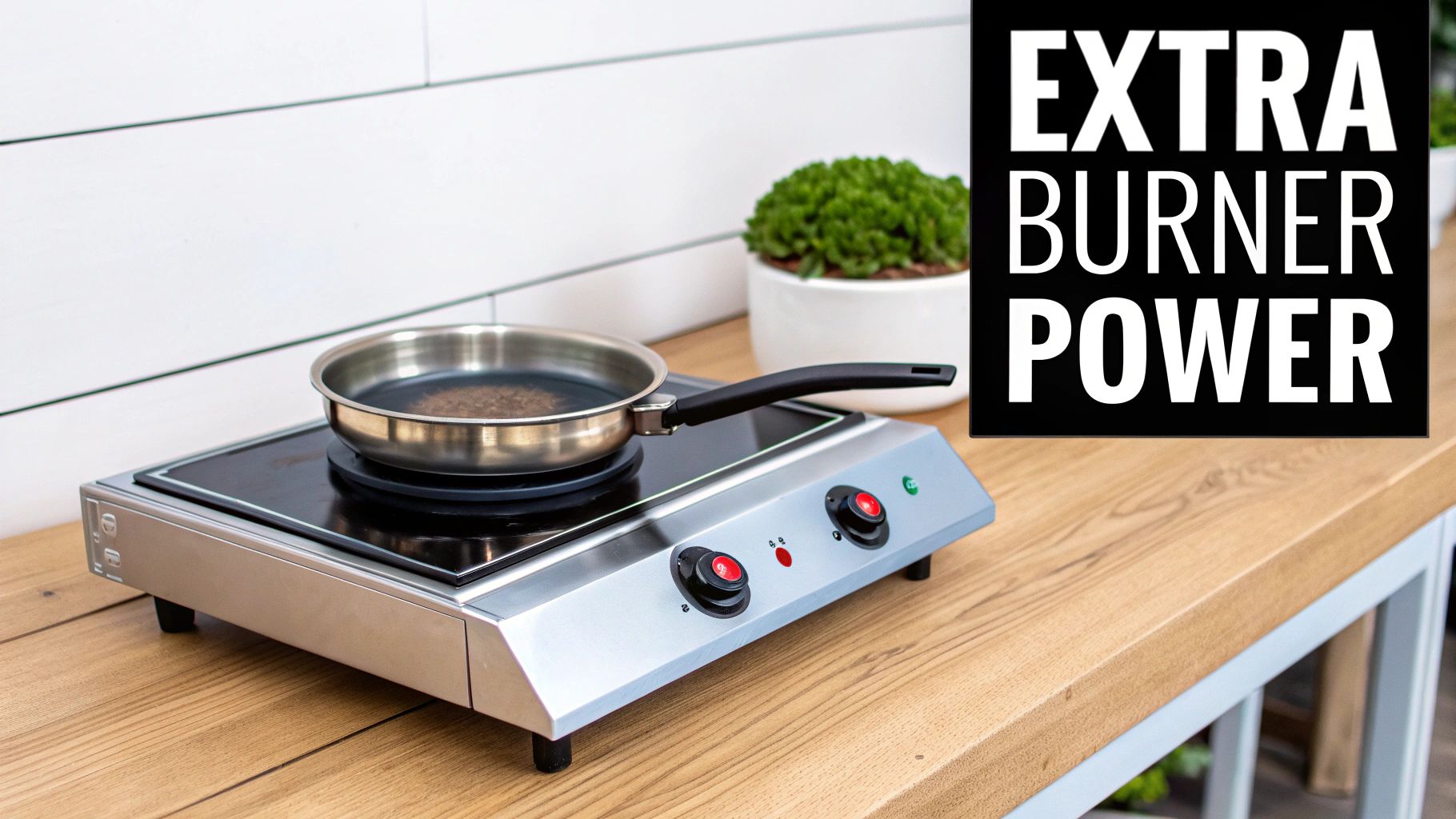
In the fast-paced world of foodservice, every inch of counter space and every second counts. For a bustling Seattle food truck or a crowded catering prep line, a commercial hot plate is like adding another burner to your kitchen without the headache and expense of a full renovation. It’s a dedicated appliance built for the sole purpose of supplemental cooking, letting you expand your capacity on the fly.
Unlike the flimsy models you might find in a dorm room, commercial-grade hot plates are built tough. They feature robust construction designed to withstand the constant wear and tear of a professional kitchen, making them essential wherever space is tight but the orders keep coming.
To give you a clearer picture, here’s a quick breakdown of where a hot plate really shines.
Commercial Hot Plate At a Glance
| Feature | Primary Function | Ideal Kitchen Application |
|---|---|---|
| Portability | Provides a movable heat source | Food trucks, catering events, pop-ups |
| Dedicated Heating | Isolates specific cooking tasks | Sauté stations, sauce warming, finishing |
| Space Efficiency | Adds cooking capacity in tight spots | Small kitchens, sandwich prep lines, garde manger |
| Precise Control | Maintains consistent, low-to-high heat | Melting, simmering, holding temperatures |
Basically, it’s all about creating smarter, more efficient workflows no matter the size of your kitchen.
Expanding Your Kitchen's Capabilities
The real beauty of a hot plate is how it complements your larger equipment by creating independent, specialized workstations. This modular approach is a game-changer for a smooth service.
- Dedicated Stations: Set one up on a sandwich prep table to toast buns or perfectly melt cheese, keeping your main cook line clear for the big orders.
- Mobile Flexibility: For food trucks and pop-ups, a hot plate is a non-negotiable core component. If you’re building one out, our comprehensive food truck equipment list can give you more ideas.
- Overflow Support: When the dinner rush hits, it instantly becomes an essential extra burner for finishing sauces, sautéing vegetables, or keeping side dishes warm, preventing a bottleneck that could slow down the whole line.
Throughout this guide, we’ll explore how this compact appliance works alongside staples like commercial refrigerators, under counter freezers, and deep fryers to boost your entire workflow. By truly understanding what a hot plate is used for, you can unlock a new level of efficiency in your Washington-based kitchen.
How a Pro Kitchen Really Uses a Hot Plate
Walk into any busy professional kitchen, and you’ll see that a commercial hot plate is one of the unsung heroes. Chefs all over Seattle’s food scene depend on these compact workhorses for critical daily tasks that would otherwise jam up the main cooking line.
Think of it like a specialist on a team. It doesn’t do everything, but what it does, it does exceptionally well. This is what makes it so valuable. For instance, you can set up a dedicated station just for sauces, where delicate emulsions and complex reductions are held at the perfect temperature. This one move frees up a burner on your main range, prevents a bottleneck, and keeps everything consistent when you’re slammed.
Build Out Smart, Self-Sufficient Workstations
One of the smartest ways to use a hot plate is to create hyper-focused, independent workstations. By pairing one with other essential equipment from Seattle Restaurant Equipment, you can build a layout that cuts down on how much your staff has to move around and seriously bumps up their output.
-
Sandwich & Sauté Stations: Put a hot plate right on a sandwich prep table. A line cook can grab cold ingredients from the refrigerated rail and immediately sauté mushrooms, onions, or meats without taking a single step away from their station. Everything is right there.
-
Pizza Prep Power-Up: In the same way, you can drop a hot plate next to a pizza prep tables. It’s perfect for pre-cooking toppings like sausage or rendering bacon, turning that spot into a self-contained pizza hub that speeds up the whole process.
-
Bar & Coffee Shop Helper: A hot plate next to your Seattle bar equipment is a game-changer for making warm syrups, hot toddies, or mulled wine. For a coffee shop, setting one up near your Seattle coffee shop refrigerators makes it easy to whip up specialty hot drinks or warm up pastries.
These simple setups show how a hot plate works perfectly with equipment like under counter refrigerators and under counter freezers. It’s a small piece of gear that can transform a basic prep area into a full-on production station, making a huge difference in your workflow.
A hot plate is a force multiplier in the kitchen. It decentralizes the work, letting your main range and deep fryers handle the heavy hitters while smaller, precise jobs get done efficiently somewhere else.
A Must-Have for Mobile and High-Volume Kitchens
Outside of a traditional restaurant, the hot plate is an absolute necessity for mobile and high-demand gigs. For a catering company working an event off-site, a portable hot plate is a reliable, powerful heat source you can plug in anywhere. In a food truck, where every single inch of space counts, it’s a non-negotiable piece of equipment that gives you cooking power without the massive footprint of a full range.
And during a chaotic dinner rush? It’s your ultimate overflow burner. When every one of your main burners is fired up, the hot plate is there to handle that extra side dish or last-minute sauté. It keeps the tickets moving and the customers happy.
Their value is clearly on the rise. The global market for electric hot plates was valued at around USD 0.82 billion in 2024 and is expected to jump to nearly USD 1.5 billion by 2033. You can dig into the full report on the electric hot plate market growth to see just how essential these appliances are becoming.
Comparing Hot Plates to Other Cooking Equipment
When you're outfitting your kitchen, every piece of gear is an investment. Figuring out when a hot plate is the right tool for the job—and when you need something beefier—is a key decision that hits your budget, your space, and your daily workflow. Let's break down how a commercial hot plate from Seattle Restaurant Equipment stacks up against the other usual suspects in a professional kitchen.
Think of a hot plate as a specialist, not a generalist. It’s built for specific, targeted tasks, not for trying to do everything at once. That focus is its biggest strength, letting it shine in spots where a bigger, more complicated piece of equipment would be overkill or just plain impractical.
This diagram lays out some of a hot plate's most valuable roles in the kitchen.
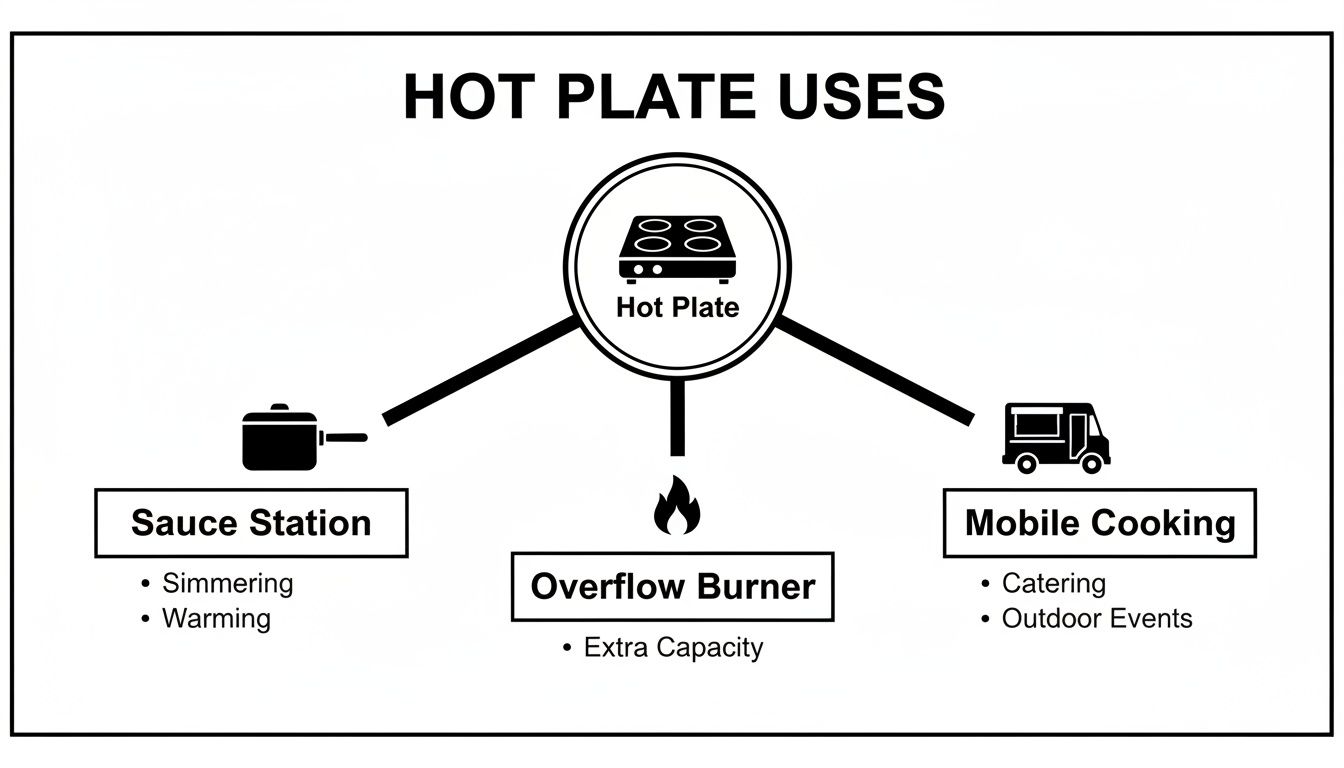
As you can see, a hot plate is perfect as a dedicated station for simmering sauces or as a pop-up burner for catering gigs, freeing up your main range for the heavy lifting.
To make things clearer, let's put these options side-by-side.
Cooking Equipment Comparison for Your Kitchen
This table gives you a quick snapshot of how these different pieces of equipment fit into a commercial kitchen.
| Equipment Type | Best For | Space Requirement | Heat Response | Typical Cost |
|---|---|---|---|---|
| Commercial Hot Plate | Single-task cooking, overflow capacity, mobile setups, and dedicated stations (sauces, sauté). | Low. Fits on a countertop. | Moderate to slow (electric coils take time to heat/cool). | $ |
| Induction Cooktop | Fast heating, precise temperature control, energy efficiency. Ideal for delicate work or quick boils. | Low. Countertop models are common. | Instantaneous. Heat stops the second the pan is lifted. | $$ |
| Full-Size Range | High-volume, multi-pot cooking. The kitchen's primary workhorse for the main line. | High. Requires significant floor space and professional ventilation. | Varies by type (gas is instant, electric is slower). | $$$ |
Each one has its place, but the hot plate is often the unsung hero that fills the gaps and makes the whole operation run smoother.
Hot Plates Versus Commercial Ranges
The most common comparison is with a full-size commercial range. Your range is the kitchen's powerhouse, built for juggling multiple big jobs during a hectic dinner rush. The hot plate, on the other hand, is the nimble support unit.
- Capacity: A 6-burner range is made for cooking several large stockpots at once. A hot plate is your go-to for single jobs, like keeping a béchamel perfectly smooth or toasting spices for a garnish.
- Space and Portability: Ranges are permanent fixtures that eat up floor space and need a hood. A hot plate is small enough to tuck away and can be set up on any sturdy counter, creating a cooking station wherever you need one.
- Cost: The upfront cost for a full range is a major capital expense. A hot plate is a budget-friendly way to add another burner to your lineup without breaking the bank.
A hot plate doesn't replace your range; it makes it better. By offloading the smaller tasks, you prevent bottlenecks and keep your main line clear for the big orders.
Hot Plates Versus Induction Cooktops
Induction cooktops are the high-tech kids on the block. They use magnetic fields to heat the pan directly, which is incredibly fast and efficient. But they do have a couple of strings attached compared to a trusty old electric or gas hot plate.
While induction is blazingly fast and safer to the touch, it has one major catch: it only works with specific magnetic cookware. A traditional hot plate offers universal compatibility, happily heating any pot or pan you own—cast iron, stainless steel, aluminum, you name it.
In a busy kitchen where a line cook just grabs the nearest clean pan, that universal compatibility is a huge plus. On top of that, commercial induction units usually come with a much steeper price tag. The classic hot plate delivers reliable heat at a price that’s a lot easier to swallow.
Hot Plates Versus Specialized Equipment
What about highly specialized gear like a deep fryer or a pizza oven? Here, the roles are crystal clear. A deep fryers does one thing: fry food in hot oil. It’s essential for your fries and wings, but you can’t simmer a sauce in it.
Likewise, a pizza prep tables is for building pies, and the oven next to it is for baking them. But where do you pre-cook your sausage or sauté your mushrooms? A hot plate set up right at that station adds that crucial capability. In these scenarios, the hot plate isn’t competing—it’s a valuable teammate, adding a burner to workstations that would otherwise be without one. It fills in the gaps, making your entire kitchen more versatile and efficient.
How to Choose the Right Commercial Hot Plate
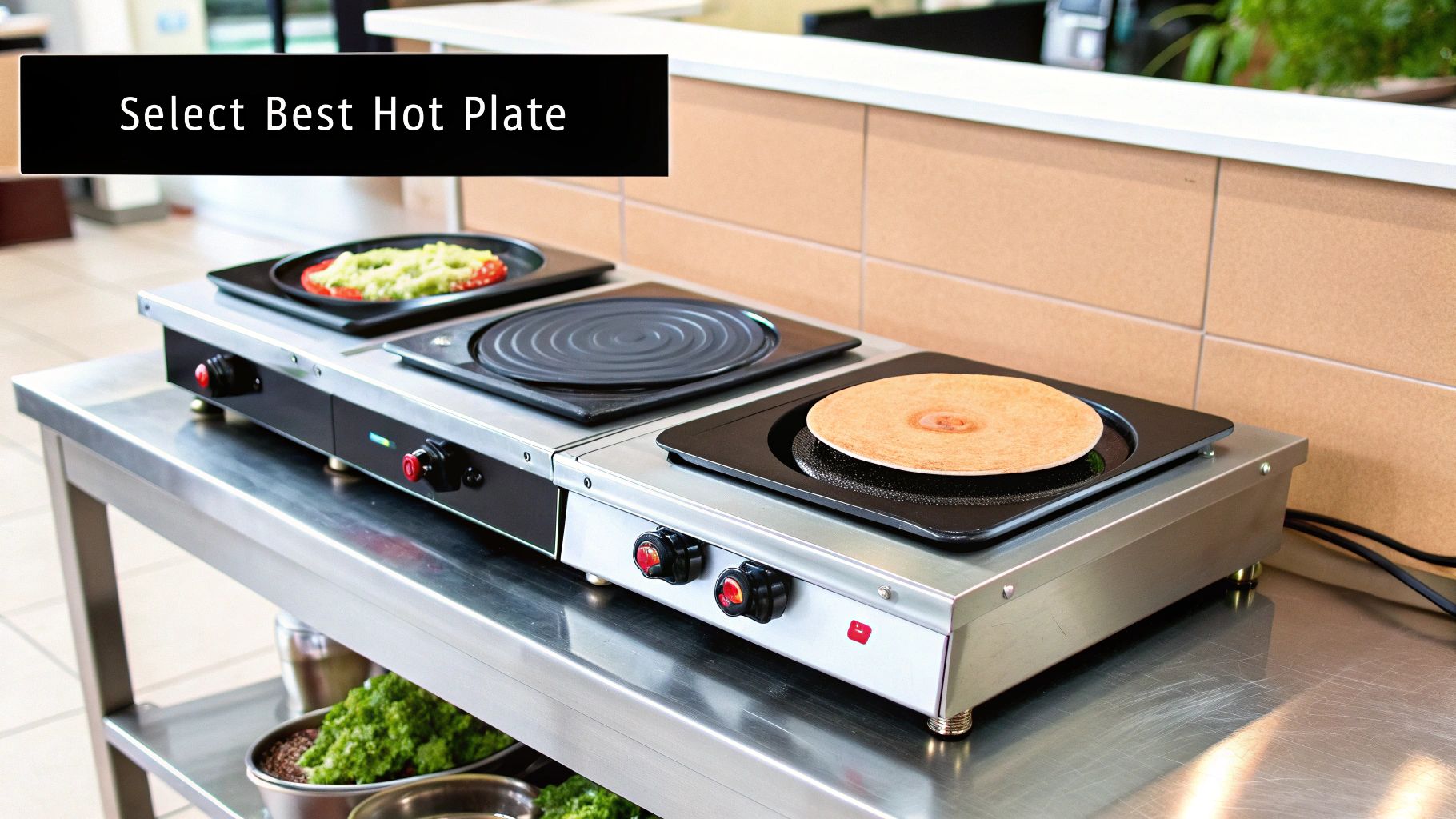
Picking the perfect hot plate isn't just about grabbing what's on sale. It’s about matching the gear to the grind in your kitchen. With a few different options on the market, understanding the key differences will help you make a smart investment that pulls its weight day in and day out.
This is your practical guide to nailing that choice, making sure you get a model that actually makes your kitchen run smoother.
Burner Type and Power Source
First thing's first: how do you want to make heat? Your choice here really comes down to what you're cooking and how you want to cook it. Each of the three main types has its own personality, and one will fit your style better than the others.
- Electric Coils: These are the straightforward workhorses. Often the most affordable, they’re simple to use and get the job done. They take a minute to heat up and cool down, but their no-fuss design makes them a reliable pick for general warming and simmering.
- Solid Cast Iron Plates: If you need heat that sticks around, cast iron is your friend. These plates hold their temperature like a champ and spread it out evenly. This makes them perfect for holding sauces at the perfect temp or finishing a dish with consistent, gentle heat.
- Induction: This is the high-tech option, bringing speed, safety, and efficiency to the table. Induction burners heat the pan directly—not the cooktop—so you get an instant response when you turn the dial. The surface stays cooler, but just remember, you'll need magnetic cookware for it to work.
Next up is the power source. Gas hot plates bring the raw power with high BTUs, perfect for getting a ripping hot sear or bringing a big pot to a boil fast. Of course, you’ll need a gas line. Electric models, on the other hand, are the definition of plug-and-play. If you have an outlet, you have a cooking station.
Sizing and Construction
Once you know how you're heating, you need to figure out how much you're heating. Take a look at your menu and your counter space. A Seattle coffee shop just needs a single burner for heating syrups, but a busy caterer might need a heavy-duty four-burner unit to keep up with the rush.
In a commercial kitchen, durability isn't a bonus feature—it's a requirement. You absolutely need to look for heavy-duty, stainless steel construction. It has to be tough enough to handle the daily abuse, from spills and splatters to being on all day.
This is the line in the sand between a home appliance and a professional tool. Residential kitchens can worry about looks; pro kitchens need equipment built to last. It's the same story in other industries, too. For instance, the global industrial hot plate market was valued at a massive USD 1.8 billion in 2023, all because factories need gear that won't quit.
By thinking through the burner type, power, size, and build, you can find the perfect fit for your operation. Ready to see what's out there? Check out our hand-picked collection of commercial hot plates in Seattle.
Integrating a Hot Plate into Your Kitchen Workflow
A hot plate's real magic isn't just about adding another burner—it’s about where you put it. Smart placement can completely transform your kitchen's workflow, creating a more logical and efficient layout. When you integrate this little powerhouse thoughtfully, you can design smarter workstations that cut down on wasted steps and get orders out faster.
Think of your kitchen as a collection of specialized zones. A hot plate lets you drop a heating element into a station that’s never had one, instantly leveling up its capabilities. That’s where you’ll see the real return.
Creating Efficient, Self-Contained Stations
Picture this: you place a hot plate right on a refrigerated pizza prep tables. Just like that, you’ve created a self-contained station. Your crew can now pre-cook toppings like sausage or peppers in the exact same spot where they build the pies. No more running back and forth to the main range, which shaves precious seconds off every single order.
It’s the same story in a bar setting. A hot plate can sit next to your Seattle bar equipment for warming cocktail ingredients, making simple syrups, or creating hot garnishes on the fly. In a café, putting one beside your Seattle coffee shop refrigerators makes it a breeze to steam alternative milks or prepare hot fudge for a mocha.
This simple concept works almost anywhere in your kitchen:
- Prep Lines: Team up a hot plate with a sandwich prep table to toast buns, melt cheese, or warm up proteins. The entire sandwich-making process stays in one clean, contained spot.
- Cold Storage Areas: Put a hot plate near your under counter refrigerators or under counter freezers. Now your staff can quickly warm ingredients pulled from cold storage without getting in the way of the main cooking line.
- Garde Manger: Add a small hot plate to your cold station. It’s perfect for finishing a salad with freshly seared scallops or whipping up a warm vinaigrette.
By pairing a compact hot plate with your bigger workhorses like commercial refrigerators and deep fryers, you can streamline your whole operation. A well-designed workflow is everything, and you can dive deeper into these strategies in our guide to effective restaurant kitchen layout design.
A Versatile Tool Beyond the Kitchen
While hot plates are a must-have in any professional kitchen, their basic, reliable technology is a cornerstone in a ton of other fields. You'll find them in science labs, where they are essential heating devices for experiments. In fact, the global market for hot plate stirrers—a device that combines heating and stirring—was valued at roughly USD 17.86 billion in 2024.
This just goes to show how reliable and precise these simple machines are across all kinds of demanding industries. It’s a great reminder of just how dependable a commercial-grade hot plate is for any professional setting, including yours.
Essential Safety and Maintenance Tips
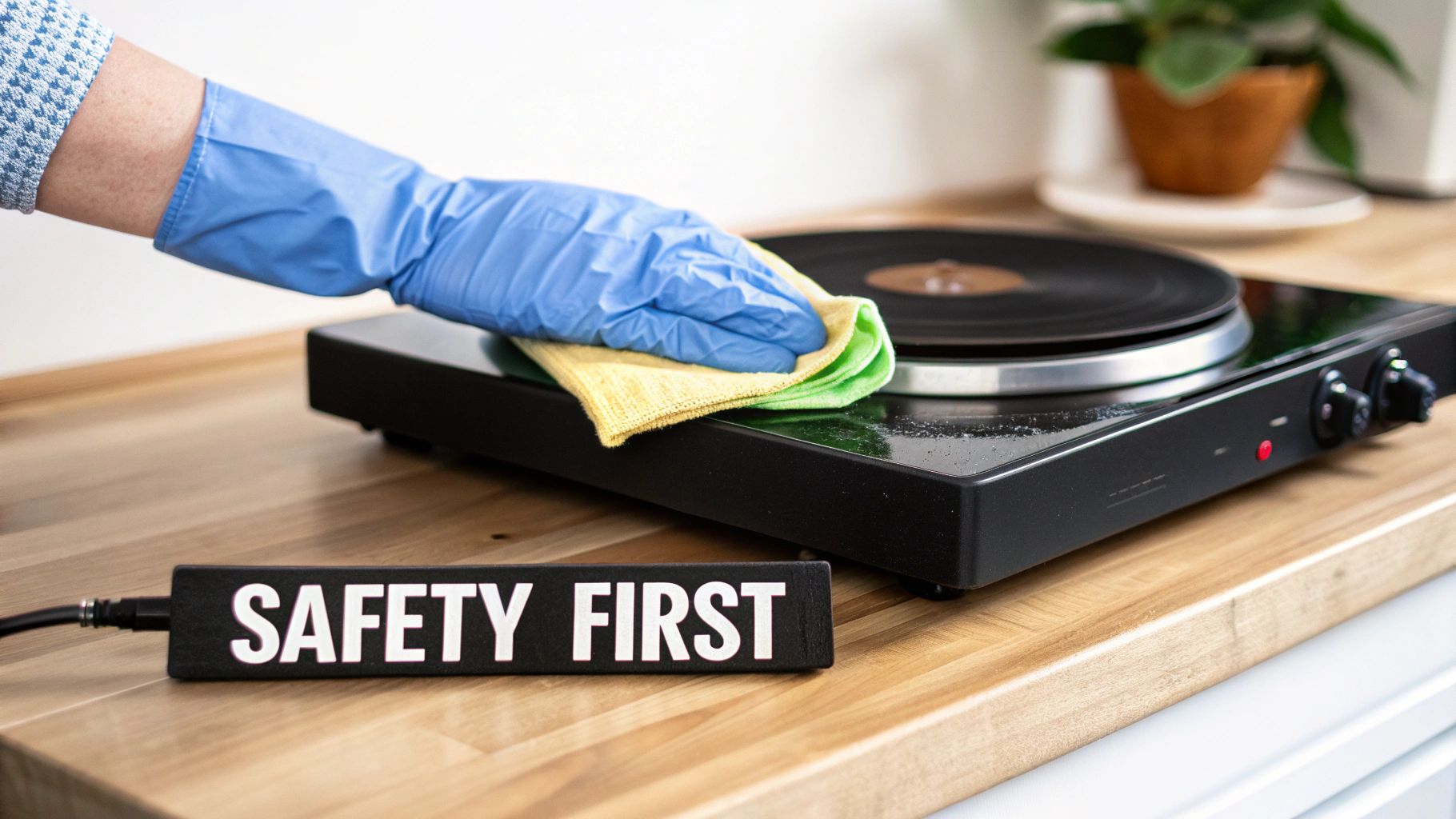
To get years of reliable service out of your commercial hot plate, you can't skip over safety and routine maintenance. This isn't just another piece of cooking gear; it's a workhorse that powers your service day in and day out. Thinking ahead not only protects your investment but also keeps your staff and kitchen safe.
Think of it this way: safety is the first step to an efficient kitchen. Before you even plug it in, make sure the hot plate is on a solid, level surface. You don’t want it sliding around or wobbling when you’ve got a pan of hot liquid on top.
Creating a Safe Cooking Zone
Just like you wouldn’t park a deep fryer in the middle of a high-traffic walkway, your hot plate needs its own dedicated safe zone. The entire area around the unit must be kept clear of flammable stuff—think cleaning chemicals, paper towels, and kitchen rags.
- Give It Room to Breathe: Always leave enough space around the hot plate for air to circulate. This prevents it from overheating, which can fry the internal parts.
- Keep Flammables Far Away: Maintain a safe distance from anything that could catch fire. This is huge in tight kitchens where clutter can pile up fast.
- Never Walk Away: A hot plate that’s on should never be left unattended. It’s a basic kitchen rule that prevents boil-overs, fires, and a whole lot of other headaches.
Your first line of defense is smart placement. Treat a hot plate with the same respect you’d give a full-sized range. Position it to support your kitchen’s flow without becoming a hazard for your crew.
Simple Daily Maintenance for Longevity
Consistent care is what makes the difference between equipment that lasts for years and equipment that gives out when you need it most. A simple daily cleanup routine only takes a few minutes but pays for itself over and over.
Wipe up spills and splatters as soon as the surface is cool enough to touch. This stops food from getting baked on, which can mess with heat distribution and becomes a nightmare to scrub off later.
At the end of service, give the unit a good wipe-down after it has completely cooled. While you’re at it, give the power cord a quick look for any signs of fraying or damage. If you're running a gas model, check the connections every so often to make sure nothing has come loose.
Common Questions Answered
We get a lot of questions from kitchen managers trying to figure out where a hot plate fits into a workspace already packed with bigger gear. It's a fair question. The best way to think about it is as a specialized tool that makes your primary equipment even better.
Here are some of the most common questions we hear, with straight-up answers to help you see how a hot plate could work for you.
| Question | Answer |
|---|---|
| Can I put a hot plate next to a fridge or freezer? | Absolutely. This is actually a perfect setup. It creates a self-contained station where ingredients move directly from your commercial refrigerator or under counter freezer right to the cooking surface. Think less running around the kitchen, more efficient prep. |
| How powerful is it compared to my range? | It's not going to replace your main range, and it's not meant to. A commercial hot plate delivers focused, consistent heat that's ideal for sauces, sautés, or keeping sides warm near a sandwich prep table. It’s about adding capacity, not replacing it. |
| How does it really help my workflow? | By handling the smaller, quick-fire tasks, it frees up your main line. Instead of taking up a whole burner on your six-burner range just for a béchamel, you can delegate that to the hot plate. This prevents bottlenecks when you're slammed and keeps the bigger equipment like your deep fryers open for the main event. |
| Is it worth the investment for a small space? | For sure. It's a small investment that adds major flexibility. You can tuck it onto a prep table or create a new station without a huge footprint, complementing everything from your pizza prep tables to your Seattle bar equipment. It's all about making your existing layout work smarter. |
Hopefully, that clears things up a bit. A hot plate isn't just another piece of equipment; it's a strategic addition that can smooth out your kitchen's rhythm and boost your efficiency, especially during the dinner rush.
Ready to add this versatile workhorse to your kitchen? Seattle Restaurant Equipment has a solid selection of commercial hot plates ready to go. Take a look at our collection and see which one fits your workflow.