

If you’re running any kind of food operation in Washington, from a downtown Seattle cafe to a food truck in Tacoma, the small 3 compartment sink is your best friend. It’s not just a nice-to-have piece of equipment; it's the absolute bedrock of your kitchen's sanitation process and a non-negotiable for passing health inspections.
This sink is built for one critical job: the manual Wash-Rinse-Sanitize method. This is the exact process health departments require to keep cross-contamination at bay and your customers safe.
The Blueprint for a Clean and Compliant Kitchen
When you move from a home kitchen to a commercial one, the rules of the game change entirely. You're now operating under strict health codes, and the 3 compartment sink is the command center for hygiene. It’s not just a suggestion—it's the tool that ensures every single pot, pan, and utensil is properly cleaned and ready for service.
Think of it as a foolproof assembly line for clean dishes. Each basin has its own dedicated role, guiding your team through a clear, methodical process. This eliminates any guesswork and drastically cuts down the risk of foodborne illness. It's no wonder it's one of the first things an inspector looks for.
More Than Just a Sink
While its main job is dishwashing, the impact of a 3 compartment sink ripples throughout your entire kitchen. Keeping your tools and wares properly sanitized is what makes the rest of your expensive equipment run smoothly and safely.
Let's break down how it connects to everything else in your operation:
- Commercial Refrigerators & Commercial Freezers: Proper sanitation is your first line of defense against cross-contamination between raw meats and ready-to-eat foods tucked away in your fridges.
- Sandwich Prep Tables & Pizza Prep Tables: A constant flow of clean pans, containers, and utensils is what keeps a busy prep line moving without a hitch.
- Deep Fryers: Keeping those fryer baskets and tools clean and free from gunk is essential for both the taste of your food and the lifespan of your fryer.
- Seattle Bar Equipment & Seattle Coffee Shop Refrigerators: Everything from cocktail shakers to espresso machine steam wands needs meticulous cleaning. A 3 compartment sink provides the structured process to handle it all, supporting the tools that live in your undercounter refrigerators and undercounter freezers.
Before we dive deeper into the specs, let's pull all this together. Here's a quick look at why this piece of equipment is so essential.
Small 3 Compartment Sink At a Glance
| Feature | Why It Matters | Primary Benefit |
|---|---|---|
| Three Separate Basins | Allows for the mandatory Wash-Rinse-Sanitize process. | Health Code Compliance |
| Compact Footprint | Designed to fit in tight spaces like food trucks or small cafes. | Space Efficiency |
| Durable Construction | Typically made from stainless steel to withstand heavy use. | Longevity & Value |
| Systematized Workflow | Creates a clear, repeatable process for staff to follow. | Reduced Contamination Risk |
In short, a 3 compartment sink isn't just another item on a checklist. It's the core of your kitchen's safety protocol.
Understanding how this one piece of equipment ties into your entire workflow is a massive step in setting up a successful commercial kitchen. When you master its use, you're building a foundation of safety and efficiency that protects your staff, your customers, and your reputation.
Why a 3 Compartment Sink Is Your First Line of Defense
Let's move past the idea of just checking a box for the health inspector. Your small 3 compartment sink is the absolute heart of your kitchen's entire hygiene strategy. It’s not just about following rules; it's the command center you build to stop cross-contamination dead in its tracks—the kind of thing that can tank your reputation overnight.
Think of it as a sanitation assembly line. Each basin has one job, and one job only, in a sequence that guarantees safety. This methodical flow isn't just a suggestion; it's what health departments across Washington demand as the first line of defense for any serious foodservice operation.
The Wash, Rinse, Sanitize Workflow
The process is brilliantly simple, but its impact is massive. Every step is designed to systematically strip away food grime and kill harmful bacteria, making sure every pot, pan, and utensil is completely safe to go back into service. This is the core principle that protects everything your food touches, from your commercial refrigerators to your deep fryers.
Here’s a look at the simple, three-step safety process every kitchen needs to master.
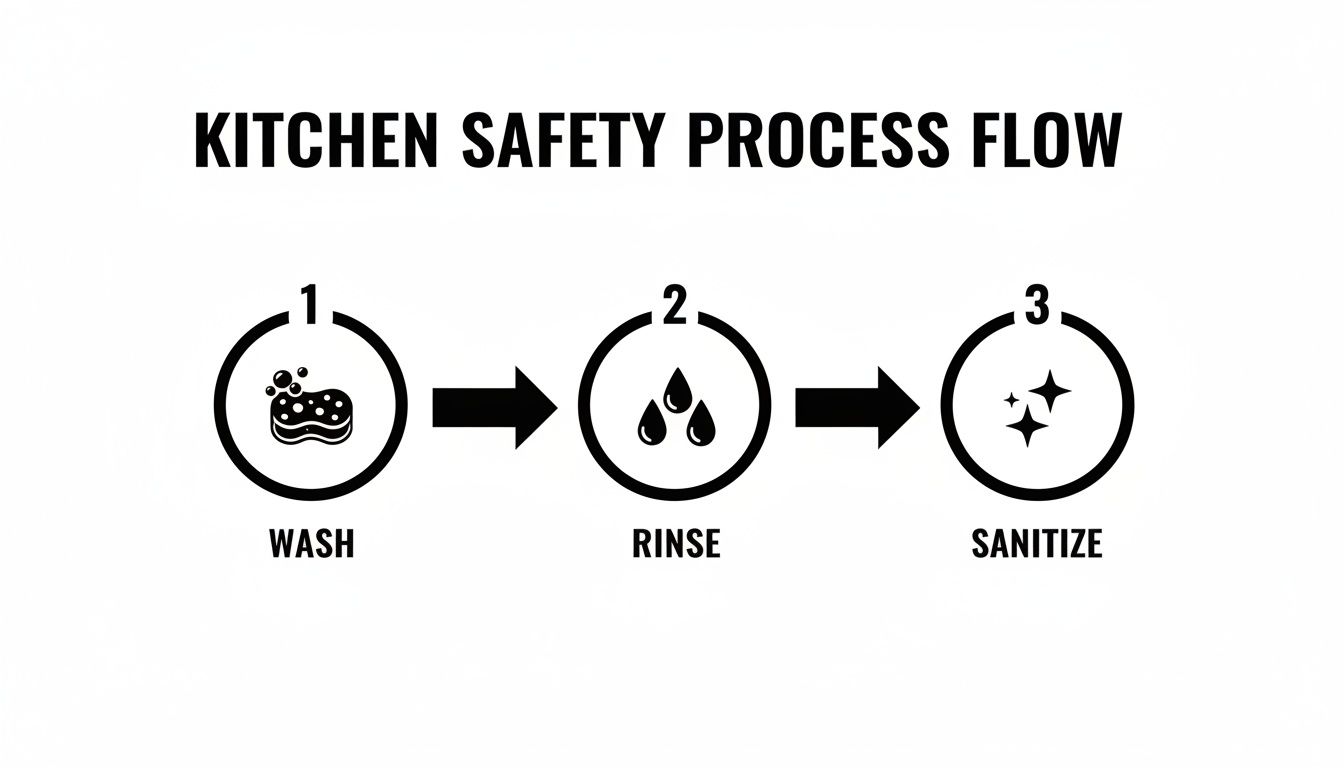
This flowchart shows exactly how each step—wash, rinse, and sanitize—builds on the one before it to get the job done. It's also a perfect visual for why a single-basin sink just won’t cut it in a commercial kitchen.
In Washington State, health codes are incredibly strict on this. When an inspector walks in, they'll be looking to see that your first basin has hot, soapy water (at least 110°F), the second has clean rinse water, and the third is filled with a properly mixed, approved sanitizing solution. No exceptions.
This isn't some new-fangled idea. The three-compartment sink model actually goes back to the post-WWII health codes of the 1950s. That’s when the FDA first standardized the wash-rinse-sanitize method to fight foodborne illness, cutting incidents by a whopping 60% by 1960.
Today, the global market for these sinks is valued at $362.5 million. We're seeing a huge spike in demand for compact models under 54 inches, especially with Washington's 15% rise in ghost kitchens since 2022. You can learn more about these compartment sink market trends and their historical impact.
Once you get this workflow, it's easy to see why picking the right small 3 compartment sink is such a foundational move. It's a direct investment in the safety of every single dish you serve, whether it's a club sandwich from a sandwich prep table or a latte made with tools from your Seattle coffee shop refrigerators. It truly is your first line of defense.
Picking the Right Sink Size and Material
Choosing a small 3 compartment sink is like picking the right tool for a critical job—getting the size and material right from the start saves you from some serious headaches down the road. In a commercial kitchen, every square inch is prime real estate. "Small" isn't just a suggestion; it's a specific requirement to make sure your dishwashing station works with your kitchen layout, not against it.
When we talk about a small sink, we're usually looking at units with an overall width of less than 60 inches. These are the compact workhorses designed to tuck into the tight corners of a food truck, a cozy Seattle coffee shop, or a busy bar where space is everything. Before you even start browsing, grab a tape measure. Get the exact length, width, and height of the spot you've picked out, and don't forget to factor in plumbing hookups and enough room for your staff to move.
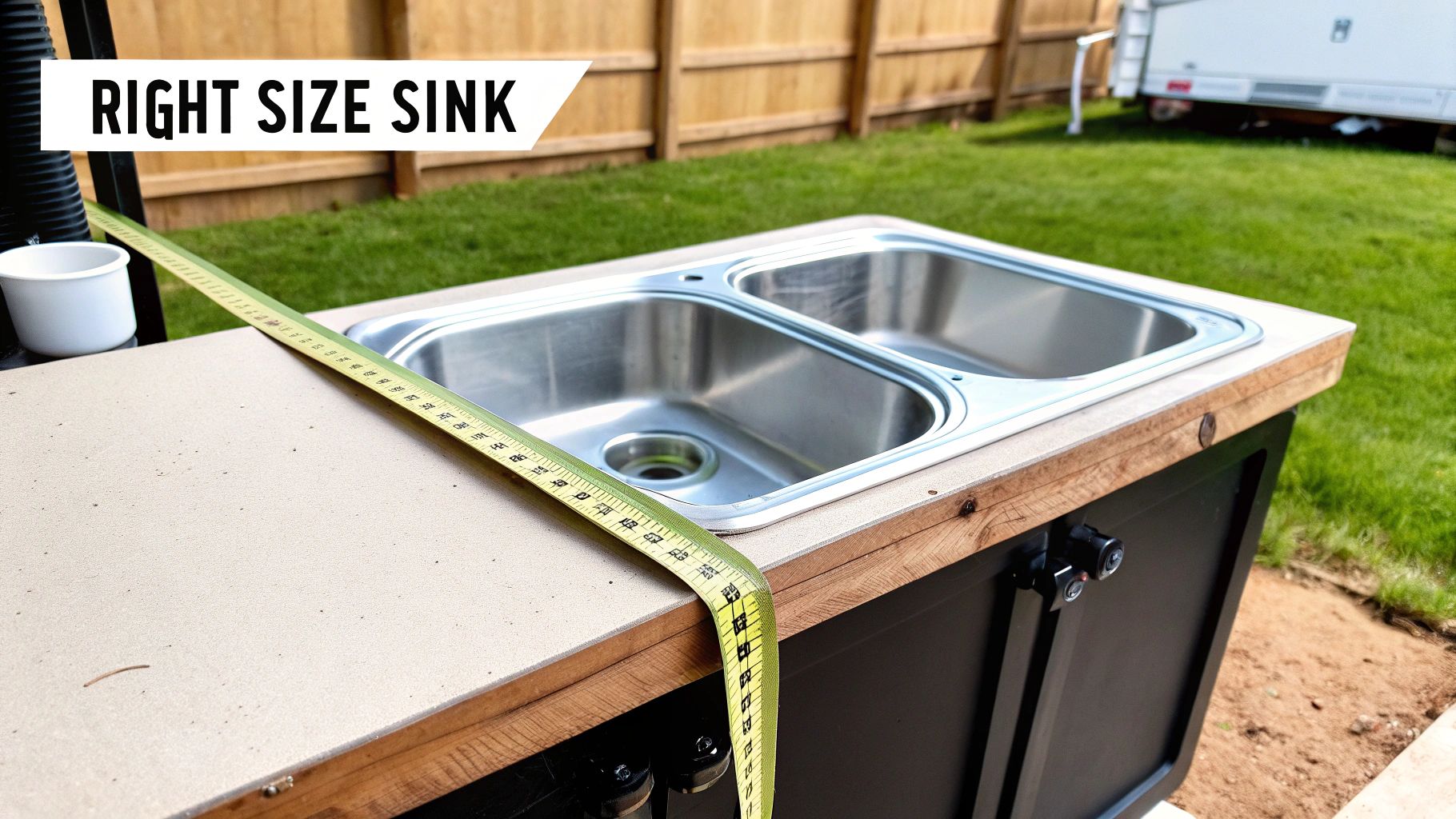
Making Sense of Stainless Steel Gauge
Once you've got your dimensions locked in, the next big decision is the material. In the world of commercial kitchens, stainless steel is the undisputed king, and for good reason. It's tough, non-porous, and a breeze to sanitize. But not all stainless steel is the same. The real difference comes down to its gauge, which is just a fancy word for the metal's thickness.
- 18-Gauge Stainless Steel: This is your most common, budget-friendly option. It’s a solid choice for many light-to-medium duty spots, like a small cafe or a bar that's mostly washing glassware and smaller items.
- 16-Gauge Stainless Steel: This is the heavy-duty contender. A lower gauge number means thicker, tougher steel. If you're running a high-volume kitchen where heavy pots and pans are getting dropped and scrubbed all day, that extra investment in 16-gauge steel pays for itself in durability and resistance to dents.
The three-compartment sink has long been a cornerstone of hygiene compliance. For Seattle Restaurant Equipment customers—we're talking about independent eateries in Tacoma or food trucks cruising through Everett—a compact small three-compartment sink is often the perfect fit. These units, usually under 60 inches wide and sometimes without drainboards to save precious space, are vital. Stainless steel is the go-to here, holding over 70% of the market share because it resists corrosion and is easy to get NSF certified. You can read more about the dominance of stainless steel in commercial sinks here.
To Drainboard or Not to Drainboard?
Finally, you need to decide if you need integrated drainboards. These are the attached surfaces that give you a convenient spot to air-dry dishes after they’ve been sanitized. For many kitchens, they’re a non-negotiable part of the workflow.
Pro Tip: Your local health department will almost certainly require a dedicated space for air-drying. If you get a sink without drainboards, you'll need to have separate, NSF-approved counter or rack space set aside just for this purpose.
The catch is that drainboards add to the sink's overall footprint. If your space is extremely tight, a model without them can save you some valuable inches. You can always use separate, NSF-approved drying racks nearby. It’s a trade-off: weigh your available space against your workflow to see if the convenience of built-in drainboards is worth the extra length.
Navigating Plumbing and Essential Accessories
Picking out the right small 3 compartment sink is a big win, but the job is only halfway done. The real magic happens with the plumbing and accessories you choose—they’re what turn a simple steel basin into a compliant, dishwashing workhorse. Getting these details right from the jump is key to a kitchen that runs like a well-oiled machine.
Your first big decision is the faucet. This isn't just about getting water into the sink; it’s about making your workflow faster and easier. A high-arc gooseneck faucet is a lifesaver for filling deep stockpots, while a wall-mounted pre-rinse sprayer can blast gunk off plates before they even hit the suds. Think about the bulkiest items you’ll be washing—your faucet should make that job less of a headache.
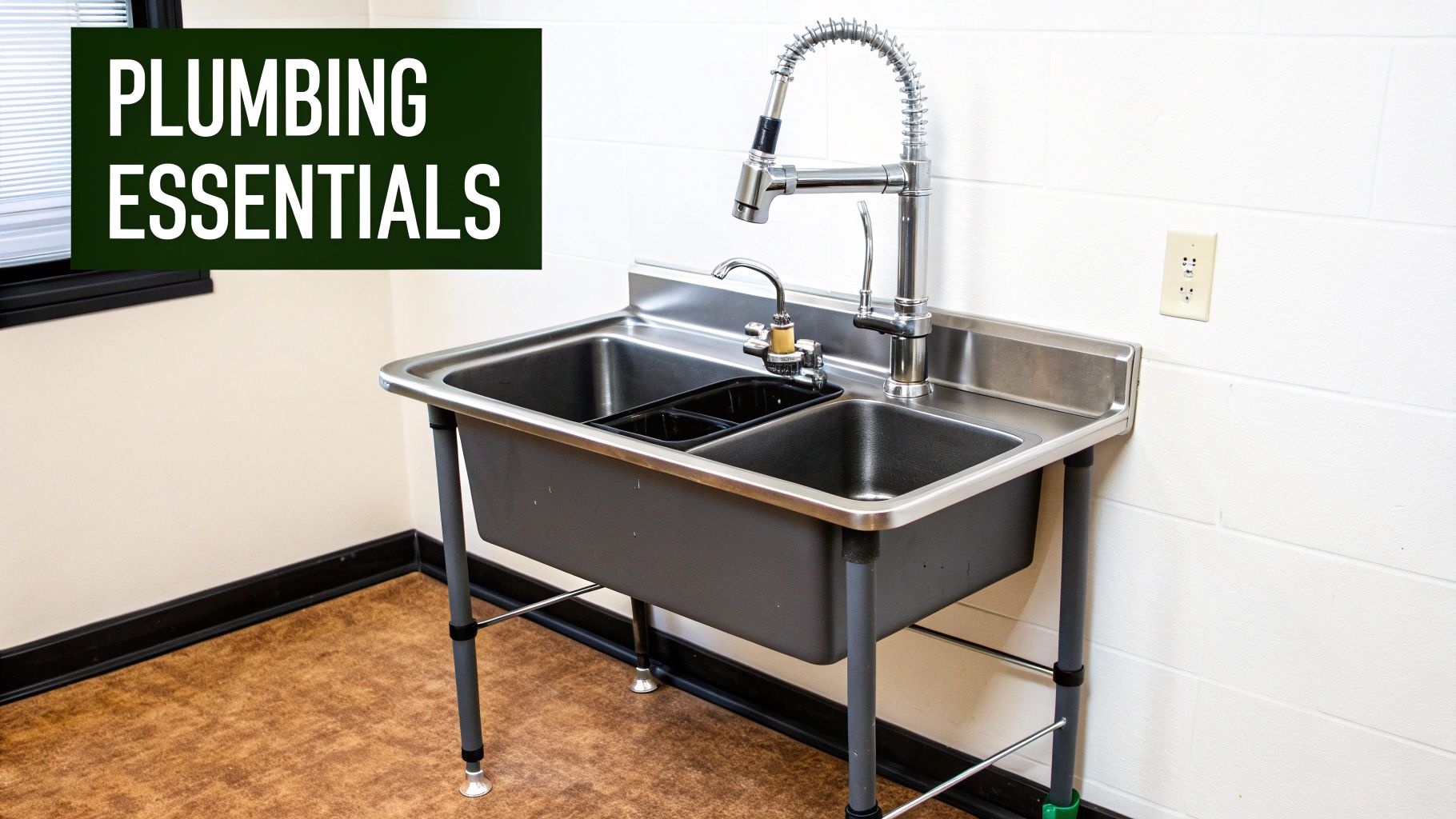
Beyond the Faucet: Key Components
After the faucet, a few other pieces are non-negotiable for a professional setup. Proper drainage is a must, and it takes more than a simple pipe heading out the wall. This is where grease traps become absolutely essential.
A correctly sized grease trap is almost always required by local health codes. Its job is to keep fats, oils, and grease from wrecking the city's sewer lines. To make sure you're compliant and avoid fines, check out our guide on grease trap sizing for your restaurant.
You'll also want to look into a few other must-have accessories that boost both safety and function:
- Lever Drains: These are a game-changer. They let your staff drain a sink full of hot, soapy, or grimy water without having to stick their arms in. It's safer and way more efficient.
- Splash Guards: Health inspectors love to see these. Splash guards attach to the sides of your sink to stop dirty water from contaminating nearby food prep areas, like your sandwich prep tables or pizza prep tables.
- Sturdy Leg Bracing: A sink filled with water is seriously heavy. Good, solid leg bracing makes sure the whole unit stays stable and won't wobble, even during the chaos of a dinner rush.
Don't overlook water temperature. Health codes require your "wash" basin to hold water at a steady 110°F or higher. This is the magic number for cutting through grease and sanitizing properly. You’ll likely need a dedicated water heater or a mixing valve to hit this mark consistently.
Investing in these extras turns your small 3 compartment sink into a fully integrated system. It's what ensures you always have clean dishware ready for your deep fryers and other equipment like undercounter freezers, keeping your entire operation running smoothly and safely from day one.
Building a Complete and Cohesive Kitchen
Your small 3 compartment sink is the heart of your sanitation system, but it doesn't work in a vacuum. Think of it as the central hub of a wheel, supporting every other piece of equipment and keeping your whole kitchen moving. A well-placed sink ensures a smooth, compliant, and seriously efficient workflow, from the first prep chop to the final plate out the door.
An effective dishwashing station is the silent partner to your production line. Clean pans, utensils, and containers, fresh from the sink, are what keep your sandwich prep tables and pizza prep tables running at full steam. If you have a bottleneck at the sink, you’ve got a direct slowdown in food output. It's that simple.
The same goes for your high-heat equipment. You need to keep that cookware spotless for the best performance from your deep fryers, preventing old flavors from transferring and making sure every batch is as good as the last.
Integrating Sanitation Across Your Floorplan
This idea of integration should stretch to every corner of your operation. You're not just buying a sink; you're building a system where clean tools are always within arm's reach.
- Commercial Refrigerators and Commercial Freezers: A steady supply of sanitized containers from your 3 compartment sink is non-negotiable for safely storing ingredients and prepped food. This is your first line of defense against cross-contamination in your walk-in.
- Undercounter Refrigerators and Undercounter Freezers: These little workhorses, usually right at the prep station, depend on the main sink to feed them clean pans and tools. This keeps your line cooks moving without having to walk across the kitchen.
- Seattle Bar Equipment: For any bar or coffee shop, the sink is the MVP. It's constantly washing shakers, glassware, and pitchers, directly supporting the specialized Seattle coffee shop refrigerators and other essential bar gear.
A well-integrated kitchen is a profitable one. When your sanitation station seamlessly supports your prep, cooking, and storage equipment, you minimize downtime and maximize output. Every piece works together.
When you stop seeing your small 3 compartment sink as just a box to wash dishes in and start seeing it as a foundational piece of your entire operation, you can design a much smarter and more productive kitchen.
To help you map it all out, our commercial kitchen equipment checklist can give you some valuable insights. It’s all about creating a cohesive space where every component, from the coolers to the cookline, works in harmony.
Why Washington Restaurants Choose Our Equipment
When you’re putting your money on the line for a small 3 compartment sink or any other major appliance, you need a partner who gets what it’s like to run a kitchen in Washington. Here at Seattle Restaurant Equipment, our whole business is built around getting you the right gear, right when you need it—without the usual headaches and markups. We’re all about value, reliability, and speed.
We don’t bother with expensive showrooms or commission-hungry salespeople. Instead, we pass those savings straight to you. This lean approach means we can offer top-tier equipment, from commercial refrigerators and commercial freezers to specialized Seattle bar equipment, at prices that actually work for an independent operator's budget. Our online store is straightforward and puts our entire inventory right at your fingertips, 24/7.
Fast, Free Shipping and Smart Financing
We know that waiting around for weeks for a critical piece of equipment just isn't an option. A kitchen can't run without its tools. That’s why we offer fast, free 1-2 business day shipping to cities all over the state, including Seattle, Spokane, Tacoma, and Vancouver.
This kind of rapid delivery means that whether you’re scrambling to replace a broken deep fryer or setting up a new coffee shop with Seattle coffee shop refrigerators, your downtime is cut to an absolute minimum.
On top of that, we have financing options designed to help you manage your cash flow. You can get the equipment you need to grow—like new sandwich prep tables or pizza prep tables—without having to tie up a huge chunk of your capital upfront.
"Washington's food truck scene is booming, expected to hit over 5,000 units statewide by 2025. For these space-crunched operators, a small three-compartment sink is an unsung hero. Our customers love the financing options and 1-2 day delivery to places like Vancouver or Spokane, which turns a necessary kitchen upgrade into a quick and easy win."
This combination of speed and financial flexibility is a total game-changer, especially as Washington's mobile food scene keeps expanding. Having a reliable local partner who can deliver is essential. You can learn more about the market trends driving compartment sink demand to see why this is such a key piece of equipment.
Still Have Questions About Small 3 Compartment Sinks?
Even after you've done your homework, a few specific questions always pop up right before you pull the trigger on a new sink. Let’s tackle the most common ones we hear from restaurant and food truck operators right here in Washington. We want to make sure you have total confidence in your choice.
Do I Really Need a 3 Compartment Sink if I Have a Dishwasher?
Yes, almost always. The Washington State health code is pretty clear on this: even with a commercial dishwasher, you need a small 3 compartment sink. It's your legally required backup in case the power goes out or your machine breaks down. It's also the only practical way to wash those huge stock pots, sheet pans, and other bulky items that just won't fit in a standard dish machine.
Plus, it’s the perfect spot for pre-soaking really tough, baked-on messes, which actually helps your other equipment, like deep fryers and sandwich prep tables, perform better. Think of it as the reliable workhorse of your entire sanitation process. It's always best to double-check with your local health inspector, but installing one is the safest bet for staying compliant.
What Size Sink Is Best for a Food Truck or Coffee Shop?
When you’re working in a tight space like a food truck or a Seattle coffee bar, every inch counts. A "small" sink is typically anything under 60 inches wide, and you can even find super-compact models between 36 and 48 inches. The absolute most important thing is making sure each sink basin is big enough to completely submerge your largest pot or pan.
Get out the tape measure and figure out your exact footprint. You might want to look at a model without the built-in drainboards to save that precious counter space for other gear like undercounter refrigerators and undercounter freezers.
Which Stainless Steel Gauge Should I Choose?
The "gauge" just tells you how thick the steel is—and it's a bit backward, so a lower number means thicker, stronger metal. For most places like cafes, bars, and delis, 18-gauge stainless steel hits the sweet spot between being tough enough for daily use and being affordable.
But if you’re running a high-volume kitchen where big, heavy pots and pans are getting tossed around all day, spending a little extra on 16-gauge stainless steel is a really smart move. It resists dents, dings, and warping much better, and that durability will pay for itself over the long haul.
Can I Finance a New Sink and Other Kitchen Equipment?
Absolutely. We have financing programs built specifically for foodservice businesses. It’s a great way to get all the essential equipment you need right now—from your sink to commercial refrigerators, commercial freezers, and pizza prep tables—without having to spend a huge chunk of cash all at once.
This approach is a fantastic way for new businesses to get started or for established operations to manage their cash flow while upgrading their kitchen. It ensures you can get the tools you need to succeed without delay.
Financing lets you build out the complete, efficient kitchen you need to thrive, from your sanitation station all the way to your cooking line and cold storage.
Ready to build a compliant and efficient kitchen? At Seattle Restaurant Equipment, we have the perfect small 3 compartment sink and all the supporting equipment you need, from prep tables to refrigeration. Shop our full collection online and get fast, free shipping anywhere in Washington.