

Let's get right to it: a combi oven is the Swiss Army knife of any serious commercial kitchen. It’s a single piece of equipment that handles three different cooking methods. It gives you the dry, crisping heat of a convection oven, the moist cooking of a steamer, and a combination of both.
Think of it as the ultimate multitasker, ready to replace your convection oven, steamer, and even your proofer all at once.
Your Guide to the Ultimate Kitchen Multitasker
For any foodservice operation in Washington—from a packed Seattle restaurant with a walk-in commercial refrigerator to a cozy Tacoma food truck trying to maximize its under counter refrigerator space—a combi oven is a game-changer. It saves precious real estate, simplifies your cooking process, and delivers amazingly consistent food every single time.
This guide will walk you through why this one machine can completely reshape your kitchen's efficiency and menu. It's not just another oven; it’s the new heart of your culinary operations.
Imagine roasting, steaming, poaching, baking, and even "air frying" all in the same unit. Better yet, you can often cook different items simultaneously without any flavor transfer. That’s the real value a combi oven brings to a high-pressure kitchen.
The Power of Consolidation
Instead of cramming multiple large appliances onto your cook line, a single combi oven does the job of several. For a Seattle coffee shop that wants to start offering hot food or a bar looking to serve top-notch appetizers, this is huge. You can simply do more with less, which is non-negotiable in today's expensive rental market.
Think about the standard equipment lineup in a kitchen:
- A commercial refrigerator and commercial freezer for your cold storage.
- Sandwich prep tables or pizza prep tables for assembly.
- Separate ovens, steamers, and maybe a couple of deep fryers for cooking.
A combi oven fits right into this workflow, replacing several cooking units and freeing up that valuable space under your ventilation hood. This not only makes for a smarter kitchen layout but can also cut down your initial equipment investment.
So, what is a combi oven at its core? It’s an investment in consistency, efficiency, and creative freedom. By perfectly blending dry heat and steam, it allows chefs to produce incredible food with less effort and less waste.
This idea of consolidation isn't just about saving space; it's also about saving labor. With programmable cooking cycles, your staff can load the oven, push a button, and move on to other tasks. They can focus on prepping ingredients at a pizza prep table or managing the deep fryers, trusting the oven to do its job.
This level of automation means every dish, from perfectly steamed vegetables to a golden-brown roasted chicken, comes out exactly right, every time. It cuts down on the need for constant supervision and dramatically reduces the chance of human error.
The Three Core Cooking Functions Explained
A combi oven’s real power comes from its mastery over both dry heat and moisture. It can switch between three completely different cooking environments, getting results that a single-purpose machine just can't touch. Think of it as having a high-performance convection oven, a gentle steamer, and a smart hybrid cooker all packed into one unit.
Getting a handle on these three functions is the key to unlocking what this beast can really do in your kitchen.
This diagram gives you a quick visual breakdown of how a combi oven pulls it all together.
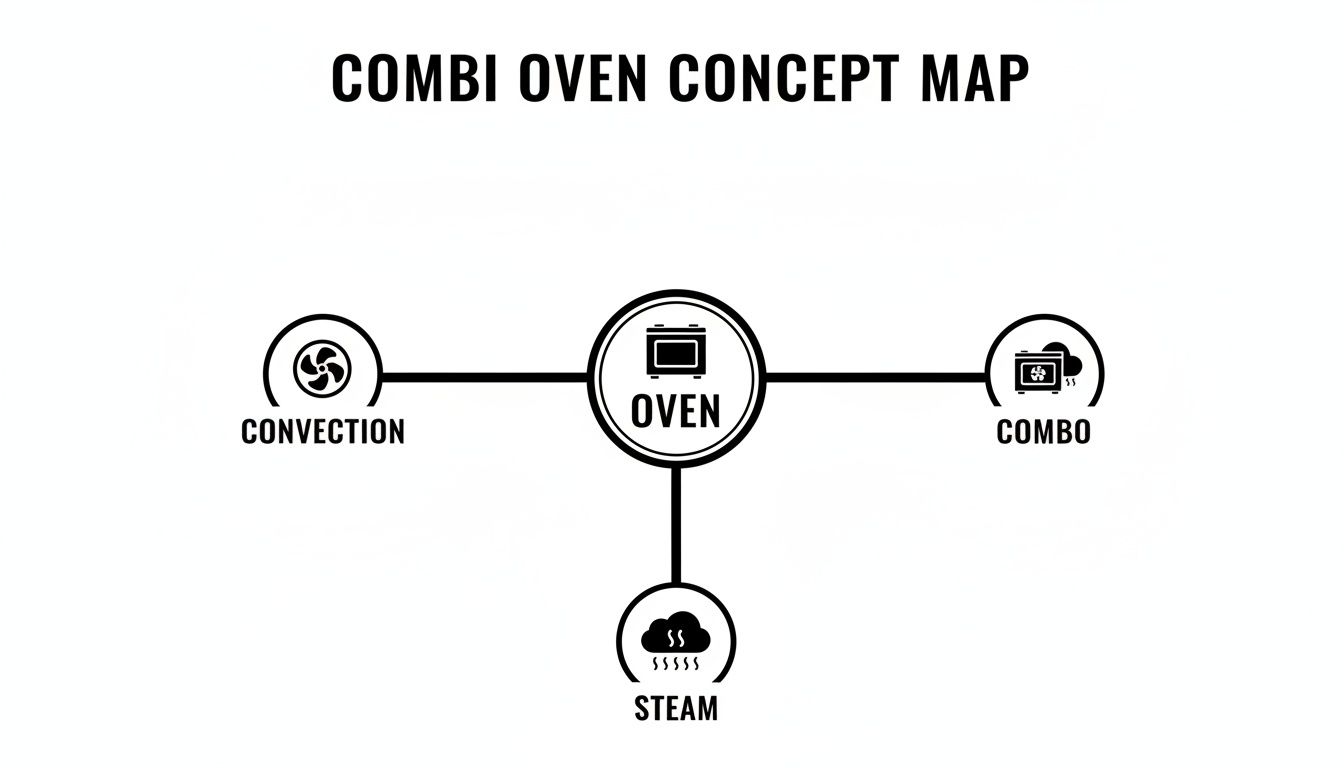
As you can see, it can run as a straight convection unit, a pure steamer, or a blend of both, giving you incredible flexibility.
Convection Mode: Dry Heat Precision
First up is Convection Mode. This works just like a standard convection oven, but with way more power and precision. A seriously powerful fan blasts intensely hot, dry air all around the cooking chamber. This process strips away the cool air bubble that naturally surrounds food, letting it cook faster and much more evenly.
This is your go-to setting for getting that beautiful, golden-brown finish and a perfectly crispy texture.
- Roasting: Imagine you need to roast a batch of whole chickens for a busy Seattle lunch rush. The circulating dry heat gets the skin perfectly crisp while the meat cooks through without any hot spots.
- Baking: For a coffee shop in Everett, this mode is a lifesaver. It churns out perfectly baked pastries, cookies, and bread with a consistent golden crust, batch after batch.
- Searing: You can even use it to put a quick, high-heat sear on meats before you finish them off with another method.
Basically, anything you'd make in a regular convection oven, a combi oven can do with more control. We dive deeper into the comparison in our guide that asks: what is a convection oven?
Steam Mode: Gentle, Moist Heat
The second core function is Steam Mode. In this setting, the oven injects pure steam into the chamber, creating a 100% humidity environment. This is an incredibly gentle way to cook, transferring heat to food without browning it or drying it out one bit.
Steam is fantastic for delicate items because it preserves their natural moisture, color, nutrients, and flavor. It’s a much healthier way to cook, too, since you often don't need to add any fats or oils.
Using steam allows you to gently cook foods like fish or vegetables, ensuring they remain tender and vibrant. It's the ideal method for poaching, steaming, and even sous vide-style cooking without a water bath.
For instance, a caterer in Bellevue could use steam mode to perfectly cook hundreds of portions of salmon, making sure every single one is moist and flaky. It’s also the secret to blanching vegetables so they stay crisp and colorful for a busy sandwich prep line.
Combination Mode: The Best of Both Worlds
Now for the real magic: Combination Mode. This is where the oven intelligently blends the dry, browning power of convection with the moisture-locking benefits of steam. By precisely controlling the humidity level inside, you can create the perfect cooking atmosphere for a massive range of dishes.
This is where a combi oven truly leaves all other equipment in the dust. Combi ovens have completely changed the game for large-scale food prep since they first showed up in the 1970s. In fact, market data shows they now make up over 60% of new commercial oven installations in Europe and a rapidly growing 40% share in the US foodservice sector as of 2023.
Think about roasting a prime rib. Combination mode uses steam to cook the meat evenly, keeping it incredibly succulent and juicy on the inside. At the same time, the convection heat is working to create that irresistible crispy, browned crust on the outside. This dual-action approach also reduces shrinkage, which means higher yields and lower food costs—a huge win for any restaurant's bottom line.
The Real-World Benefits for Your Washington Kitchen
Knowing how a combi oven works is one thing, but what really matters is how it helps your bottom line. For any Washington restaurant, bar, or coffee shop, this single appliance is an investment in doing things better, faster, and more profitably. It’s more than just a cooker; it’s a core part of your business strategy, delivering real results every day.
One of the first things you'll notice is a big drop in food waste. When you roast meats in a normal oven, you can lose up to 30% of the product's weight from moisture loss. A combi oven, with its precise humidity control, slashes that shrinkage.
That means more sellable food from the same raw ingredients, which directly boosts your profit margins on every single dish.
Maximizing Yield and Minimizing Costs
Let's think about that in real terms. A Seattle steakhouse roasting prime rib or a Tacoma deli cooking turkeys for sandwiches can get more servings out of each cut. Over a year, cutting down on shrinkage like that can add up to thousands of dollars in saved food costs.
Besides saving on food, a combi oven is an energy-saving beast. Instead of running a separate convection oven and a steamer, you're just powering one smart machine. That has a direct impact on your utility bills, which is a big deal for any business.
A combi oven doesn't just cook better; it cooks smarter. By combining multiple functions into one unit, it reduces food shrinkage, lowers energy consumption, and frees up your most valuable asset—your staff.
In the U.S. restaurant scene, combi ovens are perfect for independent operators and food trucks in places like Washington state who are dealing with tight spaces and budgets. They can cut energy use by up to 30% compared to a conventional setup. They also cook multiple dishes at once without the flavors mixing, which gets food out faster. For our customers—like pizzeria owners in Tacoma or caterers in Bellevue—this means you can equip a mobile kitchen or ghost operation with a reliable, warranty-backed combi oven that ships free and arrives in just 1-2 days. It's no surprise that combi oven use has jumped 25% in North American foodservice since 2020. You can get more insights on this from RATIONAL, a pioneer in combi technology.
Unlocking Labor Efficiency and Menu Expansion
Another huge plus is the boost to your team's efficiency. In today's tough labor market, that's priceless. A chef can load the oven, pick a pre-set recipe, and just walk away.
The oven automatically handles complicated cooking steps. This "set it and forget it" ability lets your staff focus on other important jobs, like managing the deep fryers during a rush, stocking the under counter refrigerators, or working the sandwich prep tables. This doesn't just make your kitchen more productive; it guarantees every dish comes out perfectly consistent, no matter who is working that day.
This new efficiency makes it easy to expand your menu without having to remodel your whole kitchen.
- A Seattle coffee shop could add a hot lunch menu with roasted vegetables, baked goods, and savory proteins. A compact combi oven would fit right in next to their existing Seattle coffee shop refrigerators.
- A bar in Everett could upgrade its menu from basic fried food to high-quality roasted chicken wings, steamed seafood, and baked appetizers, a great match for its Seattle bar equipment.
- A food truck can make a wider variety of items much faster. This helps maximize sales during peak hours with just one space-saving unit.
A combi oven fits right into a well-planned commercial kitchen. It works with your other core equipment—from commercial refrigerators and freezers to specialized pizza prep tables—to make your entire operation run smoother and more profitably. For a deeper look into designing an efficient workspace, check out our guide on setting up a commercial kitchen. It’s not just an oven; it’s a tool that helps you do more with less.
How Combi Ovens Compare to Other Ovens
Choosing new kitchen equipment can feel like a high-stakes decision. Do you go for a combi oven, or can you get by with a standard convection oven and a separate steamer? Getting a clear picture of the differences is the only way to make a smart investment that actually works for your menu, your crew, and your budget.
A combi oven isn’t just another box that heats things up; it’s a strategic move that fundamentally changes what one appliance can accomplish in your kitchen.
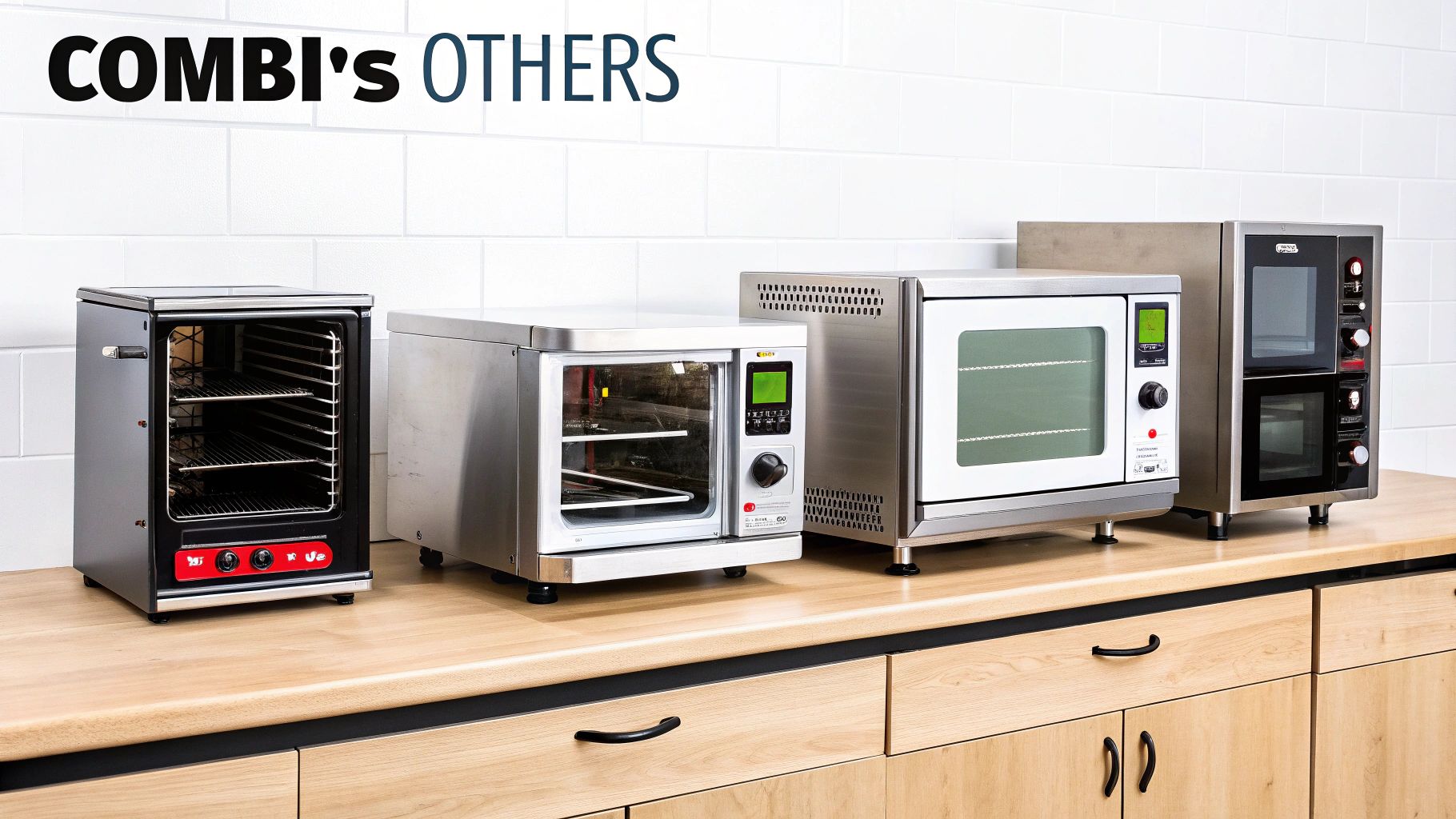
Think about your current cooking line. You probably have a convection oven that’s a beast for roasting and baking, and maybe a standalone steamer for your delicate fish and vegetables. Each one is a specialist, and they’re great at what they do. A combi oven, though, is the jack-of-all-trades that has somehow mastered them all.
The Specialist vs. The Generalist
A traditional convection oven is your go-to for anything that needs that perfect, golden-brown finish. It pushes dry, hot air all around the food, giving you that crispy chicken skin or beautifully browned loaf of bread. But its greatest strength is also its main limitation—it has no way to add moisture. If you tried to steam broccoli in it, you’d just end up with sad, shriveled florets.
To learn more about the specifics, check out our guide on convection vs regular ovens.
On the flip side, a dedicated steamer is a master of gentle cooking. It perfectly preserves the color, nutrients, and texture of things like asparagus or seafood without needing a drop of oil. But that's all it does. You can't use a steamer to brown, roast, or crisp anything, leaving you with perfectly cooked proteins that look pale and unappetizing.
This is exactly where the combi oven steps in. It handles both of these jobs perfectly and then adds its unique combination mode, which neither of the others can touch. This gives you a level of precision that not only opens up new culinary doors but also saves a ton of space on your line.
Combi Oven vs. Traditional Ovens: A Feature Showdown
To really get what a combi brings to your kitchen, it helps to see a direct comparison. This table breaks down why so many modern chefs are making the switch.
| Feature | Combi Oven | Convection Oven | Steamer |
|---|---|---|---|
| Browning & Crisping | Excellent | Excellent | Not Possible |
| Steaming & Poaching | Excellent | Not Possible | Excellent |
| Humidity Control | Precise (0-100%) | None | 100% Only |
| Menu Versatility | Extremely High | Moderate | Low |
| Footprint | Single Unit | Separate Units | Separate Units |
| Food Yield | High (Reduces Shrinkage) | Lower (Can Dry Food) | High (Preserves Moisture) |
As you can see, the versatility is off the charts. While a Seattle pizzeria will always need its specialized deck oven and pizza prep tables, a combi can tackle just about everything else on the menu, from appetizers right through to dessert.
The real advantage is simple: a combi oven gets rid of the compromise. You don't have to choose between a roast that's moist and juicy or one that's brown and crispy. You get both, from one machine, in one cooking cycle.
That kind of flexibility is a game-changer. For a busy Seattle restaurant, it means you can replace two, maybe even three, older appliances with a single, highly efficient unit. You're not just freeing up floor space; you're making your workflow smarter.
Instead of shuffling pans from a steamer to an oven, your chefs can do the entire process in the combi. It fits right into a modern kitchen layout alongside other essentials like commercial refrigerators, under counter freezers, and deep fryers, making the whole operation run more smoothly.
Choosing the Right Combi Oven for Your Business
Picking out the perfect combi oven for your kitchen isn't just about getting the biggest, shiniest model on the floor. It's about making a smart match between what the oven can do and what your kitchen actually needs, day in and day out. Get it right, and you've found a workhorse that will completely elevate your operation.
Making that choice comes down to a few key decisions. You'll need to think about the right size for your output, the best power source for your building, and the ideal way to make steam. Nailing these details means your new combi oven will be a powerful asset, not a source of constant frustration.
Sizing Your Combi Oven Correctly
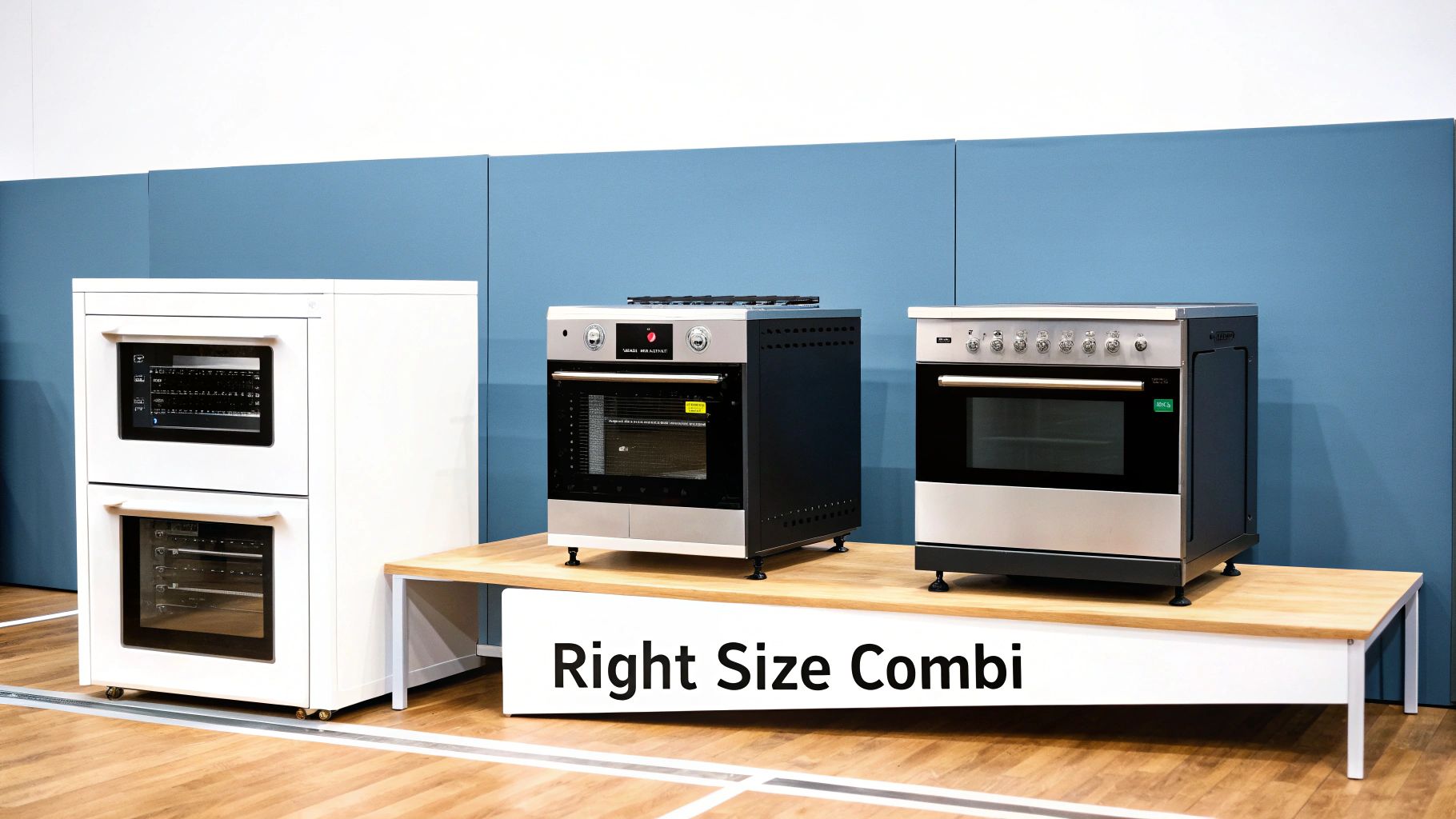
First things first, let's talk size. The right size is all about how much food you're pushing out. Combi ovens come in everything from small countertop units to massive roll-in models, and the wrong choice can either slow your kitchen to a crawl or just eat up precious space and electricity.
- Countertop Models: These compact units are perfect for smaller operations or kitchens tight on space. Think of a Seattle coffee shop that wants to add pastries and a small lunch menu—one of these can sit right next to their Seattle coffee shop refrigerators without needing a full remodel.
- Half-Size Models: A solid step up, these floor models can handle a bigger load. They're a great fit for a medium-sized restaurant or a busy bar that needs more muscle than a countertop oven can offer.
- Full-Size/Roll-In Models: These are the giants, built for high-volume kitchens in large restaurants, catering businesses, or hospitals. A central production kitchen would use one of these alongside walk-in commercial freezers to really maximize their output.
Power Source Gas Vs Electric
Your next big call is the power source. Honestly, both gas and electric combi ovens are fantastic performers, so this decision usually boils down to what hookups you already have and what your local utility bills look like.
Gas combi ovens often cost less to run day-to-day, especially in places where natural gas is cheaper than electricity. Just remember, they still need an electrical hookup to power the control panel and fans.
Electric combi ovens can offer slightly more precise temperature control, which is a real plus if you're doing delicate baking. Installation is usually simpler, too, as long as you have the right high-voltage electrical service ready to go.
Boiler Vs Boilerless Steam Generation
How the oven makes its steam is another critical piece of the puzzle. This choice will impact performance, how much maintenance you'll be doing, and the initial price tag.
A boiler-based (or steam generator) system is like having a dedicated steam engine. It produces huge volumes of pure, clean steam, making it the go-to for kitchens that do a ton of steaming. The trade-off is that boilers need regular descaling to keep mineral buildup from hard water at bay.
A boilerless (or spritzer) system works by spritzing water directly onto the hot heating element, which instantly flashes it into steam. These models are typically less expensive, easier to maintain, and a bit more energy-efficient. They’re a fantastic choice for kitchens that use the combination mode more often than pure steam.
Since the first combi steamer patent hit the scene in the late 1960s, this technology has gone from clunky, manual machines to the sleek, smart powerhouses we see today. Once a niche luxury in the 1980s (costing $20,000+), they’ve become affordable essentials, now averaging $10,000-$15,000. By the 1990s, features like programmable memory were slashing cooking times by 25-40%, letting one combi do the work of 5-7 different appliances. You can learn more about the evolution of combi ovens from 247cateringsupplies.co.uk.
We're Here to Help You Build a Better Kitchen
It's pretty clear that a combi oven is more than just another piece of equipment—it's a game-changer that can completely reshape your kitchen's workflow and boost your bottom line. Here at Seattle Restaurant Equipment, our whole goal is to help you bring that power into your Washington foodservice business. We stock reliable, tough-as-nails commercial combi ovens and have a full lineup of essential kitchen gear to outfit your entire operation.
From the bedrock items like commercial refrigerators and commercial freezers to more specialized gear like sandwich prep tables and pizza prep tables, we've got the tools you need. Our selection also covers high-performance deep fryers and all the essential Seattle bar equipment, making sure every station in your kitchen is set up for success.
Your Complete Kitchen Outfitter
Our business is built around a simple idea: deliver maximum value. We do that with consistently low prices, solid manufacturer warranties, and fast, free shipping on every single order across Washington state. We get it—whether you're outfitting a brand-new food truck or upgrading a restaurant that's been around for years, getting the right equipment on-site quickly is everything.
To help you get there, we offer straightforward advice and flexible financing options to make that dream kitchen a reality. Our team is here to walk you through the choices, making sure you invest in equipment that actually pushes your business forward. That includes everything from your main cooking line to specific solutions like Seattle coffee shop refrigerators or space-saving under counter freezers and under counter refrigerators.
At Seattle Restaurant Equipment, we want to be more than just a supplier. We aim to be a long-term partner in your success, providing the reliable equipment and support you need to thrive in this competitive market.
We believe every restaurant, bar, and coffee shop deserves access to top-quality equipment without the high-pressure sales pitch. Our model is different: no commissioned salespeople and no expensive showrooms. This lets us pass those savings directly on to you.
Feel free to browse our huge online selection or just give our team a call. Let us help you find the perfect equipment to build a more efficient, productive, and profitable kitchen today. Your success is our business.
Frequently Asked Questions About Combi Ovens
Bringing a powerful new piece of equipment into your kitchen is a big decision, and it always sparks a few questions. We get it. Here are some of the most common things we hear from Washington restaurant operators who are wondering if a combi oven is the right move for them.
What Kind of Installation Is Required?
Getting a combi oven installed isn't quite as simple as plugging in a microwave. A proper setup is key to making sure it runs perfectly for years to come.
First off, you need a solid, perfectly level spot that can handle the weight. More importantly, you absolutely need proper ventilation, which almost always means placing it under a Type I or Type II ventilation hood to manage all the heat and steam it produces. You’ll also need to get a few utilities hooked up:
- A dedicated water line: This is a must for the steam functions. We strongly recommend a good water filter to keep mineral buildup from wrecking the internal components.
- A floor drain: The oven creates condensation during cooking and cleaning cycles, so it needs a place to drain safely.
- The right power hookup: This means getting a dedicated electrical circuit or a professional gas line connection that matches the oven’s specific power requirements.
How Difficult Is It to Clean a Combi Oven?
This is one of the best parts, and honestly, a huge selling point for busy kitchens. Most modern combi ovens have fully automated self-cleaning cycles. These aren't just a light rinse—they're powerful programs that use special detergents to dissolve tough grease and baked-on food.
Your end-of-day cleanup becomes a breeze. Just pull out the racks, give the inside a quick wipe to get rid of any large food bits, pop in a detergent tablet, and hit start on the cleaning cycle. The machine handles the rest. It's a world of difference from the hours spent scrubbing a traditional oven.
Can a Combi Oven Replace My Deep Fryer?
That's a great question. While a combi is the swiss army knife of the kitchen, it's not a direct one-for-one replacement for a busy commercial deep fryer.
Using its convection and combi modes, a combi oven can produce some amazingly crispy, golden-brown foods that have that "fried" texture with way less oil. Think of it as a high-powered air fryer. It's fantastic for things like chicken wings, roasted potatoes, or breaded appetizers.
However, for classic high-volume items like french fries or tempura-battered fish that truly need to be submerged in hot oil to get their signature taste and texture, a dedicated deep fryer still reigns supreme. A combi is better thought of as an incredible partner that can take the "oven-fried" items off your fryer's plate, freeing it up for what it does best.
What Is the Typical ROI on a Combi Oven?
The return on investment is where a combi oven really shines. Yes, the upfront cost is higher than a standard convection oven, but the payback comes from several different places.
You’ll see returns through lower utility bills from running one efficient machine instead of two or three. You'll also notice significantly reduced food waste, as the precise humidity control minimizes product shrinkage during cooking. Finally, the automation and faster cook times lead to major labor savings, allowing your staff to be more productive.
Ready to discover how a combi oven can elevate your kitchen's efficiency and menu? At Seattle Restaurant Equipment, we offer a wide range of commercial kitchen solutions, from versatile combi ovens and commercial refrigerators to specialized pizza prep tables and under counter freezers. Explore our full catalog and find the perfect equipment for your Washington business at seattlerestaurantequipment.com.