

Let's get straight to it. A salamander broiler is a high-powered, overhead heating unit that chefs rely on for rapid browning, melting, and finishing dishes. It’s not your standard oven. Think of it more like a precision finishing tool that delivers intense, direct heat from above. While a regular broiler is slower and a cheese melter provides gentle warmth, a salamander brings the immediate, searing heat that a commercial kitchen demands.
What Is a Salamander Broiler and Its Role in Cooking

Picture a tool that can perfectly caramelize the sugar on a crème brûlée in seconds. Or one that gives French onion soup that iconic golden-brown cheese crust. Or maybe it's putting the final sear on a steak just before it hits the pass. That's exactly what a salamander broiler is for.
This is the unsung hero of the kitchen line. It’s usually mounted above a range or on a wall, saving precious floor space while adding incredible capability. This specialized piece of equipment is designed for one main purpose: to deliver intense, directional heat from infrared or radiant sources. That focused energy lets chefs finish dishes without overcooking them, ensuring the inside stays perfect while the outside gets that amazing texture and color.
To give you a quick overview, here are the core features of a salamander broiler.
Salamander Broiler at a Glance
| Characteristic | Description |
|---|---|
| Primary Function | Rapid, high-temperature overhead heating for browning, melting, glazing, and finishing dishes just before serving. |
| Heat Source | Intense, direct heat from above, typically using infrared or radiant elements. |
| Mounting | Usually mounted on a wall or directly above a commercial range to save floor space and integrate into the cooking line. Countertop models are also available. |
| Key Uses | Caramelizing crème brûlée, melting cheese on soups and sandwiches (gratinée), browning casseroles, and putting a final sear on steaks or fish. |
| Compared to Others | Hotter and faster than a standard oven broiler. More intense and focused than a cheese melter, which provides gentle, even heat. |
| Ideal For | High-volume restaurants, steakhouses, bistros, and any commercial kitchen needing a fast, reliable finishing tool to add texture and visual appeal to dishes. |
Basically, this isn't just a "nice-to-have" for many kitchens; it's a critical tool for speed and quality.
The Mythical Origins of the Name
Ever wonder why a piece of kitchen equipment is named after a mythical fireproof amphibian? The story goes back to the 16th century when people believed salamanders could walk through fire without getting burned. That legend stuck around in folklore and eventually inspired the name for early kitchen tools.
By 1723, John Nott’s The Cooks and Confectioners Dictionary mentioned using red-hot shovels or "salamanders"—basically handheld iron plates—to brown dishes over a hearth. At the time, modern salamanders weren't common in kitchens. You can discover more about the history of this unique kitchen tool and its journey to the modern kitchen.
A salamander isn't just for melting cheese; it’s a versatile powerhouse for broiling, browning, caramelizing, and finishing. Its speed and precision make it an essential asset for any fast-paced commercial kitchen, from a bustling Seattle restaurant to a compact food truck.
A Key Component in a Modern Kitchen
In a fully equipped professional kitchen, the salamander fills a very specific role. While commercial refrigerators and commercial freezers handle cold storage and deep fryers manage high-volume frying, the salamander provides that crucial finishing touch.
It works right alongside other core appliances you'd find at Seattle Restaurant Equipment, including:
- Sandwich prep tables where dishes are assembled before getting sent under the salamander for a final melt.
- Pizza prep tables, since a quick broil can perfectly brown toppings without overbaking the crust.
- Essential Seattle bar equipment and Seattle coffee shop refrigerators that keep ingredients fresh and ready for the line.
Whether it’s mounted over a range or sitting on a counter, its function complements everything from undercounter refrigerators to undercounter freezers, making it a vital part of an efficient and productive kitchen.
Salamander Broilers Versus Other Kitchen Equipment
To really get what a salamander broiler is, it helps to put it side-by-side with other gear you find in a commercial kitchen. Plenty of appliances can melt cheese or brown a dish, but the salamander's design gives it a serious edge in a pro setting. Its intense, top-down heat is something other tools just can't replicate with the same speed and control.
A lot of kitchens will try to get by using their standard oven's broiler setting. The results aren't even close. An oven broiler has to heat up a huge, enclosed box, which takes forever to preheat and delivers a much less focused, less intense heat. This slow-motion process often means the rest of your dish gets overcooked while you're just trying to brown the top.
Think about making a crème brûlée. A salamander will give you that perfect, glassy sugar crust in less than a minute. An oven broiler might take a few minutes, and by then, you risk ending up with a warm, runny custard underneath.
Salamander Versus Cheese Melter
This is where most of the confusion happens, but the difference is night and day. A cheese melter does exactly what its name says: it melts cheese using a relatively low, gentle heat. It's great for finishing off a plate of nachos or keeping a dish warm on the pass, but it just doesn't have the muscle to actually cook or sear.
A salamander, on the other hand, is a real cooking machine. It cranks out way higher temperatures, letting you not only melt cheese but also broil, brown, glaze, and caramelize at lightning speed.
The easiest way to think about it is that a cheese melter holds a finished dish, while a salamander can transform it. It’s the difference between gently warming some cheese on a sandwich and flash-searing a steak to get a perfect crust.
For a busy Seattle restaurant trying to push out perfectly finished plates during a dinner rush, a salamander is a game-changer. Waiting for a cheese melter to slowly brown the top of a French onion soup is a good way to create a bottleneck on the line. A salamander gets it done in seconds.
Salamander Versus Charbroiler
Putting a salamander up against a charbroiler really shows you the core difference: the direction of the heat. A charbroiler cooks from the bottom up. It uses intense heat from gas flames or electric elements to grill food and create those classic char marks we all love. It’s your go-to for burgers, steaks, and grilled veggies.
A salamander does the exact opposite. It blasts intense radiant heat from above. This top-down cooking style is perfect for finishing dishes that are already cooked or for when you only want to hit the surface without touching what's underneath.
Let's break down their jobs:
- Charbroiler (Heat from Below): This is for grilling raw proteins and vegetables. It's all about getting that smoky flavor and those beautiful grill marks. You can learn more about how a charbroiler works in our detailed guide.
- Salamander (Heat from Above): You'll use this for browning, gratinéeing, caramelizing, and melting toppings on dishes that are already cooked or assembled.
You’d never try to cook a raw chicken breast in a salamander, just like you wouldn't use a charbroiler to melt cheese on a delicate piece of fish—you’d destroy it. They’re two different tools for two different jobs, and a smart kitchen uses both. Whether you’re running a coffee shop that needs quick melts or a high-end bistro, knowing the difference is key to setting up your line for success.
Choosing Between Gas and Electric Salamander Broilers
Picking the right power source for your salamander broiler is more than just a tech spec—it’s a strategic move that shapes your kitchen's rhythm, speed, and even the final taste of your dishes. The two main players, gas and electric, each come with their own strengths. The right one for you really depends on your menu, customer volume, and kitchen layout.
Think of it like this: are you driving a drag racer or a precision German sedan? Both are high-performance, but they’re built for totally different tracks.
The Power and Precision Debate
A gas salamander is the drag racer. It’s all about raw, immediate power. For a high-volume Seattle steakhouse or a slammed bistro that needs to finish dozens of dishes an hour, a gas model is almost always the answer. They heat up in a flash and throw off intense, consistent heat that can handle the craziest dinner rush without breaking a sweat.
That instant response time means chefs can fly, moving from one dish to the next without waiting for the broiler to catch up. When every second on the line counts, that speed is everything.
On the other side, you have electric salamanders, especially the modern infrared models. These are your precision sedans. They offer far better temperature control, making them perfect for the delicate work. If your menu has items that need a gentle, even browning or a carefully controlled melt without scorching, an electric unit gives you that finesse.
They might take a minute longer to preheat compared to gas, but they’re often more energy-efficient, which can trim down your utility bills over time. This makes them a smart pick for coffee shops, smaller restaurants, or kitchens in buildings where running a gas line is a no-go.
Key Takeaway: It really boils down to a simple trade-off. Gas gives you unbeatable speed and power for high-volume kitchens. Electric delivers precision and efficiency for more specialized cooking and lower-volume spots.
Getting the fuel type right is a big deal when you're setting up a commercial kitchen. To get even deeper into the weeds, check out our guide on the differences between LP and natural gas. It'll help you make the smartest call for all your equipment.
Gas vs Electric Salamanders: A Comparison for Your Kitchen
To make the choice crystal clear, let's break down how these two powerhouses stack up side-by-side. This table will help you quickly see which one aligns best with your kitchen's needs and goals.
| Feature | Gas Salamander Broiler | Electric Salamander Broiler |
|---|---|---|
| Heating Speed | Heats up almost instantly; ideal for fast-paced environments. | Slower to preheat but maintains temperature well. |
| Temperature Control | Powerful and consistent, but less precise for delicate tasks. | Excellent, precise control for delicate melting and browning. |
| Best For | High-volume steak houses, busy bistros, rapid finishing. | Fine-dining, bakeries, cafes, delicate gratinéeing. |
| Energy Source | Natural Gas or Propane (LP). | Standard electrical outlet (check voltage requirements). |
| Installation | Requires a gas line and proper ventilation. | Simpler plug-and-play installation, no gas lines needed. |
| Cost | Can have lower operating costs, depending on local utility prices. | Higher efficiency can lead to lower long-term energy bills. |
Ultimately, the best choice is the one that fits seamlessly into your operation, helping your team work smarter, not harder.
Finding the Perfect Fit in Your Kitchen
Beyond the power cord or gas line, where you actually put your salamander broiler is crucial for a smooth kitchen flow. How you mount it has a direct impact on how your team uses it during a busy service. There are three main ways to set it up, each with its own pros.
- Wall-Mounted: This is a fantastic way to save valuable counter real estate. By mounting the unit on the wall over your main line, it’s right there when you need it but never in the way.
- Range-Mounted: Often placed right on top of a commercial range, this creates the ultimate finishing station. A chef can slide a pan from a burner straight under the broiler in one fluid motion—perfect for searing steaks or finishing sauces.
- Countertop: If you’ve got the counter space to spare or need some flexibility, a countertop model is a great option. It’s perfect for smaller kitchens or food trucks where the layout might shift.
Your choice should work in harmony with your other key gear, like your commercial refrigerators and deep fryers. A well-placed salamander fits right in with your sandwich prep tables and undercounter freezers, creating a logical path from prep to plate. By thinking through both the power type and the mounting style, you’ll end up with a salamander that’s a genuine workhorse for your Seattle kitchen.
Unlocking the Culinary Potential of Your Salamander
Let's move past the technical specs for a minute. The real magic of a salamander broiler happens on the menu. This is where that intense, top-down heat turns a good dish into an unforgettable one.
A salamander isn't just another piece of cooking gear; it’s a finishing tool. It adds texture, color, and flavor in ways other methods just can't touch, which directly impacts your dish quality and ticket times. Think of it as the final, crucial step that makes everything pop.
Its true value is its versatility. You can get the perfect bubbly, golden-brown gratinée on a crock of French onion soup or flawlessly melt cheese over a massive platter of nachos. The salamander pulls it off consistently in just seconds, making it a cornerstone of any efficient kitchen.
Mastering the Art of the Finish
The secret is how a salamander delivers scorching heat from above without messing with the core of the dish. Take a reverse-seared steak. You've already brought it to the perfect internal temp. A few moments under the salamander creates a deeply browned, flavorful crust that a standard oven broiler would struggle with, likely overcooking the meat in the process.
This top-down heat is also perfect for more delicate items. When you're broiling fish fillets, a salamander can quickly crisp the skin or brown a topping while keeping the flesh underneath perfectly moist and tender. It’s a level of control that lets a chef nail their vision, every single time.
This flowchart breaks down a key decision point when choosing the right salamander for your kitchen's needs.
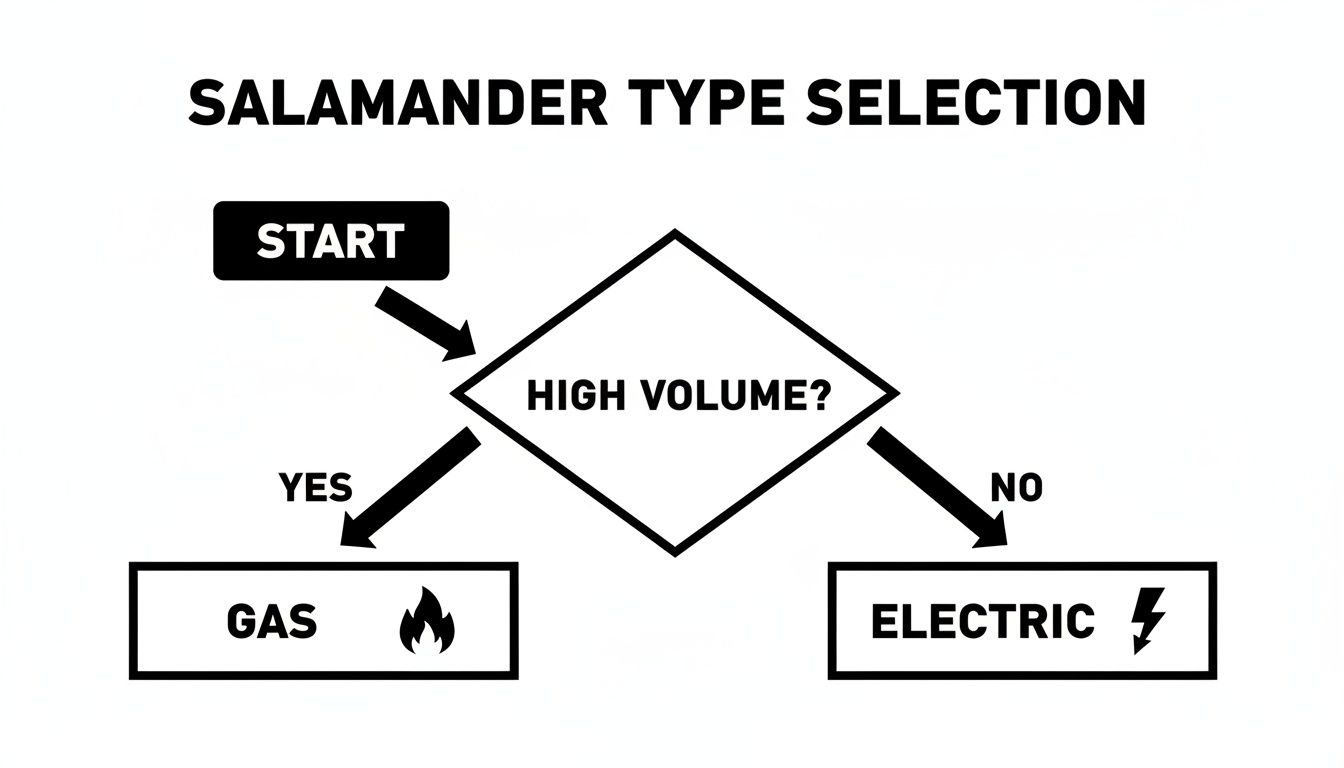
As you can see, high-volume operations get the most out of a gas model's raw power. On the other hand, electric units are a better fit for kitchens with lower output or a need for fine-tuned precision.
Why Overhead Heat Wins Every Time
So, what's the big advantage? It all comes down to that intense, directional heat. Here are a few common situations where this tool is the undisputed champion:
- Gratinéeing: For dishes like French onion soup or lasagna, the salamander’s heat rapidly melts and browns the cheese, creating that iconic bubbly crust without turning the dish below into a soupy mess.
- Caramelizing: It puts the finishing touch on desserts like crème brûlée, transforming a layer of sugar into a perfect, glassy sheet in under a minute—something that's incredibly risky in a standard oven.
- Finishing Meats: It can put a perfect sear on sous-vide or reverse-seared proteins, adding that critical texture and flavor right before the plate hits the pass.
- Toasting and Browning: From open-faced sandwiches to browning the peaks on a meringue pie, the salamander offers speed and evenness that are tough to replicate anywhere else.
A salamander broiler isn't just cooking; it's elevating. By adding that final, perfect touch of color and texture, you create a more appealing dish that commands a higher price and leaves a lasting impression on your guests.
This ability to rapidly finish dishes makes it an essential partner to other kitchen workhorses. A dish can move from a commercial refrigerator to a sandwich prep table and then under the salamander for a final melt in a seamless workflow. It works alongside your deep fryers and commercial freezers, making sure every part of a meal is ready at exactly the right time.
In the chaos of a dinner rush, salamander broilers really prove their worth. They can hit temperatures well over 1000°F—far hotter than a typical oven—to deliver that perfect caramelized crust on steaks or bubbly cheese on gratins in seconds. Unlike cheese melters, which just warm things up, salamanders actually cook. They come equipped with adjustable cooking grates and grease pans, so you can broil steaks or finish casseroles efficiently. Imagine a packed Bellevue brewery during dinner service: this beast handles the high volume, finishing multiple dishes without creating a bottleneck on the line, unlike a conventional oven broiler. You can get more insights on the power of commercial salamanders on HatcoCorp.com.
If you're interested in exploring different heating methods, you might like our deep dive into how convection ovens differ from regular ovens. Understanding how heat works is crucial for getting the most out of your entire equipment lineup.
Finding the Right Salamander Broiler for Your Kitchen
Picking the right salamander broiler is a big deal. It’s one of those decisions that will directly affect how smoothly your kitchen runs and how good your finished plates look. This is your no-nonsense guide to choosing a model that fits your business, whether you’re outfitting a brand new food truck or upgrading a busy Seattle restaurant.
Think of it like building your kitchen's dream team. Your commercial refrigerators are the quiet workhorses guarding your ingredients, and the deep fryers are handling the big, high-volume jobs. The salamander? That's your finisher—the specialist that adds the final, perfect touch. It has to work well with the rest of the crew.
Match the Salamander to Your Menu and Kitchen Pace
First things first, look at your menu. A steakhouse pushing out dozens of perfectly crusted steaks every hour has totally different needs than a little café that just needs to melt cheese on a few sandwiches. How hard you plan to run it is the most important question you can ask.
For kitchens that are constantly slammed, a powerful gas model is usually the way to go. It gives you that raw, intense heat and recovers quickly, which is exactly what you need when the tickets won't stop coming. On the other hand, an electric model could be the perfect fit for a place that does more delicate work or has a lower volume, giving you pinpoint control without the massive heat output.
This choice ripples through your whole operation, from what’s chilling in your commercial freezers to how dishes are plated on your sandwich prep tables. The right salamander keeps things moving without creating a bottleneck.
The Nitty-Gritty: Specs You Need to Check
Once you know what you need your salamander to do, it's time to get into the details. These specs will decide how the unit actually performs in your space day in and day out.
Here are the four big things to look at:
- Size and Footprint: Break out the tape measure. Seriously. Whether you're mounting it on a wall, over a range, or setting it on a counter, it has to fit without getting in everyone's way. A well-placed salamander works right alongside your undercounter refrigerators and undercounter freezers, not against them.
- Power Source (Gas vs. Electric): As we said, this is a huge decision. Gas gives you intense, on-demand heat for high-speed work. Electric offers incredible precision and can be more efficient for certain jobs.
- Heat Type (Infrared vs. Radiant): This is all about how the heat is delivered. Infrared elements get screaming hot, fast, and deliver focused energy—perfect for a quick, hard sear. Radiant elements offer a gentler, more even heat, which is what you want for melting cheese perfectly without burning it.
- Adjustability: Don't overlook this. A unit with an adjustable grate is a total game-changer. Being able to move the rack up or down gives you complete control over the heat, letting you go from a soft melt to a blistering sear in just a few seconds.
Picking a salamander isn't just about buying a heater; it's about adding a key player to your kitchen's ecosystem. The right one supports everything from your Seattle bar equipment to your pizza prep tables, making it easier to send out great food, every time.
At the end of the day, finding the perfect salamander means striking the right balance between power, size, and features for how your kitchen actually works. Make a good choice here, and it’ll pay you back in speed, quality, and efficiency for a long, long time.
Taking Care of Your Salamander Broiler
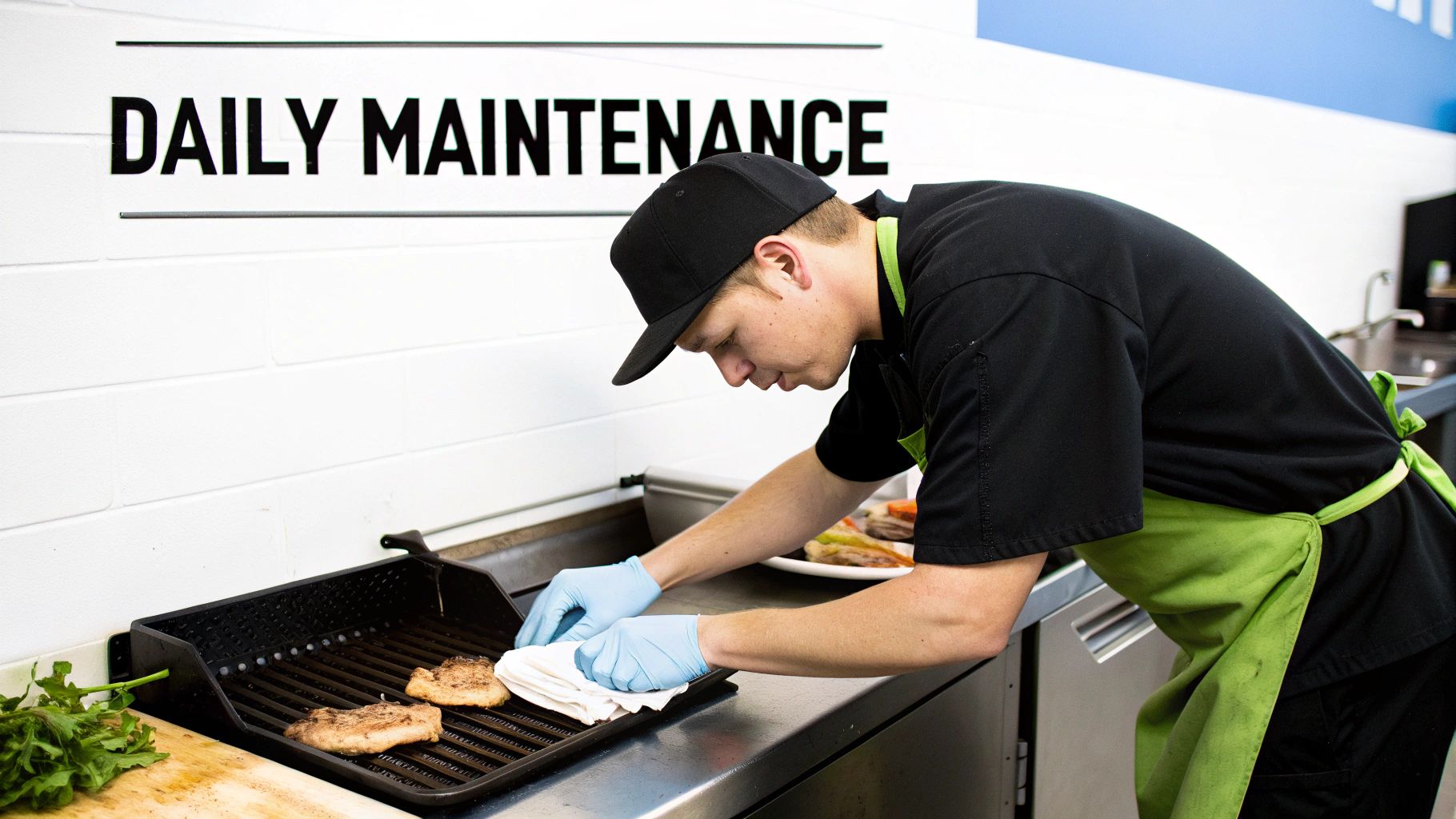
You wouldn't run your commercial refrigerators into the ground, and you wouldn't let your deep fryers go without a deep clean. Your salamander broiler is no different. To get the most out of your investment, it needs proper care. Treat it right, and it will perform flawlessly through the most hectic dinner service for years to come.
Getting the hang of daily use is step one. Always follow the manufacturer's guide for preheating—it’s the only way to get consistent heat from the first plate to the last. Next is mastering the grate height. Slide it up close for a hard, fast sear, or drop it down for a gentler, slower browning.
Remember, that intense overhead heat is unforgiving. A beautiful gratin can turn into a burnt mess in the blink of an eye. You absolutely have to keep a close watch on your cook times, especially with delicate dishes. A few seconds of inattention can mean a lost dish and wasted money.
Your Daily Cleaning Routine
A clean salamander isn't just about hygiene—it's about safety and performance. Caked-on grease and food bits are a serious fire hazard and can block the heating elements from doing their job right. A simple daily wipe-down is the best way to prevent problems before they start.
It doesn’t need to be a huge production. Just make this a non-negotiable part of your closing duties:
- Power Down & Cool Off: First things first, turn the unit off. If it's electric, unplug it. If it's gas, shut off the supply. Let it cool down completely before you touch anything.
- Pull and Soak: Remove the cooking grate and the drip pan underneath. A good soak in hot, soapy water will do most of the hard work for you, loosening up all that baked-on gunk.
- Wipe the Inside: Grab a soft cloth and a food-safe degreaser to wipe down the interior walls and ceiling. This stops that black carbon and grease from building up and messing with your heat reflection.
- Scrub, Dry, Reassemble: Give the grate and pan a good scrub, then rinse and dry them completely. Put everything back together, and it's ready for the next shift.
A disciplined cleaning schedule for your salamander broiler is just as important as maintaining your commercial freezers or sandwich prep tables. It protects your investment, ensures food safety, and keeps your entire kitchen line running smoothly and safely.
Making these simple habits part of your routine ensures your salamander remains a reliable workhorse. This kind of proactive care protects every piece of gear in your kitchen, from your main cooking line down to the undercounter refrigerators, and makes for a safer, more efficient operation.
Got Questions About Salamander Broilers?
Even after getting the basics down, you probably still have a few questions rattling around. It's totally normal. This last section is all about tackling the common questions we hear from restaurant owners right here in Seattle and across Washington.
We'll clear up any of those lingering "what ifs" so you can feel good about adding one of these powerhouse finishers to your kitchen. Think of this as your quick-hit guide for the practical stuff that comes up when you're actually planning your line.
Can I Cook Raw Food in a Salamander?
The short answer? Not really. While a salamander is a beast when it comes to heat, it’s not built to cook most raw food from scratch. Its intense, one-directional heat is all about rapid browning, searing, and melting.
If you try to cook a thick, raw chicken breast in one, you’ll end up with a charred outside and a raw middle. It's just not what they're for. That said, it's perfect for cooking thin, delicate items fast, like fish fillets or a quick shrimp scampi. For your thicker proteins, stick to using it as a finisher after cooking them through with another method, like sous-vide or a good old-fashioned pan-sear.
How Do I Choose Between Infrared and Ceramic Heat?
This is a big one, and it really comes down to a classic kitchen dilemma: speed vs. evenness.
- Infrared Salamanders: These are the sprinters of the kitchen. They fire up almost instantly and hit your food with a super-focused, intense blast of heat. If you're running a high-volume spot and need to sear steaks or caramelize a crème brûlée in a flash, infrared is your friend.
- Ceramic Salamanders: These guys offer a more spread-out, radiant heat. They might take a minute or two longer to preheat, but they give you a gentler, more even browning. This is what you want for perfectly melting cheese on nachos without burning the edges or finishing a delicate gratin.
The bottom line is simple: match the heat to your menu. For sheer speed and searing power, go infrared. For even browning and more delicate melting jobs, ceramic is the way to go.
What Kind of Dishes Can I Use?
This is a huge safety point, so listen up. Never, ever use standard ceramic or glass plates in a salamander. The extreme, direct heat can make them crack or even explode, which is the last thing you want during a busy service. Always use cookware that is specifically labeled as broiler-safe.
Your best bets are:
- Metal Pans and Plates: Stainless steel or aluminum can take the heat without any drama.
- Cast-Iron Skillets: These are absolutely perfect for those sizzling fajita platters or finishing a steak. They hold heat like nothing else.
- Oven-Safe Ceramic or Stoneware: Look for the dishes explicitly rated for broiler use. These are your go-to for classics like French onion soup.
Using the right dishware isn’t just about avoiding a mess; it’s about getting the best heat transfer for a perfectly finished plate every single time.
Bringing a salamander broiler into your kitchen is a smart move that can seriously level up your menu and speed up your ticket times. It works hand-in-glove with all your other core equipment, from commercial refrigerators and commercial freezers to your sandwich prep tables and pizza prep tables. Whether you're upgrading your Seattle bar equipment or outfitting a new coffee shop with reliable Seattle coffee shop refrigerators, knowing these finer points ensures you’re making a great investment for your kitchen's future.
Ready to add that ultimate finishing touch to your kitchen? Seattle Restaurant Equipment has a great selection of commercial salamander broilers and all the other gear you need, with free shipping across Washington. Check out our inventory and find the tools to build the kitchen you've been dreaming of.